Law study · For law students
Theft to dacoity in 9 flashcards.
In short
Theft (s.378) and its punishment (s.379), extortion (s.383), robbery (s.390) and its punishment (s.392), dacoity (s.391, s.395), dishonest misappropriation (s.403) and receiving stolen property (s.411). Plus the illustrations examiners love.
By the FAI Legal editorial desk · 12 October 2026 · 11 slides · 2 min read
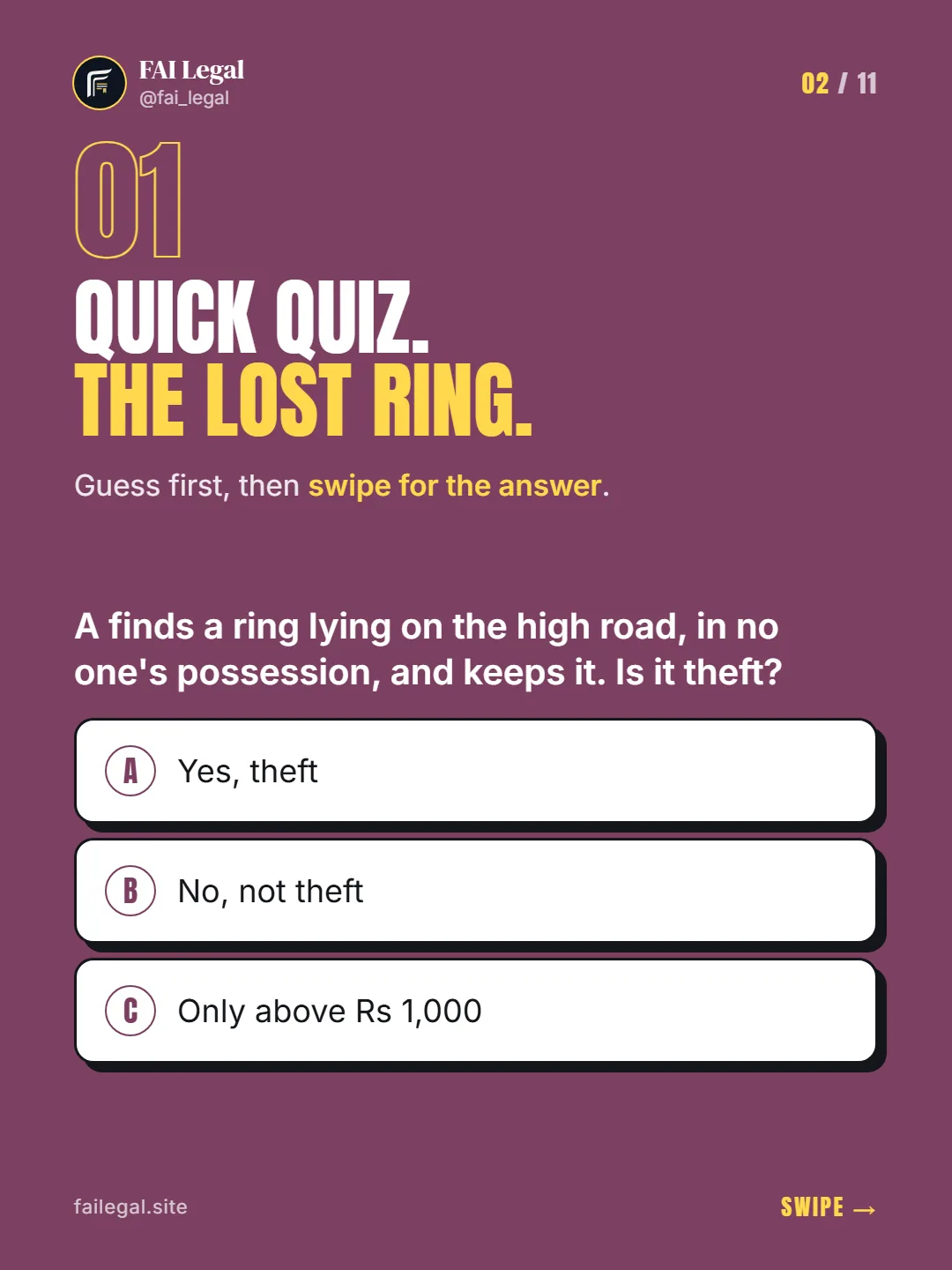

Quick quiz. The lost ring.
Guess first, then swipe for the answer.
- A. Yes, theft
- B. No, not theft
- C. Only above Rs 1,000
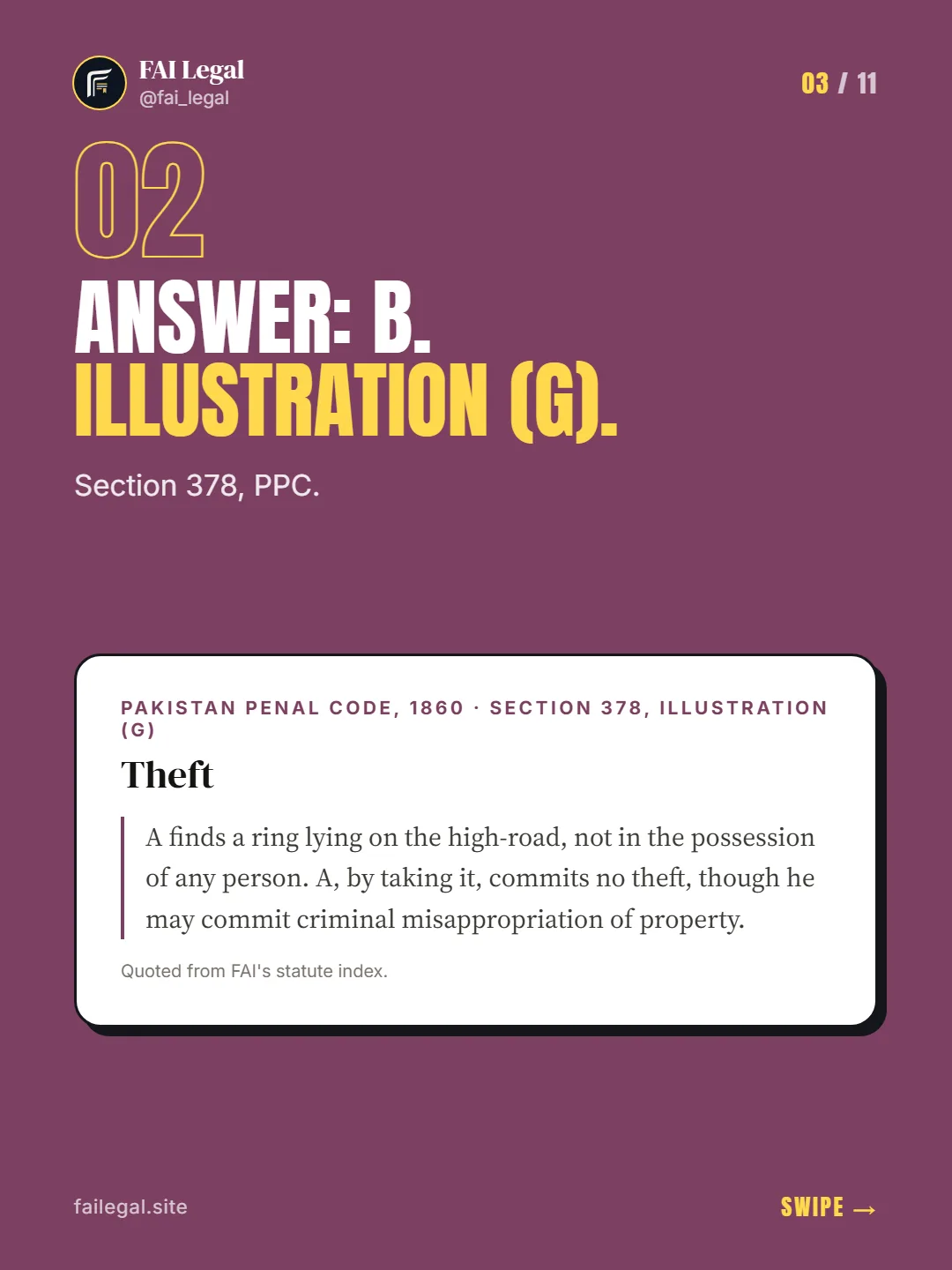
Answer: B. Illustration (g).
Section 378, PPC.
“A finds a ring lying on the high-road, not in the possession of any person. A, by taking it, commits no theft, though he may commit criminal misappropriation of property.”
Pakistan Penal Code, 1860 · Section 378, Illustration (g), Theft
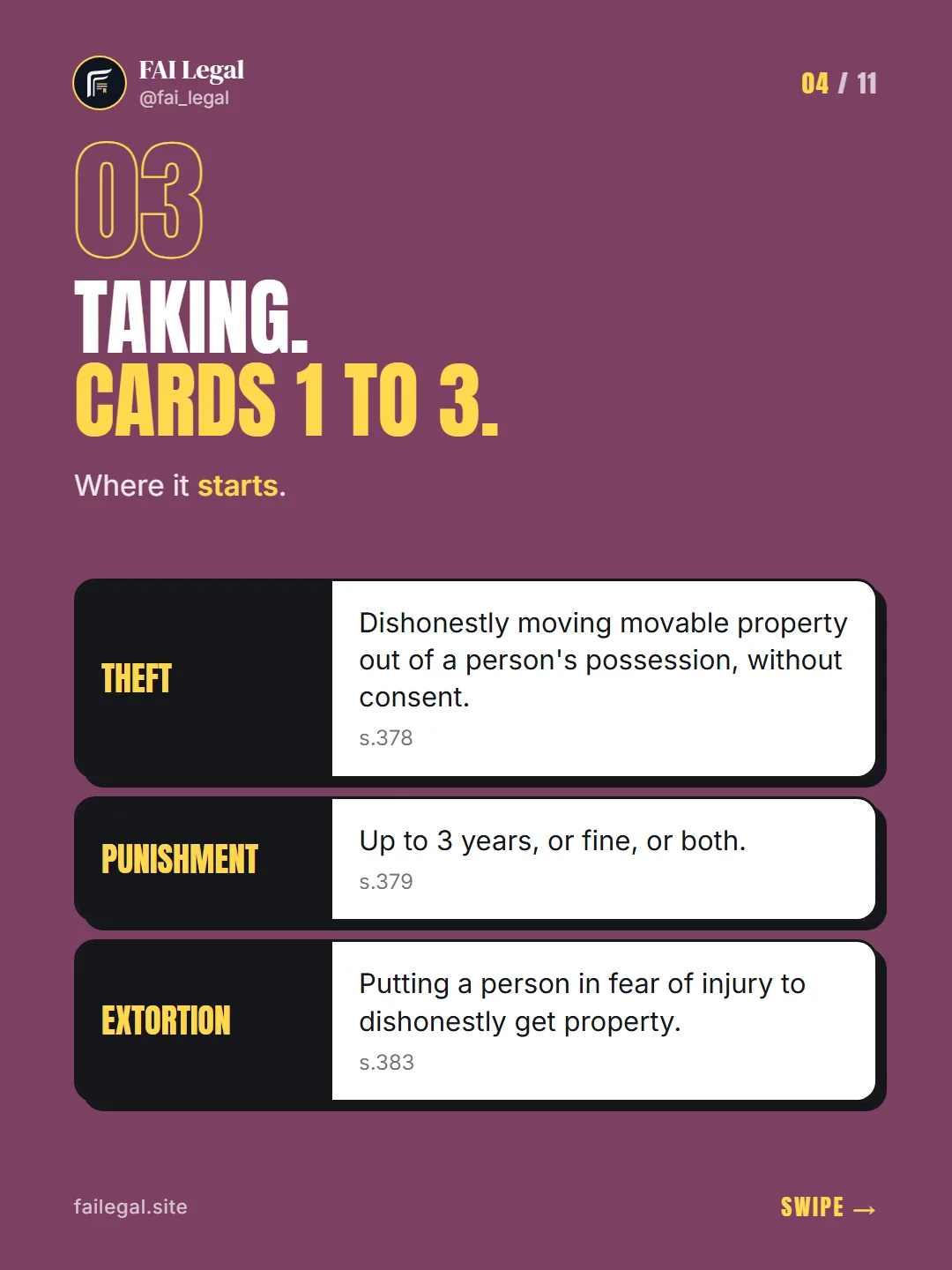
Taking. Cards 1 to 3.
Where it starts.
- TheftDishonestly moving movable property out of a person's possession, without consent. (s.378)
- PunishmentUp to 3 years, or fine, or both. (s.379)
- ExtortionPutting a person in fear of injury to dishonestly get property. (s.383)
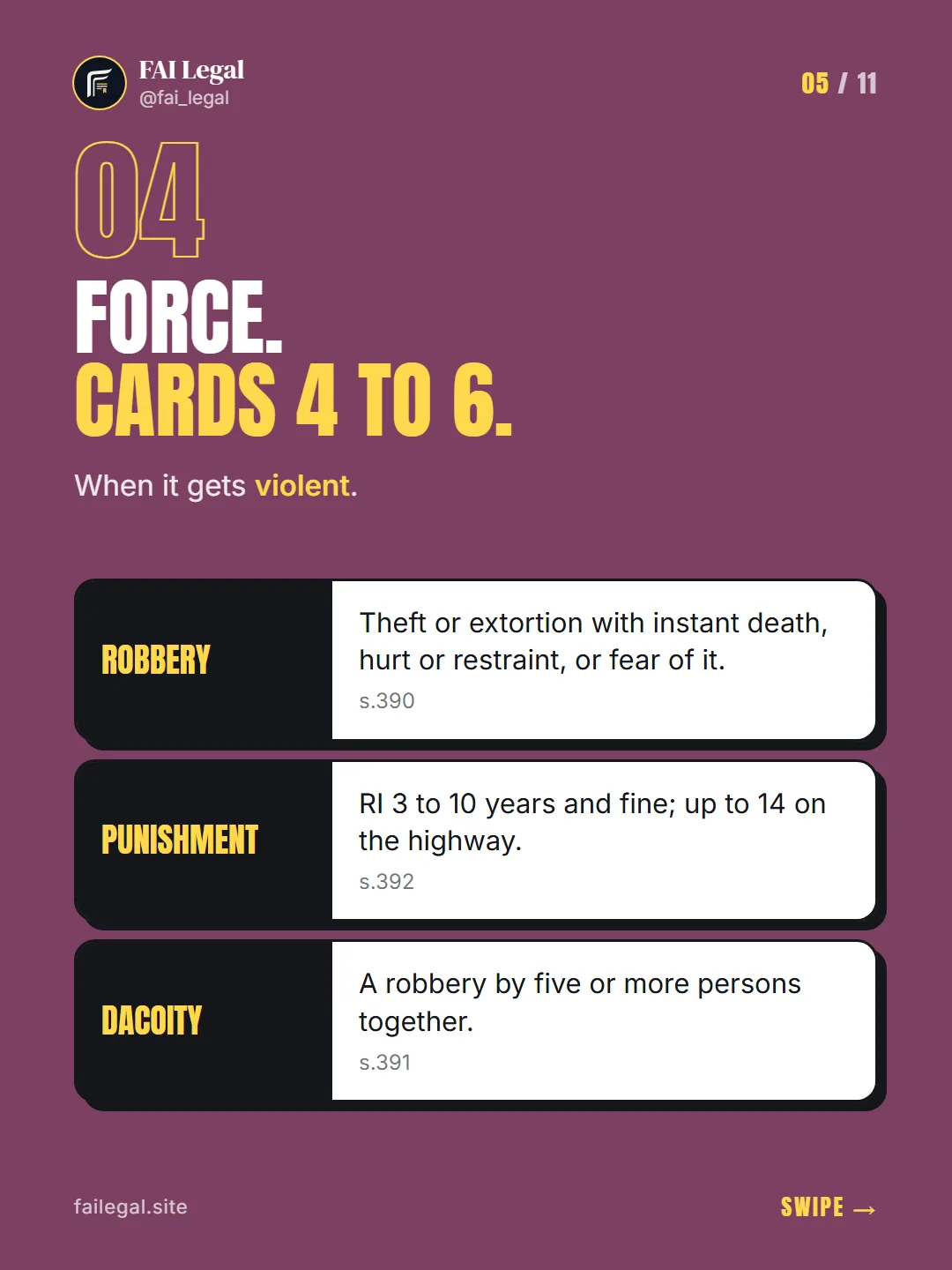
Force. Cards 4 to 6.
When it gets violent.
- RobberyTheft or extortion with instant death, hurt or restraint, or fear of it. (s.390)
- PunishmentRI 3 to 10 years and fine; up to 14 on the highway. (s.392)
- DacoityA robbery by five or more persons together. (s.391)
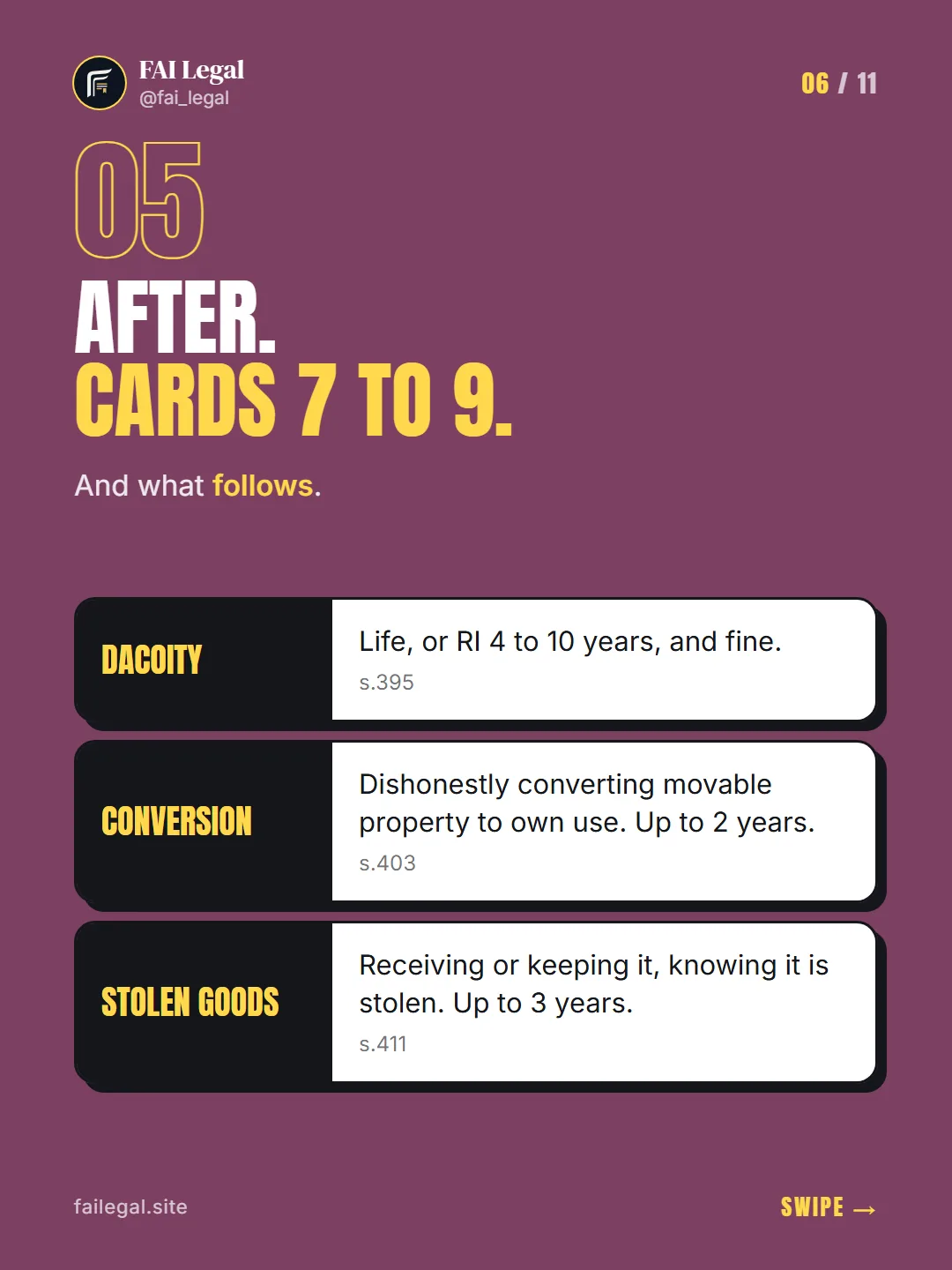
After. Cards 7 to 9.
And what follows.
- DacoityLife, or RI 4 to 10 years, and fine. (s.395)
- ConversionDishonestly converting movable property to own use. Up to 2 years. (s.403)
- Stolen goodsReceiving or keeping it, knowing it is stolen. Up to 3 years. (s.411)
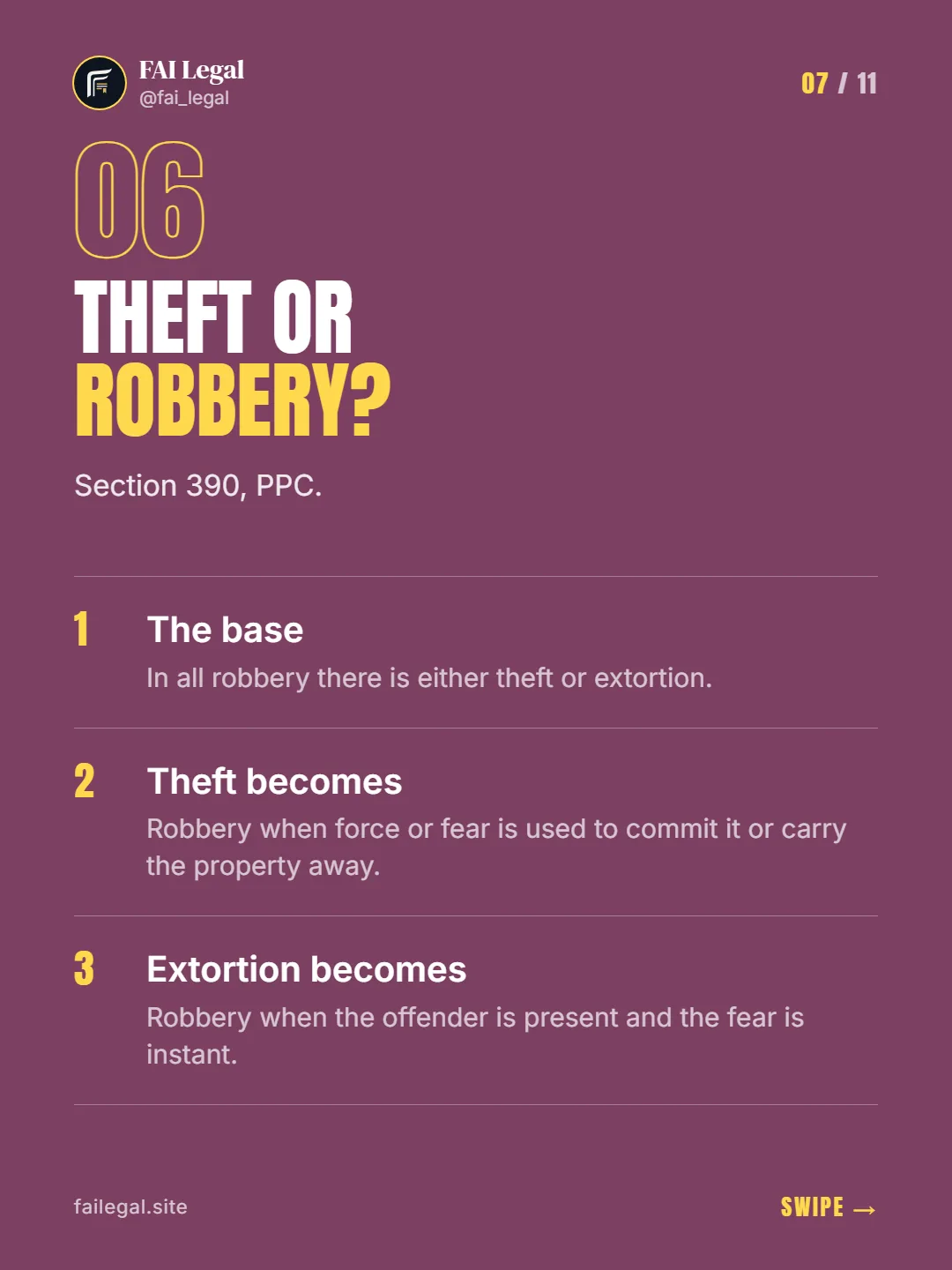
Theft or robbery?
Section 390, PPC.
- The baseIn all robbery there is either theft or extortion.
- Theft becomesRobbery when force or fear is used to commit it or carry the property away.
- Extortion becomesRobbery when the offender is present and the fear is instant.
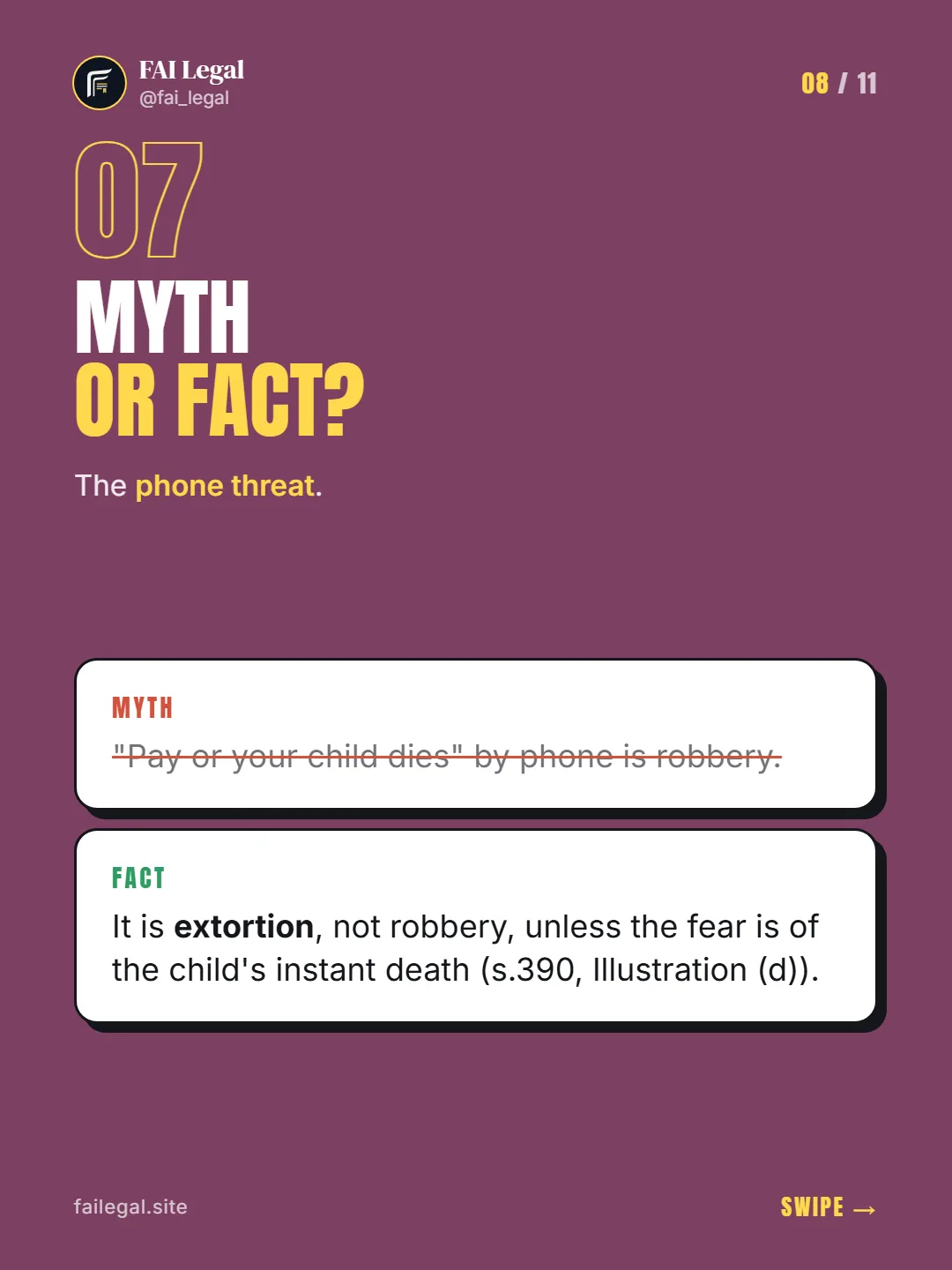
Myth or fact?
The phone threat.
- Myth: "Pay or your child dies" by phone is robbery.
- Fact: It is extortion, not robbery, unless the fear is of the child's instant death (s.390, Illustration (d)).
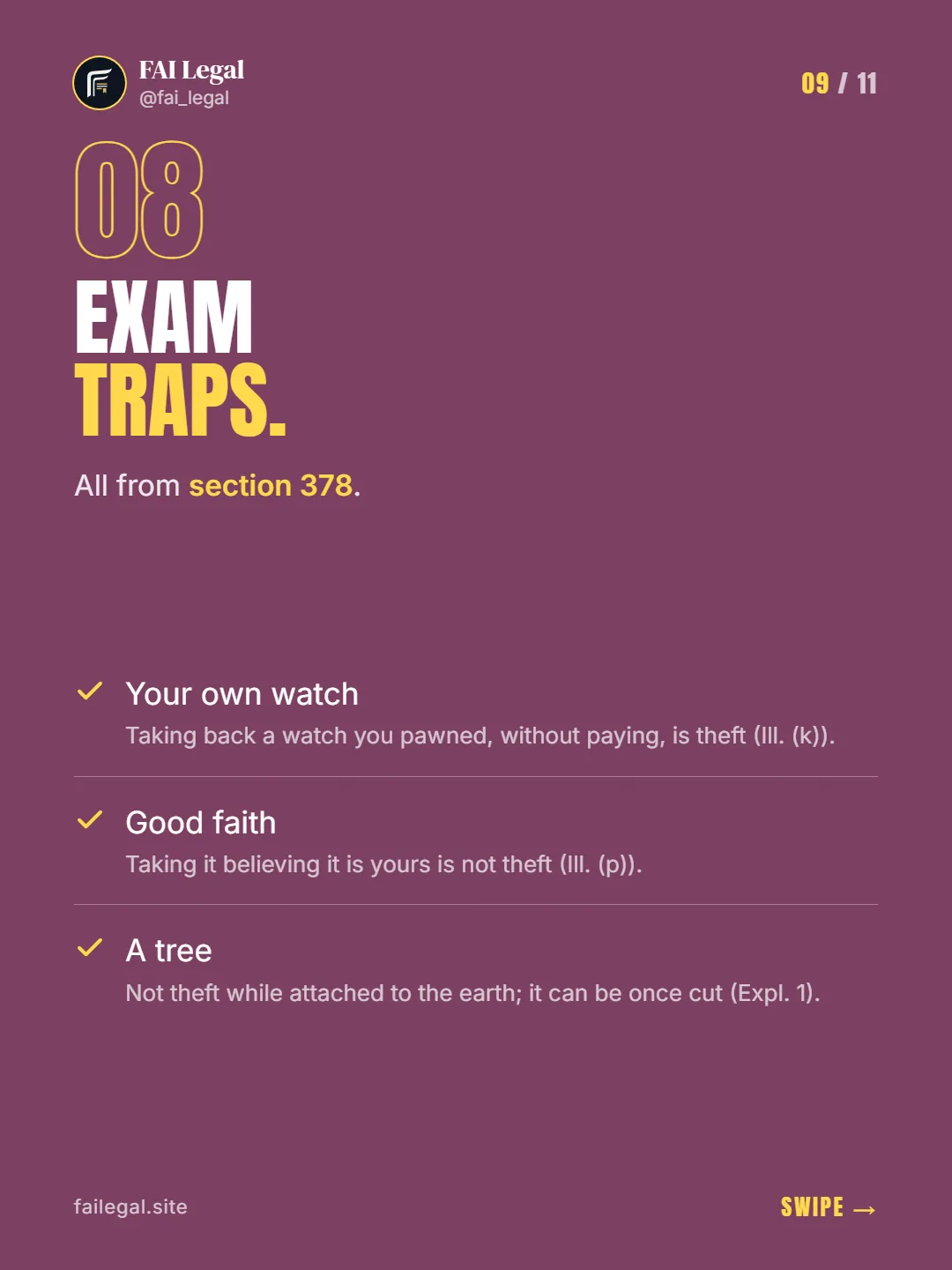
Exam traps.
All from section 378.
- Your own watchTaking back a watch you pawned, without paying, is theft (Ill. (k)).
- Good faithTaking it believing it is yours is not theft (Ill. (p)).
- A treeNot theft while attached to the earth; it can be once cut (Expl. 1).
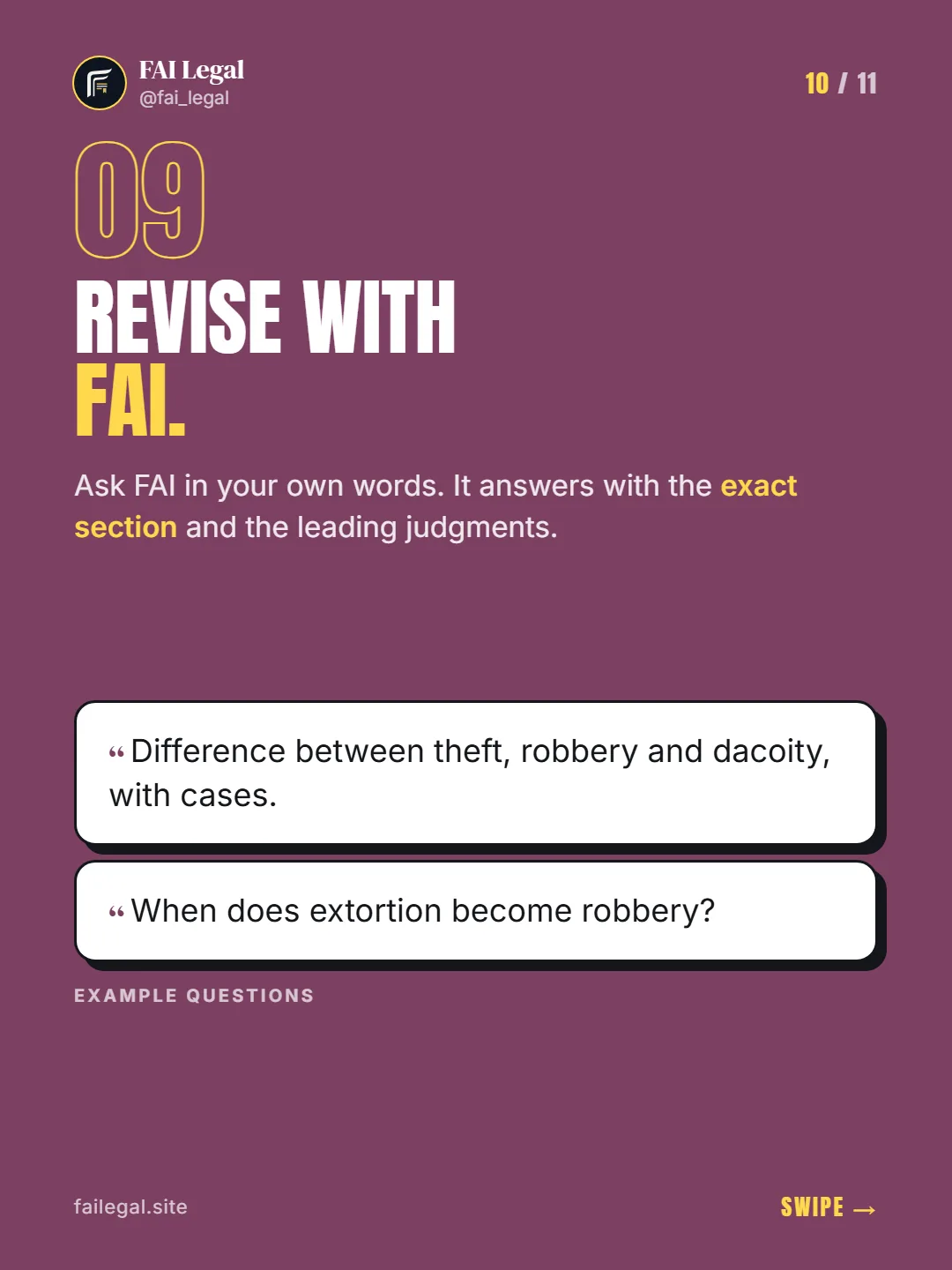
Revise with FAI.
Ask FAI in your own words. It answers with the exact section and the leading judgments.
- Difference between theft, robbery and dacoity, with cases.
- When does extortion become robbery?
Example questions
Sources
- Pakistan Penal Code, 1860 · Section 378, Illustration (g)
Theft Pakistan Code
Educational legal information, not legal advice. Every case turns on its own facts. Speak to a qualified lawyer about your situation. Review status: Pending advocate review. How we check.