Law study · For law students
Forgery in the PPC in 9 flashcards.
In short
Forgery is making a false document with intent to injure, support a claim or defraud (PPC s.463); a false document is defined in s.464; punishment is up to 2 years (s.465), up to 7 years for court records, public registers and powers of attorney (s.466), and life or up to 10 years for valuable securities and wills (s.467). Using a forged document as genuine is punished as forgery (s.471).
By the FAI Legal editorial desk · 12 October 2026 · 10 slides · 2 min read
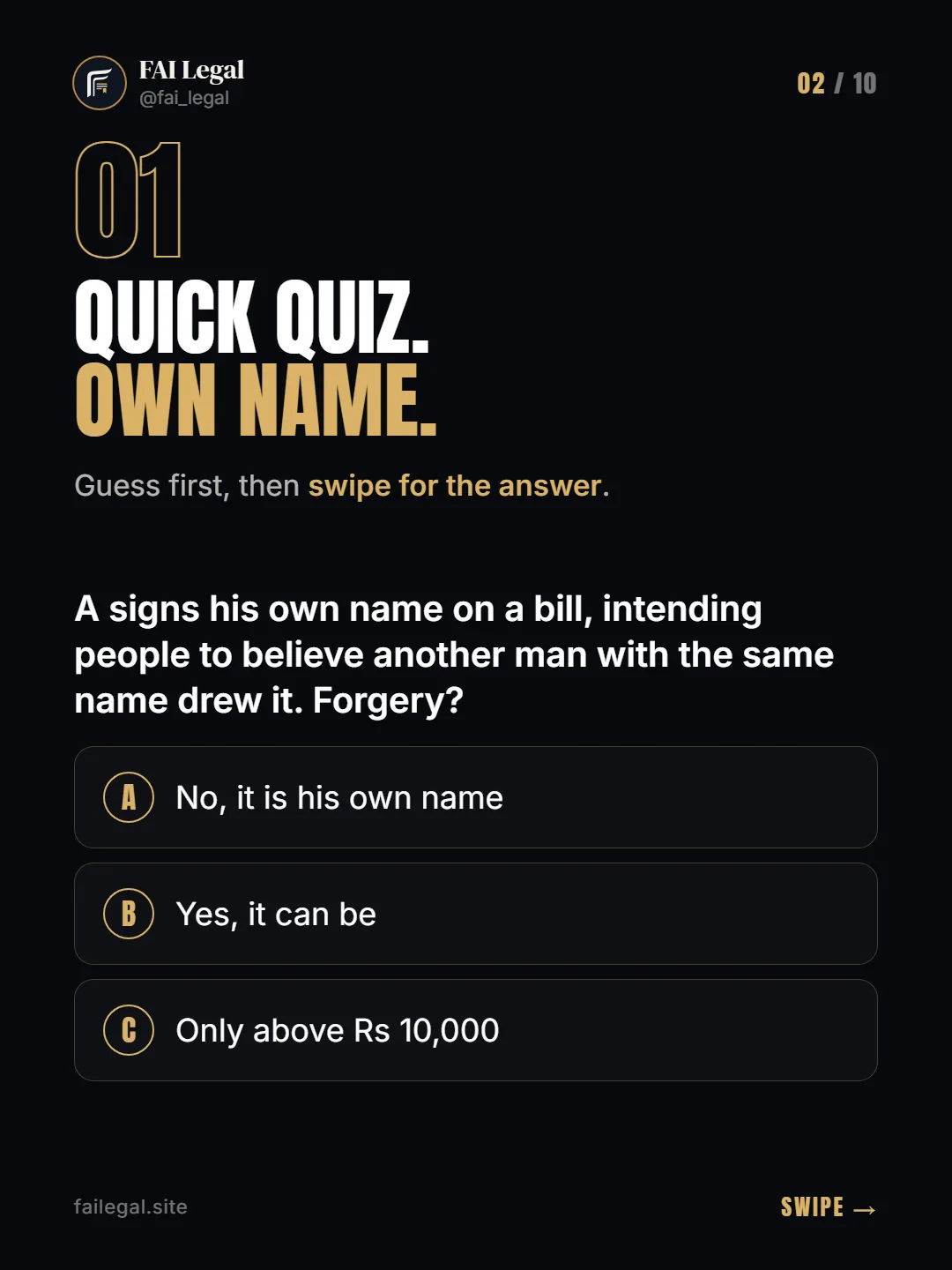
Quick quiz. Own name.
Guess first, then swipe for the answer.
- A. No, it is his own name
- B. Yes, it can be
- C. Only above Rs 10,000
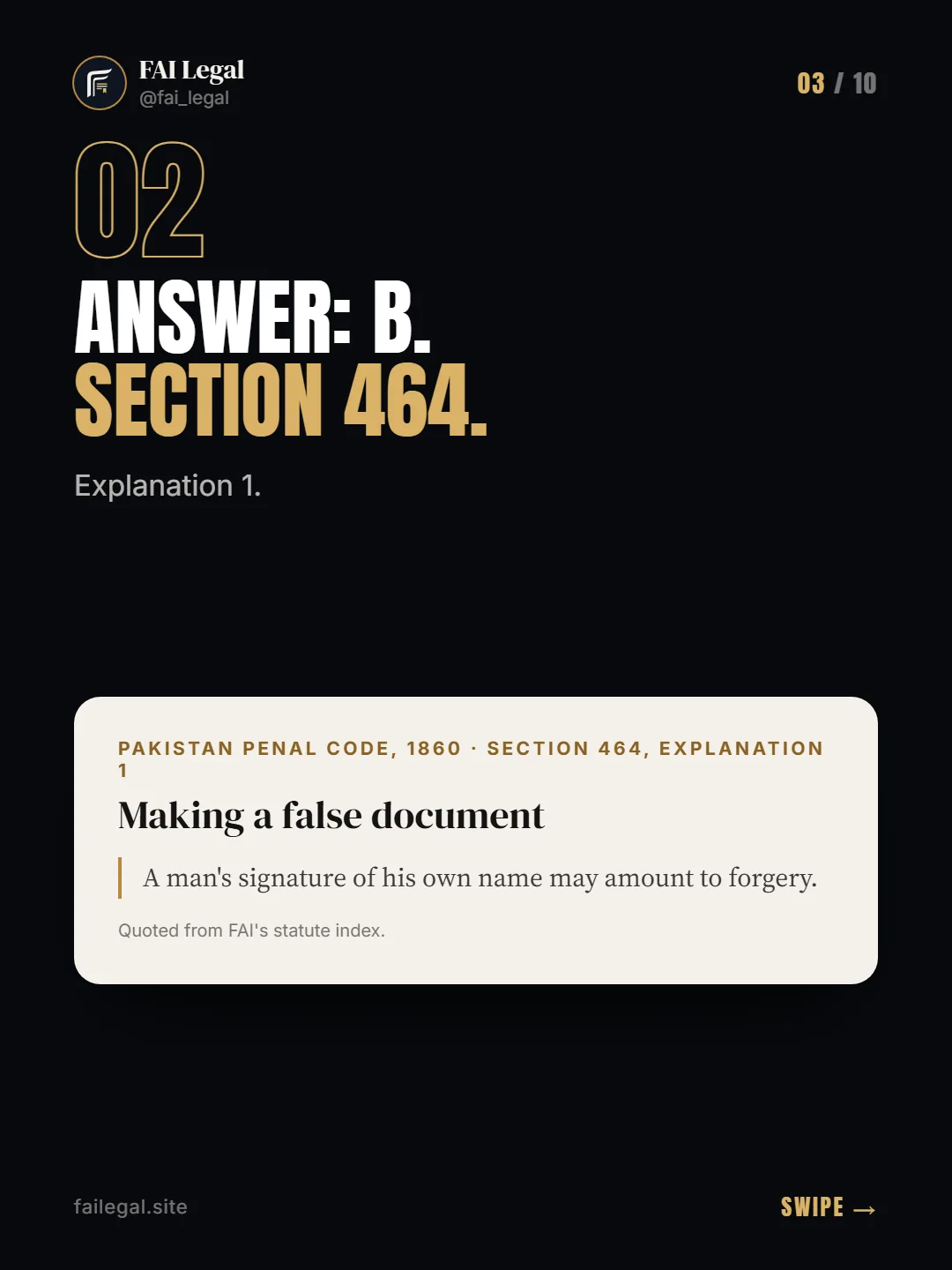
Answer: B. Section 464.
Explanation 1.
“A man's signature of his own name may amount to forgery.”
Pakistan Penal Code, 1860 · Section 464, Explanation 1, Making a false document
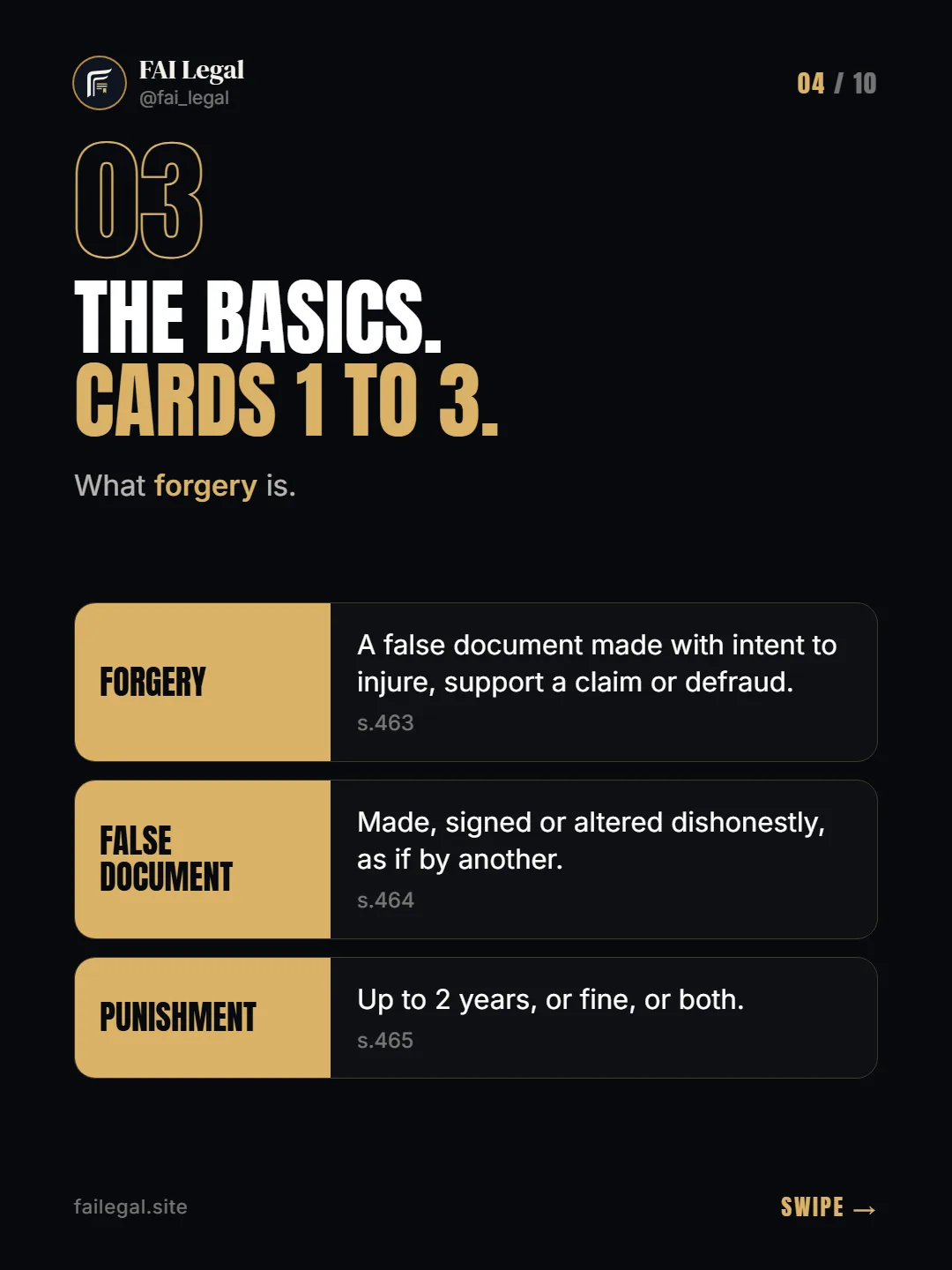
The basics. Cards 1 to 3.
What forgery is.
- ForgeryA false document made with intent to injure, support a claim or defraud. (s.463)
- False documentMade, signed or altered dishonestly, as if by another. (s.464)
- PunishmentUp to 2 years, or fine, or both. (s.465)
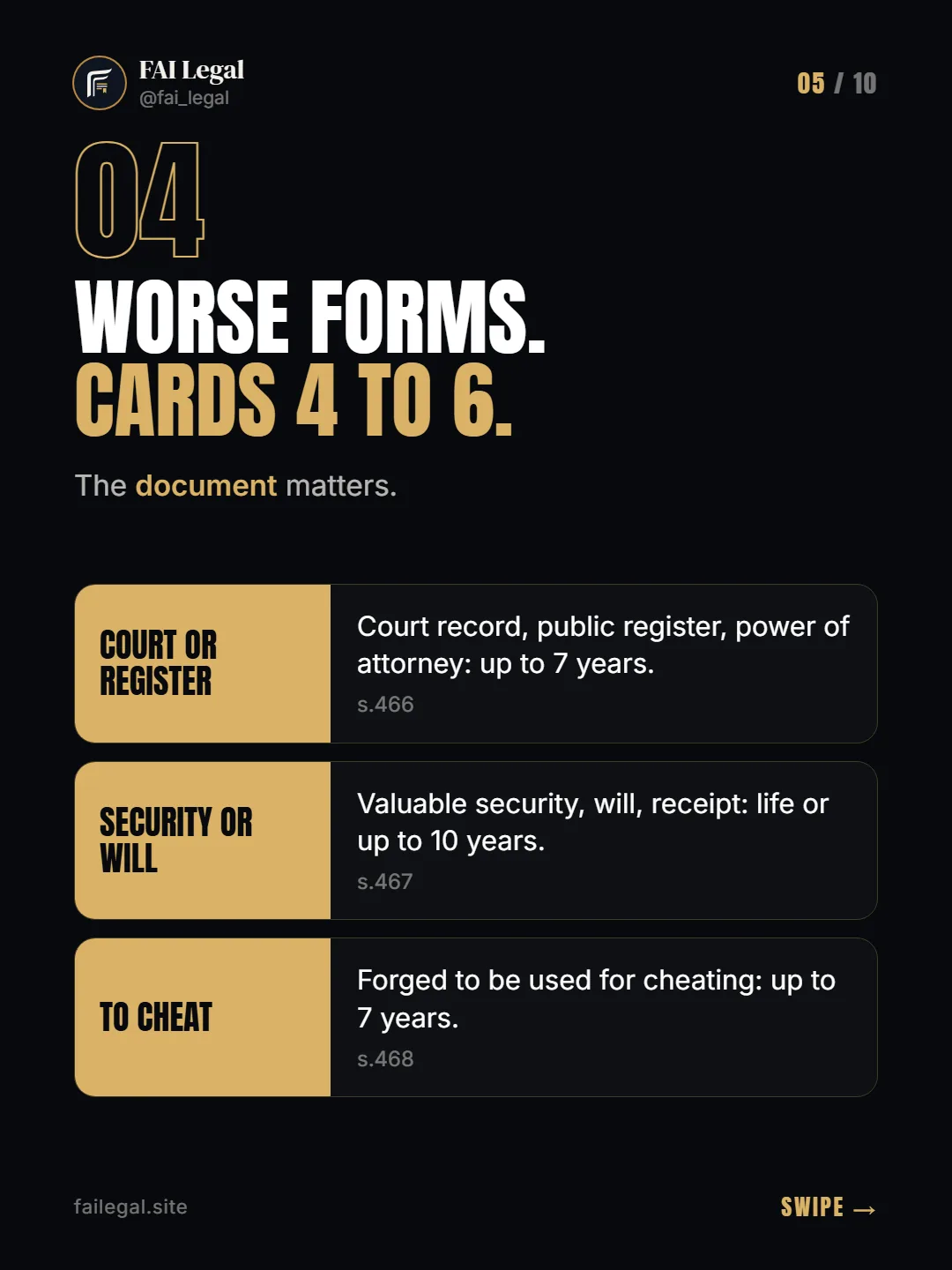
Worse forms. Cards 4 to 6.
The document matters.
- Court or registerCourt record, public register, power of attorney: up to 7 years. (s.466)
- Security or willValuable security, will, receipt: life or up to 10 years. (s.467)
- To cheatForged to be used for cheating: up to 7 years. (s.468)
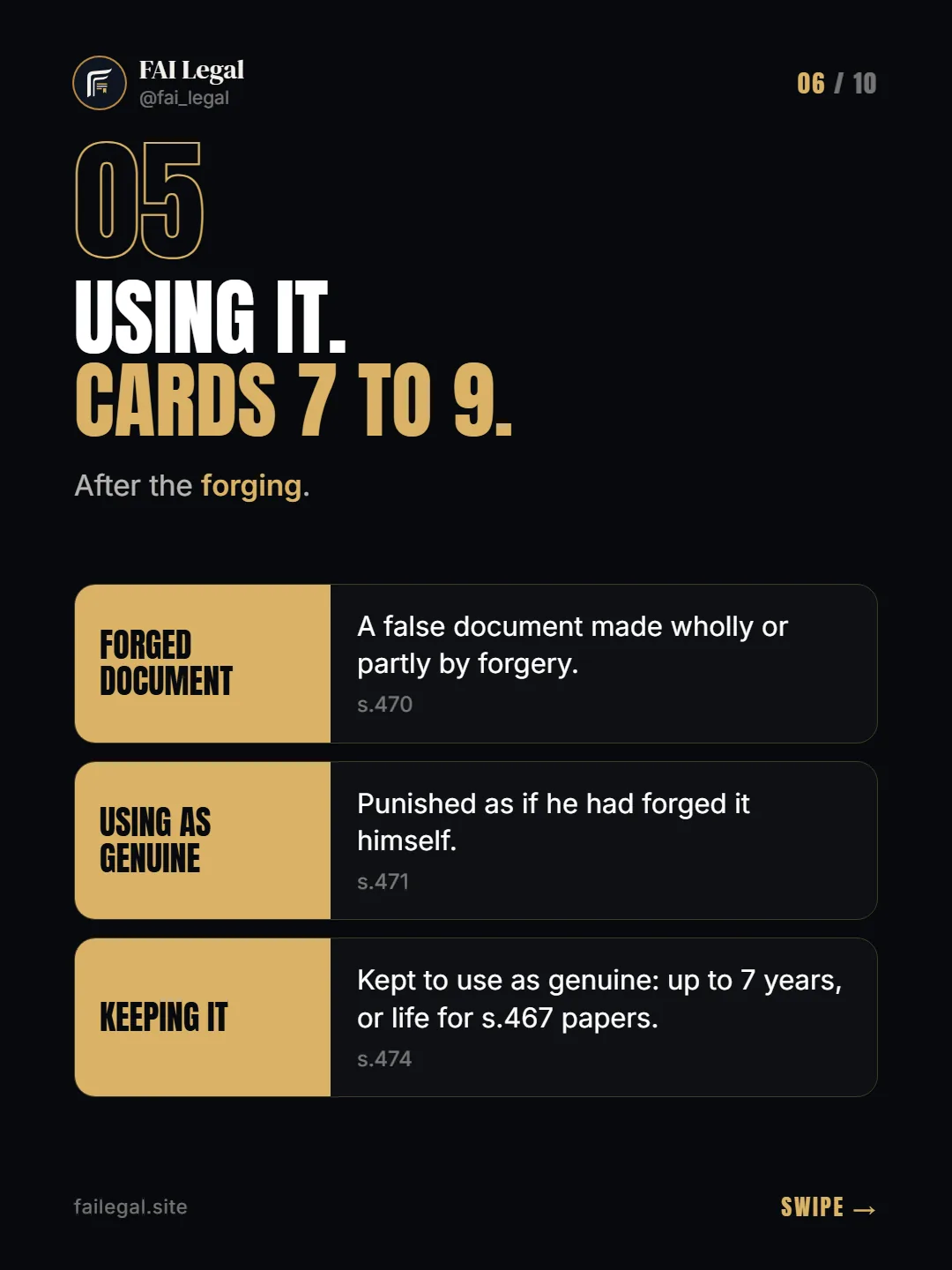
Using it. Cards 7 to 9.
After the forging.
- Forged documentA false document made wholly or partly by forgery. (s.470)
- Using as genuinePunished as if he had forged it himself. (s.471)
- Keeping itKept to use as genuine: up to 7 years, or life for s.467 papers. (s.474)
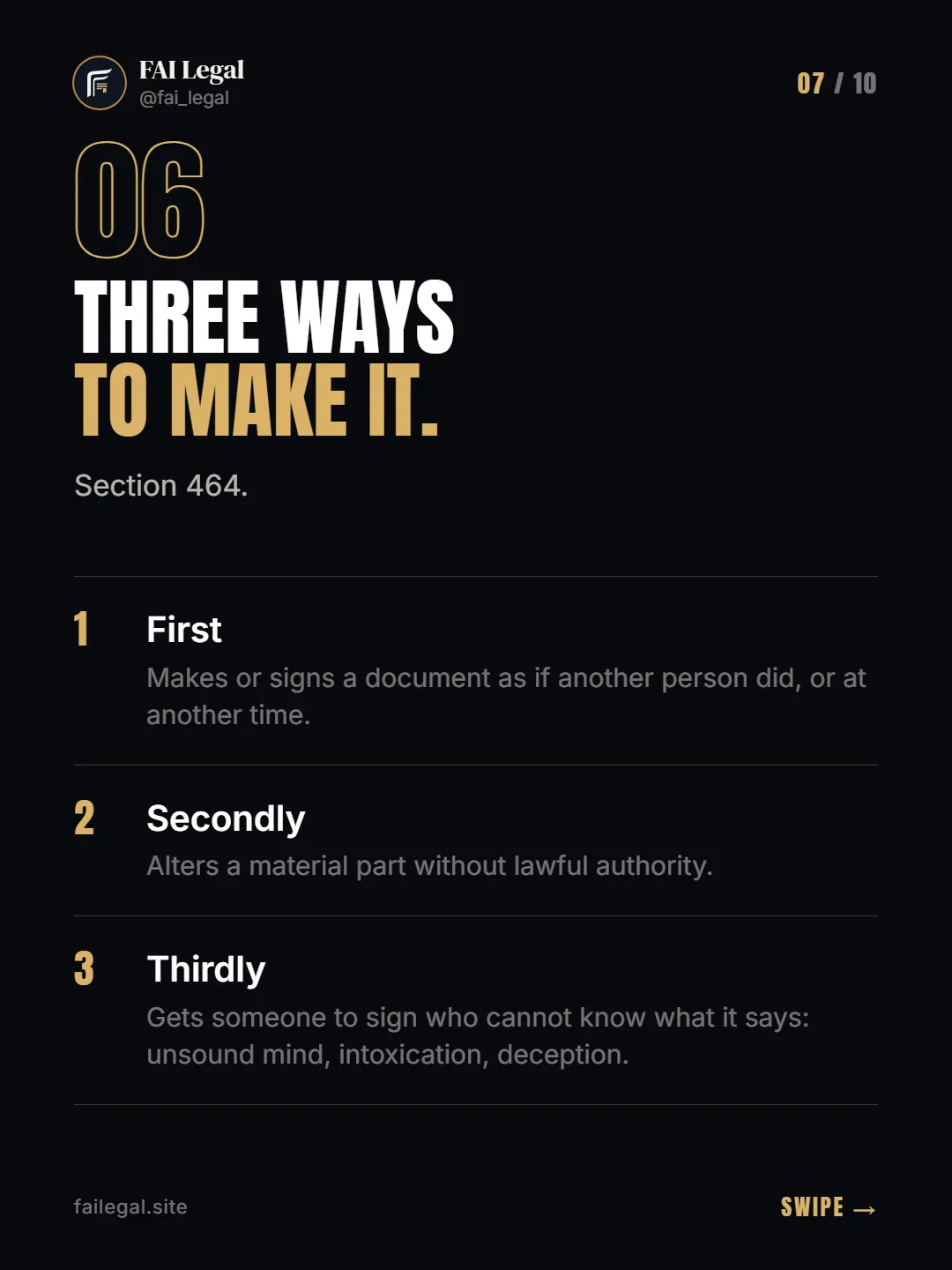
Three ways to make it.
Section 464.
- FirstMakes or signs a document as if another person did, or at another time.
- SecondlyAlters a material part without lawful authority.
- ThirdlyGets someone to sign who cannot know what it says: unsound mind, intoxication, deception.
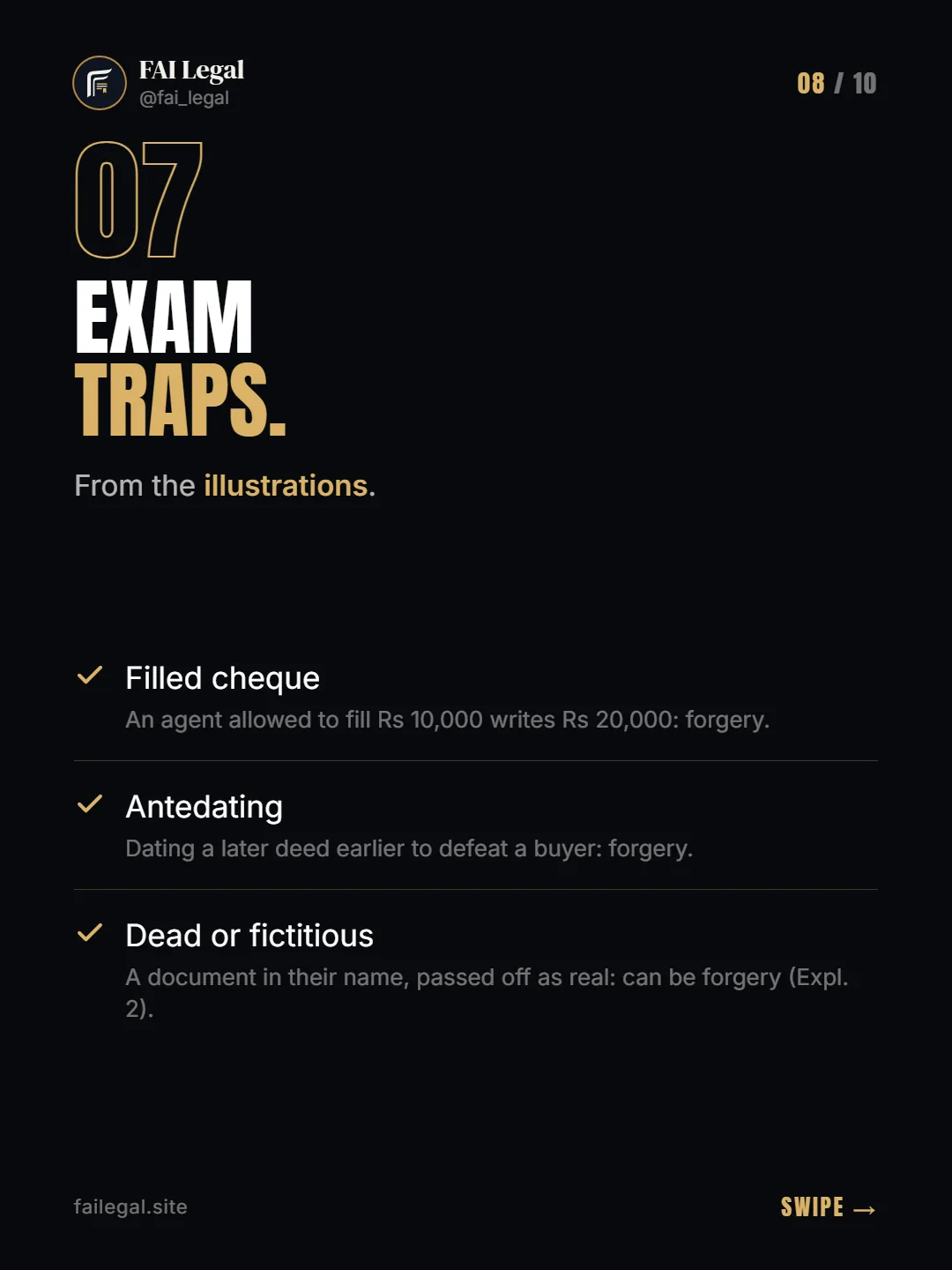
Exam traps.
From the illustrations.
- Filled chequeAn agent allowed to fill Rs 10,000 writes Rs 20,000: forgery.
- AntedatingDating a later deed earlier to defeat a buyer: forgery.
- Dead or fictitiousA document in their name, passed off as real: can be forgery (Expl. 2).
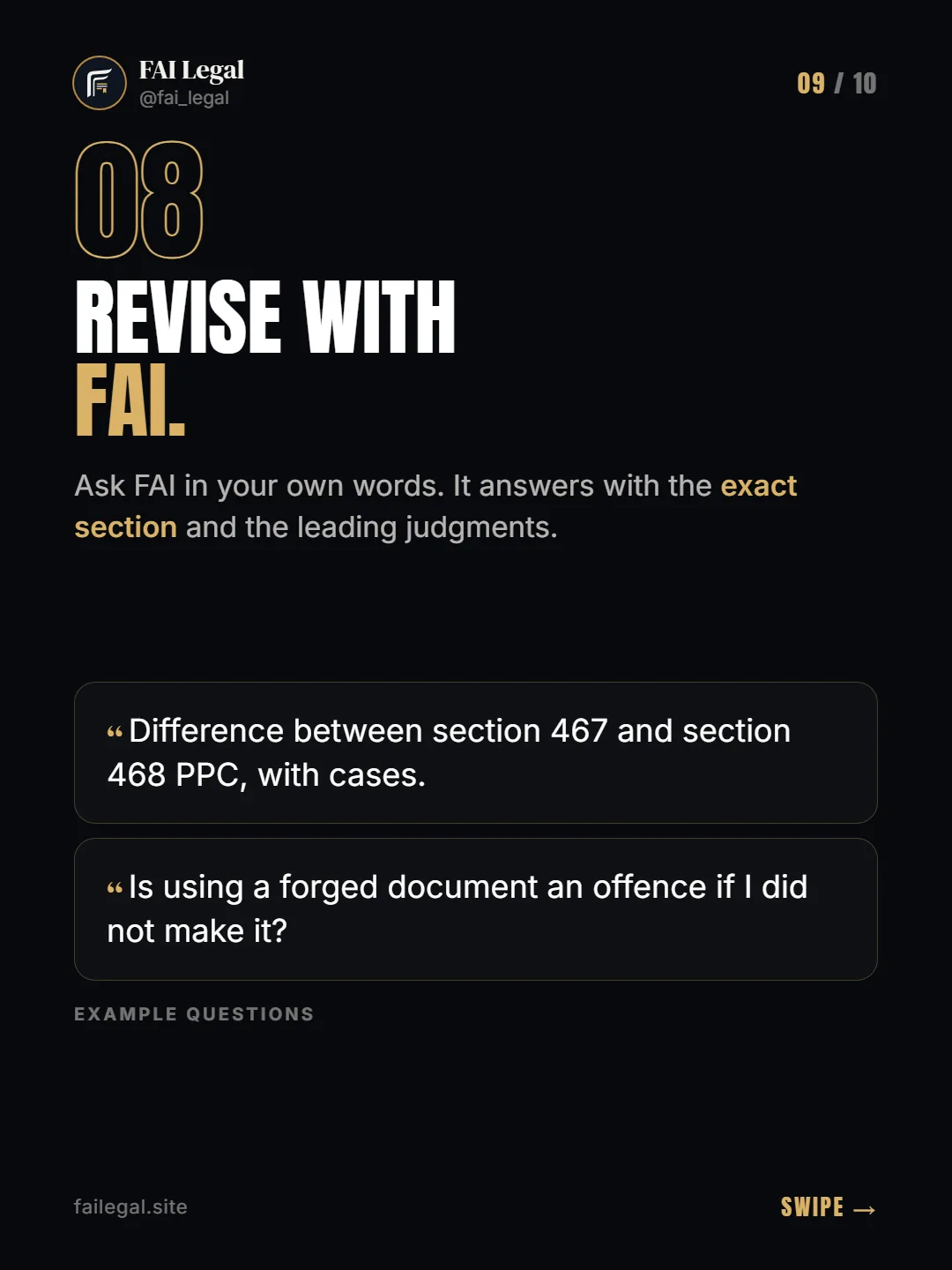
Revise with FAI.
Ask FAI in your own words. It answers with the exact section and the leading judgments.
- Difference between section 467 and section 468 PPC, with cases.
- Is using a forged document an offence if I did not make it?
Example questions
What this does not mean
- Not every false paper is forgery. Section 463 needs a false document made with intent to injure, to support a claim, or to defraud.
- Up to 2 years under s.465 is only the basic punishment. Court records, public registers and powers of attorney carry up to 7 years (s.466), and valuable securities and wills carry life or up to 10 years (s.467).
- Not making the document yourself does not keep you safe. Using a forged document as genuine is punished as if you had forged it (s.471).
Questions people ask
What is forgery under the PPC?
Under s.463 PPC, forgery is making a false document with intent to injure, to support a claim, or to defraud. Section 464 explains when a document is false.
What is the punishment for forgery in Pakistan?
The basic punishment is up to 2 years, or fine, or both (s.465). It rises to up to 7 years for court records, public registers and powers of attorney (s.466), and to life or up to 10 years for valuable securities, wills and receipts (s.467).
What is the difference between section 467 and section 468 PPC?
Section 467 turns on the kind of document: a valuable security, will or receipt, with life or up to 10 years. Section 468 turns on the purpose: a document forged to be used for cheating, with up to 7 years.
Can putting my own name on a document be forgery?
Yes, it can be. Explanation 1 to s.464 says a signature of your own name may amount to forgery.
Is using a forged document an offence if I did not make it?
Yes. Under s.471 a person who uses a forged document as genuine is punished as if he had forged it himself. Keeping one to use as genuine carries up to 7 years, or life for s.467 papers (s.474).
Sources
- Pakistan Penal Code, 1860 · Section 464, Explanation 1
Making a false document Pakistan Code
Educational legal information, not legal advice. Every case turns on its own facts. Speak to a qualified lawyer about your situation. Review status: Pending advocate review. How we check.