Law study · For law students
Limitation articles in 9 flashcards.
In short
Articles 10 (pre-emption, one year), 91 (cancellation, three years), 113 (specific performance, three years), 120 (residuary suits, six years), 142 (possession, twelve years), 156 (appeal to the High Court, ninety days), 164 (ex parte decree, thirty days), 181 (residuary applications, three years) and section 5 (condoning delay).
By the FAI Legal editorial desk · 12 October 2026 · 10 slides · 2 min read
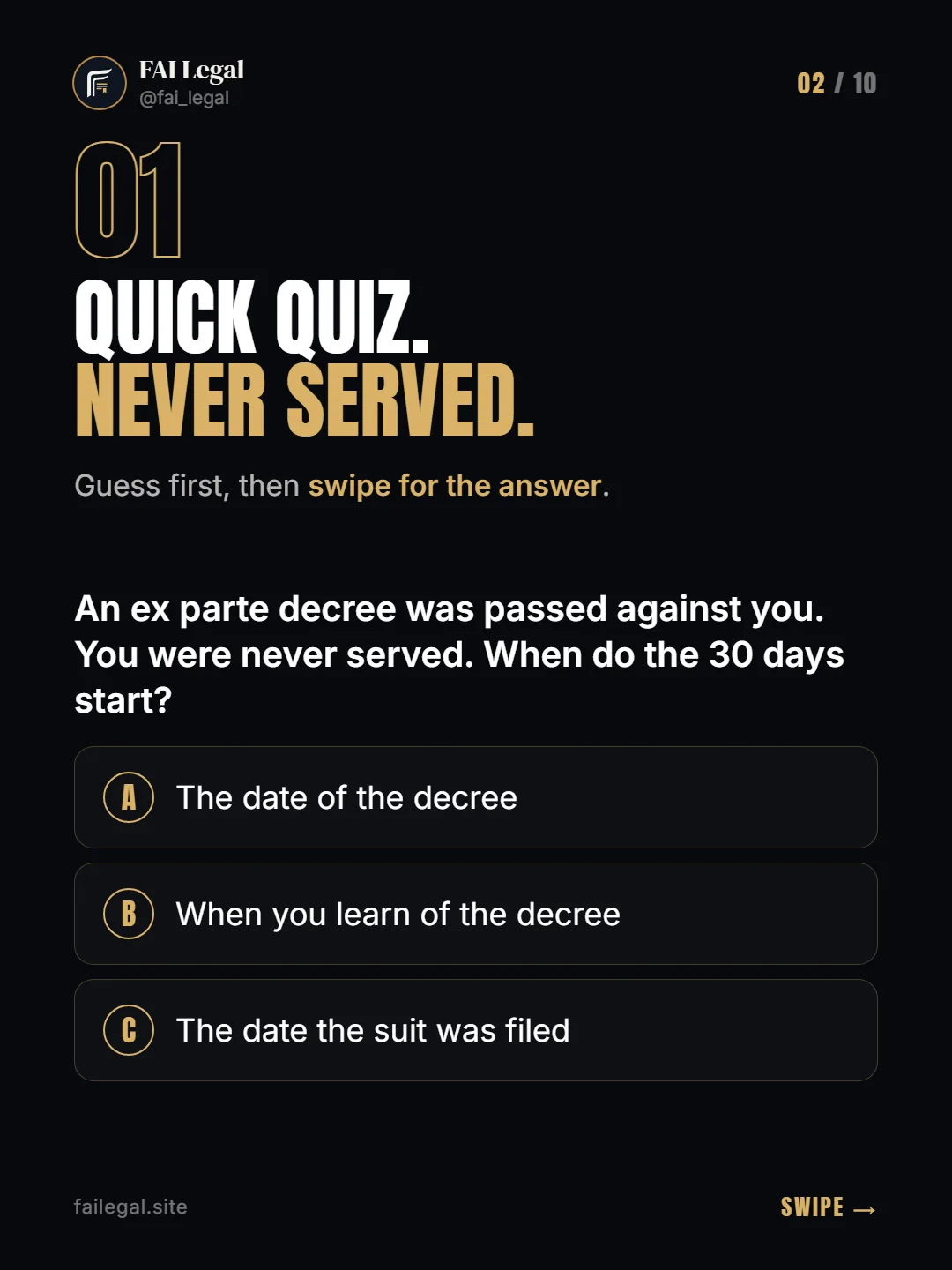

Quick quiz. Never served.
Guess first, then swipe for the answer.
- A. The date of the decree
- B. When you learn of the decree
- C. The date the suit was filed
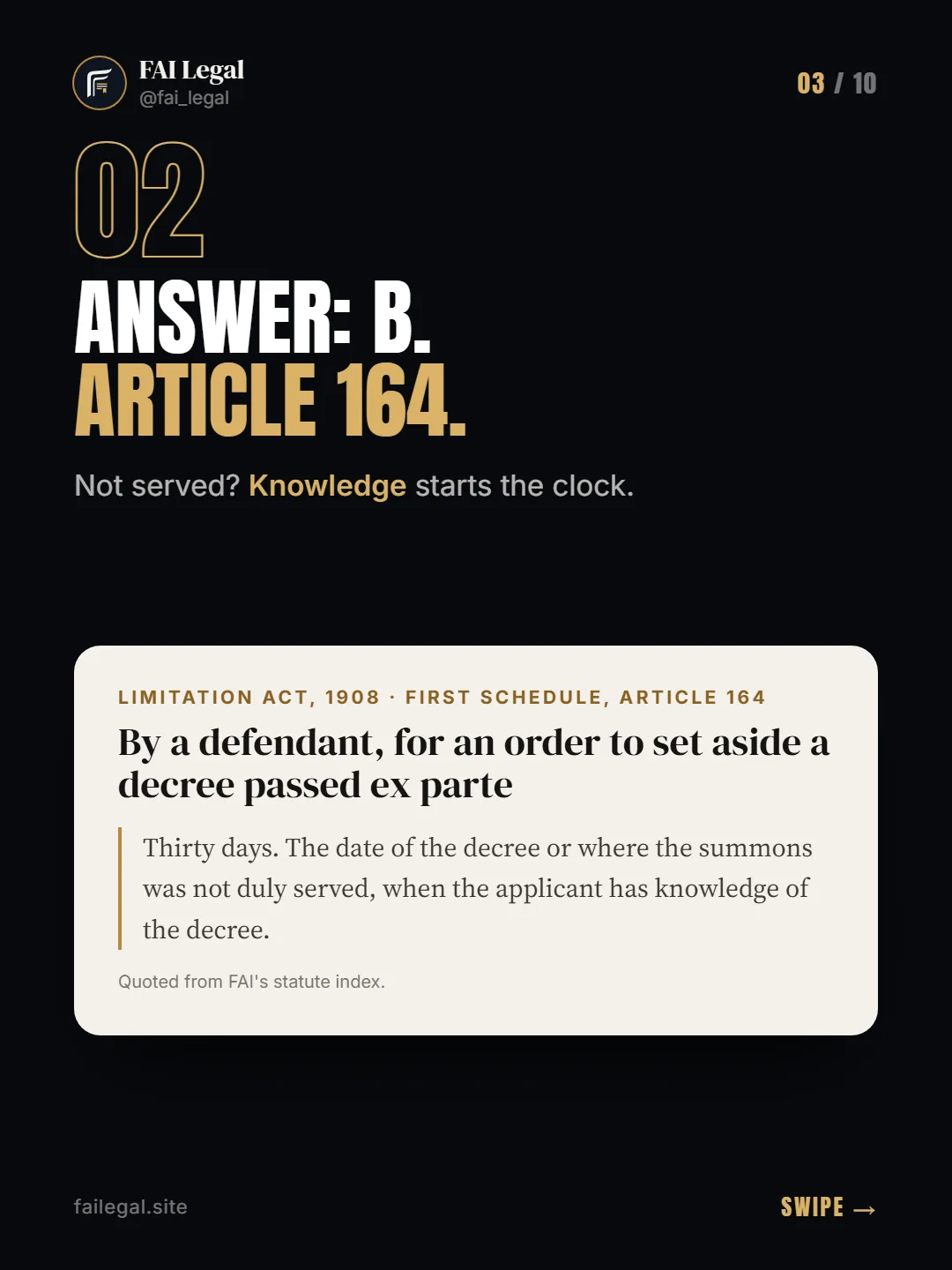
Answer: B. Article 164.
Not served? Knowledge starts the clock.
“Thirty days. The date of the decree or where the summons was not duly served, when the applicant has knowledge of the decree.”
Limitation Act, 1908 · First Schedule, Article 164, By a defendant, for an order to set aside a decree passed ex parte
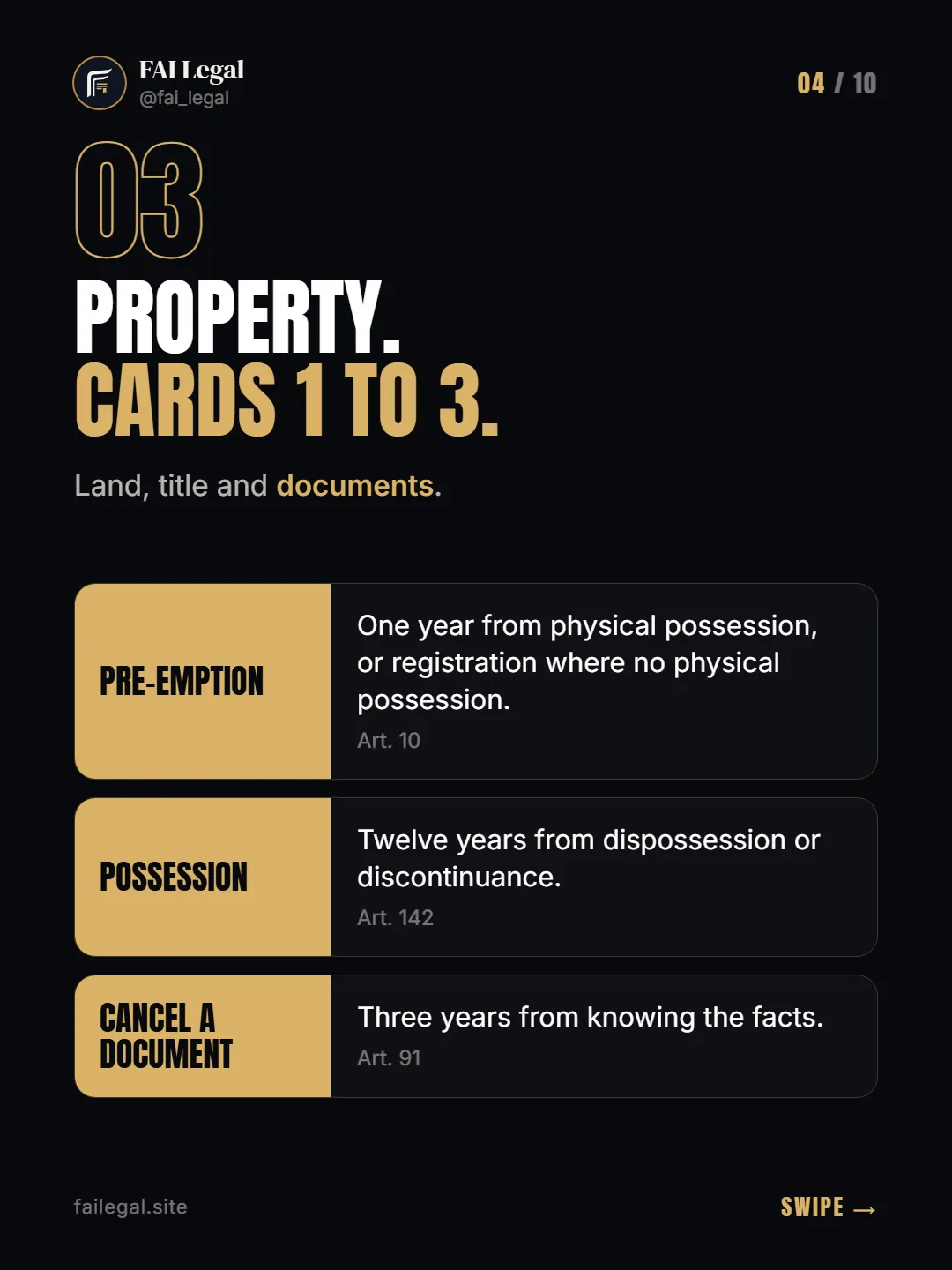
Property. Cards 1 to 3.
Land, title and documents.
- Pre-emptionOne year from physical possession, or registration where no physical possession. (Art. 10)
- PossessionTwelve years from dispossession or discontinuance. (Art. 142)
- Cancel a documentThree years from knowing the facts. (Art. 91)
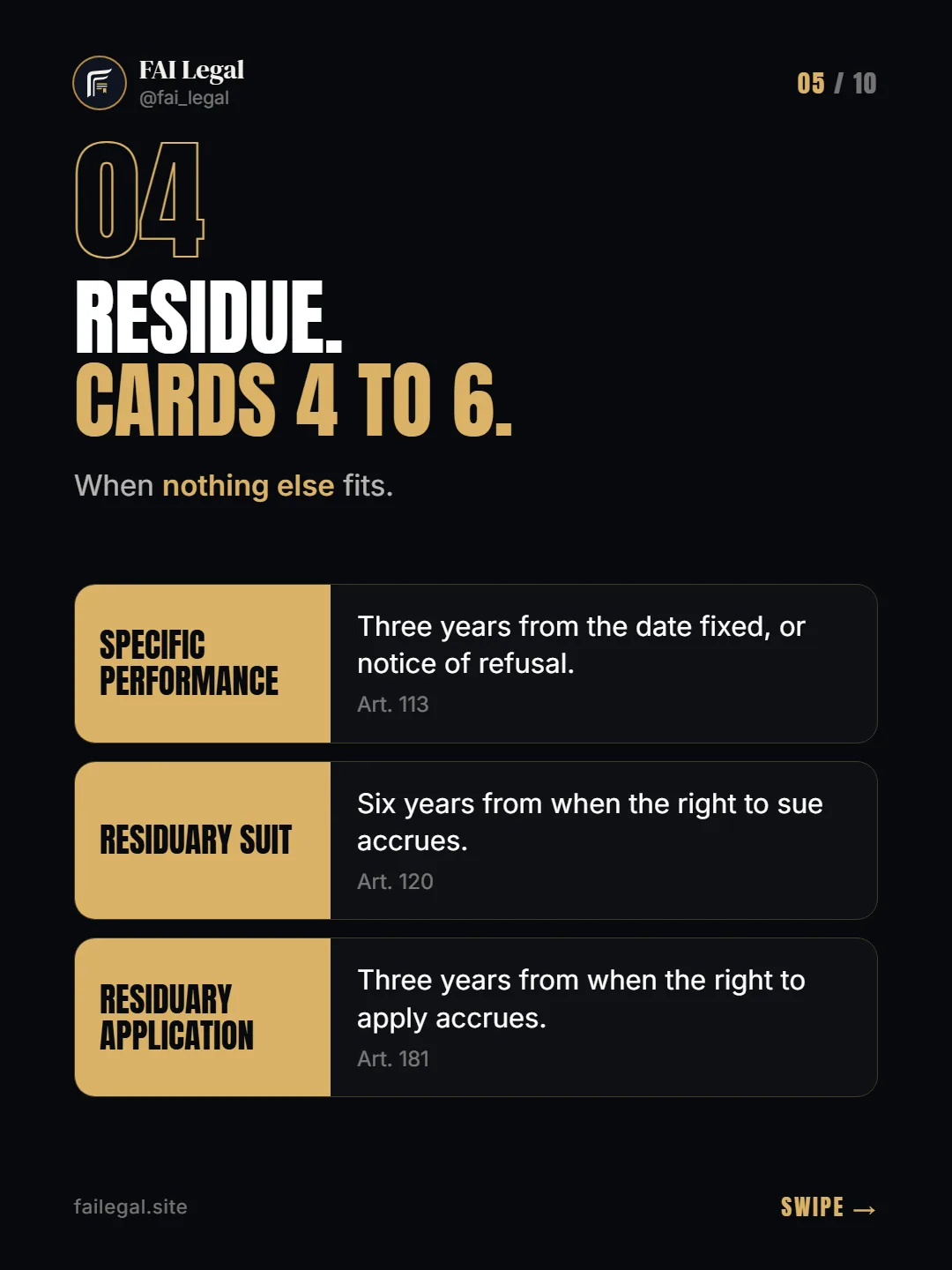
Residue. Cards 4 to 6.
When nothing else fits.
- Specific performanceThree years from the date fixed, or notice of refusal. (Art. 113)
- Residuary suitSix years from when the right to sue accrues. (Art. 120)
- Residuary applicationThree years from when the right to apply accrues. (Art. 181)
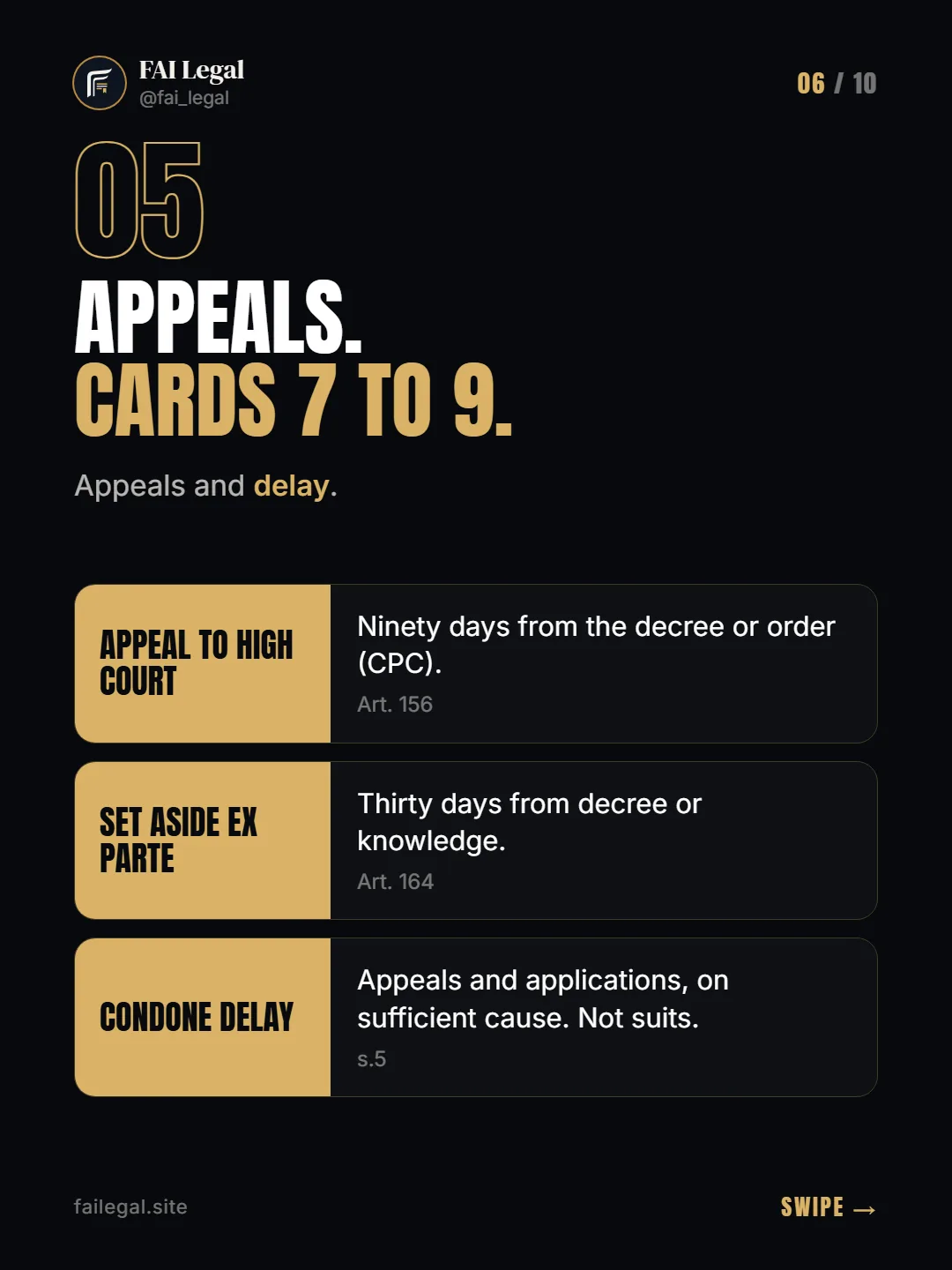
Appeals. Cards 7 to 9.
Appeals and delay.
- Appeal to High CourtNinety days from the decree or order (CPC). (Art. 156)
- Set aside ex parteThirty days from decree or knowledge. (Art. 164)
- Condone delayAppeals and applications, on sufficient cause. Not suits. (s.5)
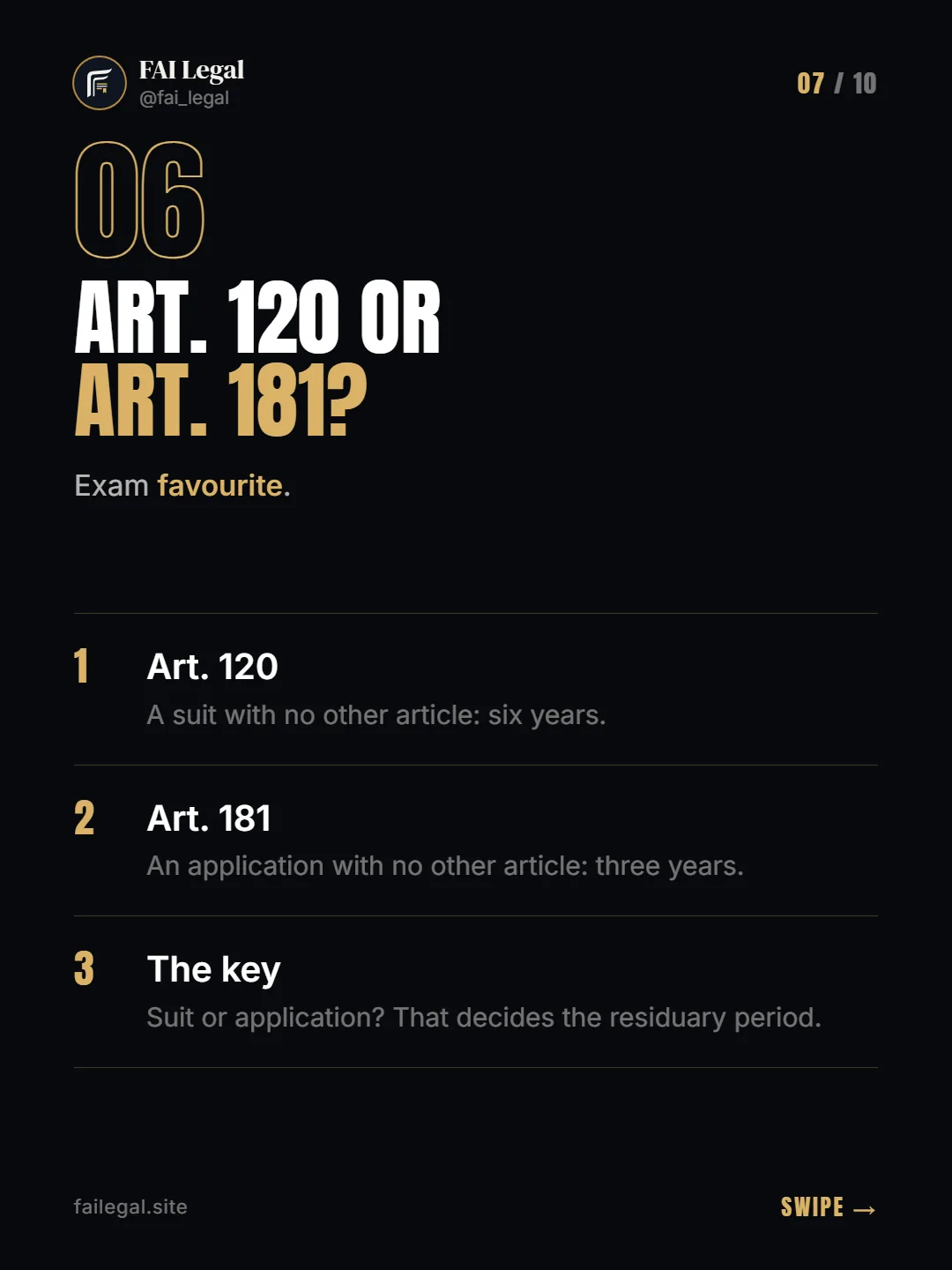
Art. 120 or Art. 181?
Exam favourite.
- Art. 120A suit with no other article: six years.
- Art. 181An application with no other article: three years.
- The keySuit or application? That decides the residuary period.
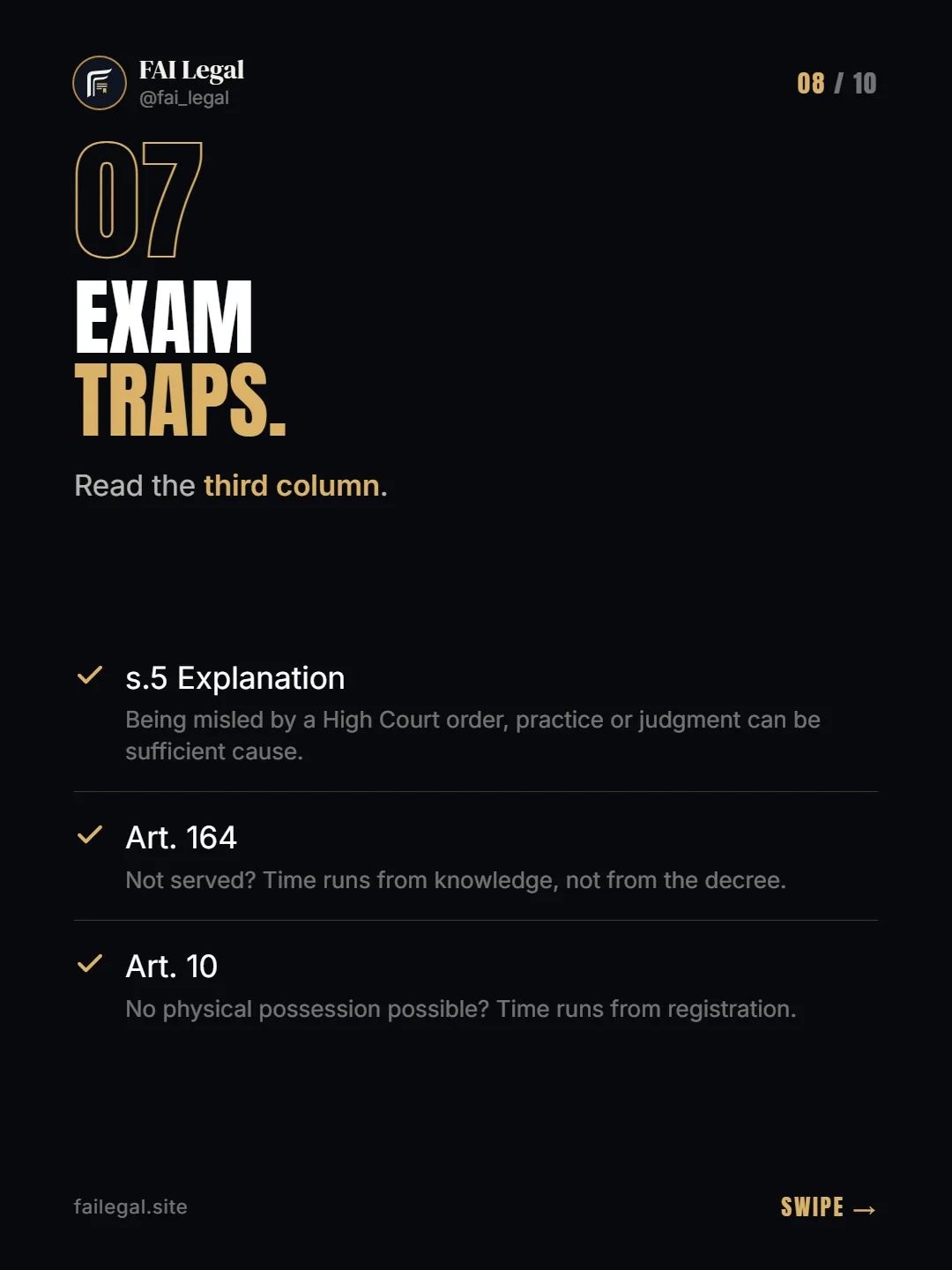
Exam traps.
Read the third column.
- s.5 ExplanationBeing misled by a High Court order, practice or judgment can be sufficient cause.
- Art. 164Not served? Time runs from knowledge, not from the decree.
- Art. 10No physical possession possible? Time runs from registration.
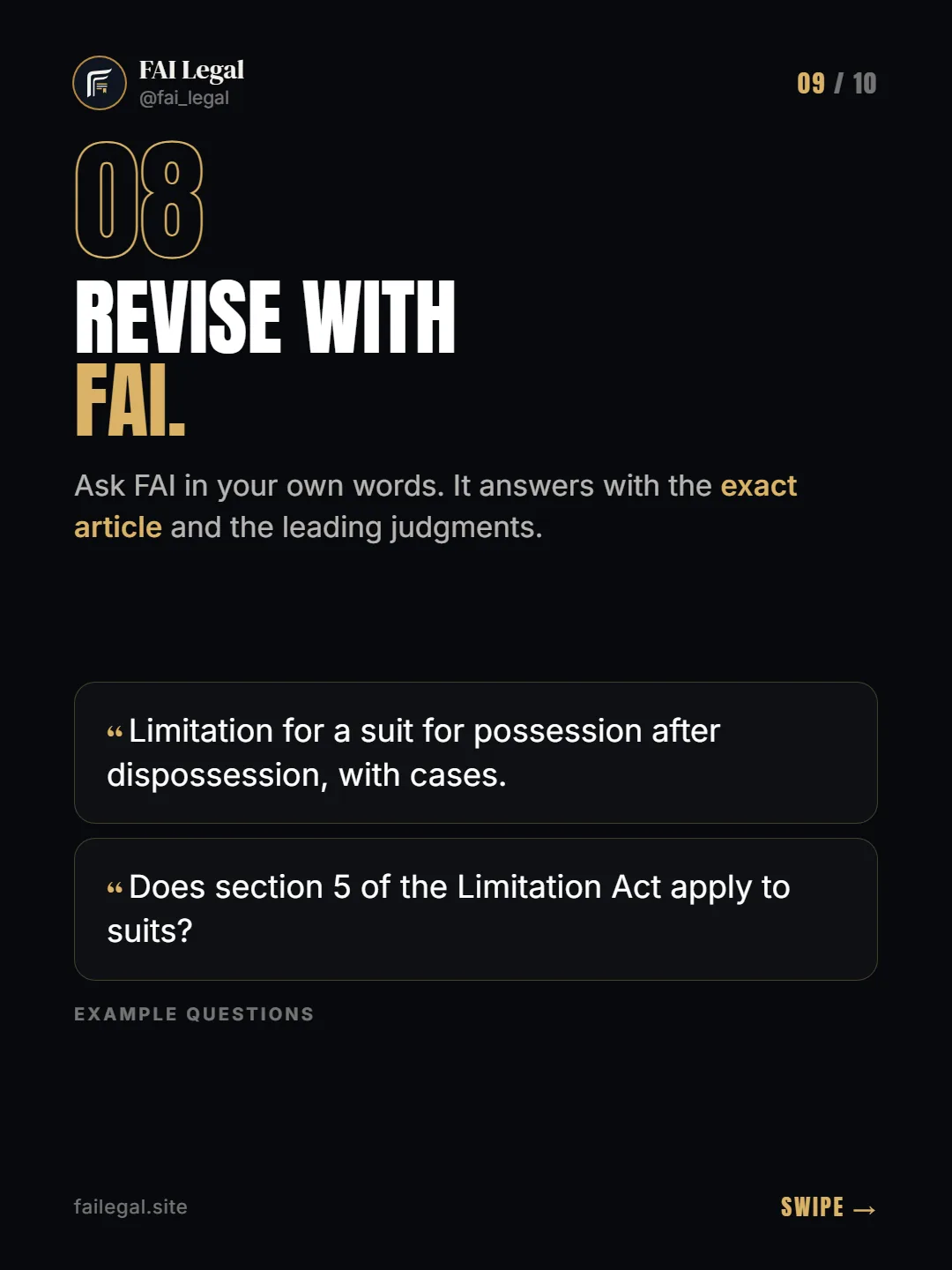
Revise with FAI.
Ask FAI in your own words. It answers with the exact article and the leading judgments.
- Limitation for a suit for possession after dispossession, with cases.
- Does section 5 of the Limitation Act apply to suits?
Example questions
What this does not mean
- Section 5 lets a court condone delay in appeals and applications on sufficient cause. It does not apply to suits.
- The residuary periods apply only when no other article fits: six years for a suit (Art. 120) and three years for an application (Art. 181).
- Under Art. 164 time runs from knowledge only where the summons was not duly served. Otherwise it runs from the date of the decree.
Questions people ask
What is the time limit to set aside an ex parte decree in Pakistan?
Thirty days under Art. 164. Time runs from the date of the decree, or from when you learn of it if the summons was not duly served.
What is the limitation for a suit for possession after dispossession?
Twelve years from dispossession or discontinuance of possession (Art. 142).
What is the limitation period for a specific performance suit?
Three years from the date fixed for performance, or from notice of refusal (Art. 113).
Does section 5 of the Limitation Act apply to suits?
No. Section 5 covers appeals and applications on sufficient cause, not suits. Its Explanation says being misled by a High Court order, practice or judgment can be sufficient cause.
What is the time limit for an appeal to the High Court?
Ninety days from the decree or order under the CPC (Art. 156).
Sources
- Limitation Act, 1908 · First Schedule, Article 164
By a defendant, for an order to set aside a decree passed ex parte Pakistan Code
Educational legal information, not legal advice. Every case turns on its own facts. Speak to a qualified lawyer about your situation. Review status: Pending advocate review. How we check.