Law study · For law students
CPC sections in 9 flashcards.
In short
Sections 9, 10, 11, 12, 15, 114, 115 and 151 of the Code of Civil Procedure 1908: jurisdiction, res sub judice, res judicata, the fraud application, review, revision and inherent powers.
By the FAI Legal editorial desk · 12 October 2026 · 11 slides · 2 min read
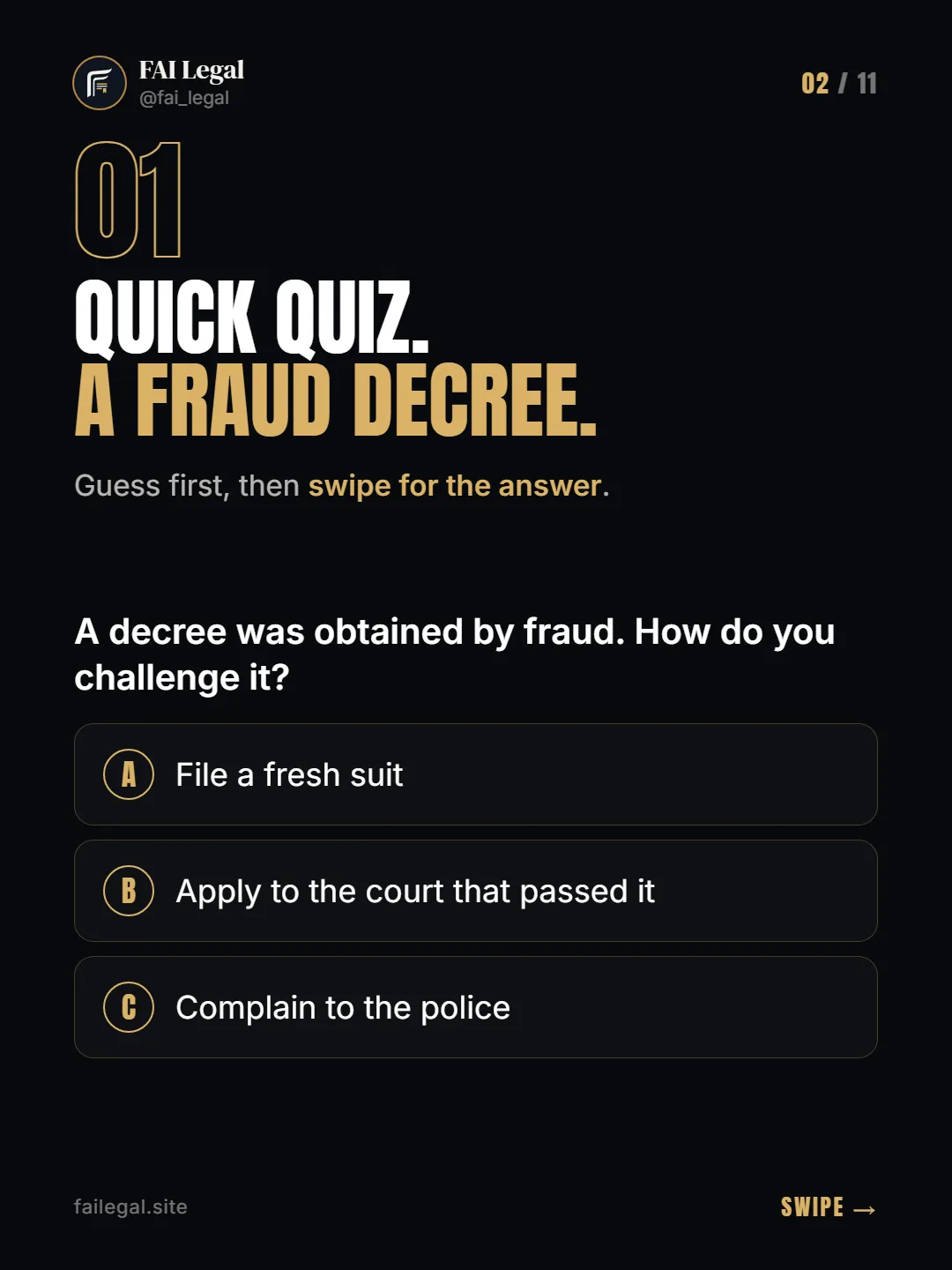
Quick quiz. A fraud decree.
Guess first, then swipe for the answer.
- A. File a fresh suit
- B. Apply to the court that passed it
- C. Complain to the police
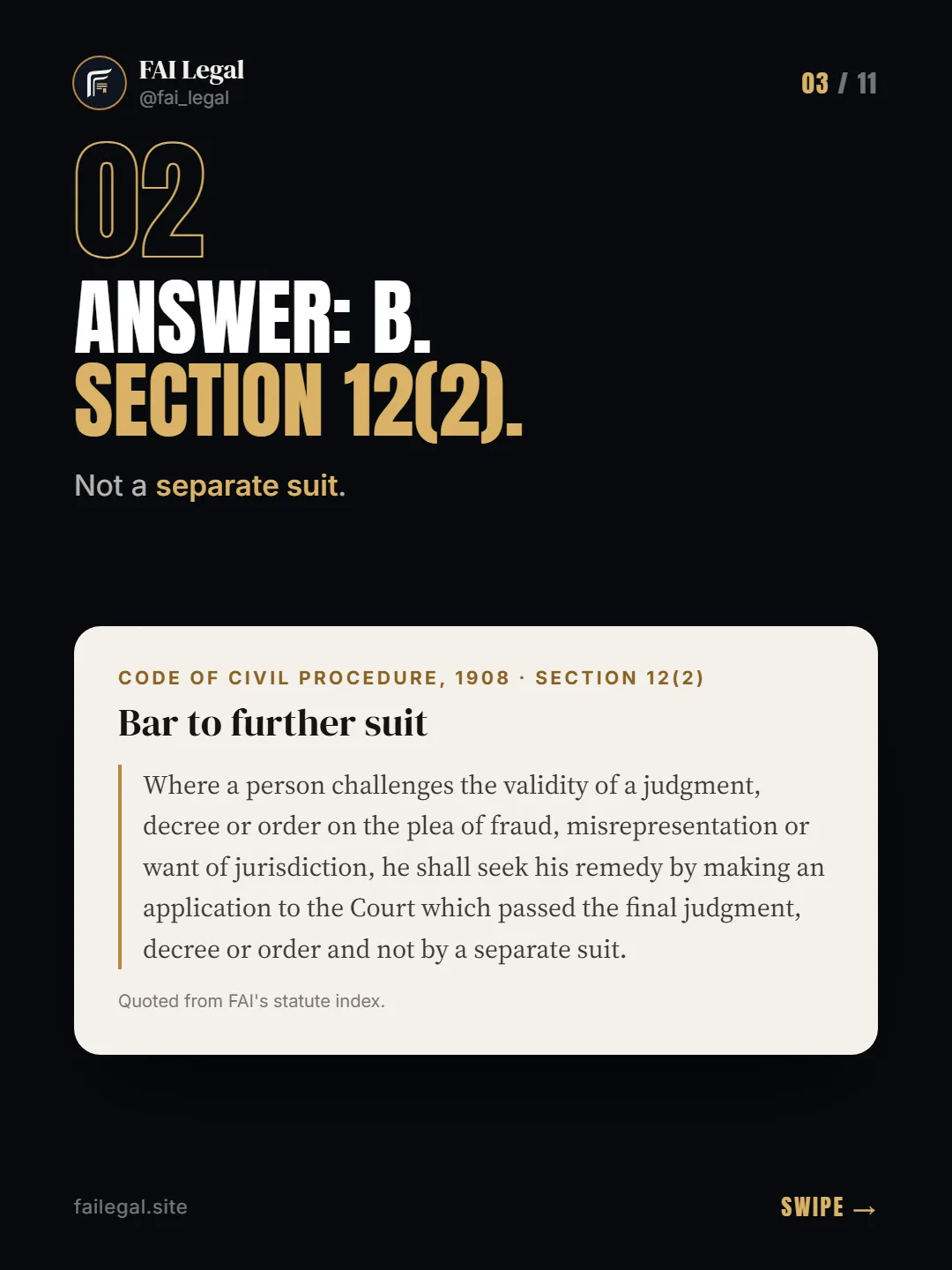
Answer: B. Section 12(2).
Not a separate suit.
“Where a person challenges the validity of a judgment, decree or order on the plea of fraud, misrepresentation or want of jurisdiction, he shall seek his remedy by making an application to the Court which passed the final judgment, decree or order and not by a separate suit.”
Code of Civil Procedure, 1908 · Section 12(2), Bar to further suit
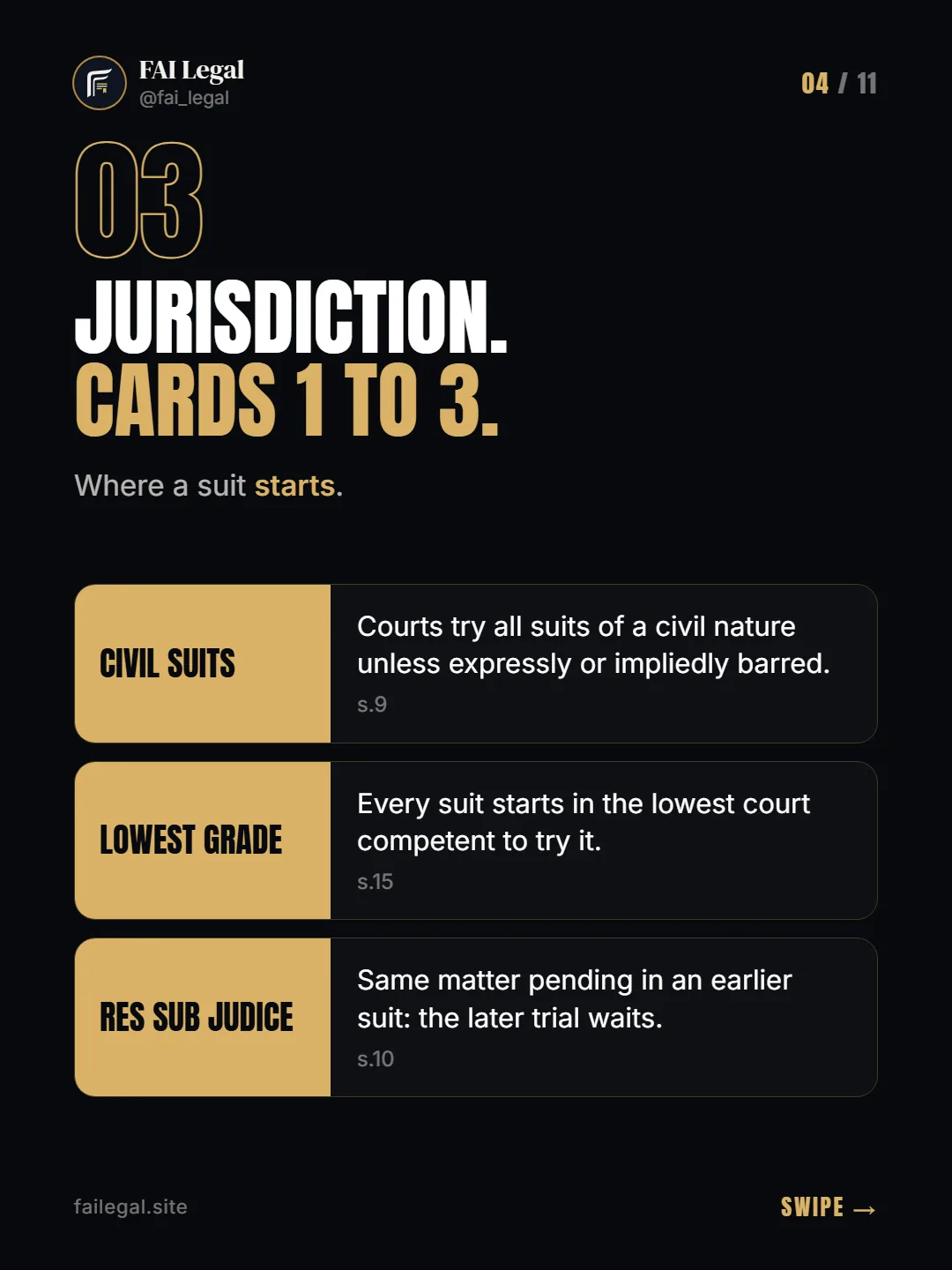
Jurisdiction. Cards 1 to 3.
Where a suit starts.
- Civil suitsCourts try all suits of a civil nature unless expressly or impliedly barred. (s.9)
- Lowest gradeEvery suit starts in the lowest court competent to try it. (s.15)
- Res sub judiceSame matter pending in an earlier suit: the later trial waits. (s.10)
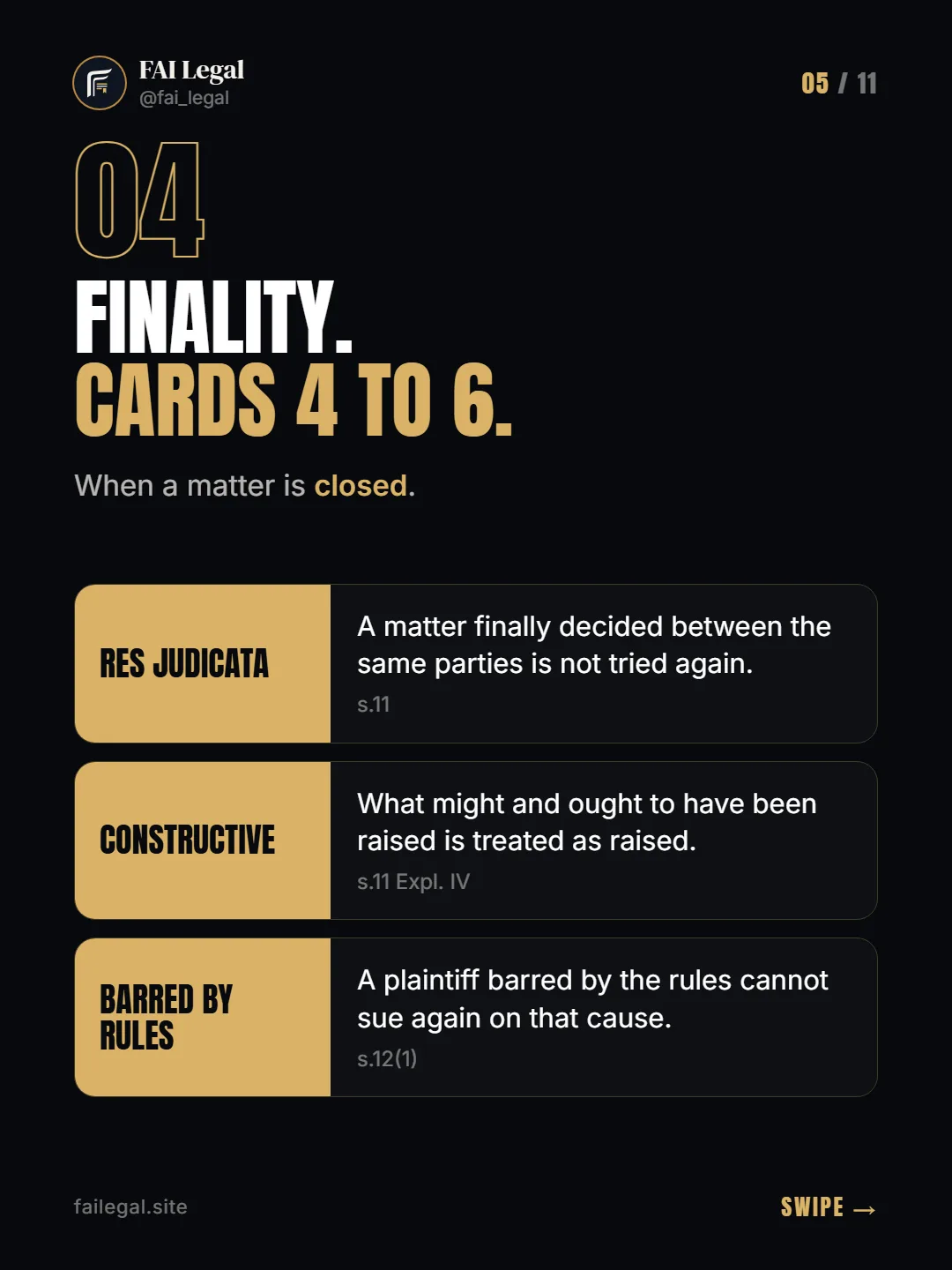
Finality. Cards 4 to 6.
When a matter is closed.
- Res judicataA matter finally decided between the same parties is not tried again. (s.11)
- ConstructiveWhat might and ought to have been raised is treated as raised. (s.11 Expl. IV)
- Barred by rulesA plaintiff barred by the rules cannot sue again on that cause. (s.12(1))
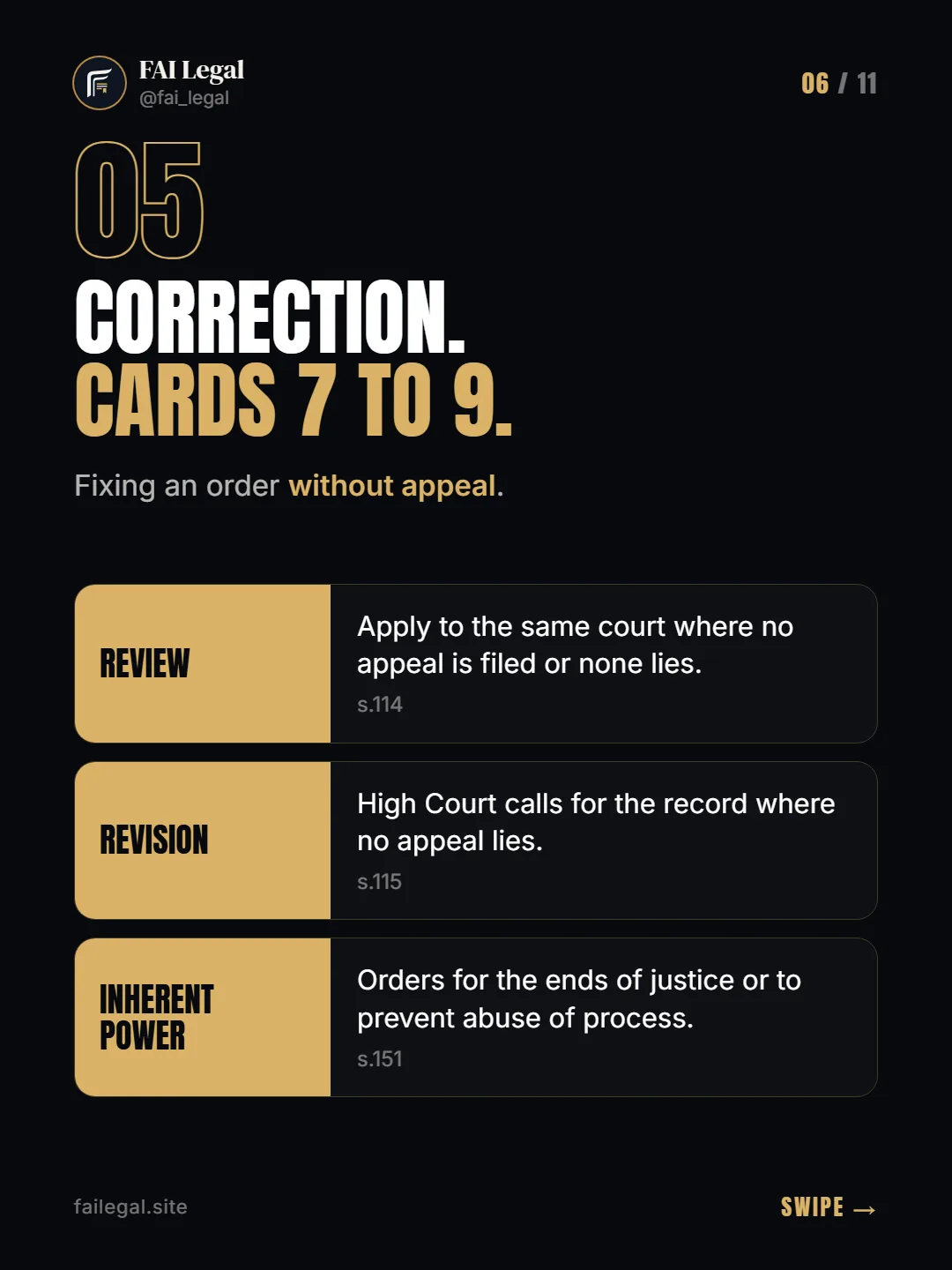
Correction. Cards 7 to 9.
Fixing an order without appeal.
- ReviewApply to the same court where no appeal is filed or none lies. (s.114)
- RevisionHigh Court calls for the record where no appeal lies. (s.115)
- Inherent powerOrders for the ends of justice or to prevent abuse of process. (s.151)
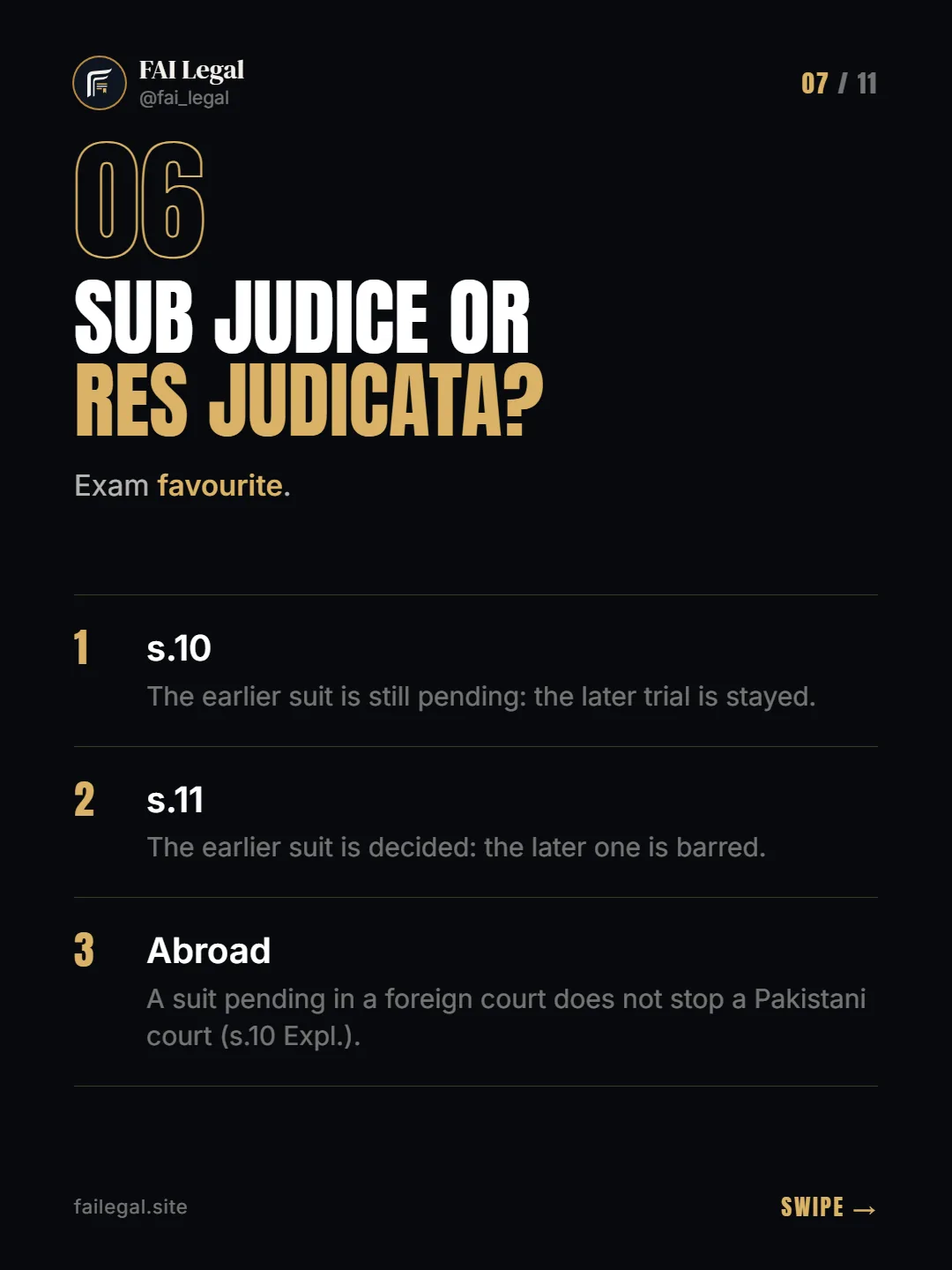
Sub judice or res judicata?
Exam favourite.
- s.10The earlier suit is still pending: the later trial is stayed.
- s.11The earlier suit is decided: the later one is barred.
- AbroadA suit pending in a foreign court does not stop a Pakistani court (s.10 Expl.).
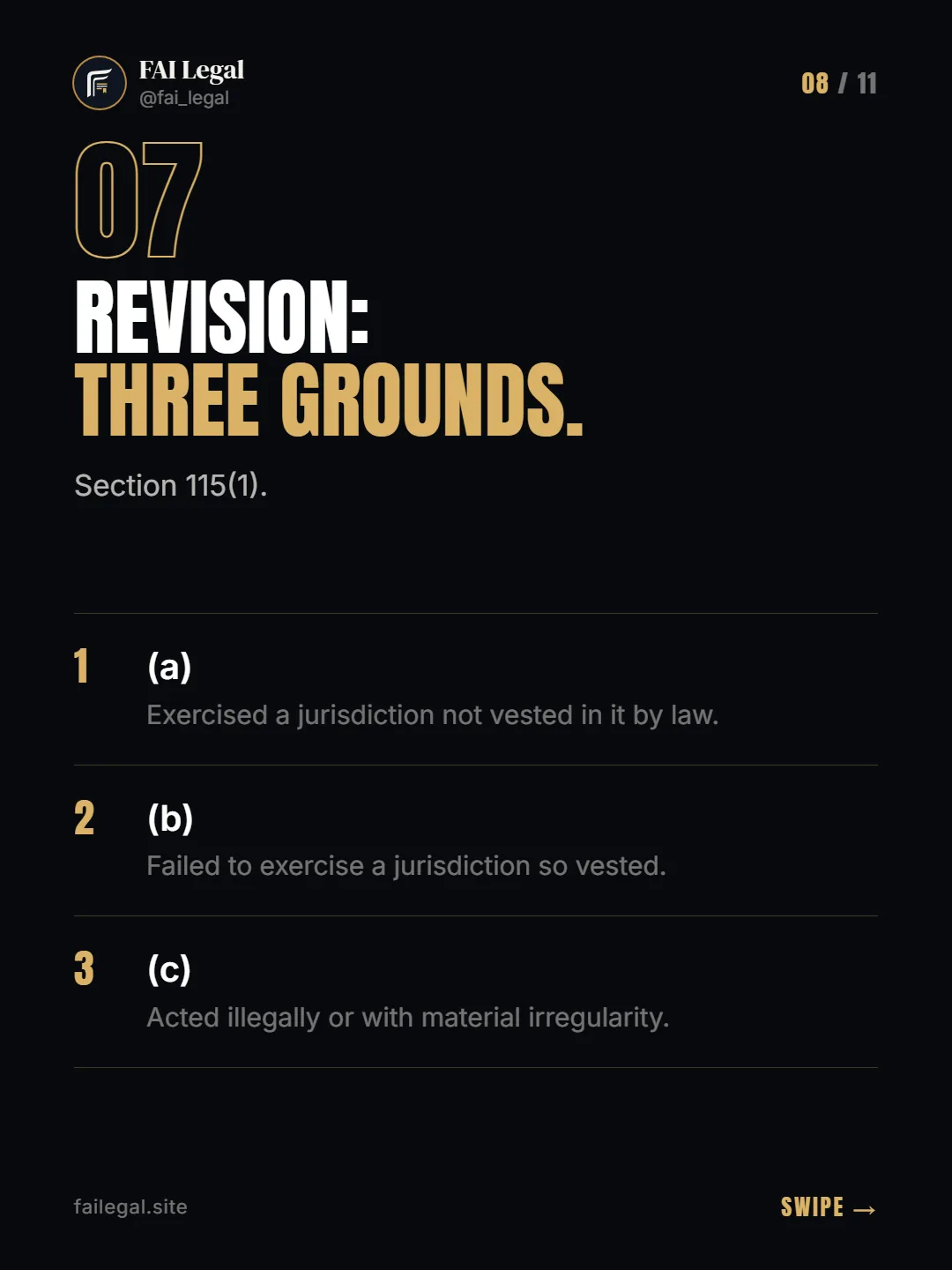
Revision: three grounds.
Section 115(1).
- (a)Exercised a jurisdiction not vested in it by law.
- (b)Failed to exercise a jurisdiction so vested.
- (c)Acted illegally or with material irregularity.
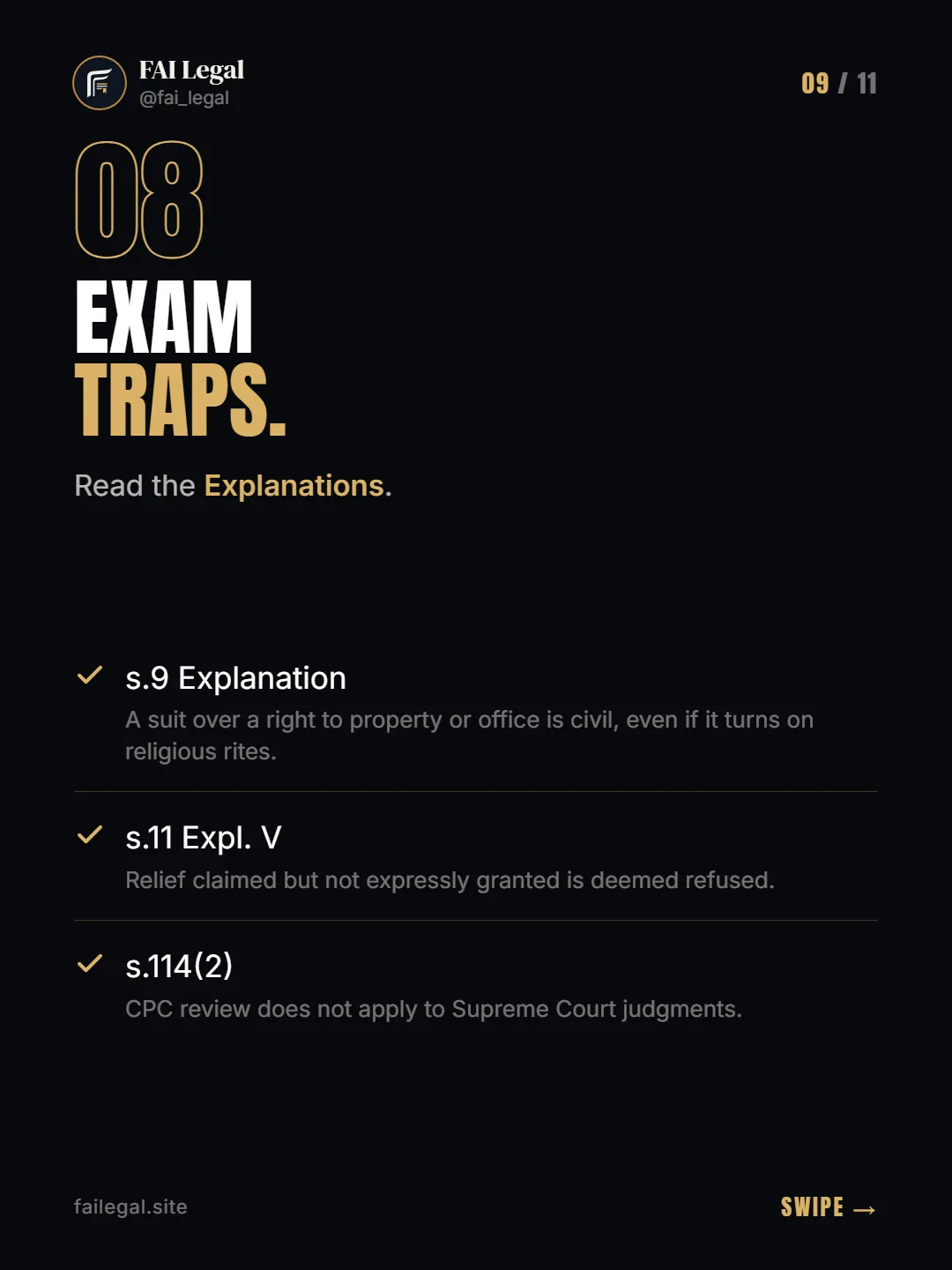
Exam traps.
Read the Explanations.
- s.9 ExplanationA suit over a right to property or office is civil, even if it turns on religious rites.
- s.11 Expl. VRelief claimed but not expressly granted is deemed refused.
- s.114(2)CPC review does not apply to Supreme Court judgments.
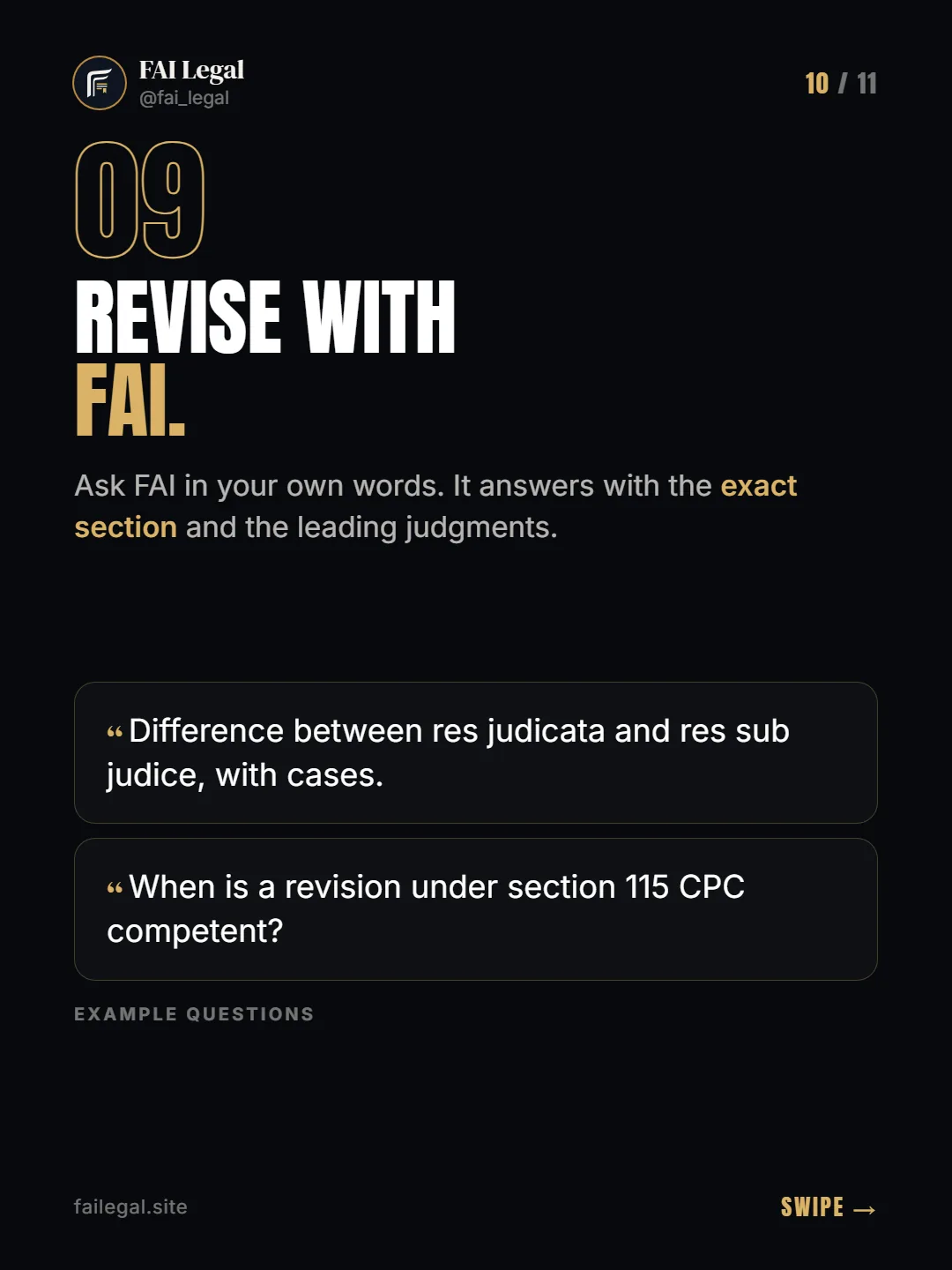
Revise with FAI.
Ask FAI in your own words. It answers with the exact section and the leading judgments.
- Difference between res judicata and res sub judice, with cases.
- When is a revision under section 115 CPC competent?
Example questions
What this does not mean
- A decree said to be obtained by fraud, misrepresentation or want of jurisdiction is not challenged by a separate suit. The application goes to the court that passed it (s.12(2)).
- A suit pending in a foreign court does not stop a Pakistani court under s.10 (s.10 Explanation).
- Review under the CPC does not apply to Supreme Court judgments (s.114(2)).
Questions people ask
How do I challenge a decree obtained by fraud in Pakistan?
Under s.12(2) CPC you apply to the court that passed the final judgment, decree or order. A separate suit is not the remedy.
What is the difference between res judicata and res sub judice?
Res sub judice (s.10) applies while the earlier suit is still pending: the later trial is stayed. Res judicata (s.11) applies once the earlier suit is decided: the later one is barred.
What is constructive res judicata?
Under s.11 Explanation IV, a matter that might and ought to have been raised in the earlier suit is treated as raised. Under Explanation V, relief claimed but not expressly granted is deemed refused.
When is a revision under section 115 CPC competent?
Where no appeal lies, the High Court may call for the record on three grounds: the court exercised a jurisdiction not vested in it, failed to exercise one vested in it, or acted illegally or with material irregularity (s.115(1)).
What is section 151 CPC?
It saves the inherent power of the court to make orders for the ends of justice or to prevent abuse of its process.
Sources
- Code of Civil Procedure, 1908 · Section 12(2)
Bar to further suit Pakistan Code
Educational legal information, not legal advice. Every case turns on its own facts. Speak to a qualified lawyer about your situation. Review status: Pending advocate review. How we check.