Law study · For law students
Specific Relief Act in 9 flashcards.
In short
Recovery of possession (ss.8, 9), specific performance (s.12), declaration (s.42) and injunctions (ss.54, 56), from the text of the Act as FAI holds it.
By the FAI Legal editorial desk · 10 October 2026 · 11 slides · 2 min read
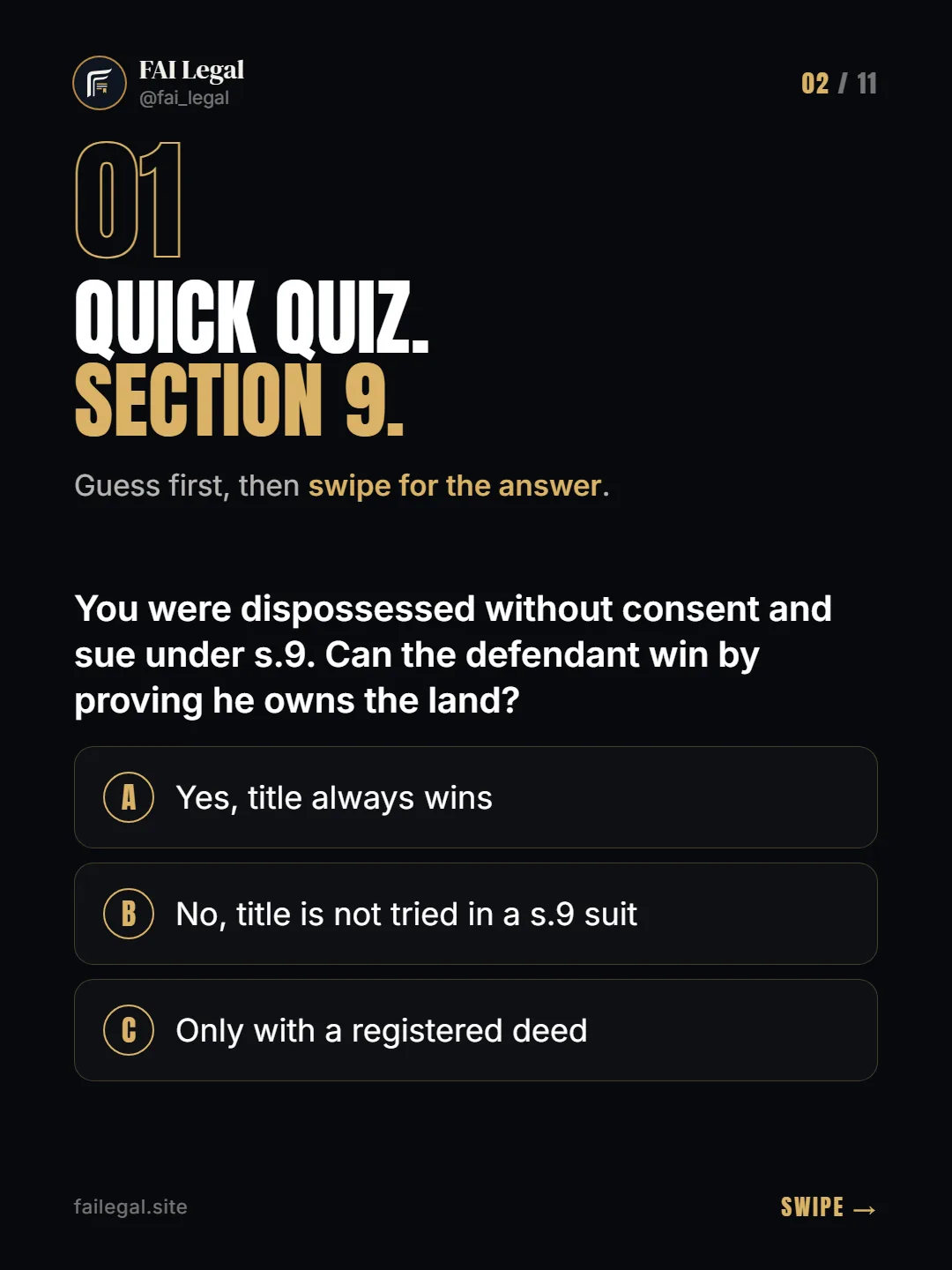
Quick quiz. Section 9.
Guess first, then swipe for the answer.
- A. Yes, title always wins
- B. No, title is not tried in a s.9 suit
- C. Only with a registered deed
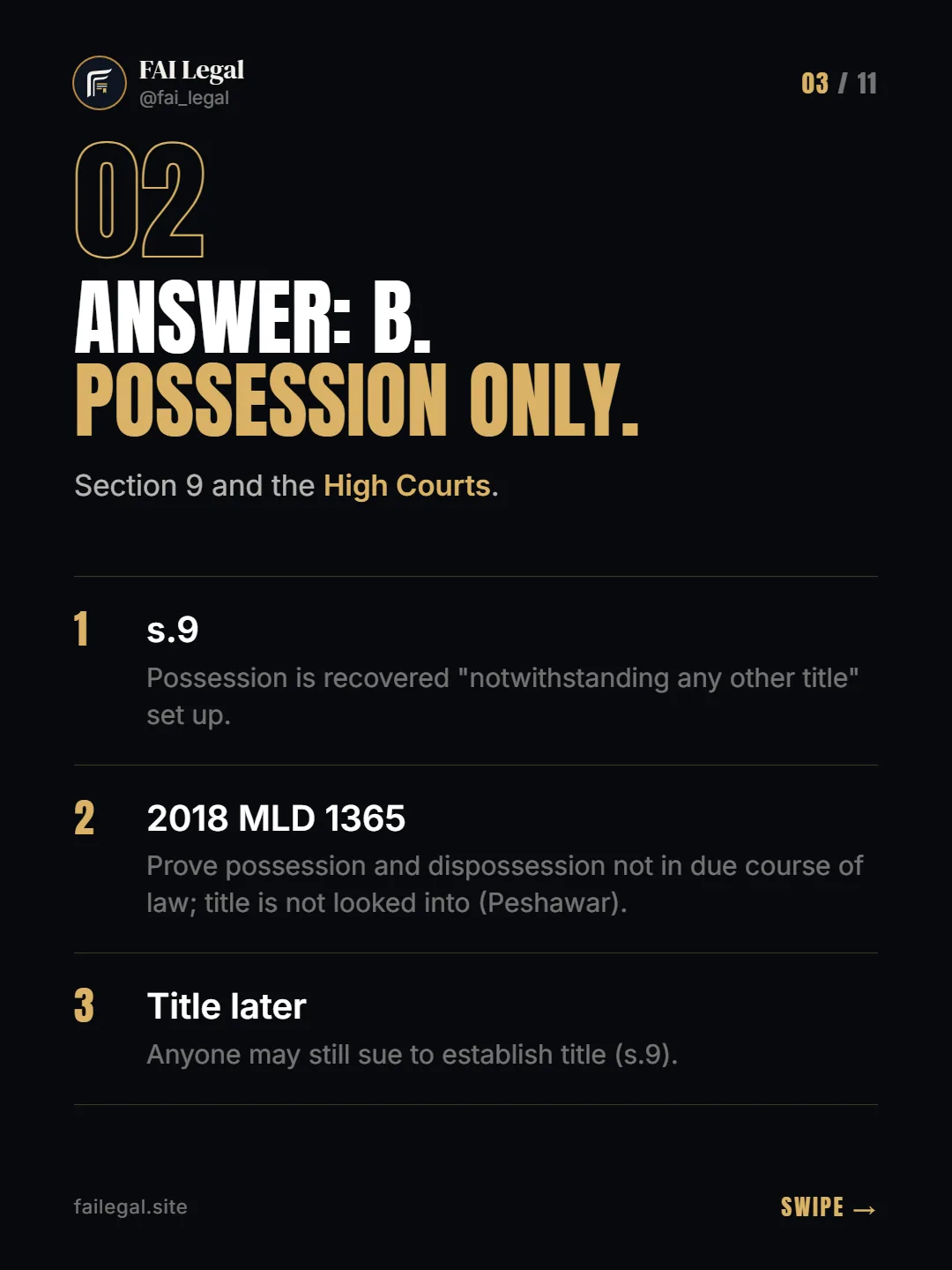
Answer: B. Possession only.
Section 9 and the High Courts.
- s.9Possession is recovered "notwithstanding any other title" set up.
- 2018 MLD 1365Prove possession and dispossession not in due course of law; title is not looked into (Peshawar).
- Title laterAnyone may still sue to establish title (s.9).
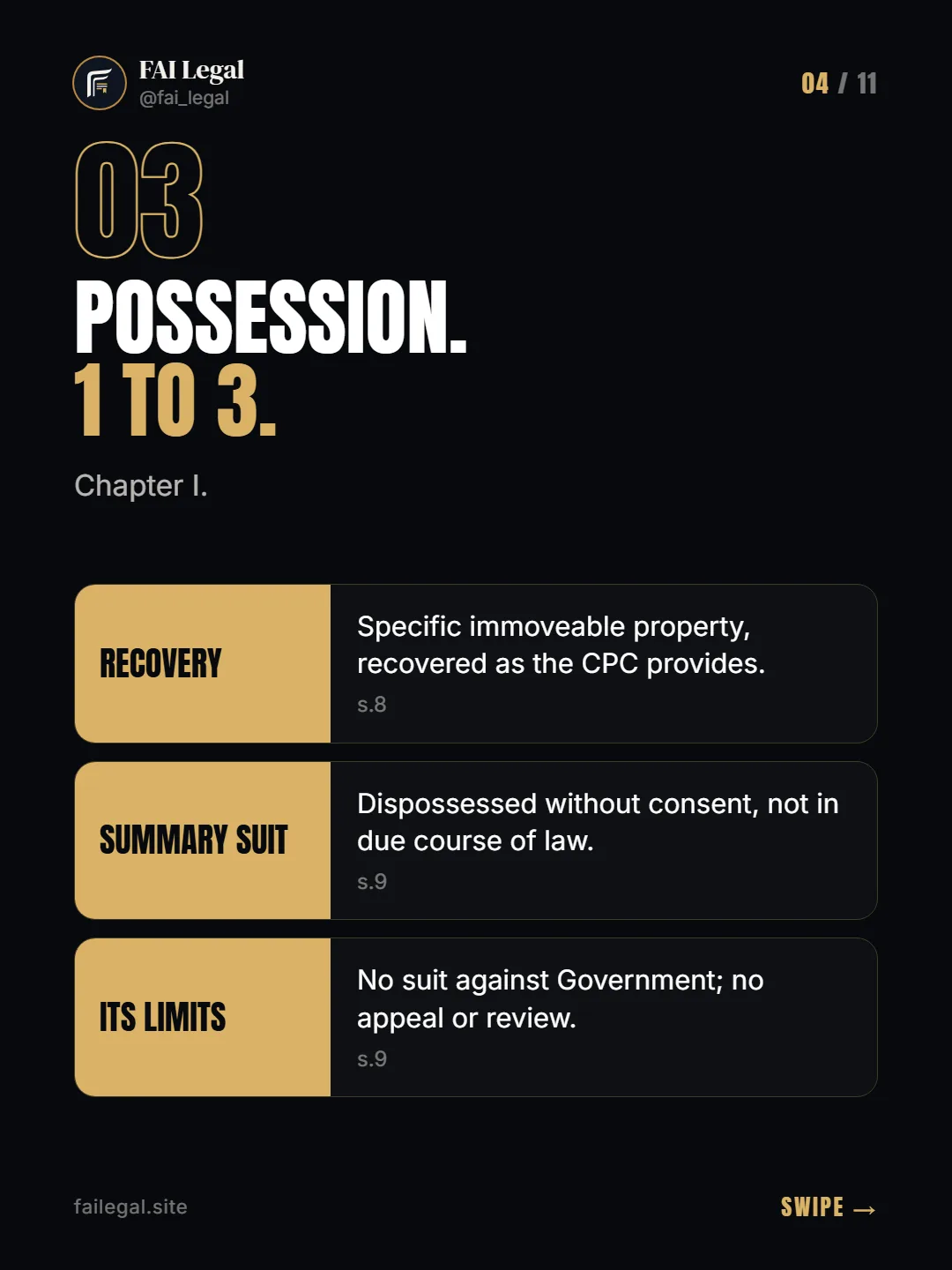
Possession. 1 to 3.
Chapter I.
- RecoverySpecific immoveable property, recovered as the CPC provides. (s.8)
- Summary suitDispossessed without consent, not in due course of law. (s.9)
- Its limitsNo suit against Government; no appeal or review. (s.9)
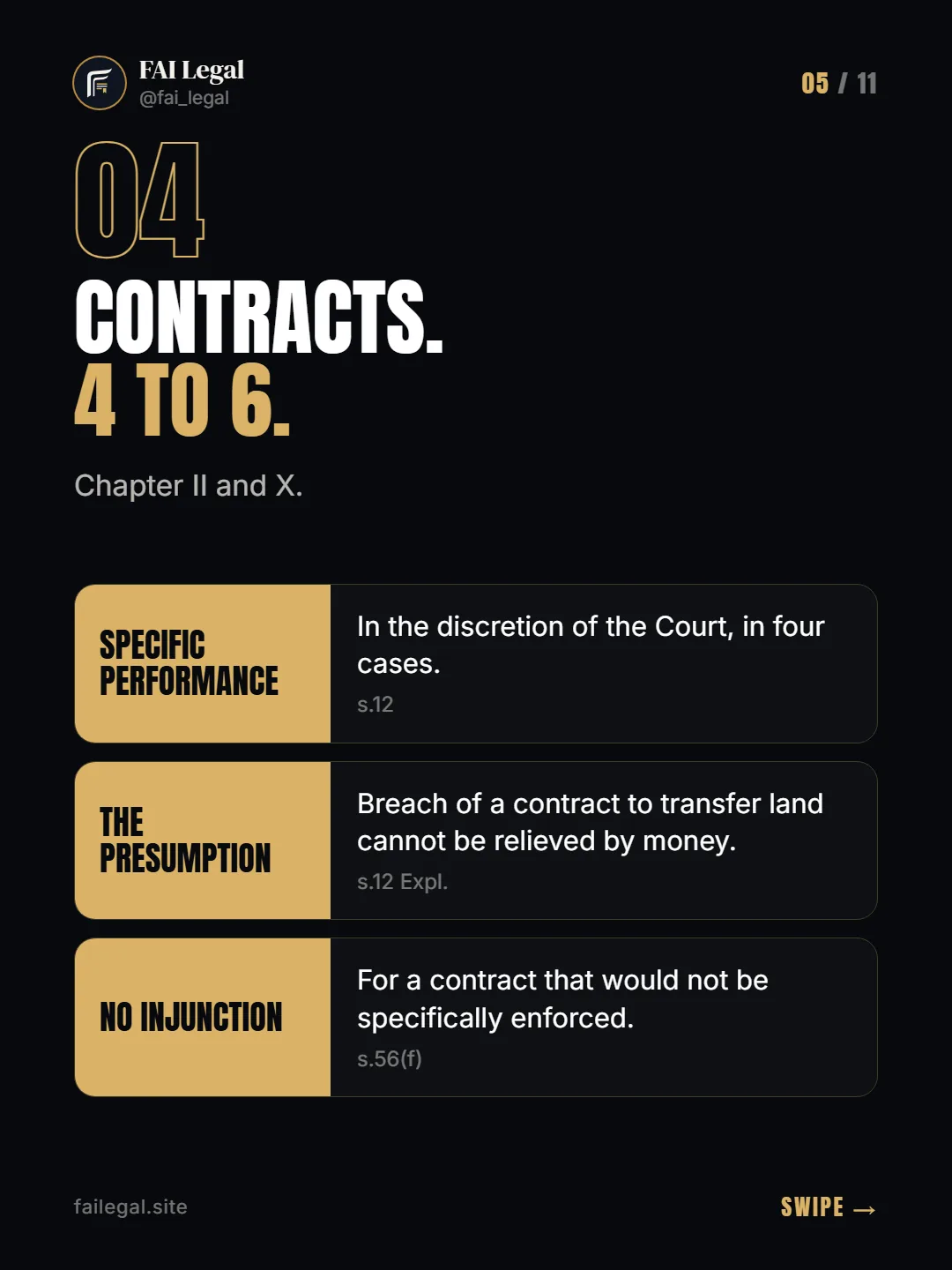
Contracts. 4 to 6.
Chapter II and X.
- Specific performanceIn the discretion of the Court, in four cases. (s.12)
- The presumptionBreach of a contract to transfer land cannot be relieved by money. (s.12 Expl.)
- No injunctionFor a contract that would not be specifically enforced. (s.56(f))
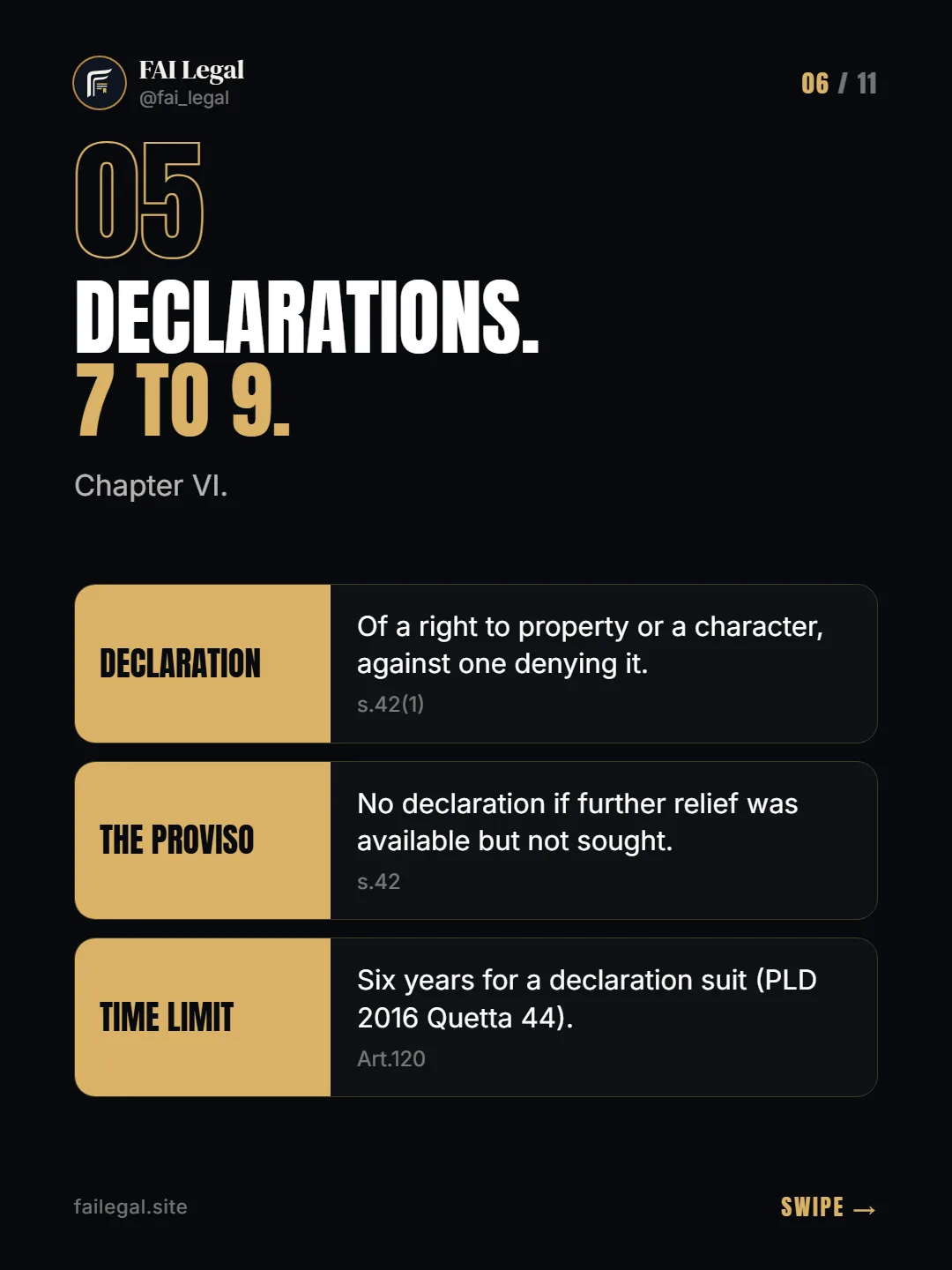
Declarations. 7 to 9.
Chapter VI.
- DeclarationOf a right to property or a character, against one denying it. (s.42(1))
- The provisoNo declaration if further relief was available but not sought. (s.42)
- Time limitSix years for a declaration suit (PLD 2016 Quetta 44). (Art.120)
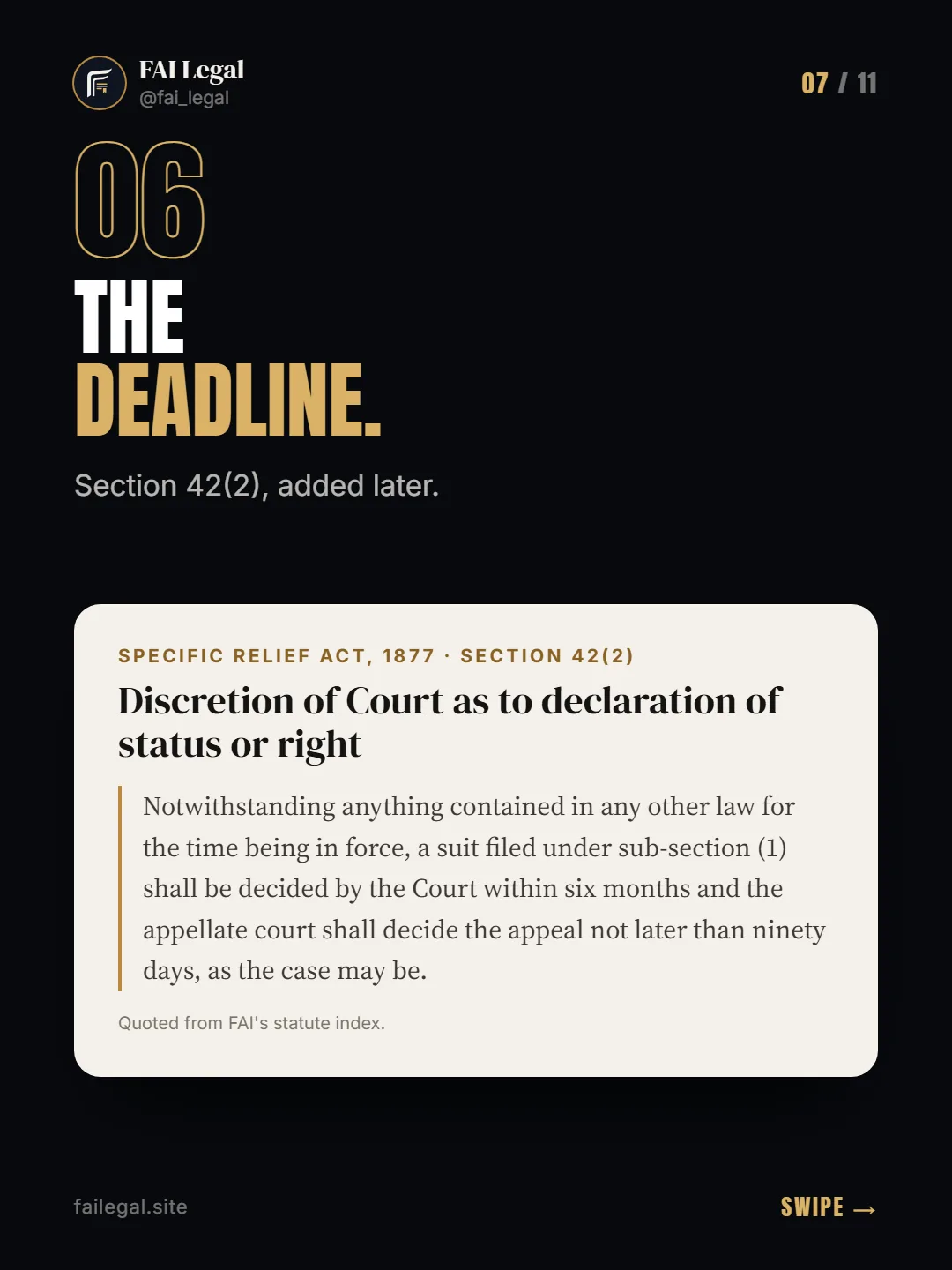
The deadline.
Section 42(2), added later.
“Notwithstanding anything contained in any other law for the time being in force, a suit filed under sub-section (1) shall be decided by the Court within six months and the appellate court shall decide the appeal not later than ninety days, as the case may be.”
Specific Relief Act, 1877 · Section 42(2), Discretion of Court as to declaration of status or right
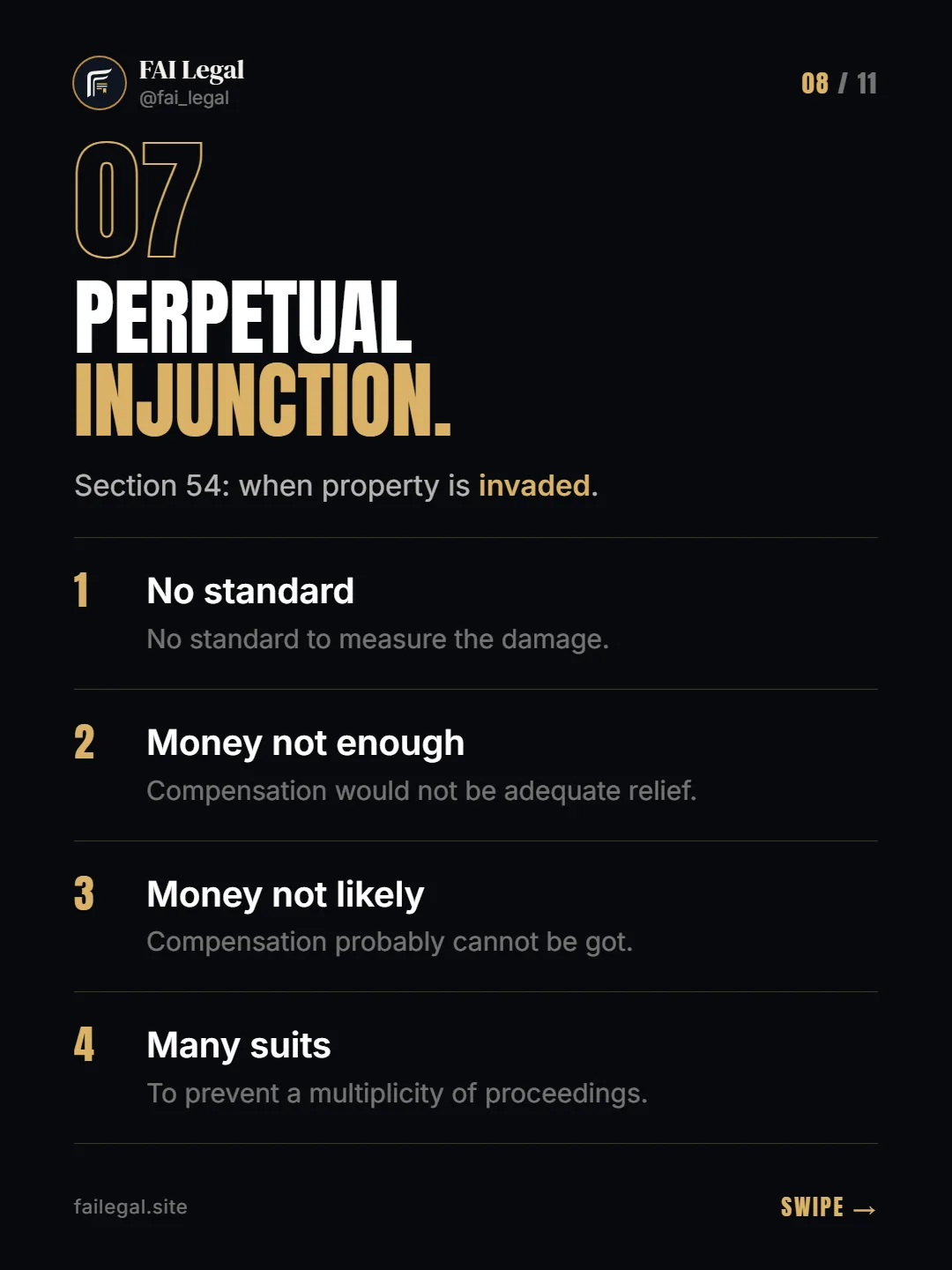
Perpetual injunction.
Section 54: when property is invaded.
- No standardNo standard to measure the damage.
- Money not enoughCompensation would not be adequate relief.
- Money not likelyCompensation probably cannot be got.
- Many suitsTo prevent a multiplicity of proceedings.
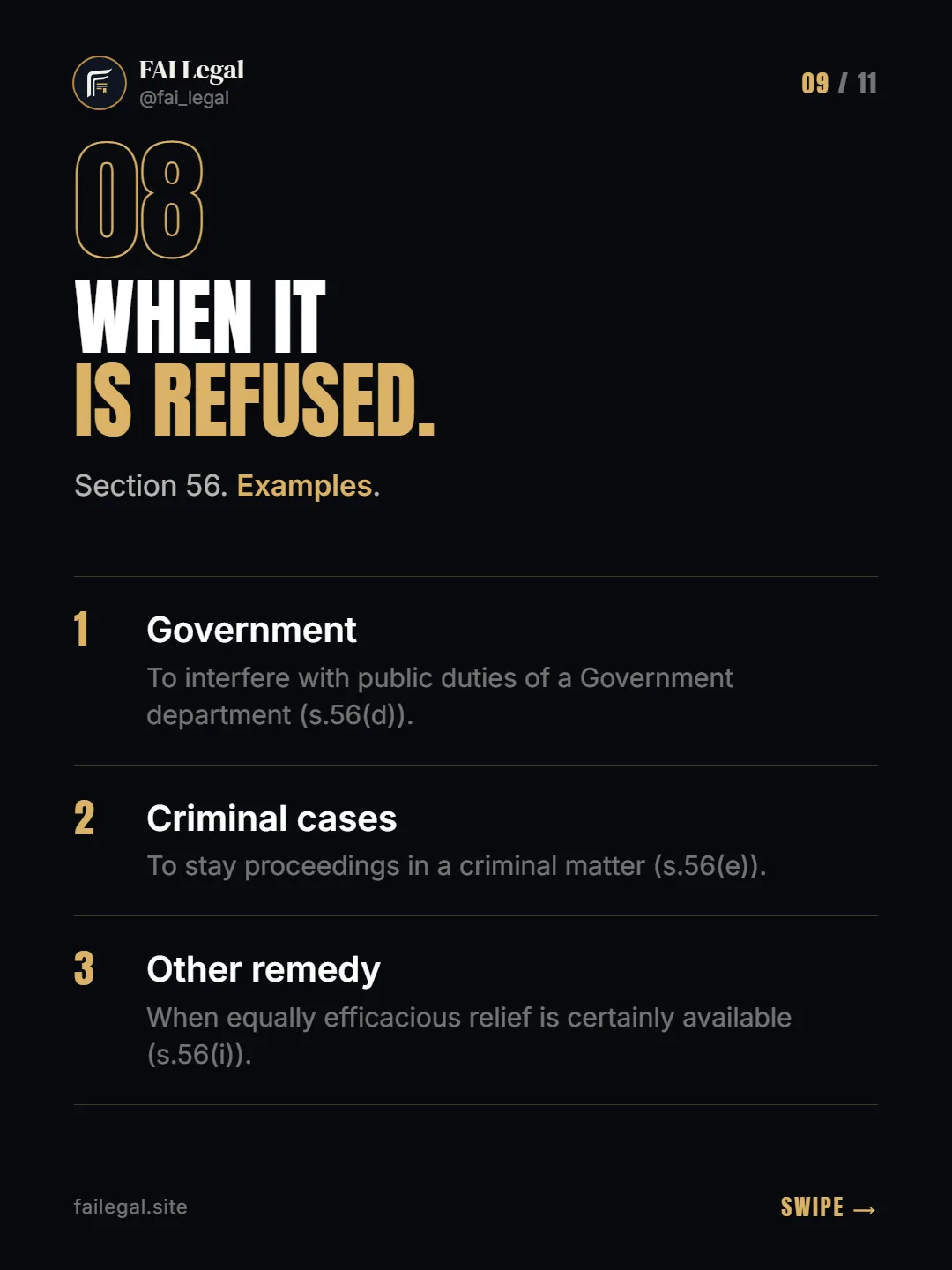
When it is refused.
Section 56. Examples.
- GovernmentTo interfere with public duties of a Government department (s.56(d)).
- Criminal casesTo stay proceedings in a criminal matter (s.56(e)).
- Other remedyWhen equally efficacious relief is certainly available (s.56(i)).
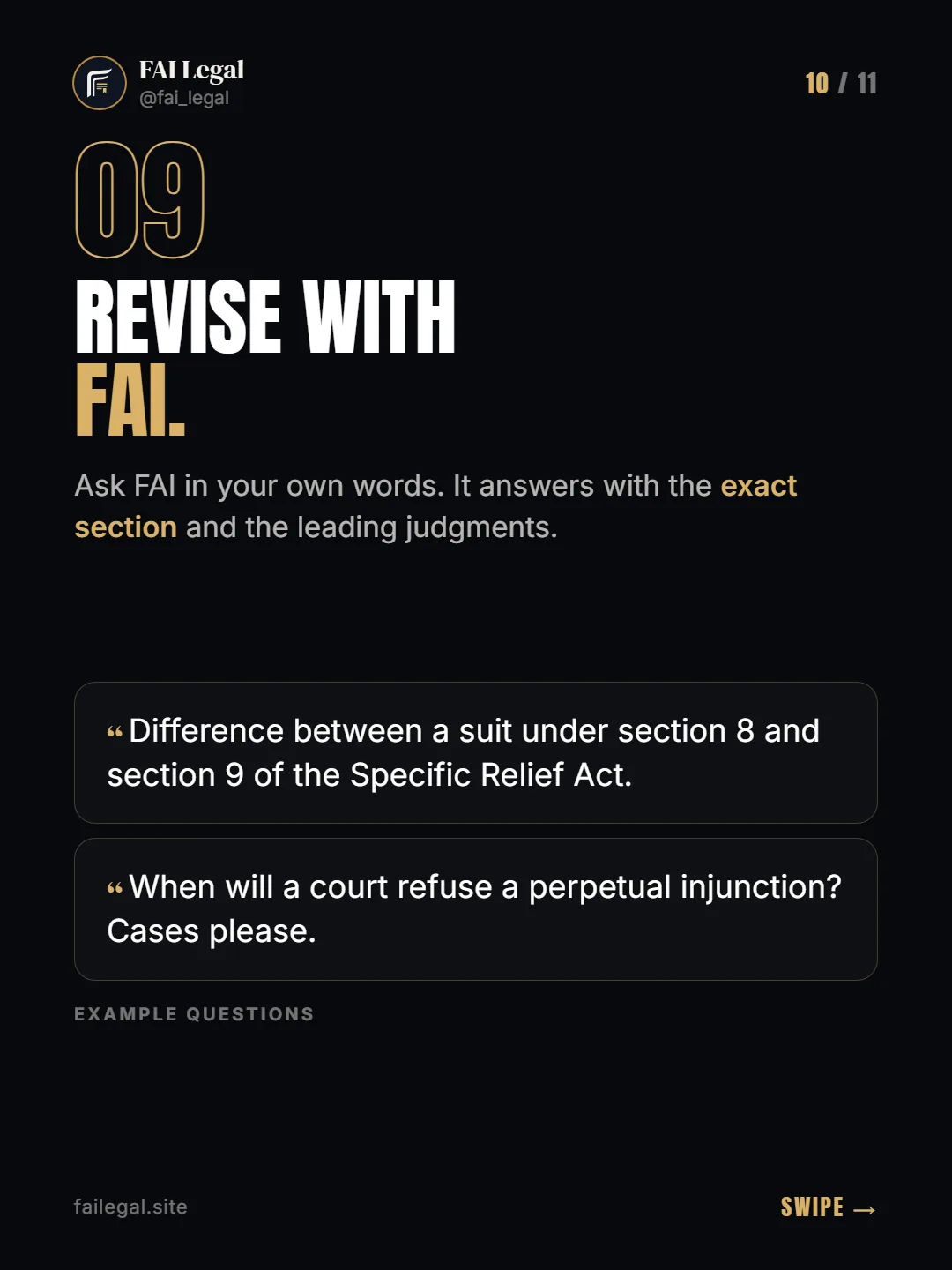
Revise with FAI.
Ask FAI in your own words. It answers with the exact section and the leading judgments.
- Difference between a suit under section 8 and section 9 of the Specific Relief Act.
- When will a court refuse a perpetual injunction? Cases please.
Example questions
What this does not mean
- A s.9 suit is about possession only. Title is not looked into there, though anyone may still sue to establish title.
- A s.9 suit cannot be brought against the Government, and no appeal or review lies from it.
- A declaration under s.42 will not be granted if further relief was available but not sought.
Questions people ask
What is the difference between section 8 and section 9 of the Specific Relief Act?
Section 8 is for recovery of specific immoveable property as the CPC provides. Section 9 is a summary suit for a person dispossessed without consent and not in due course of law, where title is not tried (2018 MLD 1365).
What is specific performance under the Specific Relief Act?
Under s.12 the court may order a contract to be specifically performed, in its discretion, in four cases. The Explanation presumes that breach of a contract to transfer land cannot be relieved by money.
What is the time limit for a declaration suit in Pakistan?
Six years under Art. 120 of the Limitation Act (PLD 2016 Quetta 44). Once filed, s.42(2) says the court shall decide it within six months, and the appeal within ninety days.
When will a court grant a perpetual injunction?
Under s.54, when property is invaded and there is no standard to measure the damage, compensation would not be adequate or probably cannot be got, or to prevent a multiplicity of proceedings.
When will a court refuse an injunction?
Section 56 gives examples: to interfere with public duties of a Government department, to stay proceedings in a criminal matter, for a contract that would not be specifically enforced, or when equally efficacious relief is certainly available.
Sources
- Specific Relief Act, 1877 · Section 42(2)
Discretion of Court as to declaration of status or right Pakistan Code
Educational legal information, not legal advice. Every case turns on its own facts. Speak to a qualified lawyer about your situation. Review status: Pending advocate review. How we check.