Property and inheritance · Supreme Court of Pakistan
Rent agreement not registered in Punjab: is the eviction case over?
The myth: “An unregistered rent agreement means the landlord can't evict.”Wrong: the landlord pays a fine and the eviction case goes on
The short answer
No. The landlord pays a fine of ten percent of a year's rent, and the case goes on. A tenant's ownership claim does not stop it.
A v. Additional District Judge, Lahore and others (names withheld) · Supreme Court of Pakistan · Civil Appeal No. 132-L of 2013 · decided 10 September 2025
By the FAI Legal editorial desk · 12 November 2026 · 6 min read
A rent agreement that was never entered with the Rent Registrar does not end a landlord's eviction case in Punjab. On 10 September 2025 the Supreme Court held that the landlord must be given the chance to cure the defect by paying the fine the law sets, ten percent of the annual rent, and the case then goes on (Civil Appeal No. 132-L of 2013, paras 14 and 22).
The same ruling said that a tenant who files a suit claiming to be the real owner cannot use it to stop or end the rent case: until a court decides in his favour, he is not the owner (paras 15 and 16).
Key points
- The missing entry can be cured: the High Court "ought to have given an opportunity to the appellant to cure the defect by paying the fine" (para 14).
- The fine is set by the law: ten percent of the annual value of the rent for a landlord (section 9 of the 2007 Ordinance as the Court set it out, para 7; section 9(b) of the 2009 Act). A tenant's own application needs five percent.
- The entry is the landlord's proof: "It is the entry of the tenancy agreement in the office of the Rent Registrar which section 5(5) of the said Ordinance treats as proof of the relationship of landlord and tenant." (para 8).
- A tenant's ownership suit does not stop the rent case: it "cannot be a ground either to dismiss or stay the proceedings before the Rent Tribunal", and until he wins "he cannot arrogate to himself the status of the owner" (paras 15 and 16).
- The case is not over for either side: the appeal goes back to be decided again after the landlady's chance to pay the fine, and nobody moves meanwhile (para 22).
Rent agreement registration in Punjab: the short answer
Your tenant has stopped paying and says your rent agreement was never registered, so you can never evict him. In Punjab that is wrong. The Rent Tribunal will not go ahead while the agreement is neither entered with the Rent Registrar nor covered by the fine, but the landlord can pay the fine, ten percent of a year's rent, and the case then goes on. The Supreme Court said so on 10 September 2025 (paras 11, 14 and 22).
People search this as rent agreement registration in Punjab, does rent agreement need to be registered, registrar rent agreement, and in Roman Urdu rent agreement registered kaise hota hai or kiraya nama. The short version: yes, it should be entered, and if it was not, the case is paused for a fine, not thrown out.
The case: a landlady's ground floor in Lahore
A landlady in Lahore had let out the ground floor of her house; the rent agreement on record is dated 31 December 1996. On 9 January 2008 she asked the Rent Tribunal to evict the tenant, saying he had defaulted on the rent, that she needed the floor herself and that he was using it for business against the agreement (paras 2 and 9).
The tenant denied that he was her tenant at all. He said he had bought the house with his own money, that she was "just a benami owner", and he filed a suit asking to be declared the real owner (paras 2 and 3).
Won, then lost, then lost again
On 9 March 2011 the Rent Tribunal ordered the tenant to hand over the floor within two months and held the landlady entitled to arrears at Rs 4,400 a month since January 2000 (para 2).
On 6 July 2011 the appeal court reversed it. It compared the tenant's signatures on the rent agreement with those on his identity card and passport by itself, found them "very much different", and told the landlady to defend her title in the civil court (para 3). On 7 May 2012 the Lahore High Court dismissed her petition "on the sole ground" that the tenancy had not been brought in line with the 2007 Ordinance and no fine had been paid (para 4). The agreement was never entered with the Rent Registrar; that, the Court was told, "till date remains unfulfilled" (para 10).
We read it in FAI Legal
The judgment is on FAI Legal's Judgment Search, marked as a citation from the court record, with every paragraph open in the judgment reader. The paragraphs quoted on this page are paras 2 to 4, 7, 8, 10, 11, 14 to 16, 19 and 22. Sections 1, 5 and 9 of the Punjab Rented Premises Act 2009 are on Statute Search.
The ruling: pay the fine, the case goes on
The Supreme Court began with section 5: a landlord must let premises only by a tenancy agreement and must present it before the Rent Registrar, and "It is the entry of the tenancy agreement in the office of the Rent Registrar which section 5(5) of the said Ordinance treats as proof of the relationship of landlord and tenant." (para 8). The 2007 Ordinance and the 2009 Act are, the Court said, "in pari materia": the same on this point (para 9).
What happens when the entry is missing comes from the Court's earlier ruling, quoted in para 11: the Tribunal must not refuse the application; it asks whether a registered agreement is on record and, if not, whether the fine was paid, and "If both these aspects are missing, the Rent Tribunal shall halt further proceeding in the matter." Halt, not dismiss. So the High Court "ought to have given an opportunity to the appellant to cure the defect by paying the fine" (para 14).
On the ownership claim: "the pendency of a civil suit filed by respondent No.3 in an eviction petition claiming to be an owner of rented premises cannot be a ground either to dismiss or stay the proceedings before the Rent Tribunal." (para 15). She had produced the original sale deed and the land record; if he wins his suit he can take possession then, "until then he cannot arrogate to himself the status of the owner of the demised premises." (para 16).
Why, and what is still open
The Rent Act's answer to a missing entry is a price, not the end of the case: the landlord's application is not entertained until the fine is deposited, and once it is, the case goes on (paras 7, 11 and 14). The Court also faulted the appeal court for comparing signatures by itself: "such a process of comparison by the court upon its own initiative and without the guidance of an expert is hazardous and recognizably inconclusive." (para 19).
Nothing is final yet. The Court set aside the High Court's and the appeal court's judgments and sent the tenant's appeal back to the appeal court, "which may decide respondent No.3's appeal after affording an opportunity to the appellant to pay the fine" (para 22). Until then: "status quo regarding possession of the demised premises" (para 22).
Renting out in Punjab? What to do
Put the tenancy in writing and take the agreement to the Rent Registrar at the start; the entry, or its certified copy, is your proof that the person in the house is your tenant (section 5). It is cheaper than the fine and the years of argument this landlady went through.
If your agreement was never entered and you need to go to the Rent Tribunal, expect to deposit the fine first: ten percent of the annual rent (section 9(b)). A tenant who wants the Tribunal's help on an agreement that does not conform deposits five percent (section 9(a)). Your case may be different: take your papers to a lawyer. Other provinces have their own rent laws, and this page is about Punjab.
Find rulings like this on FAI Legal
FAI Legal is a website: open failegal.site in your phone's browser, there is nothing to download. Ask your question in plain words, read the Punjab Rented Premises Act on Statute Search, and see this judgment in full on Judgment Search. Your case may be different, so ask about yours.
The case at a glance
- Facts
- A landlady sought the eviction of her tenant from the ground floor of her house in Lahore on 9 January 2008 (default in rent, personal need, commercial use against the agreement of 31 December 1996). The Rent Tribunal ordered eviction and arrears from January 2000 on 9 March 2011; the appeal court reversed it on 6 July 2011; the Lahore High Court dismissed her writ petition on 7 May 2012 because the tenancy was not brought in line with the 2007 Ordinance and no fine was paid (paras 1 to 4).
- The question
- Whether an eviction petition must be dismissed because the tenancy agreement was never entered with the Rent Registrar, or whether the landlord must be given a chance to cure the defect by paying the fine; and whether a tenant's pending suit claiming ownership can stop the rent case (paras 10, 14 and 15).
- What the Court held
- The landlord must be given the opportunity to cure the defect by paying the fine under section 9(a) of the 2007 Ordinance (the landlord's fine; section 9(b) of the 2009 Act) (paras 14 and 22). A tenant's pending ownership suit cannot be a ground to dismiss or stay the rent case, and until he succeeds he cannot claim the status of owner (paras 15 and 16). Appeal allowed; the matter remanded to the appeal court; status quo on possession meanwhile (para 22).
- Why
- Under the earlier Supreme Court ruling quoted in para 11 the Tribunal does not refuse such an application; it halts until the agreement or the fine is on record. The tenant had not objected to the missing entry before the Tribunal, and the High Court made it the sole ground without letting the landlady cure it (paras 10, 13 and 14). The appeal court wrongly made her defend her title in the civil court, and comparing signatures without an expert is hazardous (paras 15 to 19).
- Limits
- The Supreme Court did not order the eviction and did not decide the rent due or the signatures: the tenant's appeal will be decided again by the appeal court after the landlady's chance to pay the fine, with possession unchanged meanwhile (para 22). The ruling applies the Punjab rent law; the other provinces have their own. Entry with the Rent Registrar does not replace registration under the registration law (section 5(4)).
The law it relies on
Section 5 of the Punjab Rented Premises Act 2009: a landlord "shall not let out a premises to a tenant except by a tenancy agreement" and "shall present the tenancy agreement before the Rent Registrar", who enters it in a register, seals it and keeps a copy; the entry or its certified copy "shall be a proof of the relationship of landlord and tenant". Section 5(4): the entry does not excuse registration under the registration law. Section 9: if a tenancy does not conform to the Act, the Rent Tribunal shall not entertain an application by the landlord unless he deposits a fine of ten percent of the annual value of the rent (a tenant, five percent). Section 1: the Act extends to the whole of the Punjab.
What this does not mean
- It does not mean the landlady won the eviction. The Supreme Court sent the tenant's appeal back to the appeal court, to be decided after her chance to pay the fine; possession stays as it is meanwhile (para 22).
- It does not mean registration does not matter. The Act requires the entry with the Rent Registrar, the entry is the landlord's proof, and the price of skipping it is the fine (sections 5 and 9).
- It does not mean the tenant's claim to the house is false. The Court only said his pending suit cannot stop the rent case, and that he cannot act as owner until a court decides in his favour (paras 15 and 16).
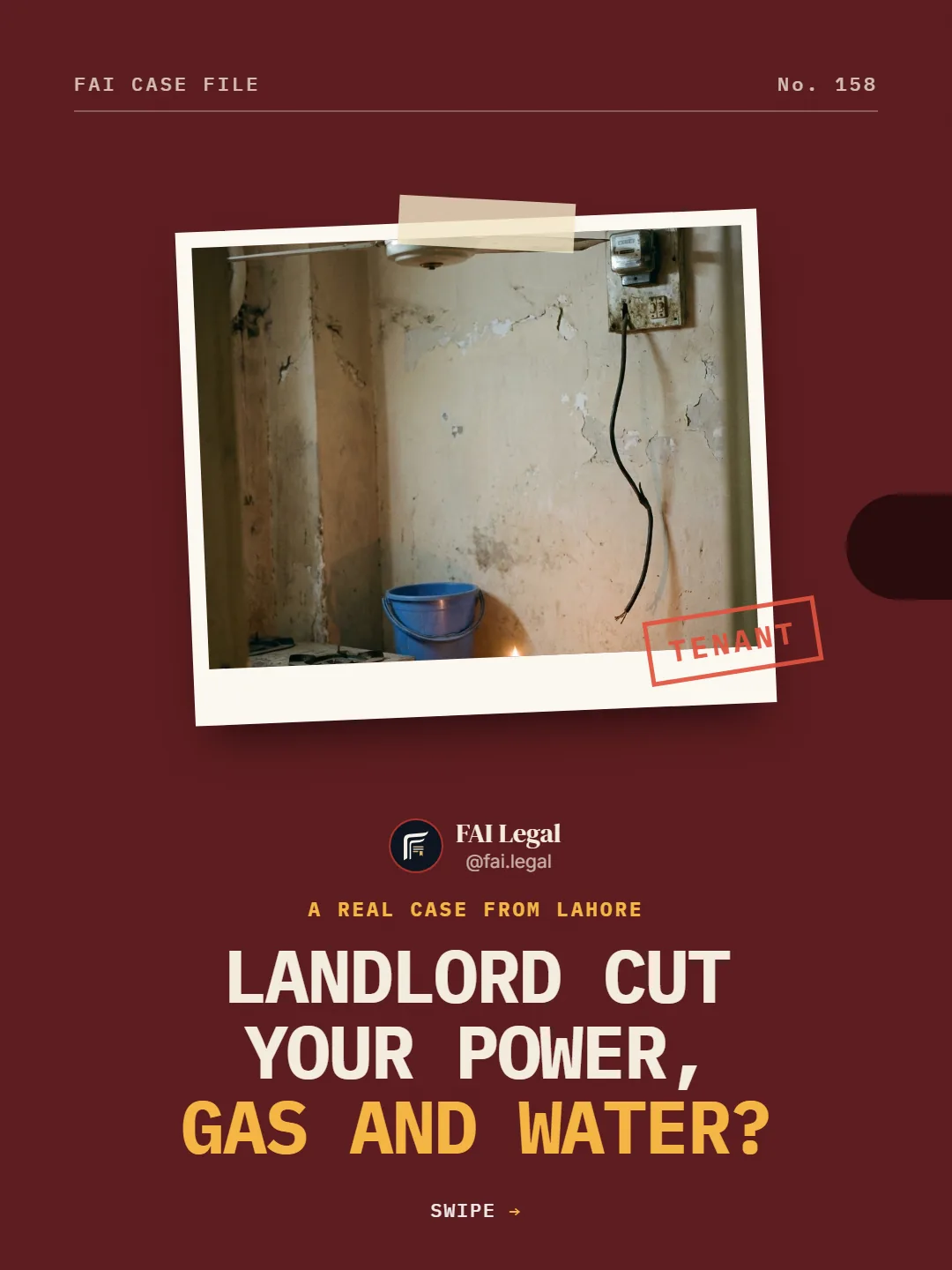
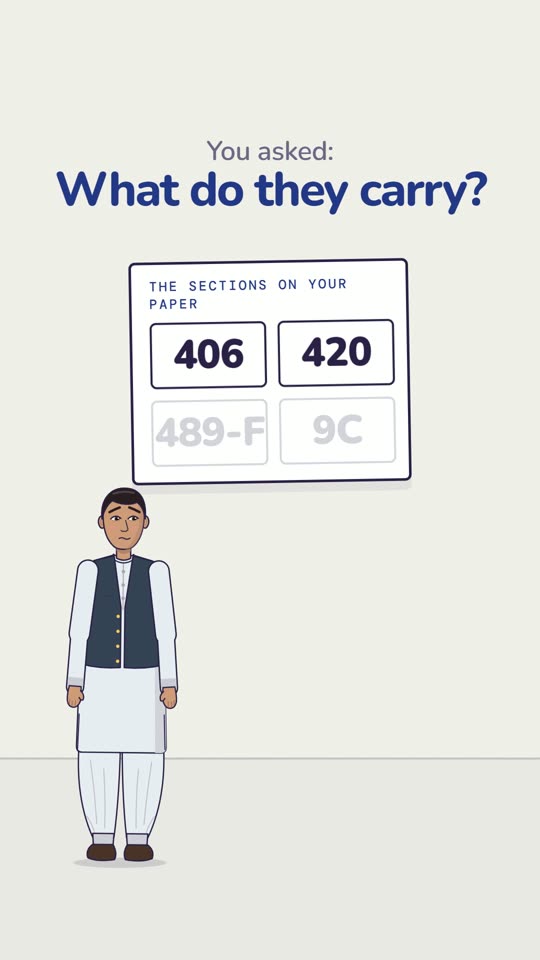
- The reel's landlord, his tenant and the stamp are a picture of the question. The real case is a landlady's in Lahore; nobody in it is named here, and the address is left out.
Questions people ask
Does a rent agreement need to be registered in Punjab?
Yes. Under section 5 of the Punjab Rented Premises Act 2009 the landlord must let premises by a written tenancy agreement and present it before the Rent Registrar, whose entry is proof of the tenancy. Registration under the registration law is a separate duty (section 5(4)).
Can a landlord evict a tenant if the rent agreement was not registered?
Yes, after paying the fine. The Rent Tribunal will not entertain the landlord's application until he deposits ten percent of the annual rent (section 9(b)). The Supreme Court held on 10 September 2025 that a landlord must be given that chance; the case is halted, not dismissed (Civil Appeal No. 132-L of 2013, paras 11 and 14).
How much is the fine for an unregistered rent agreement in Punjab?
Ten percent of the annual value of the rent for the landlord, and five percent for a tenant who applies to the Rent Tribunal (section 9 of the Punjab Rented Premises Act 2009).
My tenant says he owns the house and has filed a case. Does the eviction stop?
No. The Supreme Court said a tenant's pending suit claiming ownership cannot be a ground to dismiss or stay the rent case; if he wins it he can take possession then, but until then he cannot claim the status of owner (paras 15 and 16).
Kiraya nama register na ho to kya kirayedar ko nikala ja sakta hai?
Ji haan, Punjab mein. Agar kiraya nama Rent Registrar ke paas darj na ho to malik makan ko pehle saal bhar ke kiraye ka das feesad jurmana jama karana hoga, phir case chalta hai. Supreme Court ne 10 September 2025 ko yahi kaha.
Check yourself
True or false? “An unregistered rent agreement means the landlord can't evict.”
Wrong: the landlord pays a fine and the eviction case goes on. No. The landlord pays a fine of ten percent of a year's rent, and the case goes on. A tenant's ownership claim does not stop it.
Next one: true or false? “If a sister didn't ask for her share for years, it's gone.”
Sources
- A v. Additional District Judge, Lahore and others (names withheld), Civil Appeal No. 132-L of 2013 (Supreme Court of Pakistan, 10 September 2025)
A landlord whose tenancy agreement was never entered with the Rent Registrar must be given the chance to cure the defect by paying the fine; the Rent Tribunal halts until then, it does not dismiss. A tenant's pending ownership suit cannot stop or end the rent case. Remanded to the appeal court, status quo on possession. - Punjab Rented Premises Act 2009, Sections 1, 5 and 9 checked in FAI Statute Search, 12 November 2026 Punjab Code
Every quote and section above is traced to the full judgment or statute text by an automatic check that runs on every update.
What the reel says
Read the words of the reel
Rent agreement not registered in Punjab: can you still evict your tenant?
Your tenant says the rent agreement was never entered with the Rent Registrar, so you can't evict him. That's wrong.
1. A landlady in Lahore let out the ground floor of her house. The rent stopped, and the tenant said the house was really his.
2. In March 2011 the Rent Tribunal ordered him out, with rent due since January 2000. The appeal court reversed it, and in May 2012 the Lahore High Court dismissed her petition because the agreement was never entered with the Rent Registrar.
3. On 10 September 2025 the Supreme Court said the missing entry is not the end: the landlord must get the chance to cure it by paying the fine, ten percent of a year's rent, and then the case goes on.
4. The tenant's claim to own the house doesn't stop the rent case either: until a court decides in his favour, he is not the owner.
5. The appeal will now be heard again, and possession stays as it is meanwhile.
Renting out in Punjab? Take the agreement to the Rent Registrar at the start: that entry is your proof. Talk to a lawyer about your own case.
Full story: failegal.site/media/rent-agreement-registration-punjab-eviction-2025 Is this rule fair to both sides? Tell us why, no names.
Educational legal information, not legal advice. Every case turns on its own facts. Speak to a lawyer about your own case. Last checked: 12 November 2026. Review status: Pending advocate review. How we check.