Property and inheritance · Federal Constitutional Court of Pakistan
7E tax on property in Pakistan: is it still payable?
The myth: “Own a second house or plot and FBR taxes you on rent you never got.”Not any more
The short answer
No. On 7 May 2026 the Federal Constitutional Court held that section 7E of the Income Tax Ordinance 2001 is "ultra vires the Constitution" and struck it down "being void ab initio" (void from the start). Every action, proceeding and notice the FBR started under section 7E was declared to be without lawful authority and set aside (2026 PLD 155, para 2).
Sher Muhammad Mughari v. Federation of Pakistan · Federal Constitutional Court of Pakistan · 2026 PLD 155 · decided 7 May 2026
By the FAI Legal editorial desk · 31 October 2026 · 5 min read
Section 7E, added by the Finance Act 2022, treated 5% of the fair market value of capital assets in Pakistan, such as a second house or a plot, as income and taxed it every year, even if the property earned nothing. Rent you actually receive is a different matter: it is still taxed under section 15 as income from property.
Key points
- Section 7E is void from the start: "ultra vires the Constitution, and is accordingly struck down, being void ab initio" (2026 PLD 155, para 2).
- All actions, proceedings and notices under section 7E are "without lawful authority" and "set aside" (para 2).
- Before the ruling the High Courts were split: Peshawar and Balochistan struck section 7E down, Lahore (in intra-court appeal) and Sindh upheld it, and Islamabad struck down subsection (2) (para 1).
- Rent you really receive is still taxed under section 15 of the Income Tax Ordinance (income from property).
- This was a short order: the court said its reasons will be recorded separately (para 2). Refunds of 7E tax already paid have been reported in the press, but we found no FBR notification; ask a tax lawyer.
7E tax kya hota hai? The short answer
Section 7E ("tax on deemed income") was added to the Income Tax Ordinance 2001 by the Finance Act 2022. For tax year 2022 onwards, a resident person was treated as earning an amount equal to five percent of the fair market value of capital assets in Pakistan held on the last day of the tax year, and that "deemed income" was taxed at the rate in Division VIIIC of the First Schedule (s.7E(1) and (2)).
The best known exclusions were one capital asset of your own (usually your home), business premises you work from, farmland you farm, property whose income is already taxed, and holdings worth Rs 25 million or less after those exclusions (s.7E(2)(a) to (i)). So the tax mostly hit second houses and plots that were empty.
Why owners went to court
Owners said the law taxed income they never earned. The insertion of section 7E "was assailed before all the provincial High Courts, including the Islamabad High Court, on constitutional grounds" (2026 PLD 155, para 1).
The High Courts did not agree. The Peshawar High Court and the High Court of Balochistan struck it down. The Islamabad High Court read it down and struck down subsection (2). A Division Bench of the Lahore High Court and the High Court of Sindh upheld it (para 1).
7E tax ruling: the Federal Constitutional Court decided it, not the Supreme Court
On 7 May 2026, after hearings in April, the Federal Constitutional Court passed a short order. It held that section 7E "is ultra vires the Constitution, and is accordingly struck down, being void ab initio" (para 2).
The taxpayers' petitions against the Sindh and Lahore judgments were converted into appeals and allowed; the FBR's petitions against the Peshawar and Balochistan judgments were dismissed; the transferred Islamabad cases were disposed of (para 2). "Consequently, all actions, proceedings, and notices initiated or taken by the FBR/C.I.R under Section 7E are declared to be without lawful authority and are hereby set aside" (para 2).
Is rent still taxed?
Yes. The ruling is about deemed income, not real rent. Under section 15 of the Income Tax Ordinance, "the rent received or receivable by a person for a tax year", other than exempt rent, is chargeable to tax under the head "Income from Property" (s.15(1), FBR text of 31 July 2026 in FAI).
FAI's copy of the FBR text dated 31 July 2026 also shows the 7E rate in the First Schedule (Division VIIIC) as omitted by the Finance Act 2026.
7E tax refund and notices: what to do
If you got a 7E notice, show the tax office the ruling: Sher Muhammad Mughari v. Federation of Pakistan, 2026 PLD 155. Every 7E notice was set aside (para 2).
If you already paid 7E tax, ask a tax lawyer about getting it back. Refunds have been reported in the press, but we did not find an FBR notification on them, so the route depends on your own case. And still file your return: real rent and other income are still taxed.
For law students and lawyers
2026 PLD 155 is a short order of a two-member bench of the Federal Constitutional Court; the detailed reasons are "to be recorded separately" (para 2). Read the reasons when they come before relying on any particular ground.
The Islamabad cases (I.C.As and writ petitions) were requisitioned under Article 175E(5) of the Constitution by order dated 6 April 2026 and transferred to the Court (para 1).
The case at a glance
- Facts
- Section 7E, inserted by the Finance Act 2022, taxed 5% of the fair market value of capital assets as deemed income. It was challenged in every High Court, with split results (para 1).
- The question
- Is section 7E of the Income Tax Ordinance 2001 constitutional?
- What the Court held
- No. Section 7E is ultra vires the Constitution and struck down as void ab initio; all 7E actions, proceedings and notices are set aside (para 2).
- Why
- A short order; the reasons are to be recorded separately (para 2).
- Limits
- The order is about deemed income under section 7E. It does not touch tax on rent actually received (section 15) or other income. It says nothing about how refunds are paid.
The law it relies on
Tax on deemed income: 5% of the fair market value of capital assets in Pakistan, from tax year 2022, with exclusions in sub-section (2). Struck down as void ab initio by 2026 PLD 155.
Income from property: rent received or receivable for a tax year is chargeable to tax under the head "Income from Property".
What this does not mean
- It does not stop tax on rent you actually receive. That is still taxed under section 15.
- It does not mean you can skip your tax return.
- It does not by itself say how or when 7E tax already paid will be refunded. Ask a tax lawyer.
- It is a short order. The full reasons are still to come.
Questions people ask
What is 7E tax on property?
Section 7E of the Income Tax Ordinance taxed 5% of the fair market value of capital assets, such as a second house or plot, as if it were income, from tax year 2022. It is now void (2026 PLD 155, para 2).
Is 7E tax abolished?
Yes. The Federal Constitutional Court struck section 7E down as void ab initio on 7 May 2026 and set aside every 7E notice (2026 PLD 155, para 2).
Which court struck down section 7E?
The Federal Constitutional Court of Pakistan, in Sher Muhammad Mughari v. Federation of Pakistan, 2026 PLD 155, decided 7 May 2026.
Can I get a 7E tax refund?
Ask a tax lawyer. Refunds have been reported in the press, but we found no FBR notification. The order itself sets aside 7E actions and notices (para 2).
Is rent from my house still taxed?
Yes. Rent received or receivable is taxed under section 15 as income from property.
7E tax kya hota hai?
Dusre ghar ya plot ki qeemat ka 5% aap ki aamdan maan kar us par har saal tax. Wafaqi Aeeni Adalat ne 7 May 2026 ko ise shuru se kalaadam qarar diya (2026 PLD 155). Asal kiraya ab bhi taxable hai.
Check yourself
True or false? “Own a second house or plot and FBR taxes you on rent you never got.”
Not any more. No. On 7 May 2026 the Federal Constitutional Court held that section 7E of the Income Tax Ordinance 2001 is "ultra vires the Constitution" and struck it down "being void ab initio" (void from the start). Every action, proceeding and notice the FBR started under section 7E was declared to be without lawful authority and set aside (2026 PLD 155, para 2).
Next one: true or false? “Registry and intiqal in my name, so nobody can touch it.”
Sources
- Sher Muhammad Mughari v. Federation of Pakistan, 2026 PLD 155 (Federal Constitutional Court of Pakistan, 7 May 2026), paras 1 and 2
Section 7E Income Tax Ordinance 2001 ultra vires the Constitution, struck down as void ab initio; all 7E actions, proceedings and notices set aside. verified against full text - Income Tax Ordinance, 2001, Sections 7E and 15 text checked in FAI Statute Search, 31 October 2026
Every quote and section above is traced to the full judgment or statute text by an automatic check that runs on every update.
What the reel says
Read the words of the reel
7E tax on property in Pakistan: tax on a house you never rented out?
What is 7E tax on property, and do you still have to pay it?
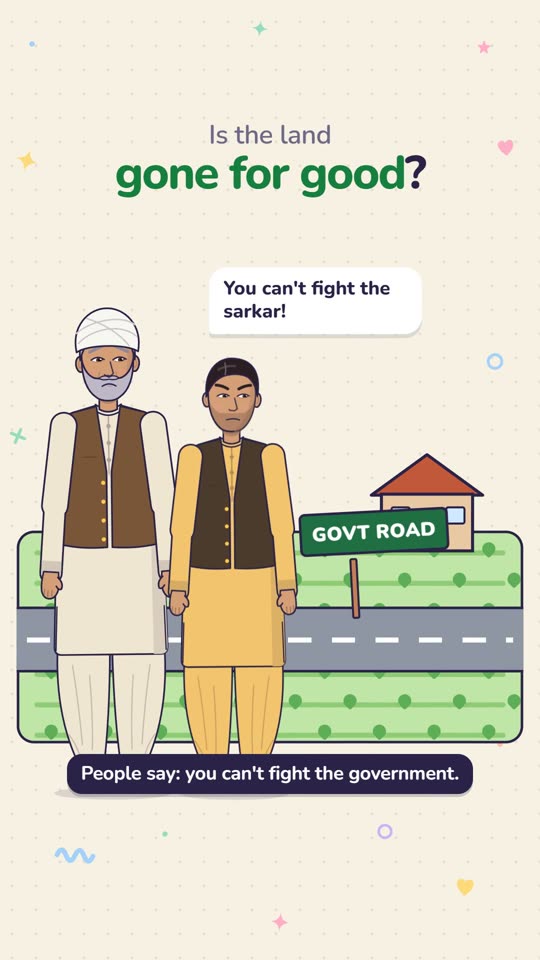
People say: own a second house or plot and FBR taxes you on rent you never got. Not any more.
2022, section 7E: FBR treated 5% of your property's value as your income and taxed it every year, even if the house stood empty. The High Courts split: Peshawar and Balochistan struck it down, Lahore and Sindh kept it. On 7 May 2026 the Federal Constitutional Court held section 7E "ultra vires the Constitution" and "void ab initio", and set aside every notice under it (2026 PLD 155). But rent you really get is still taxed (section 15).
What to do:
1. Got a 7E notice? Show the tax office this ruling: 2026 PLD 155.
2. Already paid it? Ask a tax lawyer about getting it back.
3. And still file your return.
Educational legal information, not legal advice. Every case turns on its own facts. Speak to a lawyer about your own matter. Last checked: 31 October 2026. Review status: Pending advocate review. How we check.