Law study · For law students
Read a judgment in 5 minutes.
In short
Most students start on page one and get lost by page three. Start with the citation, use the headnote as a map, then find facts, issue and holding.
By the FAI Legal editorial desk · 10 October 2026 · 8 slides · 2 min read
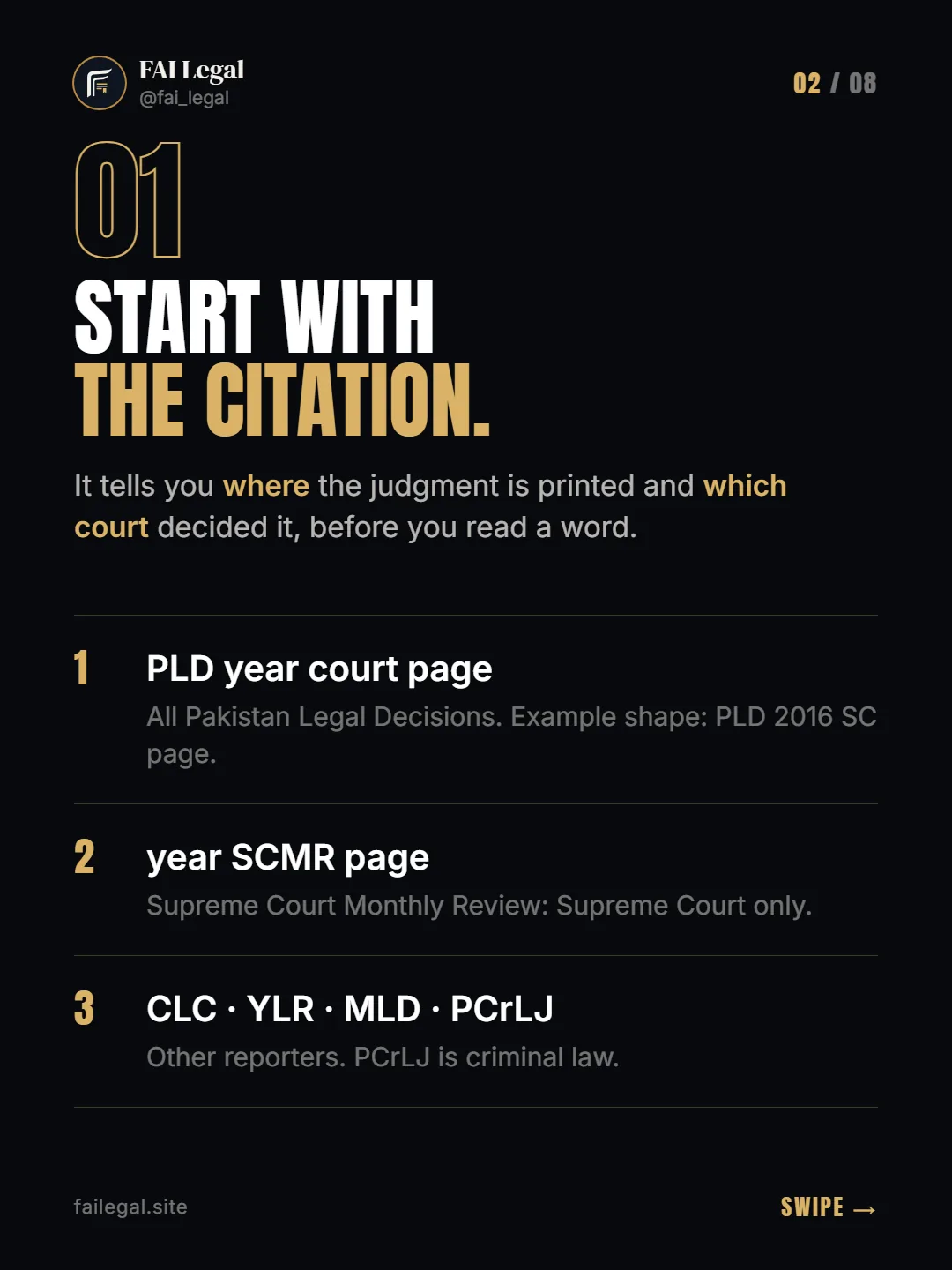

Start with the citation.
It tells you where the judgment is printed and which court decided it, before you read a word.
- PLD year court pageAll Pakistan Legal Decisions. Example shape: PLD 2016 SC page.
- year SCMR pageSupreme Court Monthly Review: Supreme Court only.
- CLC · YLR · MLD · PCrLJOther reporters. PCrLJ is criminal law.
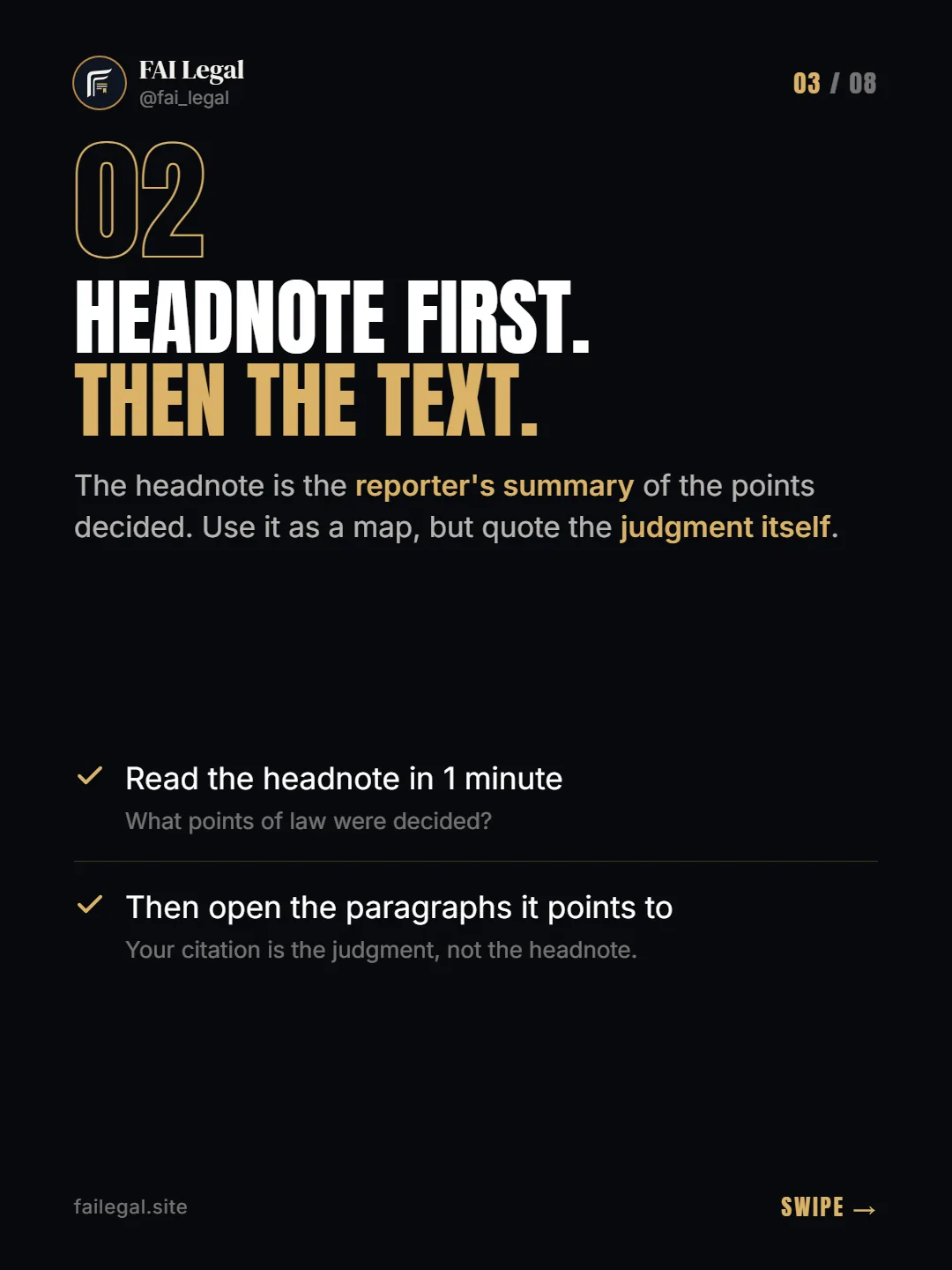
Headnote first. Then the text.
The headnote is the reporter's summary of the points decided. Use it as a map, but quote the judgment itself.
- Read the headnote in 1 minuteWhat points of law were decided?
- Then open the paragraphs it points toYour citation is the judgment, not the headnote.
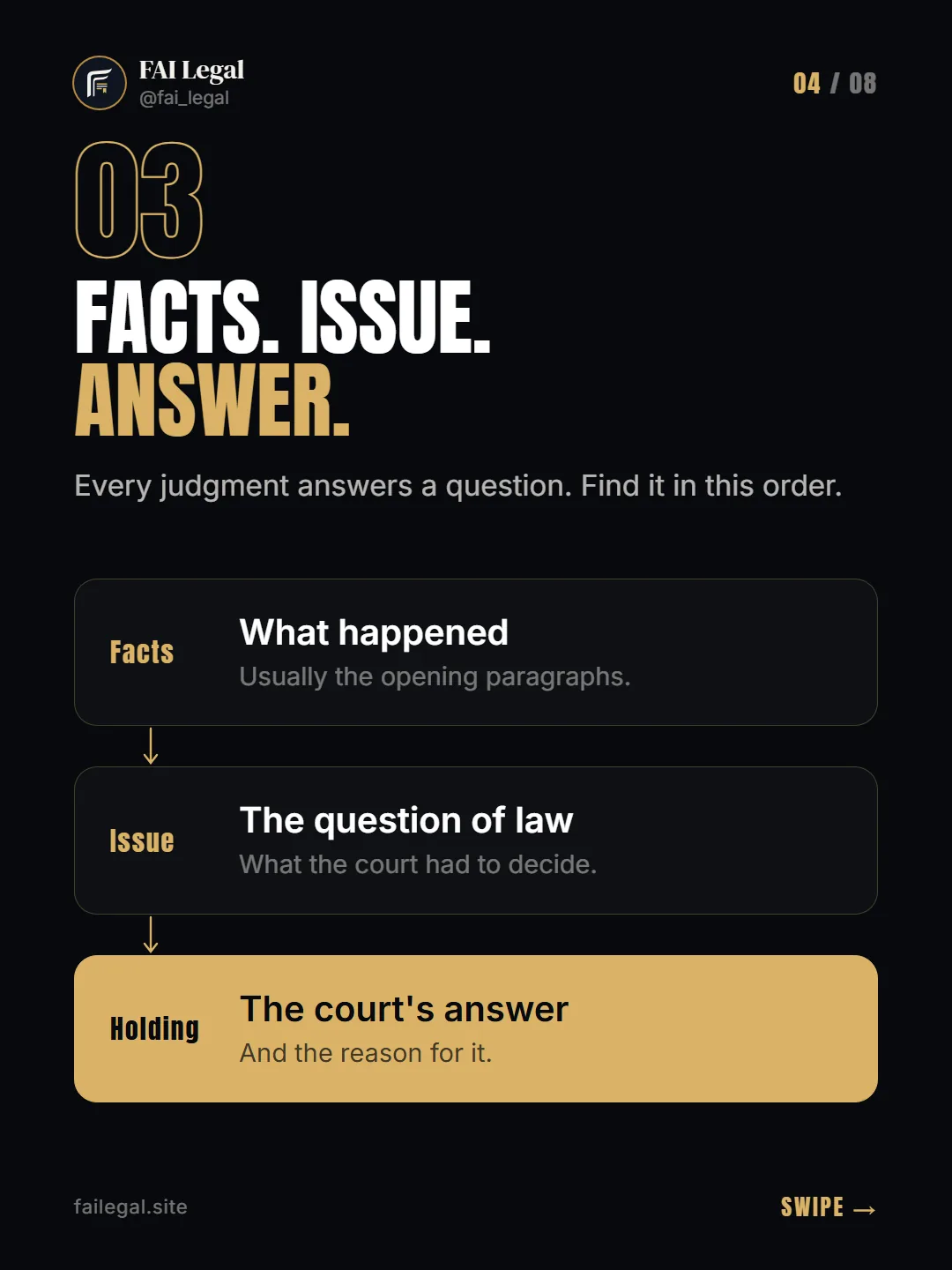
Facts. Issue. Answer.
Every judgment answers a question. Find it in this order.
- Facts: What happenedUsually the opening paragraphs.
- Issue: The question of lawWhat the court had to decide.
- Holding: The court's answerAnd the reason for it.
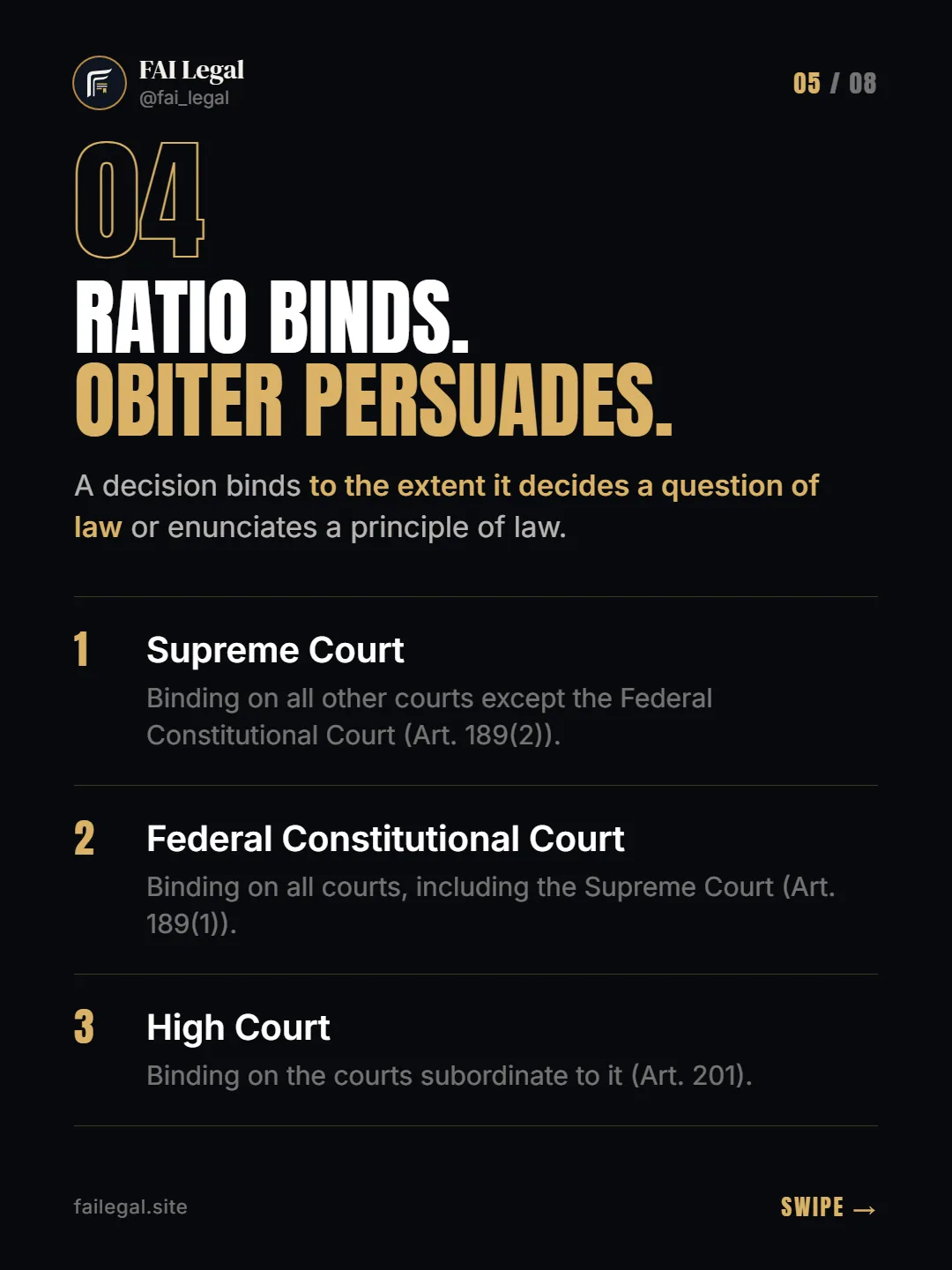
Ratio binds. Obiter persuades.
A decision binds to the extent it decides a question of law or enunciates a principle of law.
- Supreme CourtBinding on all other courts except the Federal Constitutional Court (Art. 189(2)).
- Federal Constitutional CourtBinding on all courts, including the Supreme Court (Art. 189(1)).
- High CourtBinding on the courts subordinate to it (Art. 201).
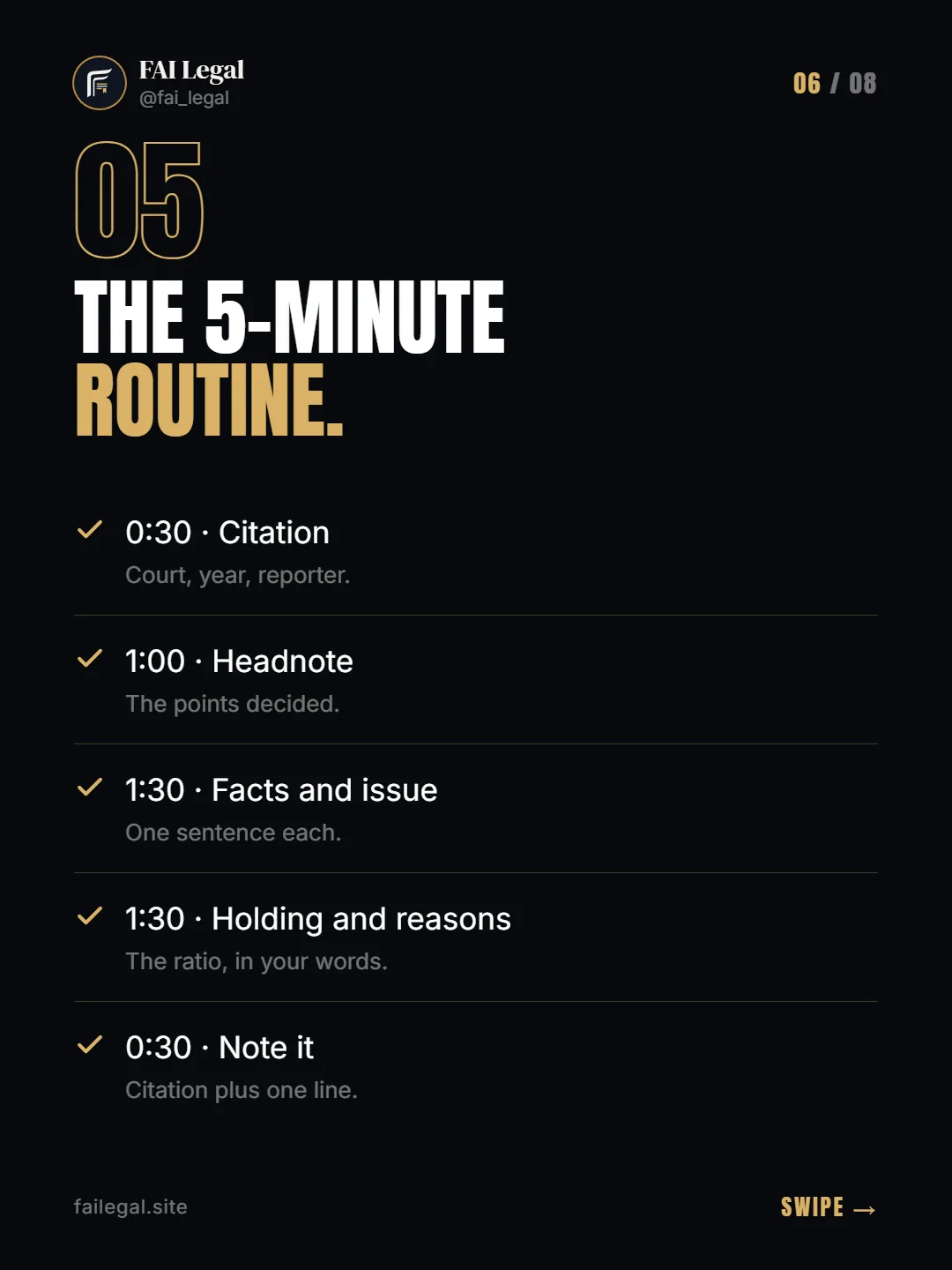
The 5-minute routine.
- 0:30 · CitationCourt, year, reporter.
- 1:00 · HeadnoteThe points decided.
- 1:30 · Facts and issueOne sentence each.
- 1:30 · Holding and reasonsThe ratio, in your words.
- 0:30 · Note itCitation plus one line.
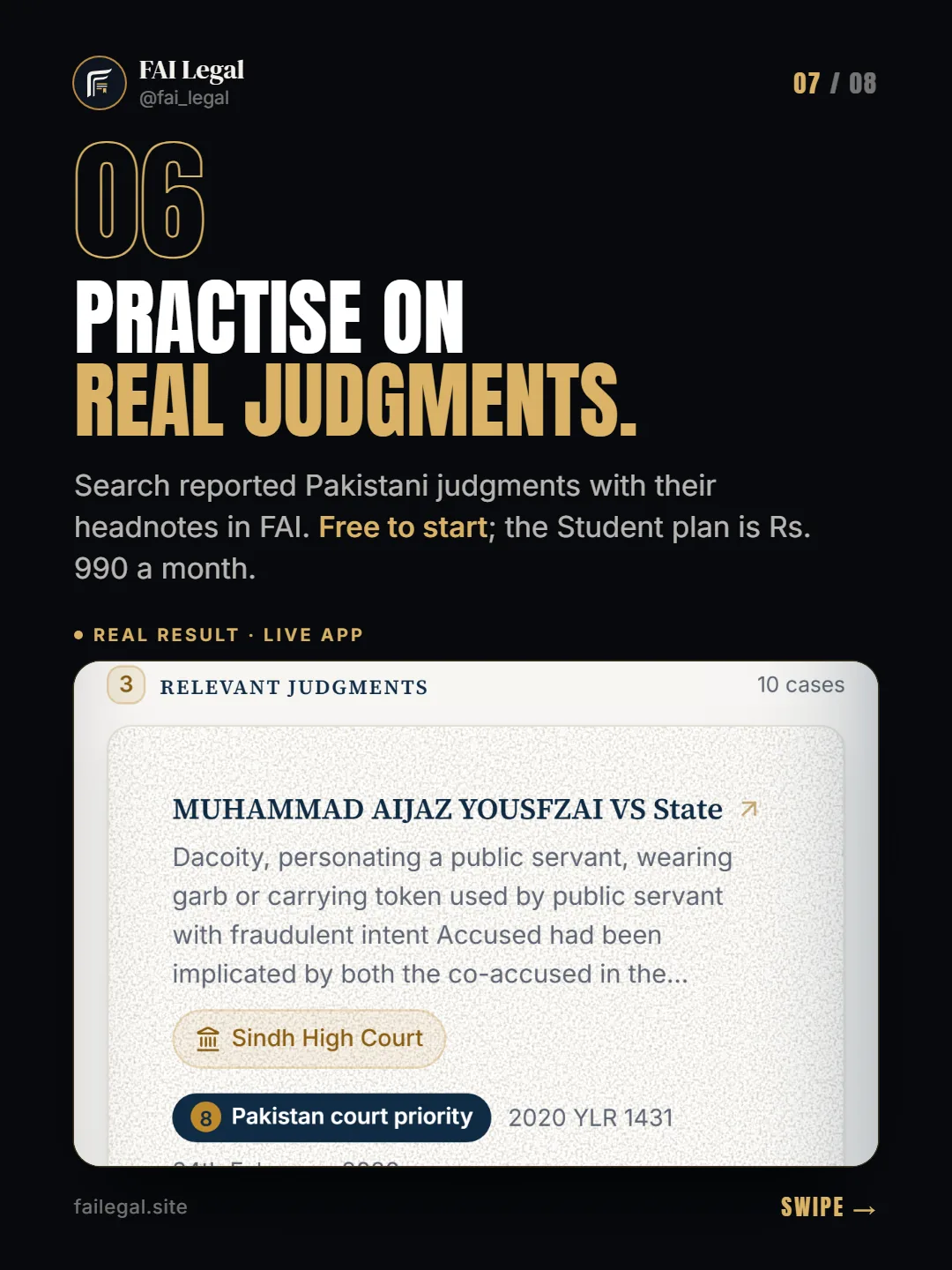
Practise on real judgments.
Search reported Pakistani judgments with their headnotes in FAI. Free to start; the Student plan is Rs. 990 a month.
What this does not mean
- The headnote is the reporter summary, not the judgment. Use it as a map, but cite the judgment itself.
- Not everything in a judgment binds. A decision binds to the extent it decides a question of law or enunciates a principle of law. Obiter only persuades.
- A High Court decision binds only the courts subordinate to it (Art. 201).
Questions people ask
How to read a case law citation in Pakistan?
A citation shows the reporter, year and page. PLD is All Pakistan Legal Decisions, SCMR is the Supreme Court Monthly Review for the Supreme Court only, and CLC, YLR, MLD and PCrLJ are other reporters, with PCrLJ for criminal law.
What is a headnote in a judgment?
It is the reporter summary of the points decided. Read it first as a map, then open the paragraphs it points to.
What is the difference between ratio and obiter?
The ratio is the part that decides a question of law or states a principle of law, and it binds. Obiter persuades but does not bind.
Which court judgments are binding in Pakistan?
Federal Constitutional Court decisions bind all courts, including the Supreme Court (Art. 189(1)). Supreme Court decisions bind all other courts except the Federal Constitutional Court (Art. 189(2)). High Court decisions bind courts subordinate to it (Art. 201).
How can law students read a judgment quickly?
Check the citation, read the headnote, note the facts and issue in one sentence each, then the holding and reasons in your own words, and finish with the citation plus one line.
Sources
- Constitution of Pakistan, 1973 · Article 189
Decisions binding on other courts Pakistan Code - Constitution of Pakistan, 1973 · Article 201
Decision of High Court binding on subordinate Courts Pakistan Code
Educational legal information, not legal advice. Every case turns on its own facts. Speak to a qualified lawyer about your situation. Review status: Pending advocate review. How we check.