Law study · For law students
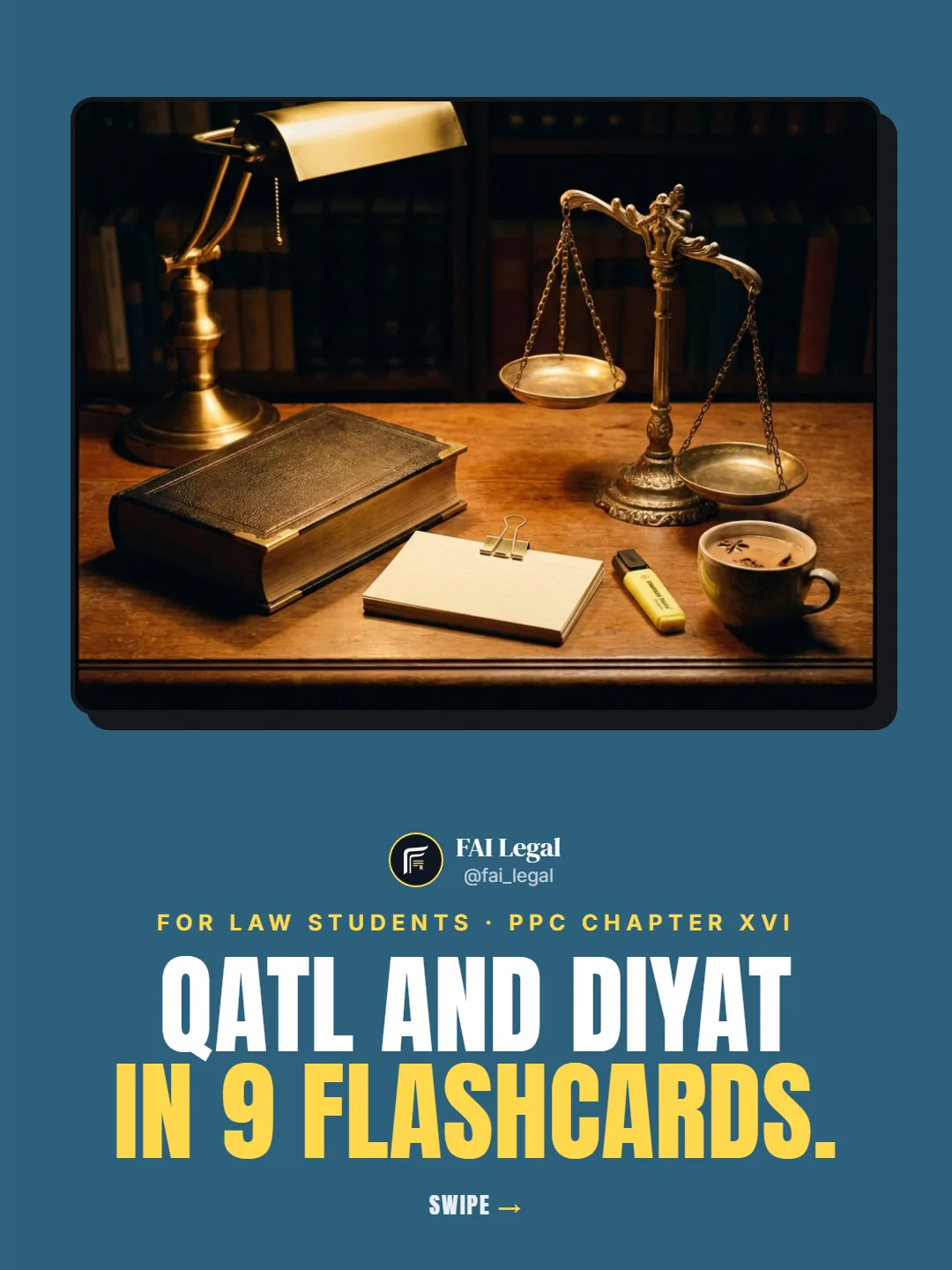
Qatl and diyat in 9 flashcards.
In short
PPC Chapter XVI on one page: the three kinds of qatl, the compensation words, and the punishments side by side, straight from the Code.
By the FAI Legal editorial desk · 10 October 2026 · 11 slides · 2 min read
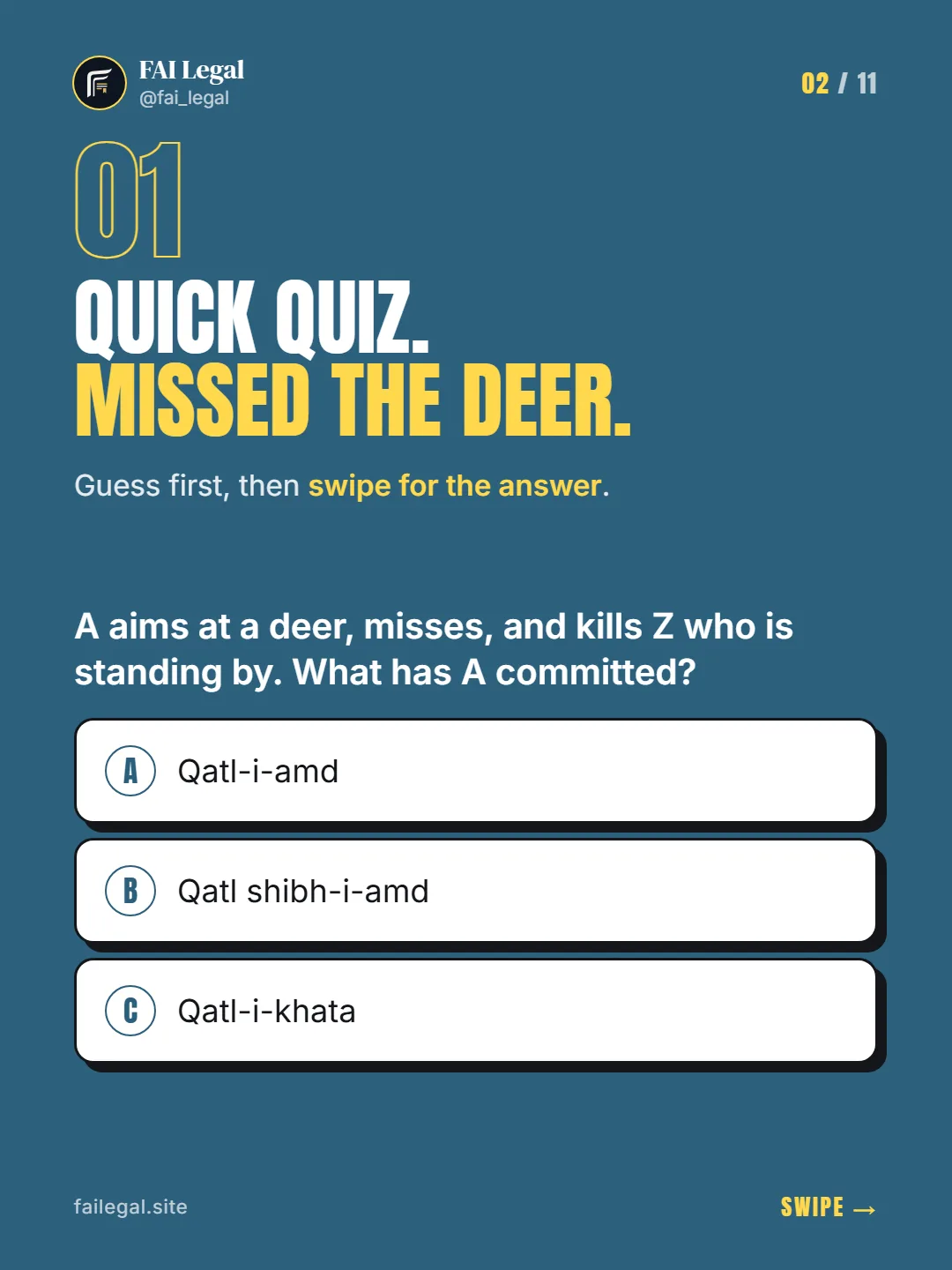
Quick quiz. Missed the deer.
Guess first, then swipe for the answer.
- A. Qatl-i-amd
- B. Qatl shibh-i-amd
- C. Qatl-i-khata
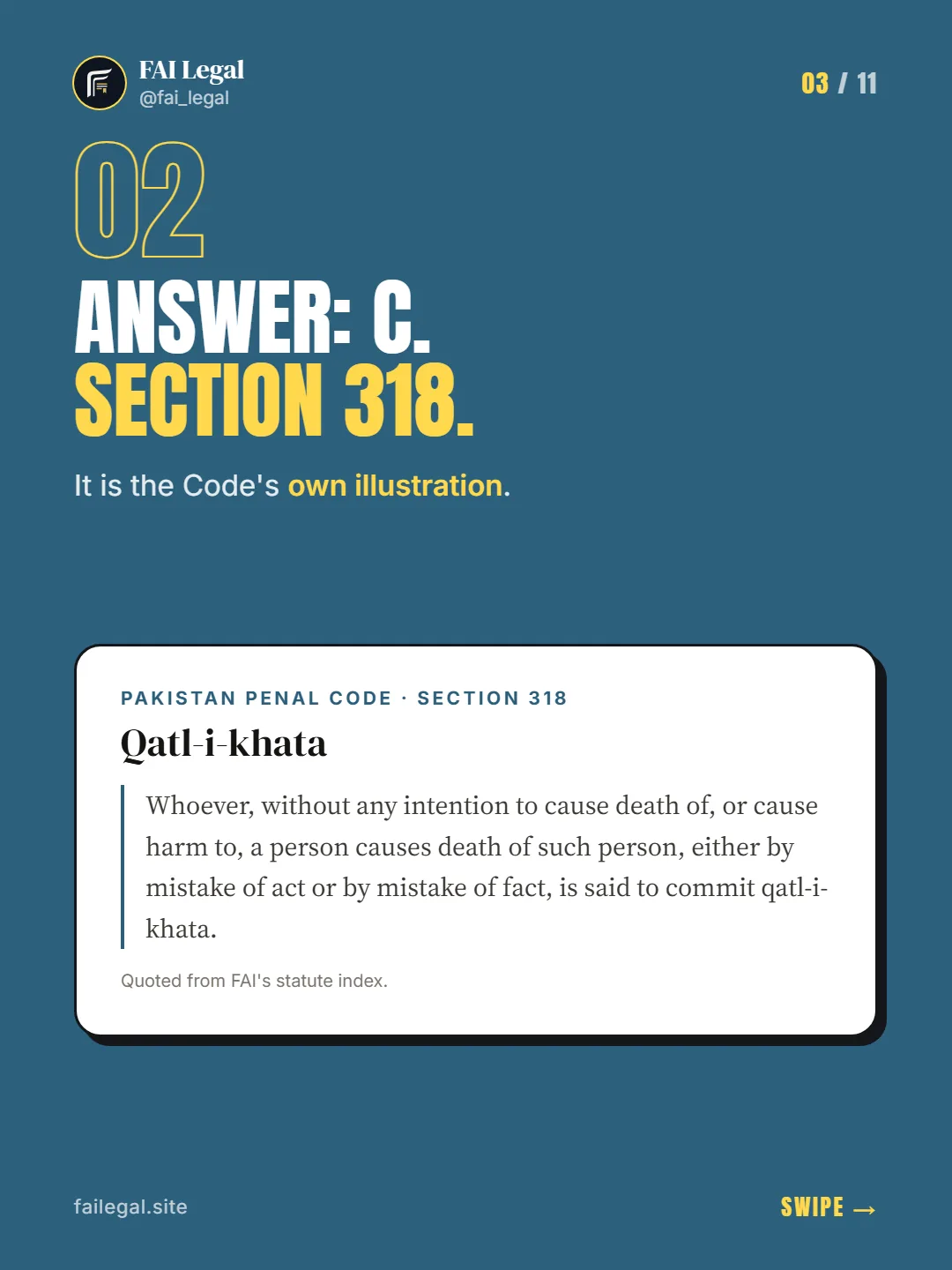
Answer: C. Section 318.
It is the Code's own illustration.
“Whoever, without any intention to cause death of, or cause harm to, a person causes death of such person, either by mistake of act or by mistake of fact, is said to commit qatl-i-khata.”
Pakistan Penal Code · Section 318, Qatl-i-khata
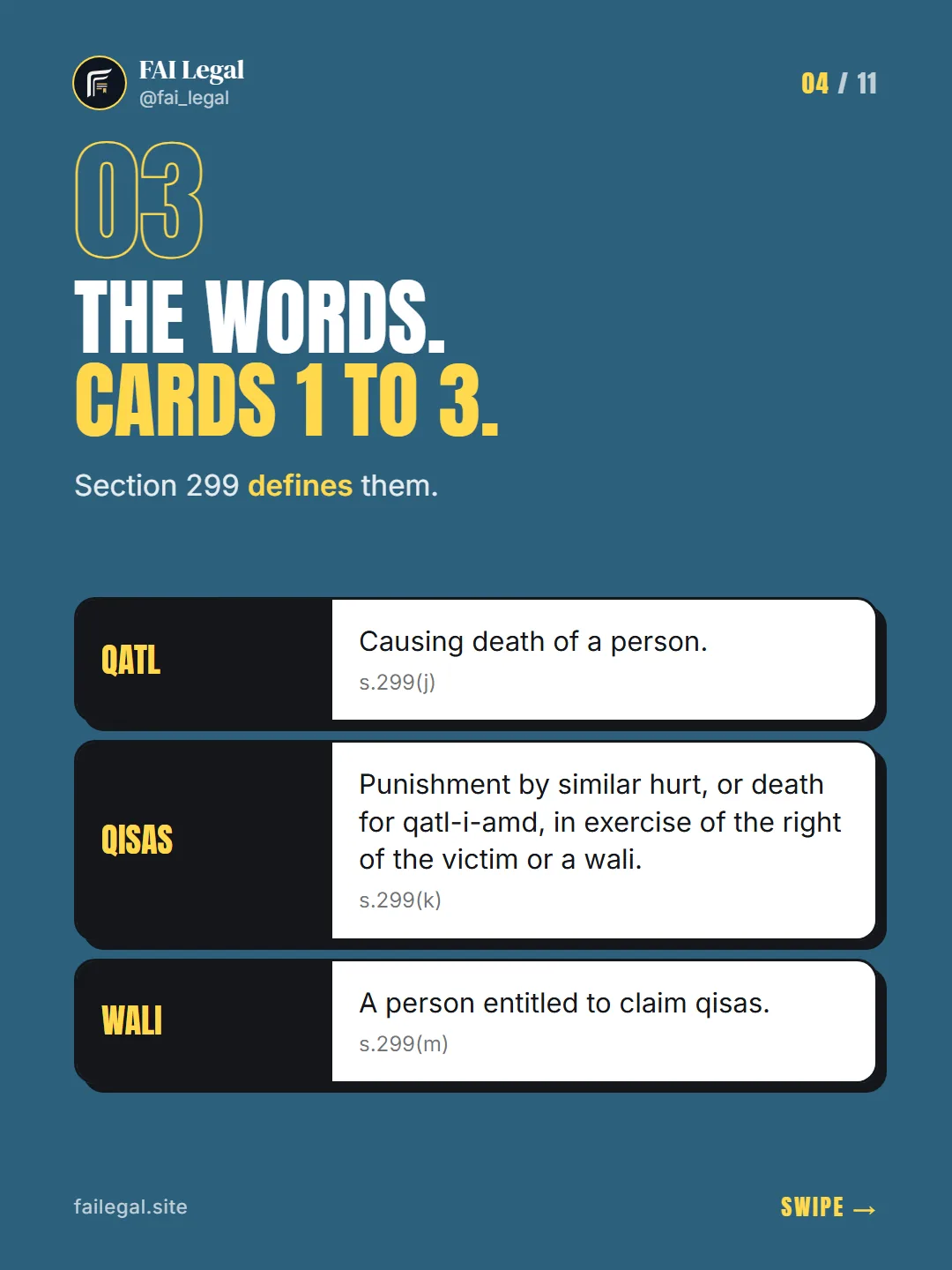
The words. Cards 1 to 3.
Section 299 defines them.
- QatlCausing death of a person. (s.299(j))
- QisasPunishment by similar hurt, or death for qatl-i-amd, in exercise of the right of the victim or a wali. (s.299(k))
- WaliA person entitled to claim qisas. (s.299(m))
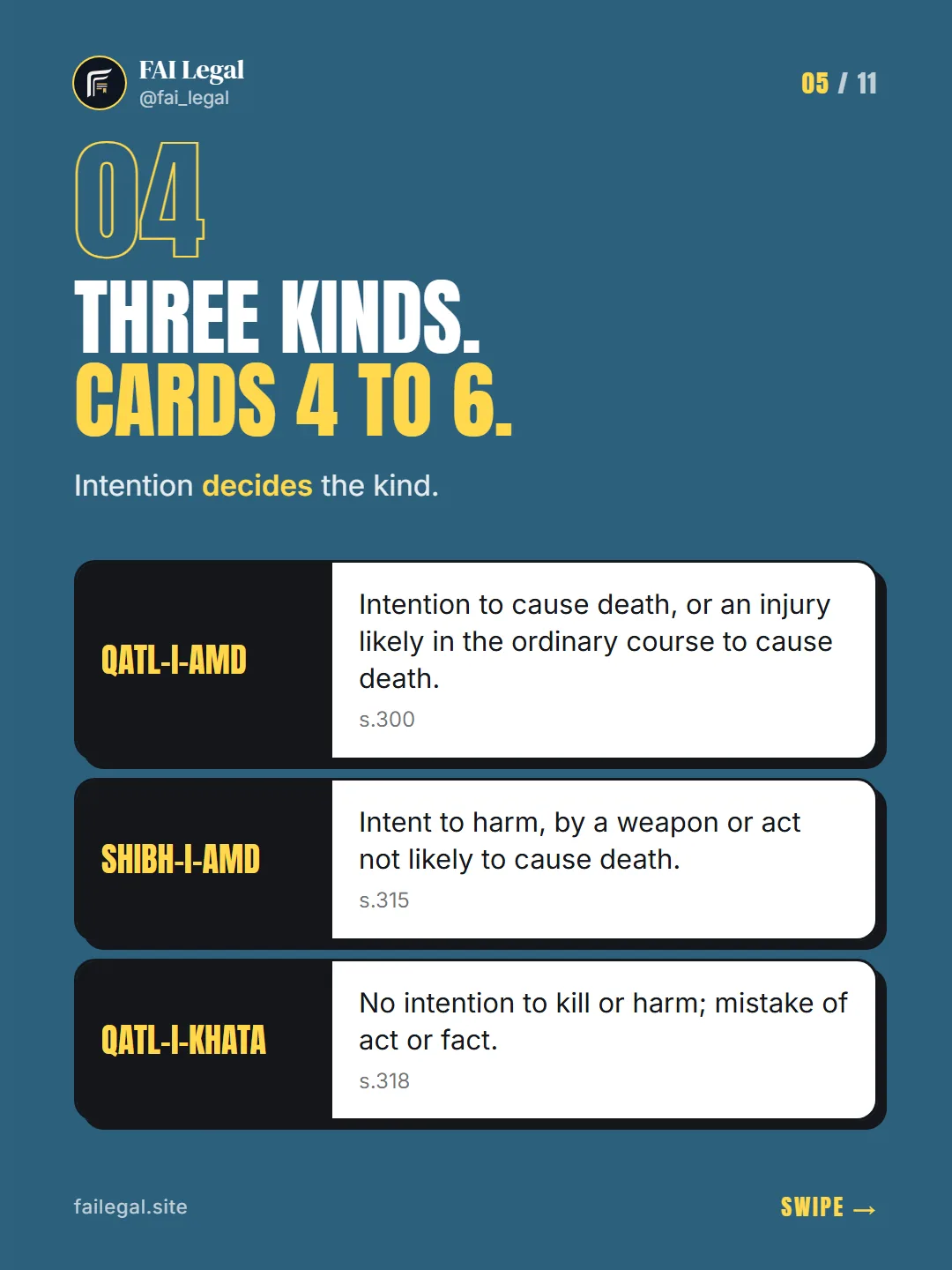
Three kinds. Cards 4 to 6.
Intention decides the kind.
- Qatl-i-amdIntention to cause death, or an injury likely in the ordinary course to cause death. (s.300)
- Shibh-i-amdIntent to harm, by a weapon or act not likely to cause death. (s.315)
- Qatl-i-khataNo intention to kill or harm; mistake of act or fact. (s.318)
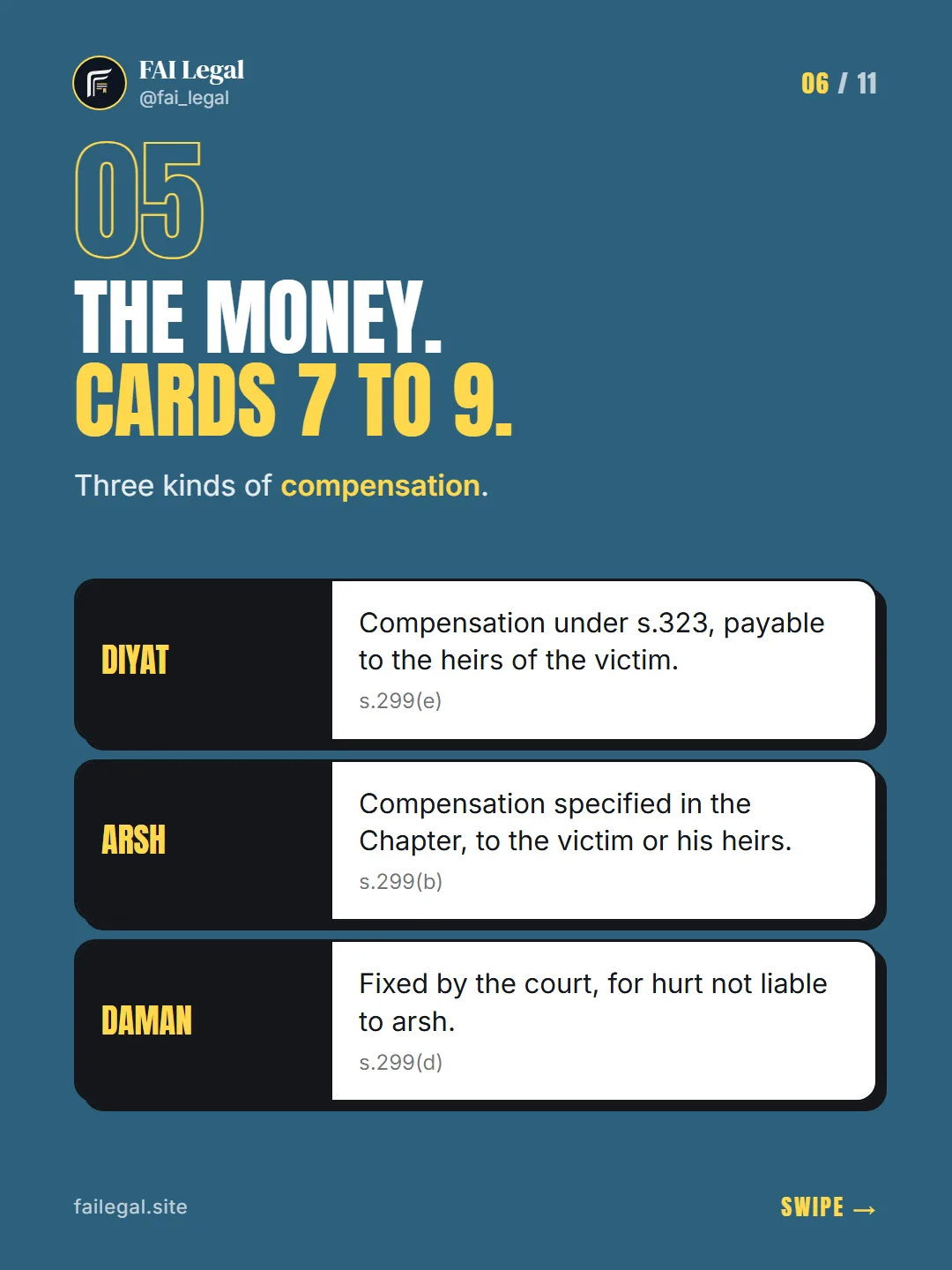
The money. Cards 7 to 9.
Three kinds of compensation.
- DiyatCompensation under s.323, payable to the heirs of the victim. (s.299(e))
- ArshCompensation specified in the Chapter, to the victim or his heirs. (s.299(b))
- DamanFixed by the court, for hurt not liable to arsh. (s.299(d))
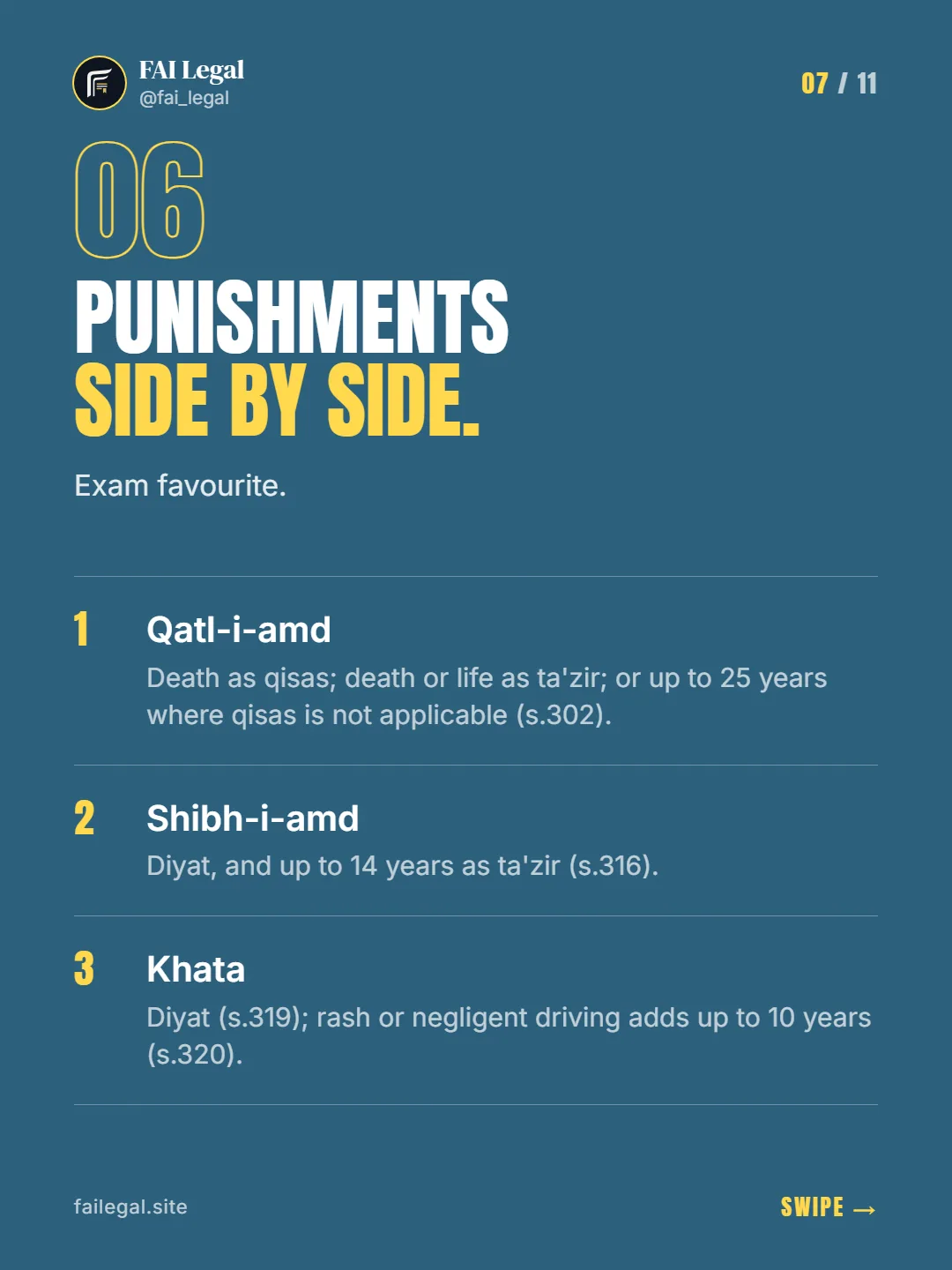
Punishments side by side.
Exam favourite.
- Qatl-i-amdDeath as qisas; death or life as ta'zir; or up to 25 years where qisas is not applicable (s.302).
- Shibh-i-amdDiyat, and up to 14 years as ta'zir (s.316).
- KhataDiyat (s.319); rash or negligent driving adds up to 10 years (s.320).
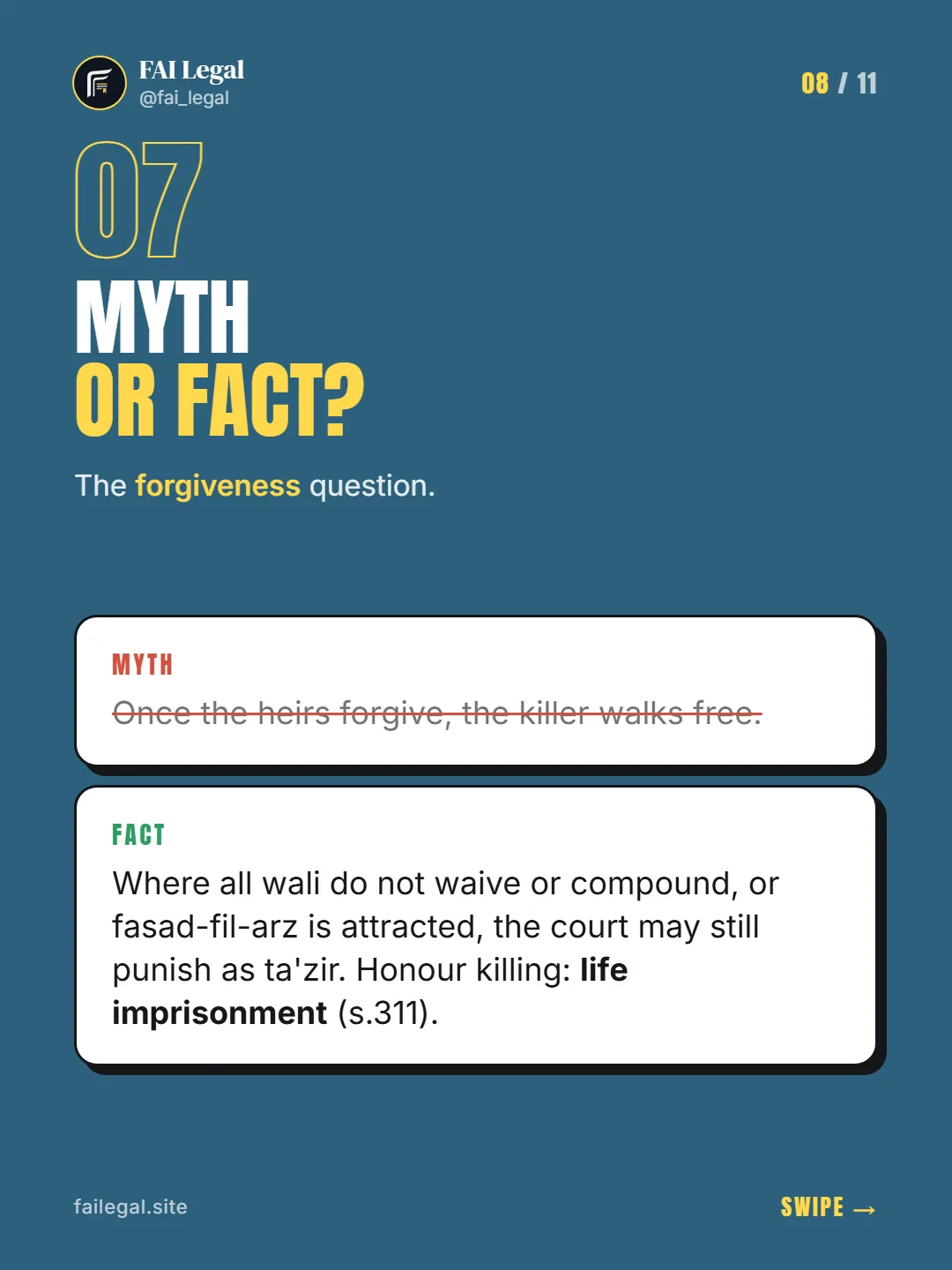
Myth or fact?
The forgiveness question.
- Myth: Once the heirs forgive, the killer walks free.
- Fact: Where all wali do not waive or compound, or fasad-fil-arz is attracted, the court may still punish as ta'zir. Honour killing: life imprisonment (s.311).
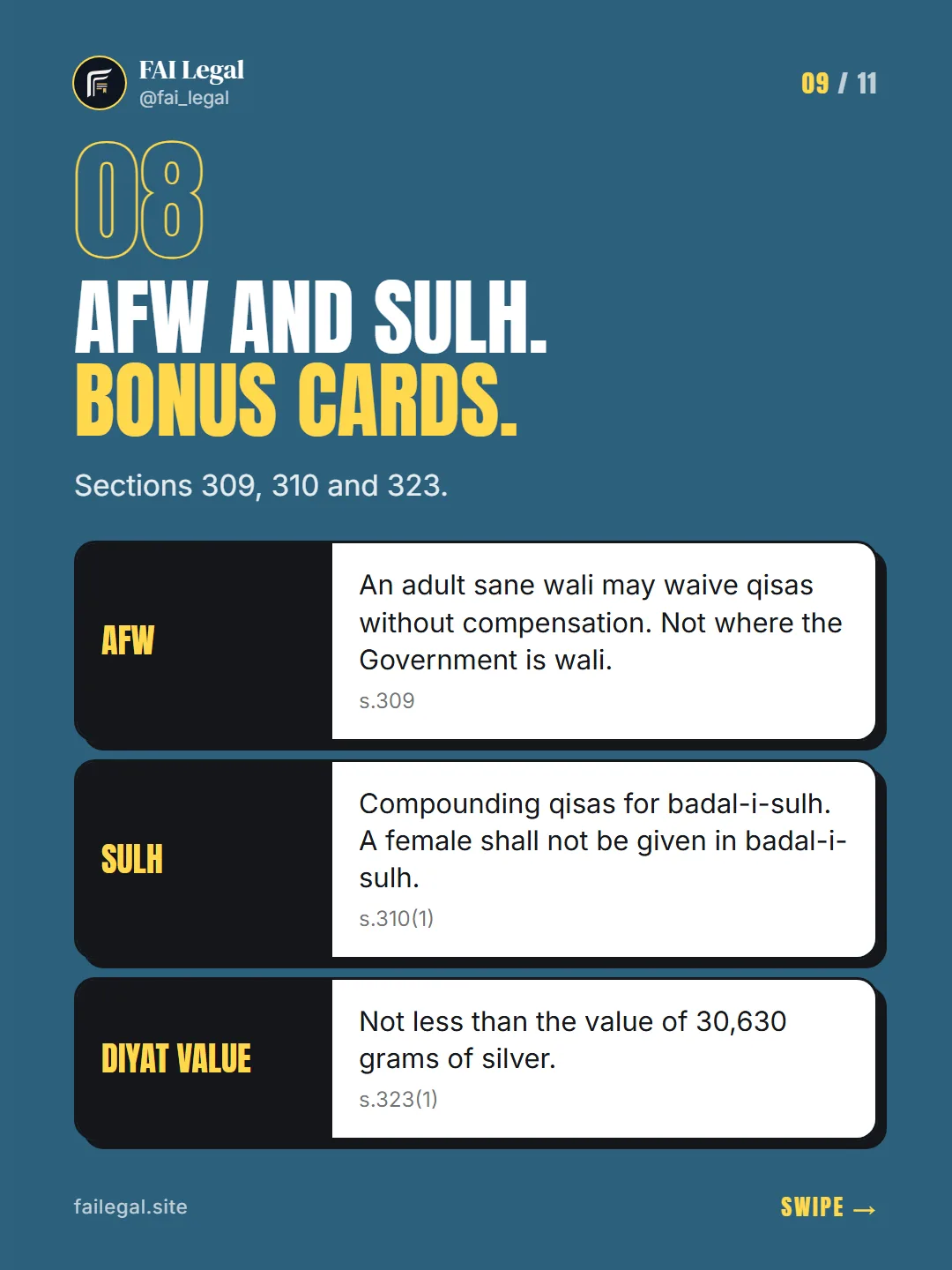
Afw and sulh. Bonus cards.
Sections 309, 310 and 323.
- AfwAn adult sane wali may waive qisas without compensation. Not where the Government is wali. (s.309)
- SulhCompounding qisas for badal-i-sulh. A female shall not be given in badal-i-sulh. (s.310(1))
- Diyat valueNot less than the value of 30,630 grams of silver. (s.323(1))
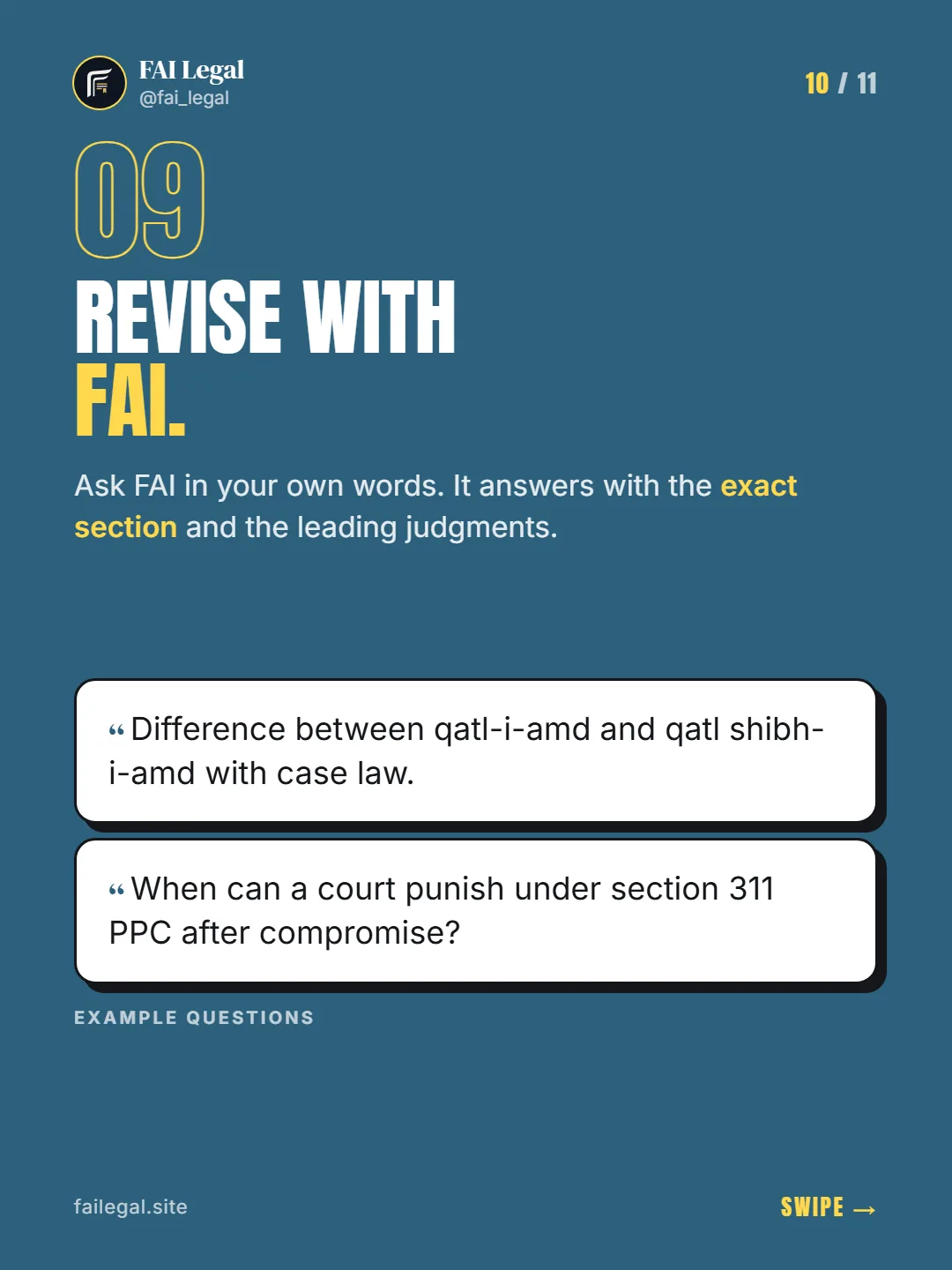
Revise with FAI.
Ask FAI in your own words. It answers with the exact section and the leading judgments.
- Difference between qatl-i-amd and qatl shibh-i-amd with case law.
- When can a court punish under section 311 PPC after compromise?
Example questions
What this does not mean
- Forgiveness by the heirs does not always end the case. Where all wali do not waive or compound, or fasad-fil-arz is attracted, the court may still punish as ta'zir (s.311).
- A wali cannot waive qisas without compensation where the Government is the wali (s.309).
- A female shall not be given in badal-i-sulh (s.310(1)).
Questions people ask
What is the punishment for 302 PPC in Pakistan?
For qatl-i-amd, death as qisas, death or life imprisonment as ta'zir, or up to 25 years where qisas is not applicable (s.302).
What is the difference between qatl-i-amd, shibh-i-amd and qatl-i-khata?
Qatl-i-amd involves intention to cause death or an injury likely to cause death (s.300). Shibh-i-amd is intent to harm with a weapon or act not likely to cause death (s.315). Qatl-i-khata has no intention to kill or harm and happens by mistake of act or fact (s.318).
What is the diyat amount in Pakistan?
Section 323(1) PPC fixes diyat at not less than the value of 30,630 grams of silver.
Can a murder case be compromised in Pakistan?
An adult sane wali may waive qisas (afw, s.309) or compound it for badal-i-sulh (sulh, s.310). But where all wali do not waive or compound, or fasad-fil-arz is attracted, the court may still punish as ta'zir, and honour killing carries life imprisonment (s.311).
What is the difference between diyat, arsh and daman?
Diyat is compensation under s.323 payable to the heirs of the victim. Arsh is compensation specified in the Chapter, paid to the victim or his heirs. Daman is fixed by the court for hurt not liable to arsh (s.299).
Sources
- Pakistan Penal Code · Section 318
Qatl-i-khata Pakistan Code
Educational legal information, not legal advice. Every case turns on its own facts. Speak to a qualified lawyer about your situation. Review status: Pending advocate review. How we check.