Law study · For law students
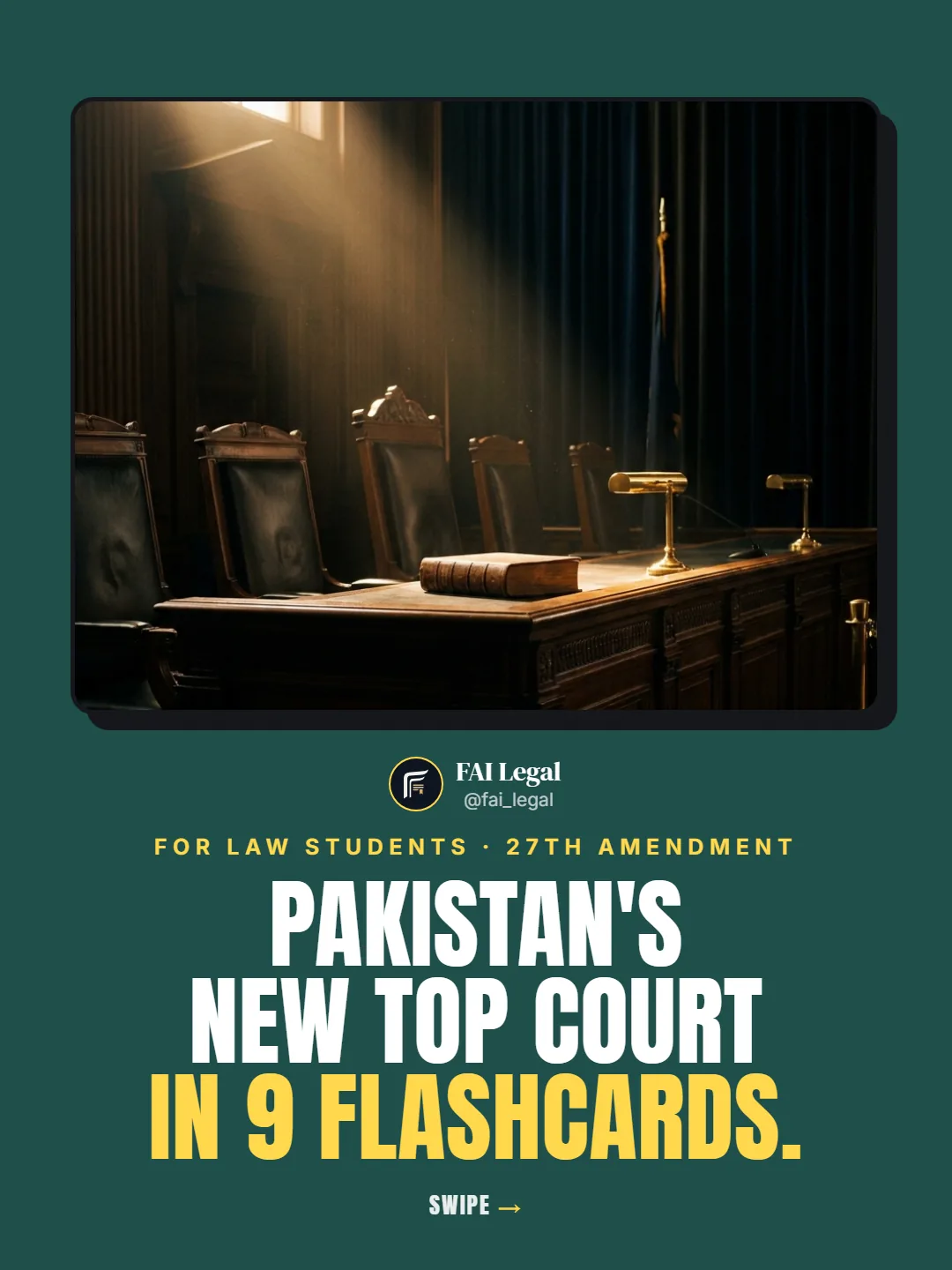
Pakistan's new top court in 9 flashcards.
In short
The 27th Amendment created the Federal Constitutional Court. Its decisions now bind every court, including the Supreme Court.
By the FAI Legal editorial desk · 10 October 2026 · 11 slides · 2 min read
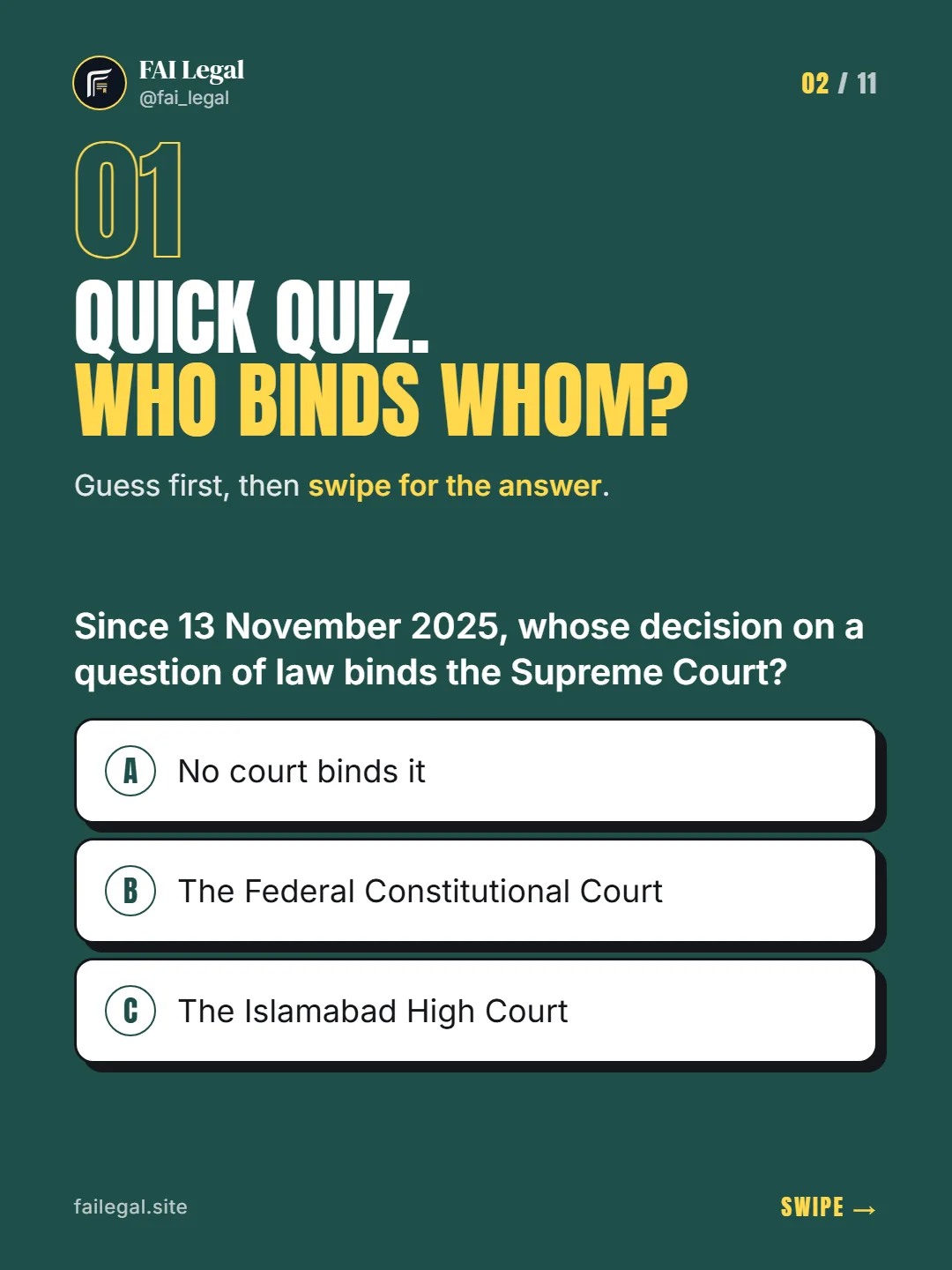
Quick quiz. Who binds whom?
Guess first, then swipe for the answer.
- A. No court binds it
- B. The Federal Constitutional Court
- C. The Islamabad High Court
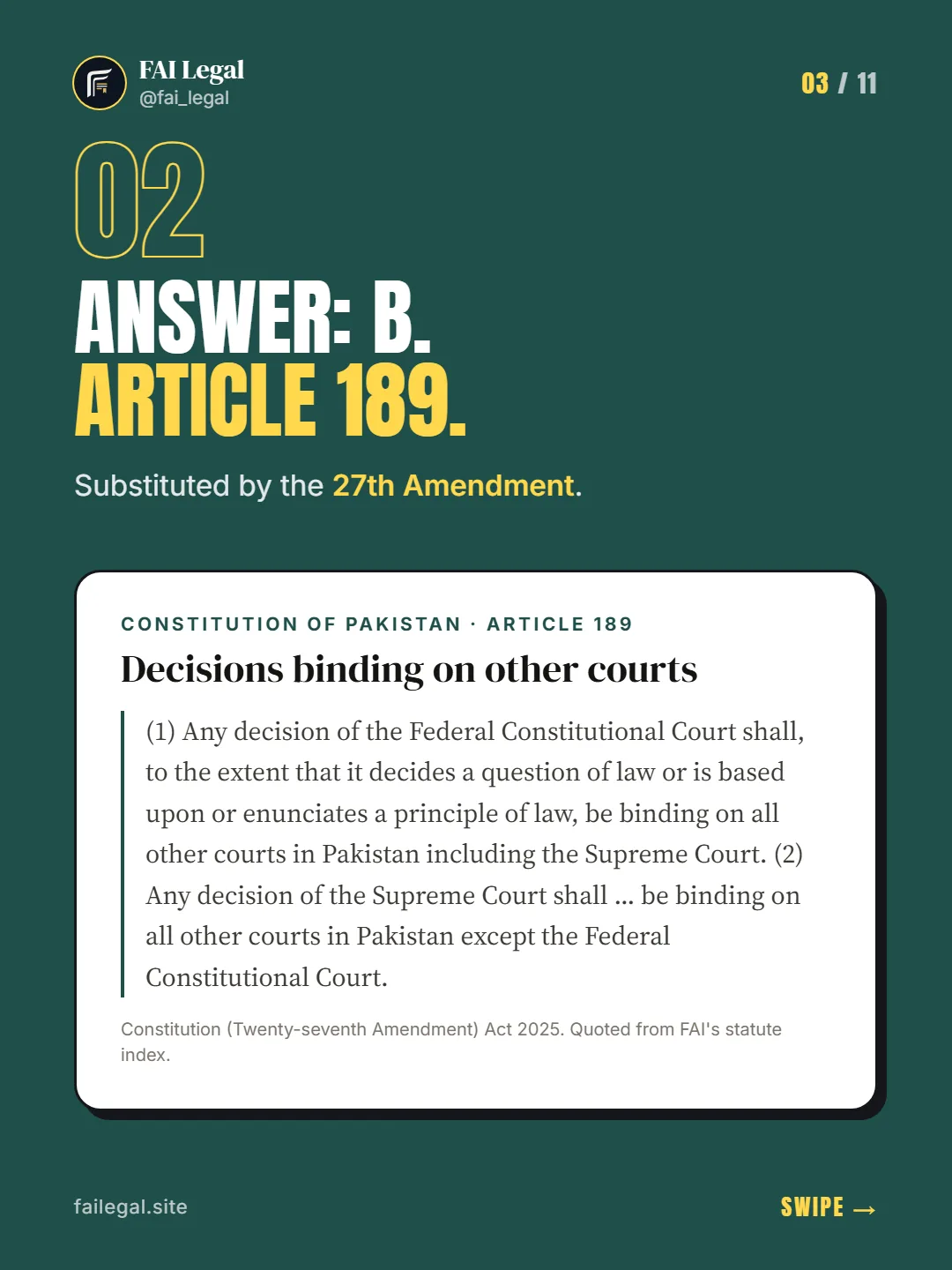
Answer: B. Article 189.
Substituted by the 27th Amendment.
“(1) Any decision of the Federal Constitutional Court shall, to the extent that it decides a question of law or is based upon or enunciates a principle of law, be binding on all other courts in Pakistan including the Supreme Court. (2) Any decision of the Supreme Court shall … be binding on all other courts in Pakistan except the Federal Constitutional Court.”
Constitution of Pakistan · Article 189, Decisions binding on other courts
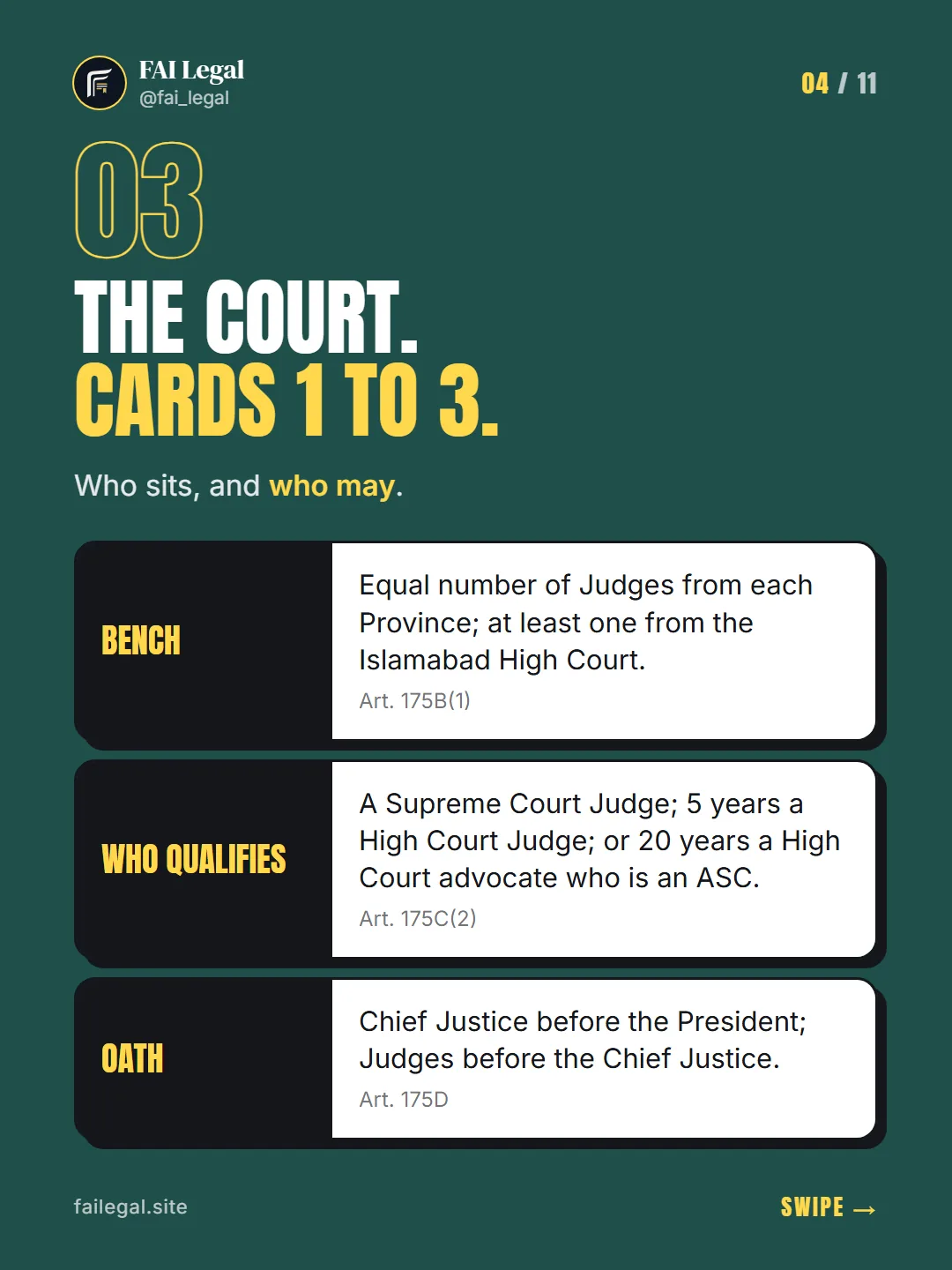
The court. Cards 1 to 3.
Who sits, and who may.
- BenchEqual number of Judges from each Province; at least one from the Islamabad High Court. (Art. 175B(1))
- Who qualifiesA Supreme Court Judge; 5 years a High Court Judge; or 20 years a High Court advocate who is an ASC. (Art. 175C(2))
- OathChief Justice before the President; Judges before the Chief Justice. (Art. 175D)
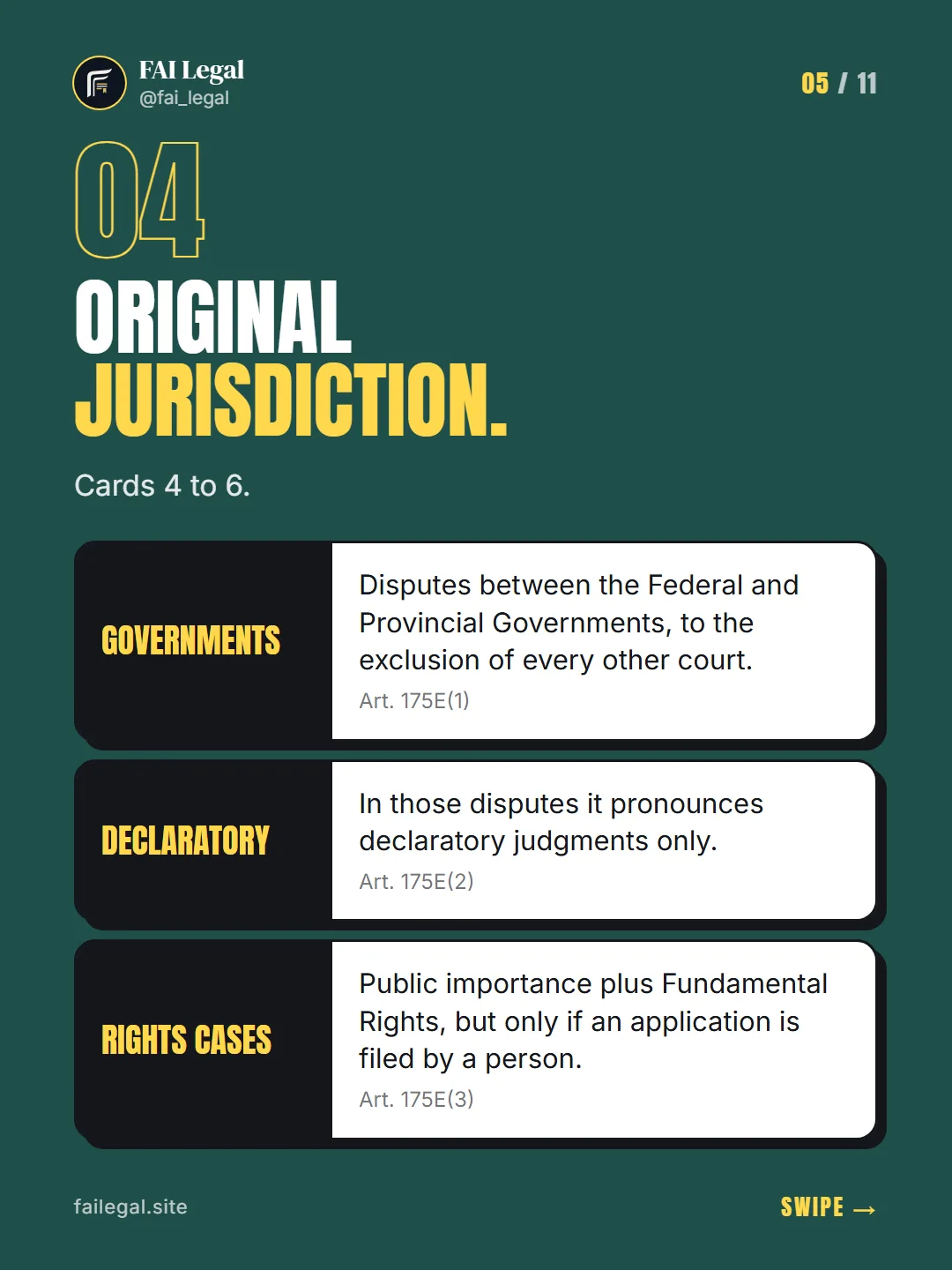
Original jurisdiction.
Cards 4 to 6.
- GovernmentsDisputes between the Federal and Provincial Governments, to the exclusion of every other court. (Art. 175E(1))
- DeclaratoryIn those disputes it pronounces declaratory judgments only. (Art. 175E(2))
- Rights casesPublic importance plus Fundamental Rights, but only if an application is filed by a person. (Art. 175E(3))
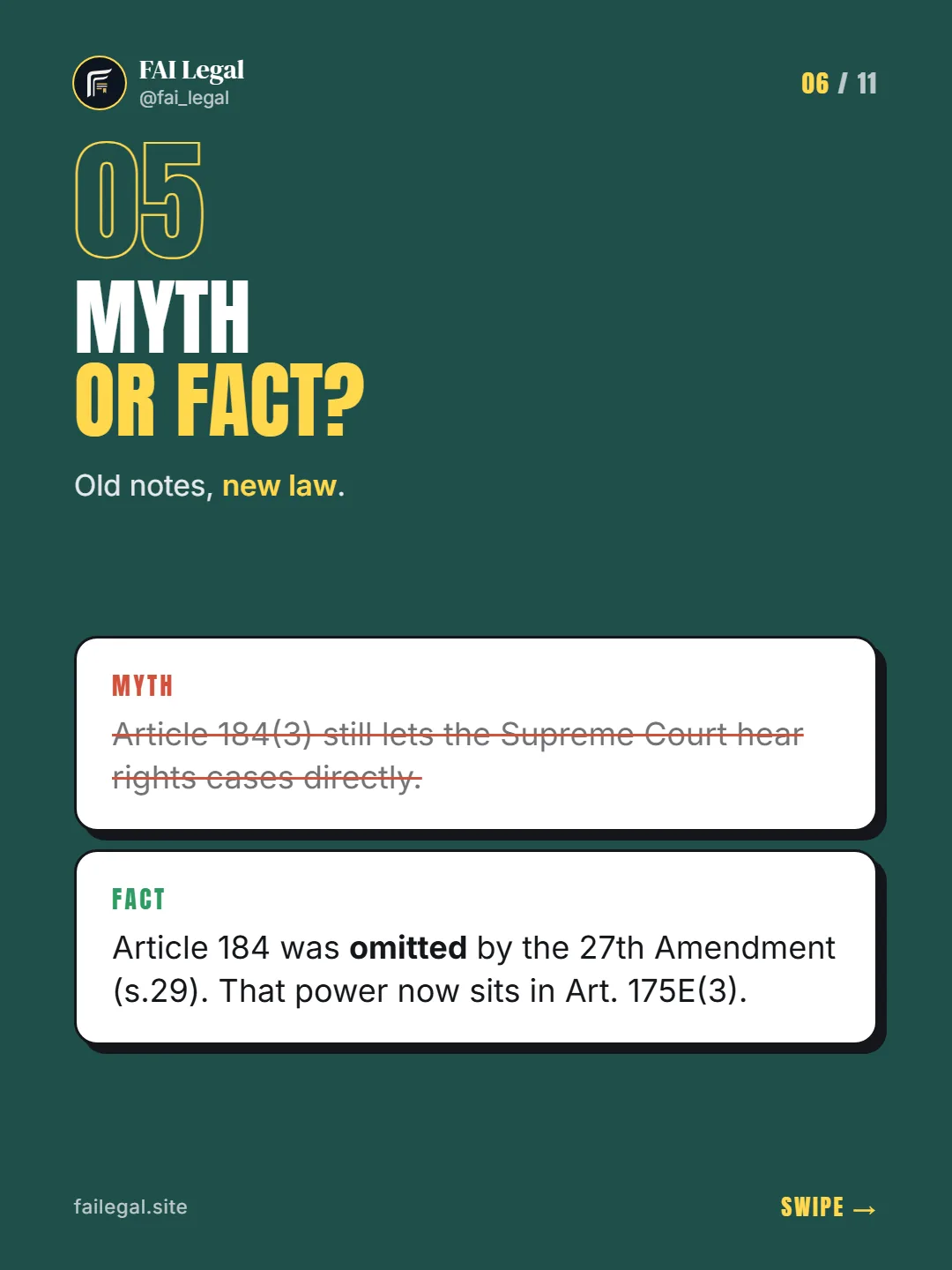
Myth or fact?
Old notes, new law.
- Myth: Article 184(3) still lets the Supreme Court hear rights cases directly.
- Fact: Article 184 was omitted by the 27th Amendment (s.29). That power now sits in Art. 175E(3).
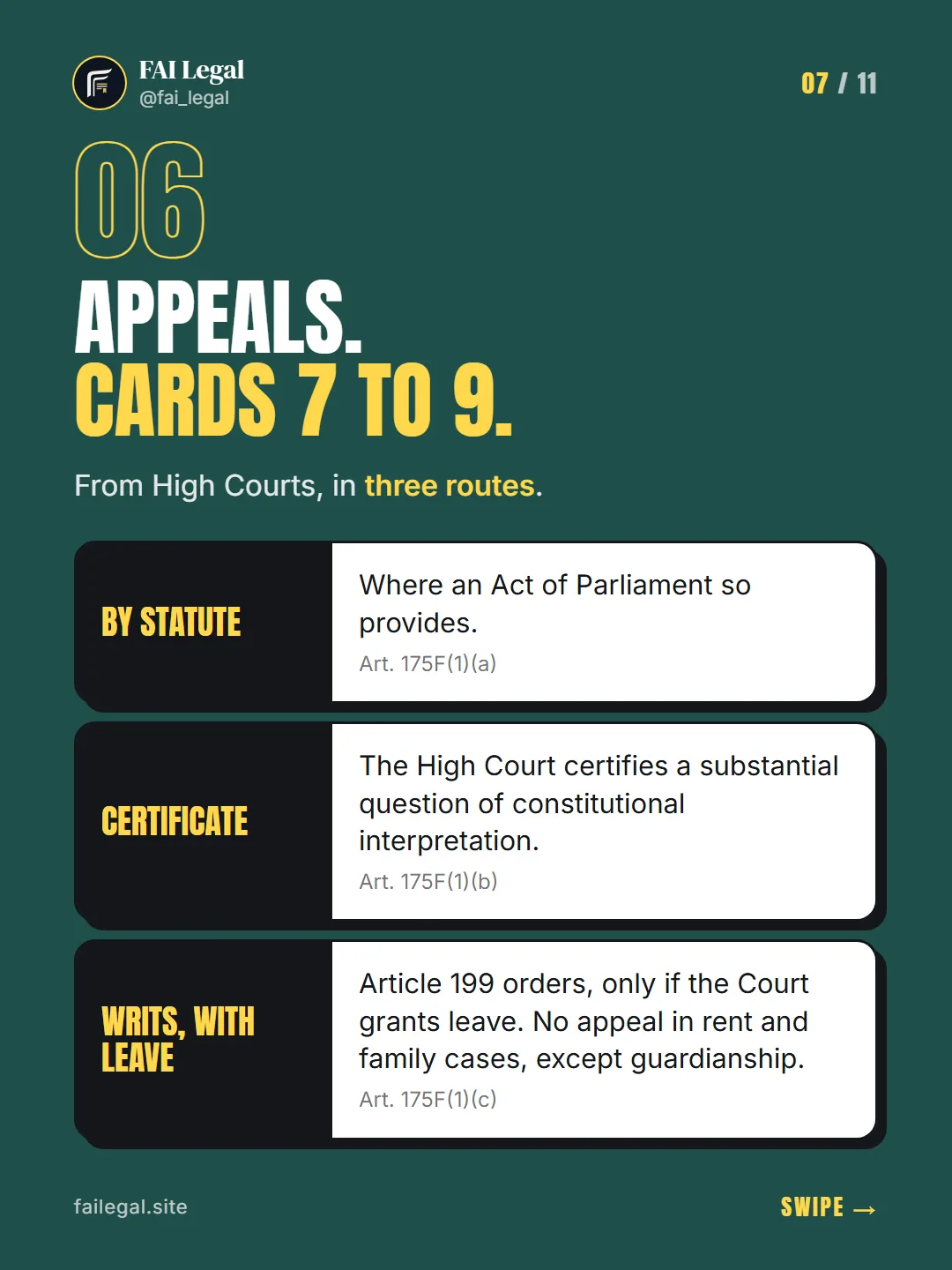
Appeals. Cards 7 to 9.
From High Courts, in three routes.
- By statuteWhere an Act of Parliament so provides. (Art. 175F(1)(a))
- CertificateThe High Court certifies a substantial question of constitutional interpretation. (Art. 175F(1)(b))
- Writs, with leaveArticle 199 orders, only if the Court grants leave. No appeal in rent and family cases, except guardianship. (Art. 175F(1)(c))
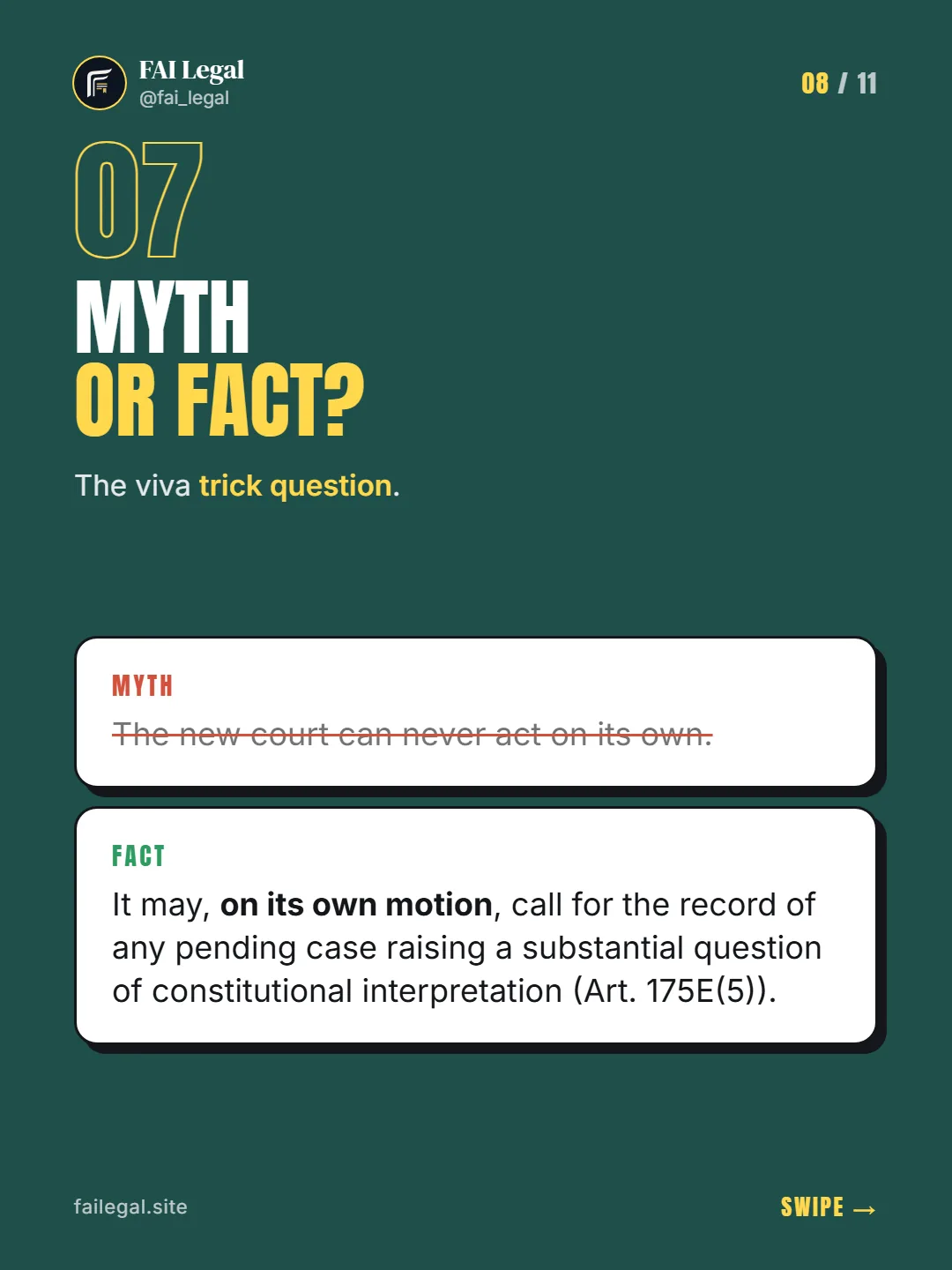
Myth or fact?
The viva trick question.
- Myth: The new court can never act on its own.
- Fact: It may, on its own motion, call for the record of any pending case raising a substantial question of constitutional interpretation (Art. 175E(5)).
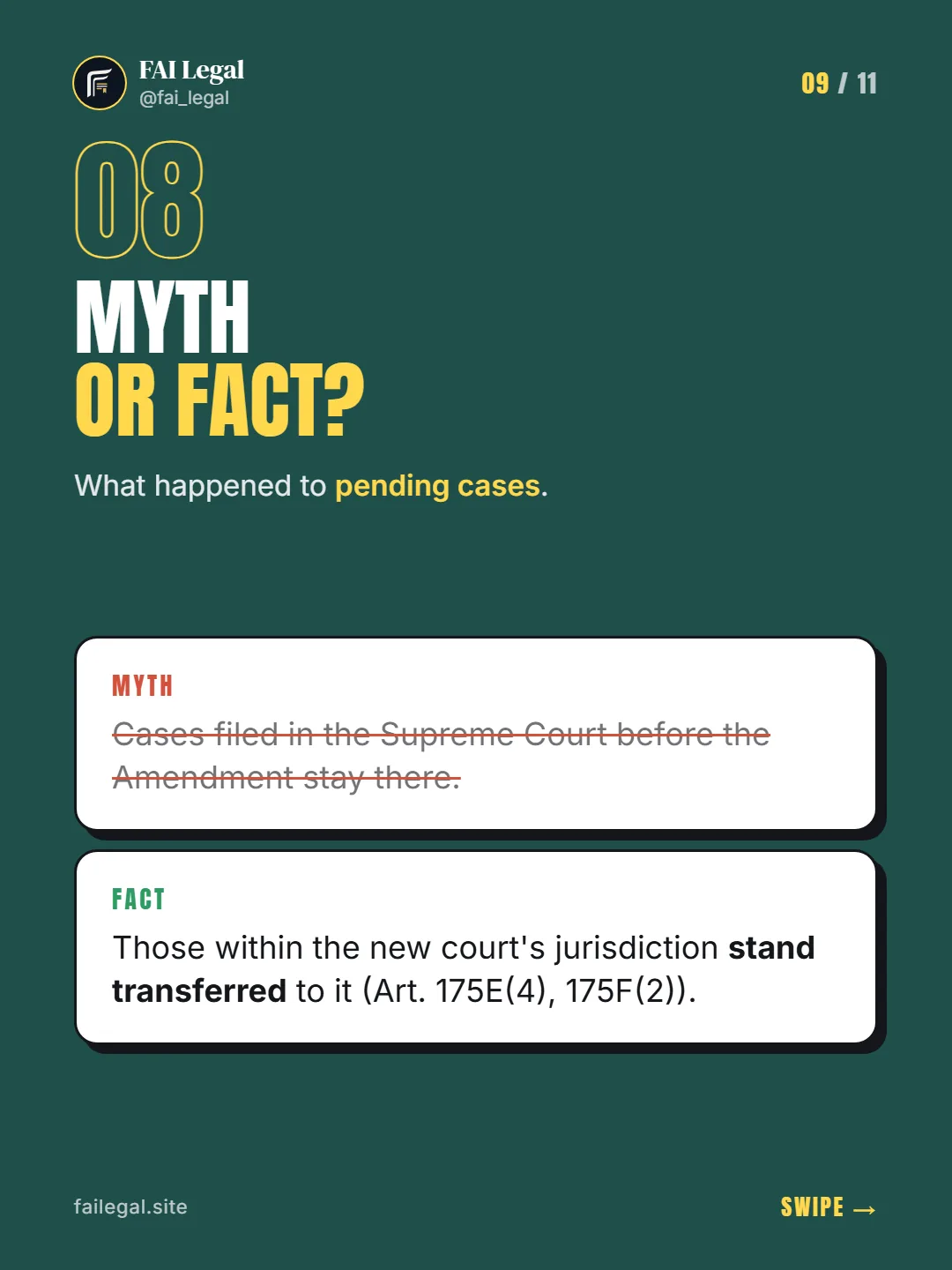
Myth or fact?
What happened to pending cases.
- Myth: Cases filed in the Supreme Court before the Amendment stay there.
- Fact: Those within the new court's jurisdiction stand transferred to it (Art. 175E(4), 175F(2)).
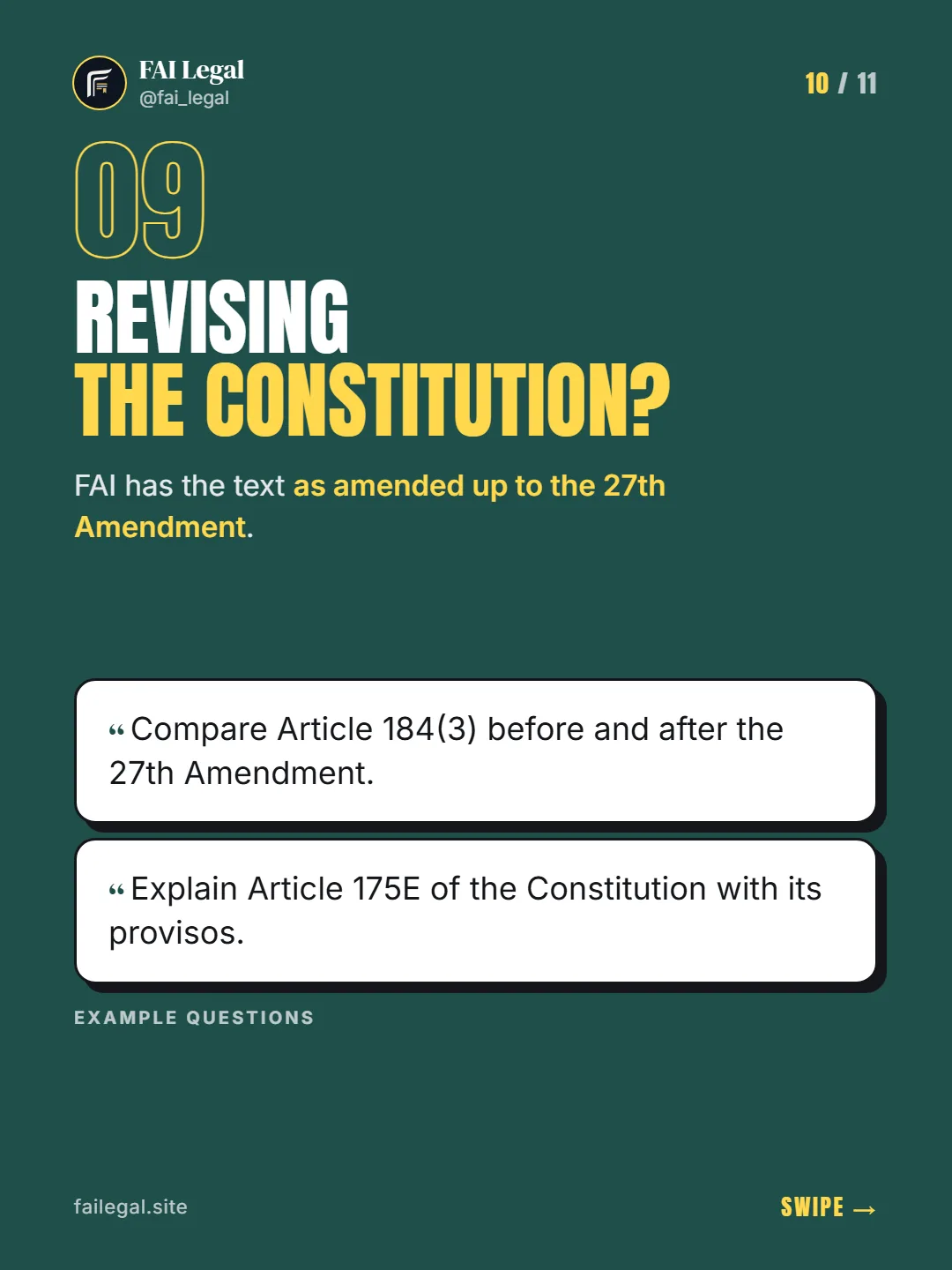
Revising the Constitution?
FAI has the text as amended up to the 27th Amendment.
- Compare Article 184(3) before and after the 27th Amendment.
- Explain Article 175E of the Constitution with its provisos.
Example questions
What this does not mean
- Article 184(3) no longer lets the Supreme Court hear rights cases directly. Article 184 was omitted by the 27th Amendment, and that power now sits in Art. 175E(3).
- In rights cases under Art. 175E(3) the court acts only on an application filed by a person, though it may call for the record of a pending case raising a substantial question of constitutional interpretation on its own motion (Art. 175E(5)).
- There is no appeal from High Court writ orders in rent and family cases, except guardianship (Art. 175F(1)(c)).
Questions people ask
What is the Federal Constitutional Court of Pakistan?
It was created by the 27th Amendment. Its decisions on questions of law bind all other courts in Pakistan, including the Supreme Court (Art. 189).
Is the Supreme Court bound by the Federal Constitutional Court?
Yes. Under Article 189, a decision of the Federal Constitutional Court that decides or enunciates a principle of law binds all other courts, including the Supreme Court. Supreme Court decisions bind all courts except the Federal Constitutional Court.
Who can become a judge of the Federal Constitutional Court?
A Supreme Court Judge, a person who has been a High Court Judge for 5 years, or a High Court advocate of 20 years who is an ASC (Art. 175C(2)).
What happened to Article 184(3) after the 27th Amendment?
Article 184 was omitted by the 27th Amendment (s.29). The power to hear public importance cases involving Fundamental Rights now sits with the Federal Constitutional Court under Art. 175E(3).
What happened to cases pending in the Supreme Court after the 27th Amendment?
Those within the jurisdiction of the new court stand transferred to the Federal Constitutional Court (Art. 175E(4), 175F(2)).
Sources
- Constitution of Pakistan · Article 189
Decisions binding on other courts Pakistan Code
Educational legal information, not legal advice. Every case turns on its own facts. Speak to a qualified lawyer about your situation. Review status: Pending advocate review. How we check.