Criminal law · Lahore High Court
Illegal detention by police: can the officers be made to pay?
The myth: “Police can hold you for days, and nothing happens to them.”Wrong: a court made two officers pay
The short answer
Yes, a court can order it. In 2020 the Lahore High Court found three men held four days in a police lock-up with no court order, set them free, and made the SHO pay Rs 20,000 and a constable Rs 40,000 from their own pockets.
A v. The State (names withheld) · Lahore High Court (Multan Bench) · Criminal Miscellaneous No. 2231-H of 2020 · decided 21 May 2020
By the FAI Legal editorial desk · 17 November 2026 · 4 min read

Yes. When the police hold someone without the law's authority, a High Court can set the person free and order the officers responsible to pay compensation from their own pockets. In an order of 21 May 2020, the Lahore High Court found three men held four days in a police lock-up with no court order, set them free, and directed the SHO to pay them Rs 20,000 and a constable Rs 40,000.
The rule they broke is a short one. Article 10(2) of the Constitution says: "Every person who is arrested and detained in custody shall be produced before a magistrate within a period of twenty-four hours of such arrest", not counting the journey to the court, and no one may be held beyond that without a magistrate's authority. Section 61 of the Code of Criminal Procedure says the same for an arrest without a warrant.
Key points
- Anyone arrested must be produced before a magistrate within 24 hours (Constitution Art. 10(2); CrPC s.61).
- A person held illegally can be set free by a High Court on a habeas petition (CrPC s.491(1)(b)).
- In 2020 the Lahore High Court found three men held four days with no court order: not named in either case, no arrest warrant, no proper Daily Diary entry.
- The court set them free and made the SHO pay Rs 20,000 and a constable Rs 40,000; such compensation is paid "by none other than the delinquent police officials".
- The same court honoured the police who gave their lives: the order was about two officials who broke the law.
Is illegal detention by police allowed? The short answer
No. Holding a person in custody beyond 24 hours without a magistrate's order is against Article 10(2) of the Constitution and section 61 of the Code of Criminal Procedure. A High Court can order the person's release, and it can make the officers who did it pay compensation themselves.
How long can the police keep you without a court order?
Twenty-four hours from the arrest, not counting the time needed to reach the nearest magistrate. Section 61 of the Code of Criminal Procedure says: "No police-officer shall detain in custody a person arrested without warrant for period longer than, under all the circumstances of the case is reasonable", and never more than twenty-four hours without a magistrate's special order (the journey to the magistrate's court is not counted). Beyond that, the police need a magistrate's order to keep the person, and that is why every arrest has to be entered in the police station's Daily Diary.
The case: four days in a lock-up, and the court's bailiff the same day
A woman went to the Lahore High Court (Multan Bench) with a habeas petition: three men had been picked up from their house by the police. The court sent its bailiff to the police station the same day. He found the three men in the lock-up. They told him they had been in the police station for four days and had not been produced in any court.
The police said the men had been arrested in two theft cases. The court checked the record: none of the three was named as an accused in either case, no arrest warrant had been taken, the statements used to justify the arrests were "dubious", and the arrest was not entered in the Daily Diary as rule 22.48 of the Police Rules 1934 requires. It held that the men "were kept in police captivity unlawfully and improperly" and set them free.
Can police officers be made to pay for illegal detention?
Yes. The court said that where a person is kept in captivity unlawfully, courts "must not hesitate in awarding even cost/compensation to the victim", and that such amount "is to be paid by none other than the delinquent police officials". It directed the SHO to pay Rs 20,000 to the men as compensation, and a constable Rs 40,000: he had also entered their house unlawfully and mistreated the women of the family.
The court added that in appropriate cases a court may also order a criminal case and departmental proceedings against the officials. In this order it also sent the constable's assets for an anti-corruption inquiry and asked the district police to post him away from dealing with the public for two years.
Does this mean the police are against the people?
No, and the court said so. In the same paragraph it wrote that "countless police personnel have laid their lives" upholding law and order, and that "we must acknowledge their sacrifices by paying them respect". The order was about two officials who broke the law, and the compensation came from them, not from the police as a whole.
What can you do if someone is held illegally?
Note when and where the person was taken and who saw it, and see a lawyer quickly. A habeas petition under section 491 of the Code of Criminal Procedure asks the High Court to bring the person before it and set them free if the detention is illegal or improper. In this case the High Court's bailiff reached the police station the same day; the court also said the police must show its bailiff the record and let him search the station.
Ask FAI Legal
We read the Lahore High Court's order in full in FAI Legal's Judgment Search, and Article 10 of the Constitution and sections 61 and 491 of the Code of Criminal Procedure in its Statute Search. FAI Legal is a website: open failegal.site in your phone's browser, ask in plain words, and read the exact law.
The case at a glance
- Facts
- Three men were picked up from their house and kept four days in a police station's lock-up without being produced in any court. A woman's habeas petition reached the Lahore High Court, whose bailiff found them in the lock-up the same day. The reel's people are drawn; nobody is named.
- The question
- Were the three men held lawfully, and if not, what should follow for them and for the officers?
- What the Court held
- They were kept in police captivity unlawfully and improperly: not named in either case, no arrest warrant, no Daily Diary entry. The court set them free and directed the SHO to pay them Rs 20,000 and a constable Rs 40,000 as compensation.
- Why
- Lahore High Court (Multan Bench), Criminal Miscellaneous No. 2231-H of 2020, decided 21 May 2020, paras 2 to 9.
- Limits
- Compensation turns on the facts the court finds; it is not automatic in every late production. The order is from one High Court bench; the rule on 24 hours comes from the Constitution and applies across Pakistan.
In the Court’s words
“Three detenus were found incarcerated in the lock-up”
Criminal Miscellaneous No. 2231-H of 2020, para 2
The law it relies on
Every person arrested and detained must be produced before a magistrate within twenty-four hours, and cannot be held beyond that without a magistrate's authority.
A person arrested without a warrant may not be detained longer than is reasonable, and never more than twenty-four hours without a magistrate's special order under section 167.
A High Court may direct that a person illegally or improperly detained in public or private custody be set at liberty.
What this does not mean
- It does not mean every arrest is illegal: an arrest within the law, with a magistrate's order beyond 24 hours, is lawful.
- It does not mean compensation follows every late production: the court decides on the facts it finds.
- It does not blame the police as a whole: the order was about two officials, and the court honoured those who gave their lives.
- It does not decide your own case: a lawyer can tell you what applies to yours.
Questions people ask
What is illegal detention?
Holding a person in custody without the law's authority, for example beyond 24 hours without a magistrate's order (Constitution Art. 10(2); CrPC s.61).
How long can police keep you without a court order in Pakistan?
Twenty-four hours from the arrest, not counting the journey to the magistrate. Beyond that, only with a magistrate's order.
What is habeas corpus in Pakistan?
A petition to the High Court under section 491 CrPC to bring a detained person before it and set them free if the detention is illegal or improper.
Can police be punished for illegal detention?
A court can make the officers pay compensation from their own pockets, as the Lahore High Court did in 2020, and in appropriate cases order a criminal case and departmental proceedings.
Illegal detention kya hota hai?
Kisi ko qanoon ke ikhtiyar ke baghair hirasat mein rakhna, jaise 24 ghante se zyada magistrate ke hukm ke baghair.
Check yourself
True or false? “Police can hold you for days, and nothing happens to them.”
Wrong: a court made two officers pay. Yes, a court can order it. In 2020 the Lahore High Court found three men held four days in a police lock-up with no court order, set them free, and made the SHO pay Rs 20,000 and a constable Rs 40,000 from their own pockets.
Next one: true or false? “A fake account in your name? Nothing can be done.”
Sources
- A v. The State (names withheld), Criminal Miscellaneous No. 2231-H of 2020 (Lahore High Court (Multan Bench), 21 May 2020)
Three men held four days in a police lock-up without a court order were set free; the SHO and a constable were directed to pay them Rs 20,000 and Rs 40,000 as compensation from their own pockets. read in full in FAI Judgment Search - Constitution of Pakistan 1973, Article 10 text checked in FAI Statute Search, 16 November 2026
- Code of Criminal Procedure 1898, ss.61, 491 text checked in FAI Statute Search, 17 November 2026
Every quote and section above is traced to the full judgment or statute text by an automatic check that runs on every update.
What the reel says
Read the words of the reel
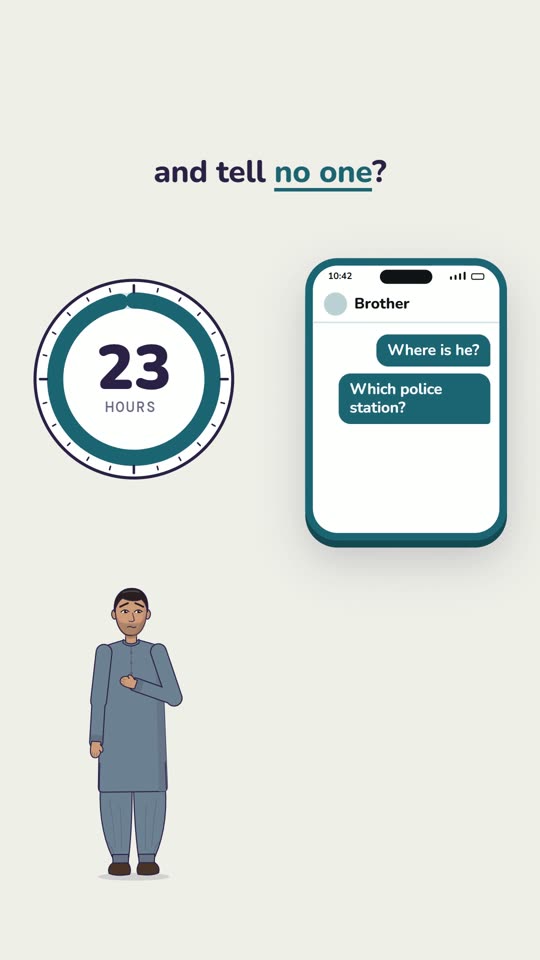
Four days in a police lock-up, and no court order.
In 2020 the Lahore High Court sent its bailiff to the police station the same day. He found the three men in the lock-up: not named in either case, no arrest warrant, the arrest not recorded. The court set them free, and made the SHO pay Rs 20,000 and a constable Rs 40,000 from their own pockets.
The law: anyone arrested must go before a magistrate within 24 hours (Constitution, Article 10).
The same court honoured the police who gave their lives. This order was about two officials who broke the law.
Did you know a policeman can be made to pay from his own pocket? Yes or no?
Send this to a friend who should know it.
General legal information, not legal advice.
#pakistanlaw #knowyourrights #legalawareness #illegaldetention #FAILegal
Educational legal information, not legal advice. Every case turns on its own facts. Speak to a lawyer about your own case. Last checked: 17 November 2026. Review status: Pending advocate review. How we check.