Law study · For law students
Hurt in the PPC in 9 flashcards.
In short
Itlaf-i-udw, itlaf-i-salahiyyat-i-udw, shajjah (head and face), jurh (the rest of the body) and all other hurts (PPC s.332(2)). A revision set from the text of ss.332 to 337-M.
By the FAI Legal editorial desk · 12 October 2026 · 11 slides · 2 min read

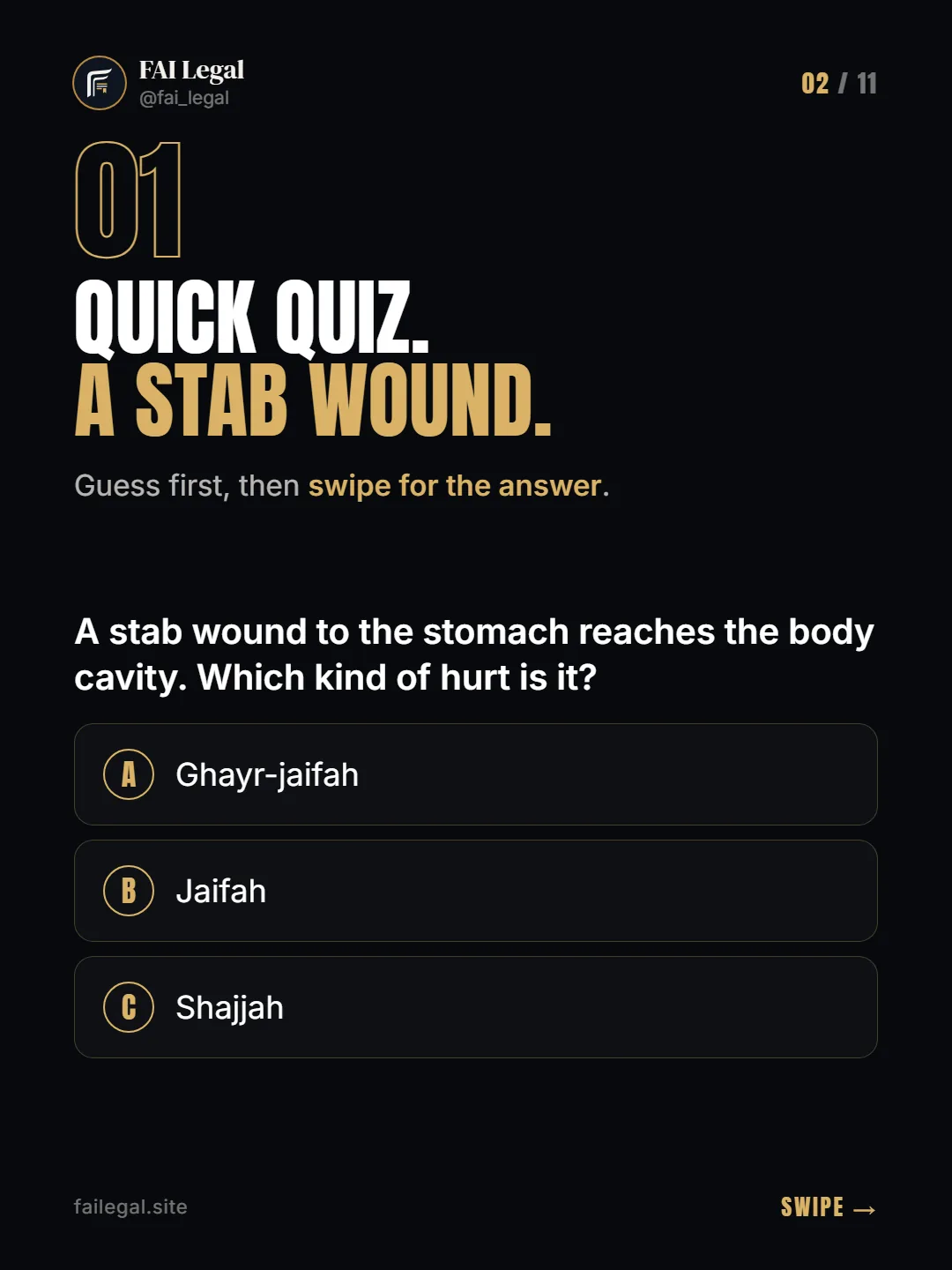
Quick quiz. A stab wound.
Guess first, then swipe for the answer.
- A. Ghayr-jaifah
- B. Jaifah
- C. Shajjah
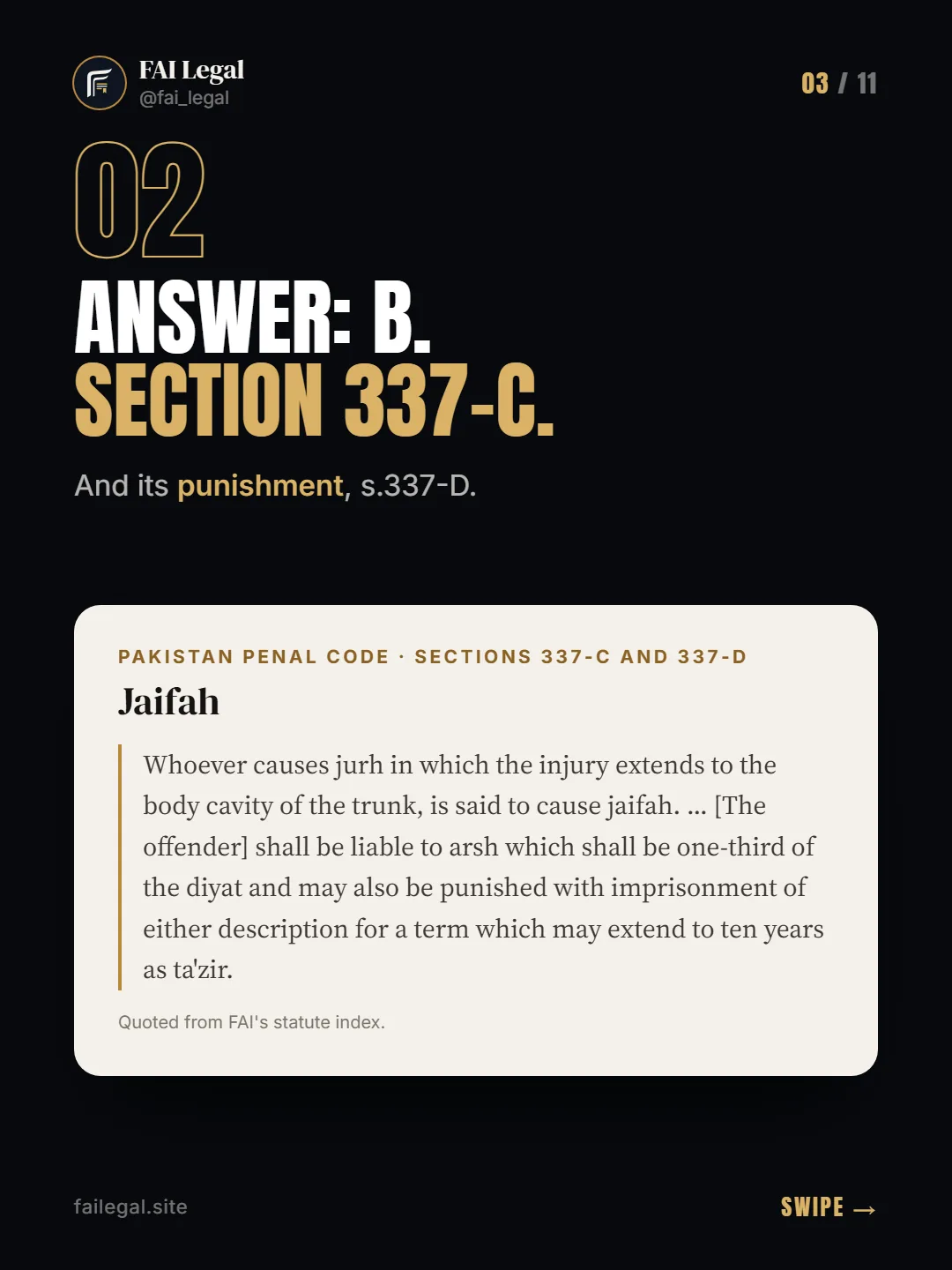
Answer: B. Section 337-C.
And its punishment, s.337-D.
“Whoever causes jurh in which the injury extends to the body cavity of the trunk, is said to cause jaifah. … [The offender] shall be liable to arsh which shall be one-third of the diyat and may also be punished with imprisonment of either description for a term which may extend to ten years as ta'zir.”
Pakistan Penal Code · Sections 337-C and 337-D, Jaifah
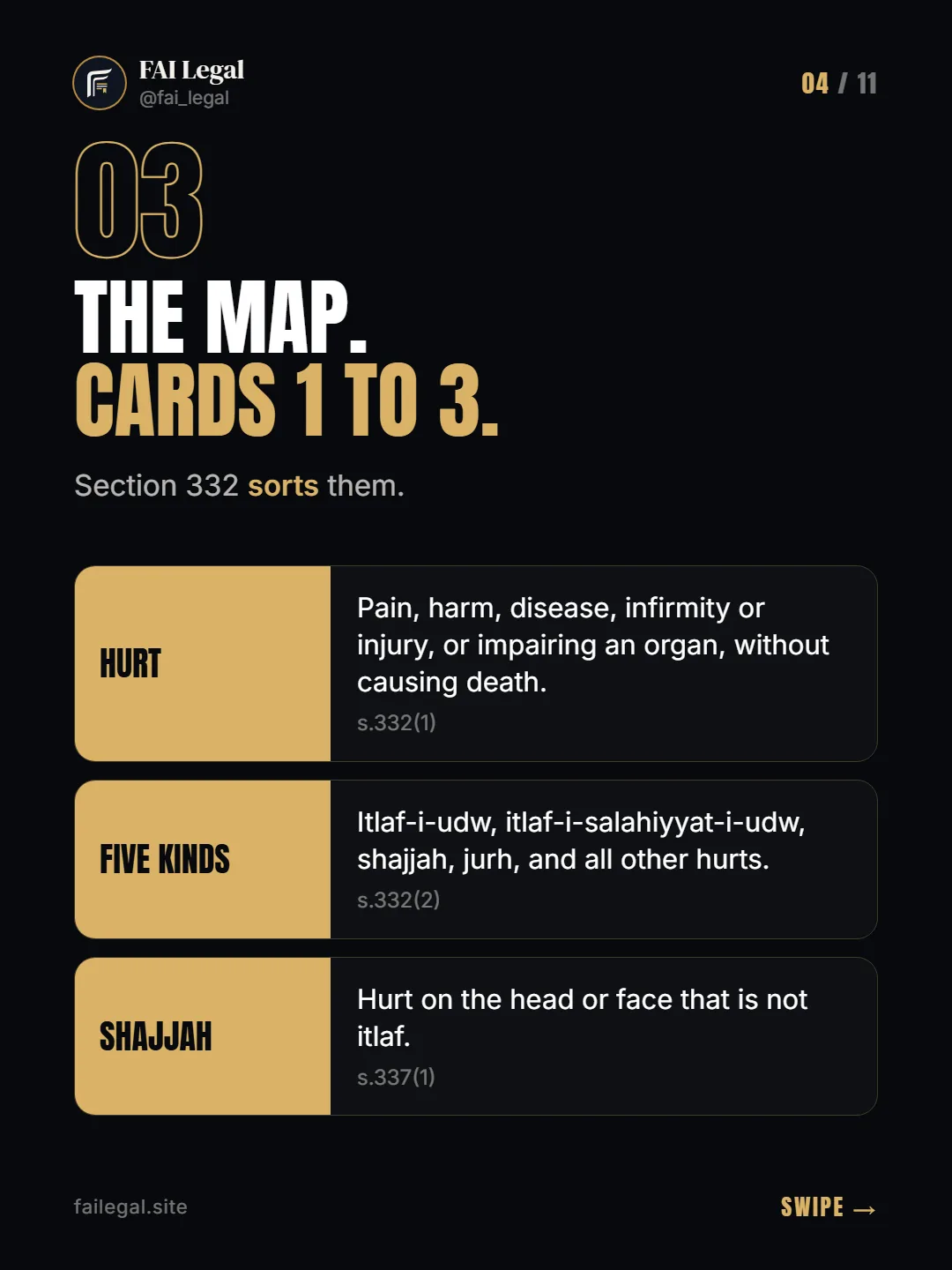
The map. Cards 1 to 3.
Section 332 sorts them.
- HurtPain, harm, disease, infirmity or injury, or impairing an organ, without causing death. (s.332(1))
- Five kindsItlaf-i-udw, itlaf-i-salahiyyat-i-udw, shajjah, jurh, and all other hurts. (s.332(2))
- ShajjahHurt on the head or face that is not itlaf. (s.337(1))
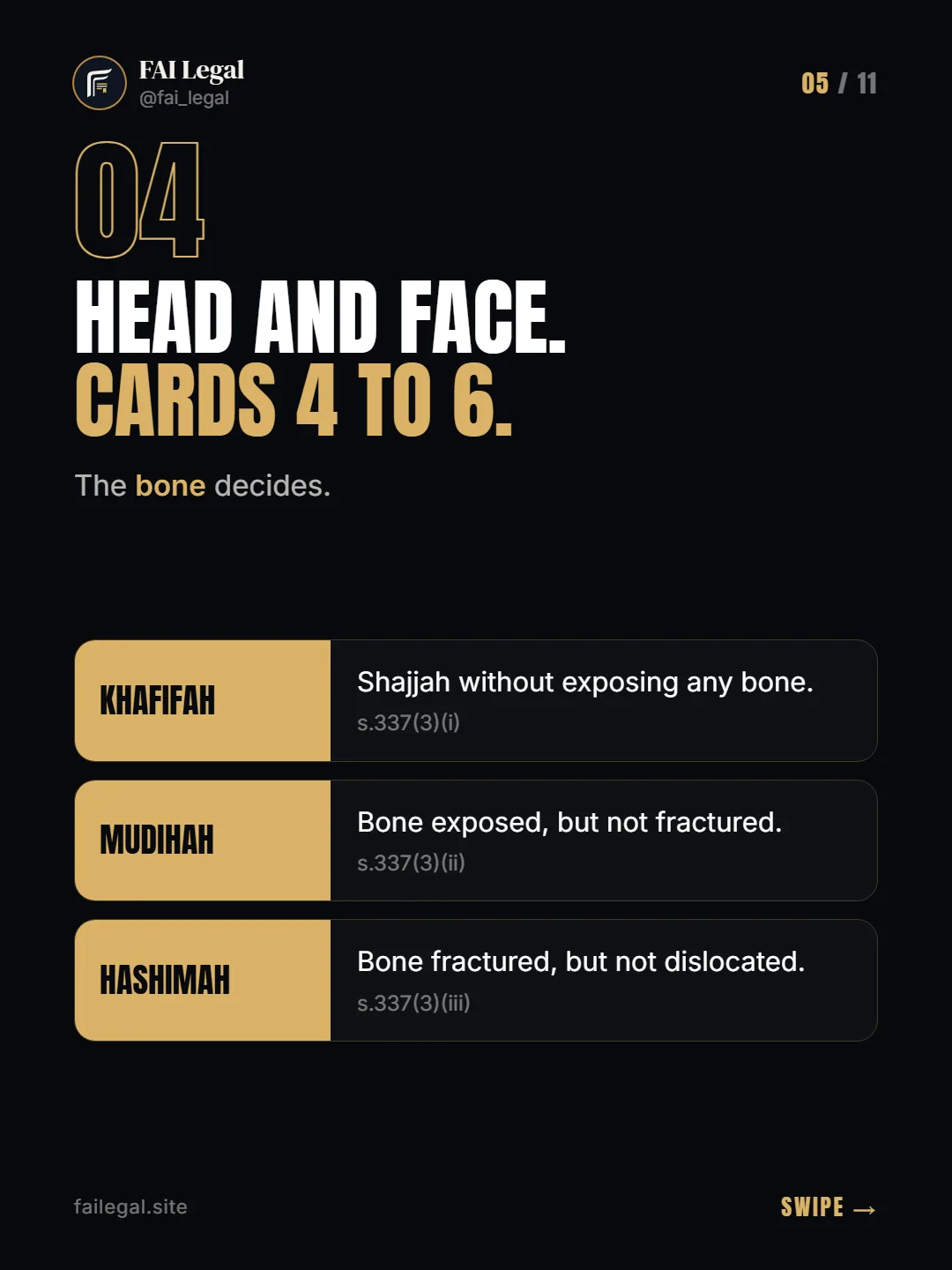
Head and face. Cards 4 to 6.
The bone decides.
- KhafifahShajjah without exposing any bone. (s.337(3)(i))
- MudihahBone exposed, but not fractured. (s.337(3)(ii))
- HashimahBone fractured, but not dislocated. (s.337(3)(iii))
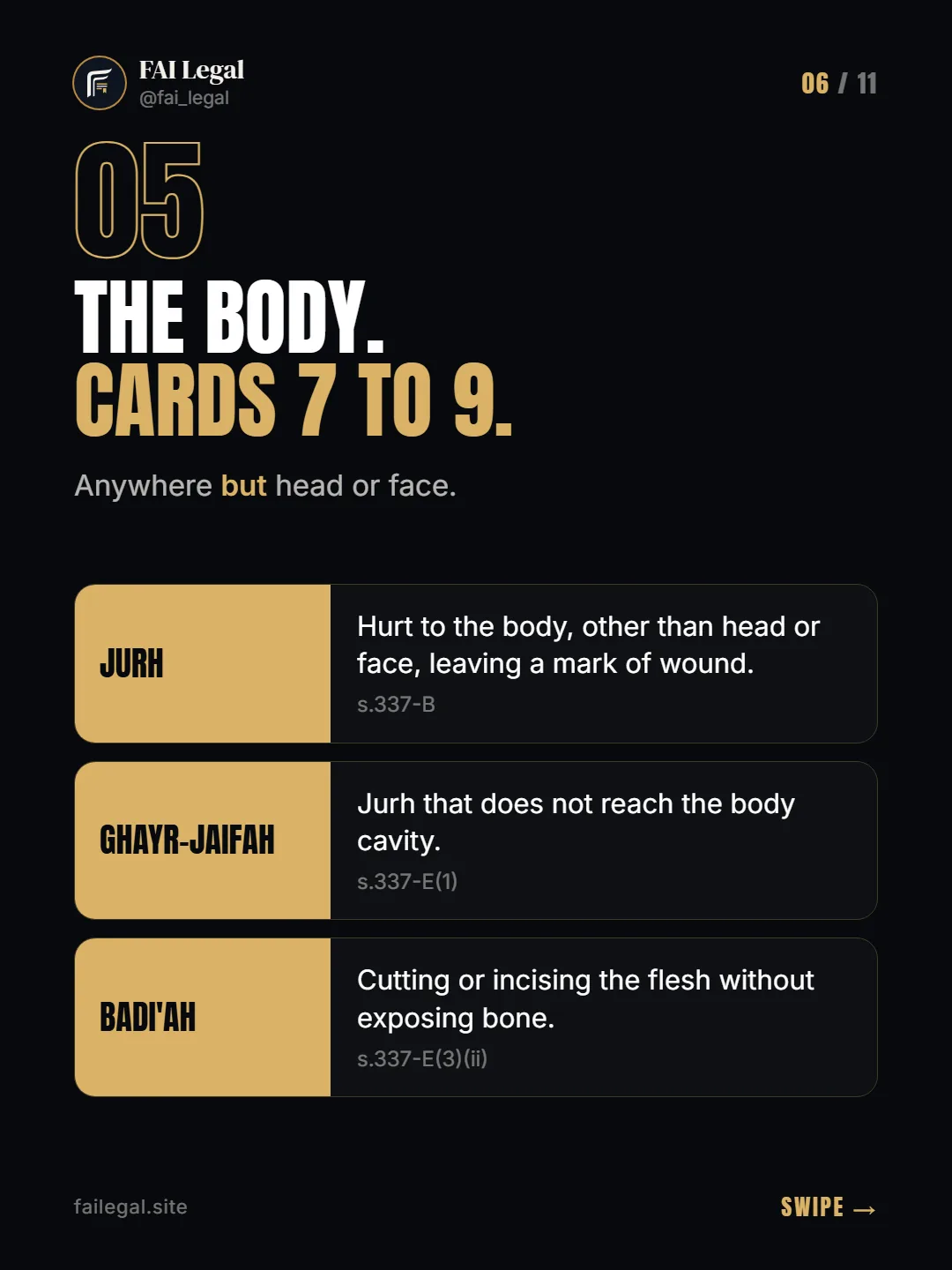
The body. Cards 7 to 9.
Anywhere but head or face.
- JurhHurt to the body, other than head or face, leaving a mark of wound. (s.337-B)
- Ghayr-jaifahJurh that does not reach the body cavity. (s.337-E(1))
- Badi'ahCutting or incising the flesh without exposing bone. (s.337-E(3)(ii))
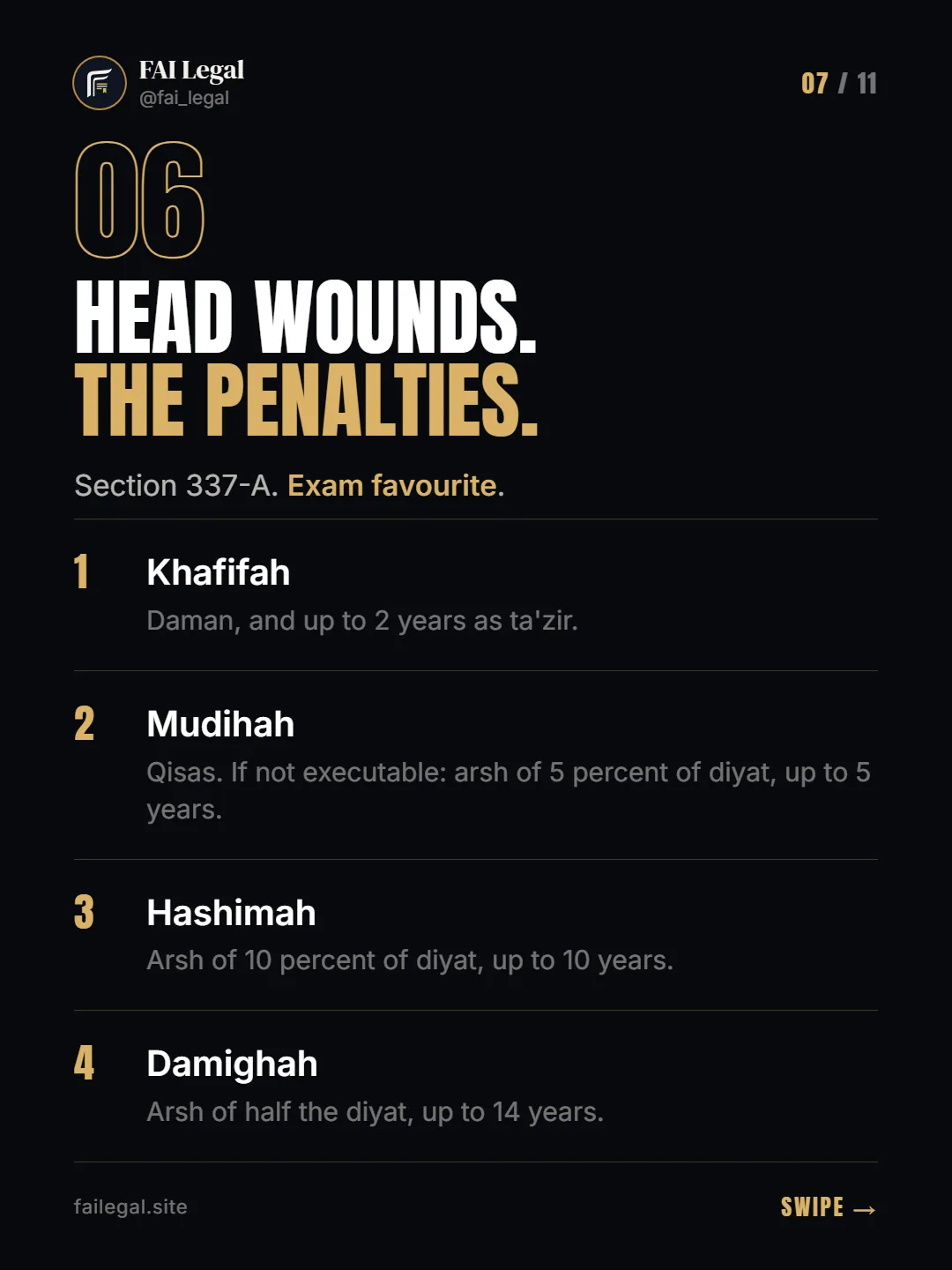
Head wounds. The penalties.
Section 337-A. Exam favourite.
- KhafifahDaman, and up to 2 years as ta'zir.
- MudihahQisas. If not executable: arsh of 5 percent of diyat, up to 5 years.
- HashimahArsh of 10 percent of diyat, up to 10 years.
- DamighahArsh of half the diyat, up to 14 years.
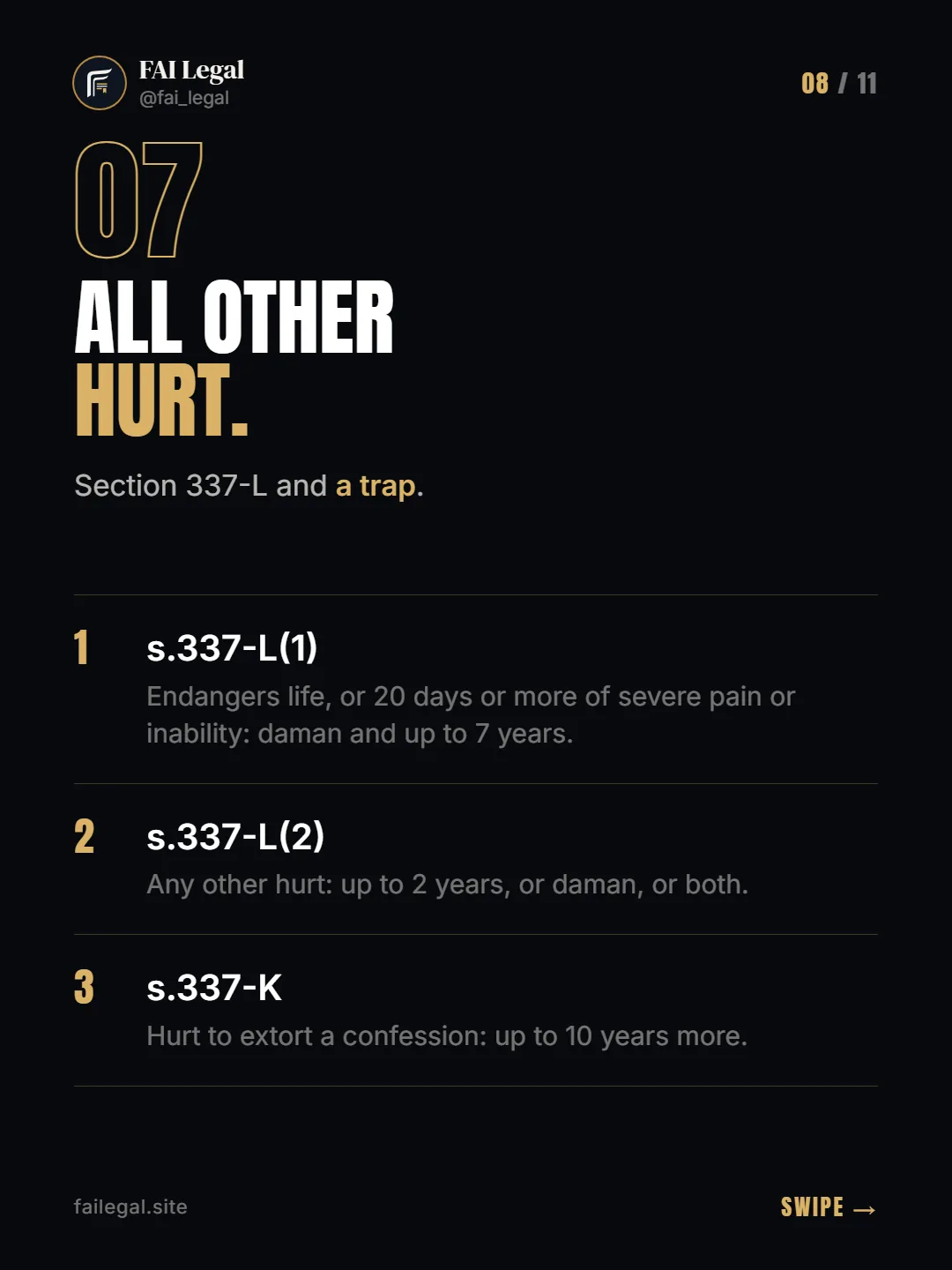
All other hurt.
Section 337-L and a trap.
- s.337-L(1)Endangers life, or 20 days or more of severe pain or inability: daman and up to 7 years.
- s.337-L(2)Any other hurt: up to 2 years, or daman, or both.
- s.337-KHurt to extort a confession: up to 10 years more.
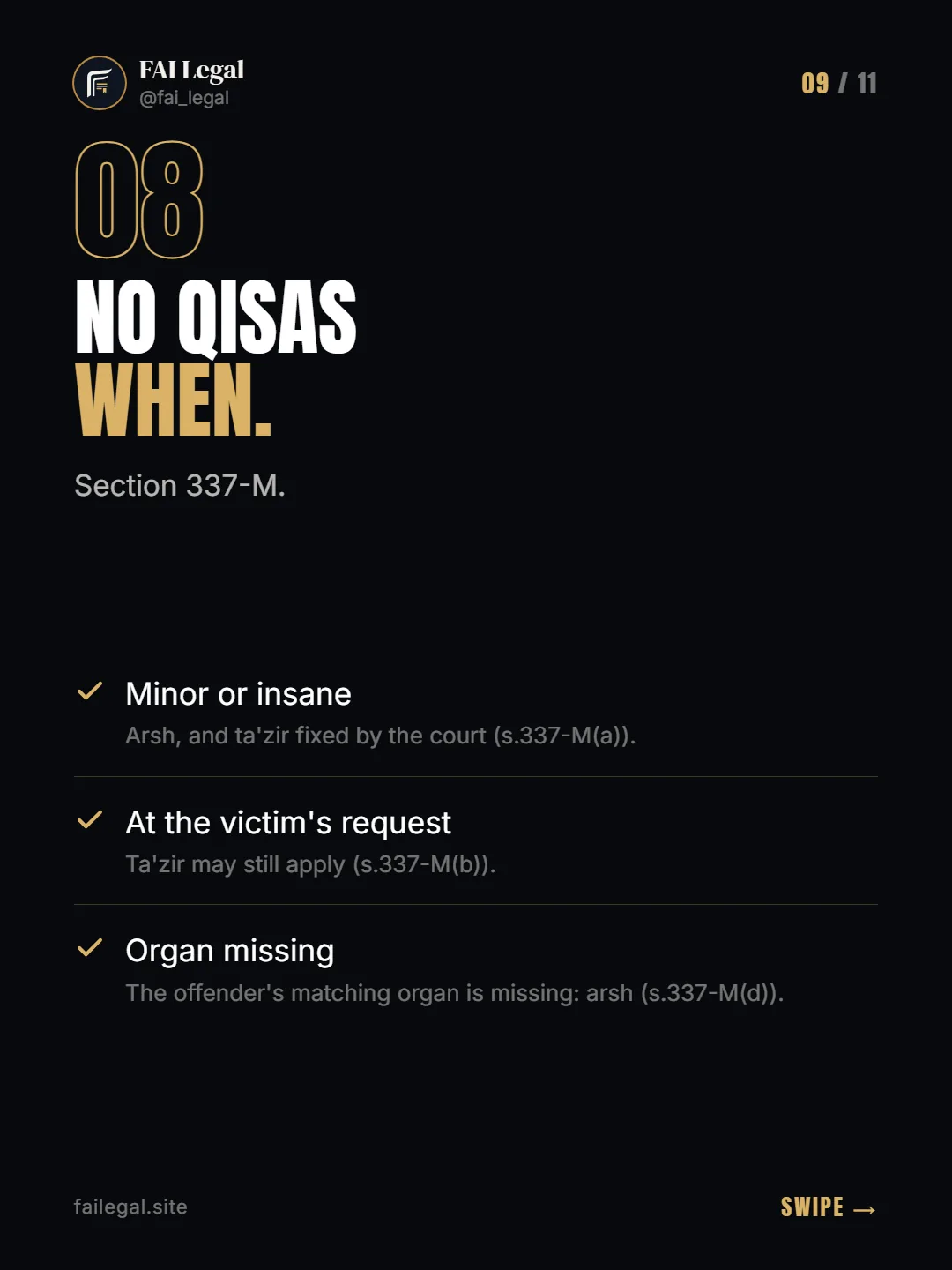
No qisas when.
Section 337-M.
- Minor or insaneArsh, and ta'zir fixed by the court (s.337-M(a)).
- At the victim's requestTa'zir may still apply (s.337-M(b)).
- Organ missingThe offender's matching organ is missing: arsh (s.337-M(d)).
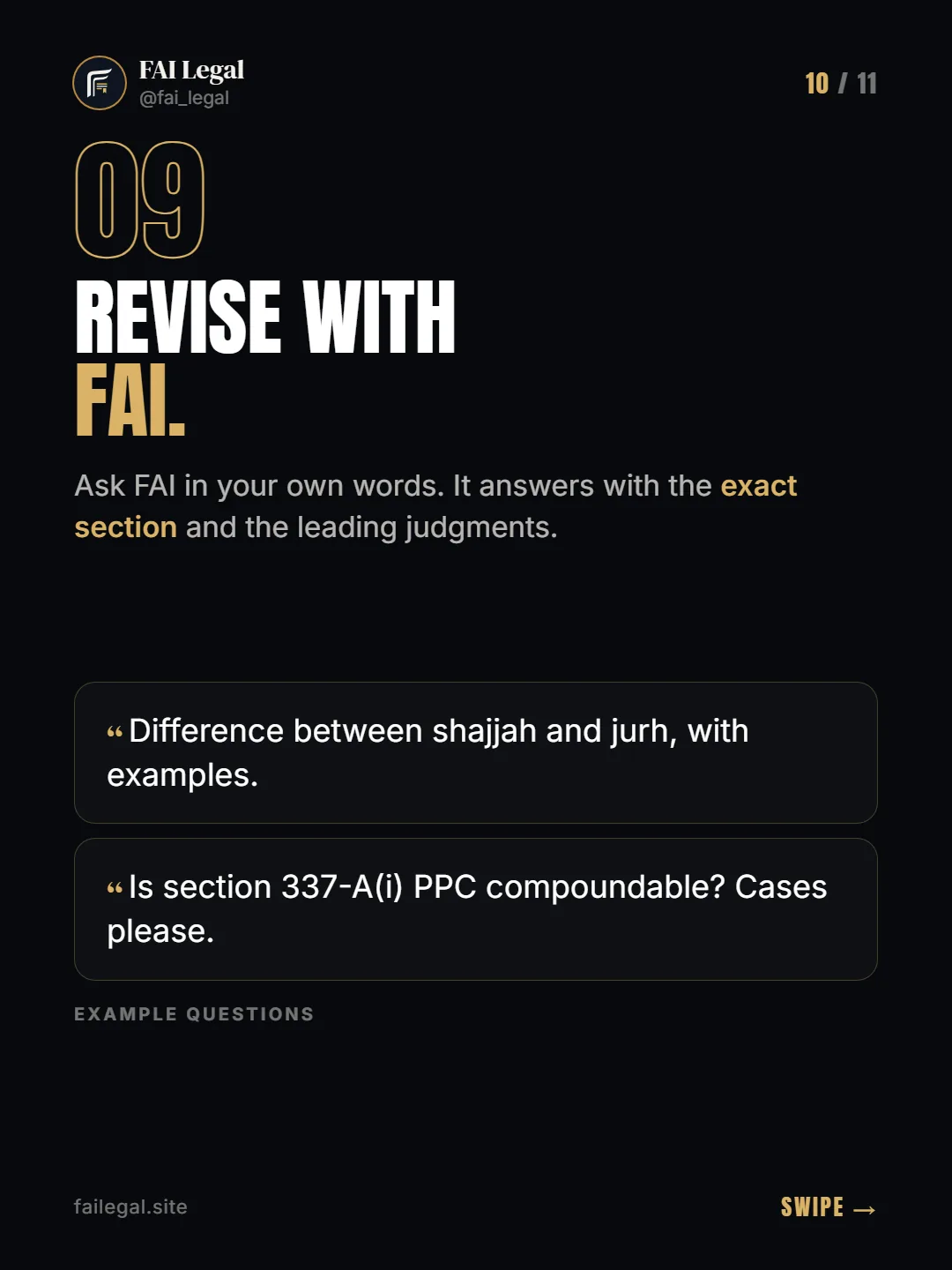
Revise with FAI.
Ask FAI in your own words. It answers with the exact section and the leading judgments.
- Difference between shajjah and jurh, with examples.
- Is section 337-A(i) PPC compoundable? Cases please.
Example questions
What this does not mean
- Shajjah covers only hurt on the head or face that is not itlaf. Hurt elsewhere on the body that leaves a mark of wound is jurh (s.337(1), s.337-B).
- Hurt means harm without causing death (s.332(1)), so these sections do not deal with killing.
- Qisas is not always the result. Section 337-M lists cases, such as a minor or insane offender, where arsh and a punishment fixed by the court apply instead.
Questions people ask
What are the types of hurt in the PPC?
Section 332(2) lists five: itlaf-i-udw, itlaf-i-salahiyyat-i-udw, shajjah, jurh, and all other hurts.
What is the difference between shajjah and jurh?
Shajjah is hurt on the head or face that is not itlaf (s.337(1)). Jurh is hurt to any other part of the body that leaves a mark of wound (s.337-B).
What is jaifah and its punishment?
Jaifah is jurh where the injury reaches the body cavity of the trunk (s.337-C). The offender is liable to arsh of one third of the diyat and may also get up to ten years imprisonment (s.337-D).
What is the punishment under section 337-A PPC?
It depends on the head wound. Khafifah: daman and up to 2 years. Mudihah: qisas, or if not executable arsh of 5 percent of diyat and up to 5 years. Hashimah: arsh of 10 percent and up to 10 years. Damighah: arsh of half the diyat and up to 14 years.
What is section 337-L PPC?
It covers all other hurt. Hurt that endangers life, or causes 20 days or more of severe pain or inability, carries daman and up to 7 years (s.337-L(1)). Any other hurt carries up to 2 years, or daman, or both (s.337-L(2)).
Sources
- Pakistan Penal Code · Sections 337-C and 337-D
Jaifah Pakistan Code
Educational legal information, not legal advice. Every case turns on its own facts. Speak to a qualified lawyer about your situation. Review status: Pending advocate review. How we check.