Criminal law · For citizens
Compromise? Not every case can end.
In short
Only if the offence is listed in section 345 CrPC. Some can be settled directly, some only with the court's permission, and no other offence can be compounded.
By the FAI Legal editorial desk · 10 October 2026 · 11 slides · 2 min read

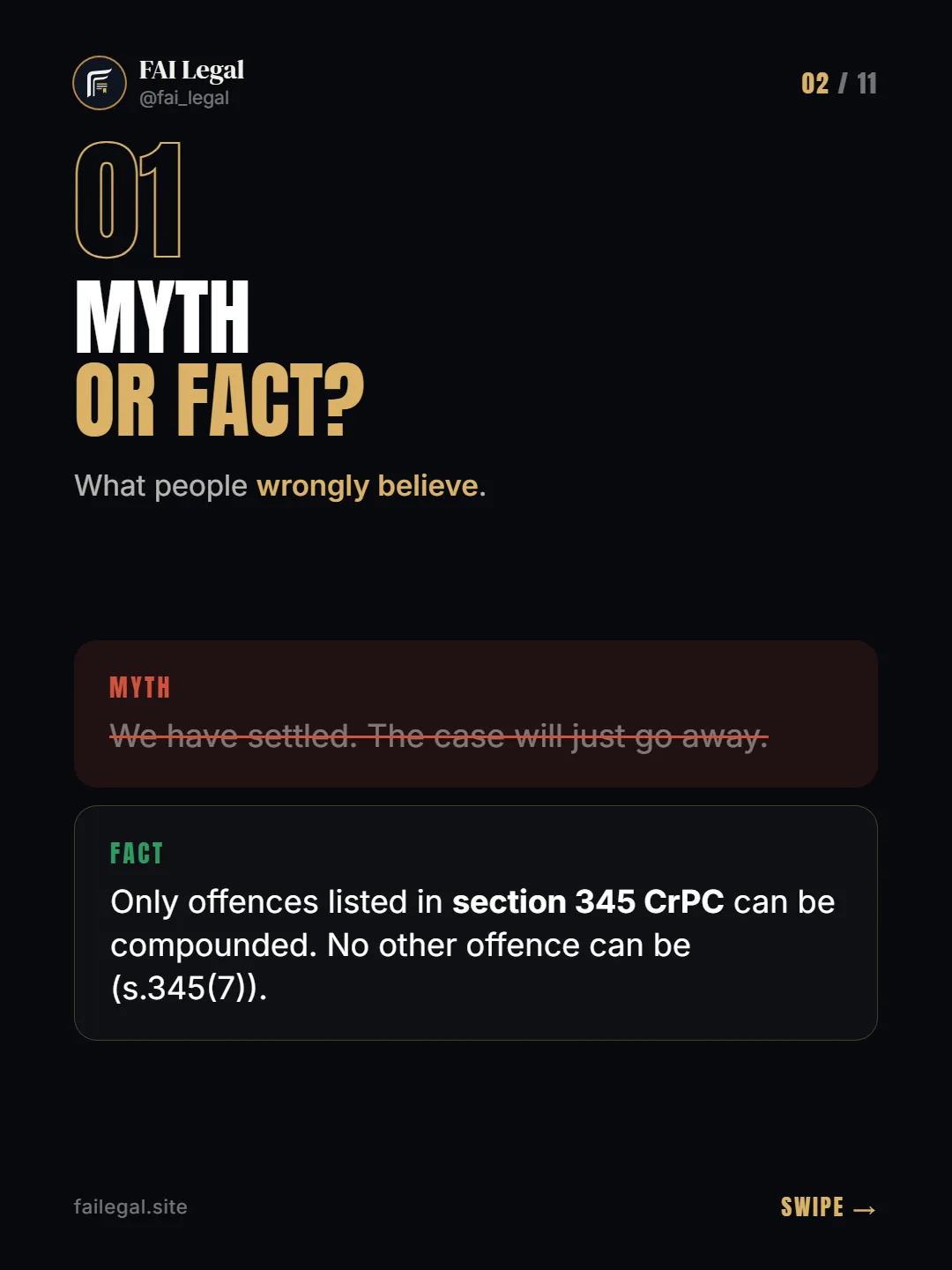

Myth or fact?
What people wrongly believe.
- Myth: We have settled. The case will just go away.
- Fact: Only offences listed in section 345 CrPC can be compounded. No other offence can be (s.345(7)).
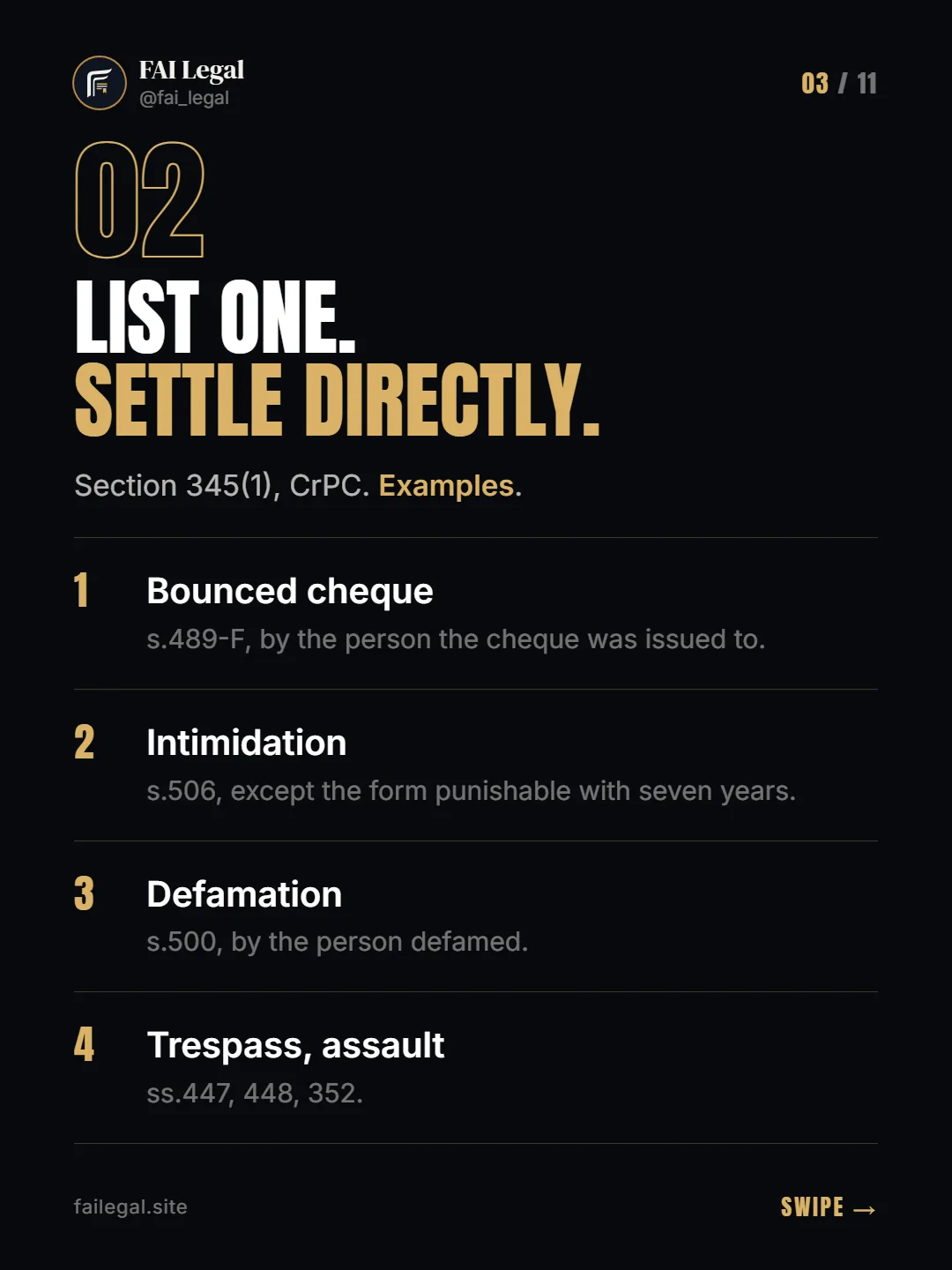
List one. Settle directly.
Section 345(1), CrPC. Examples.
- Bounced cheques.489-F, by the person the cheque was issued to.
- Intimidations.506, except the form punishable with seven years.
- Defamations.500, by the person defamed.
- Trespass, assaultss.447, 448, 352.
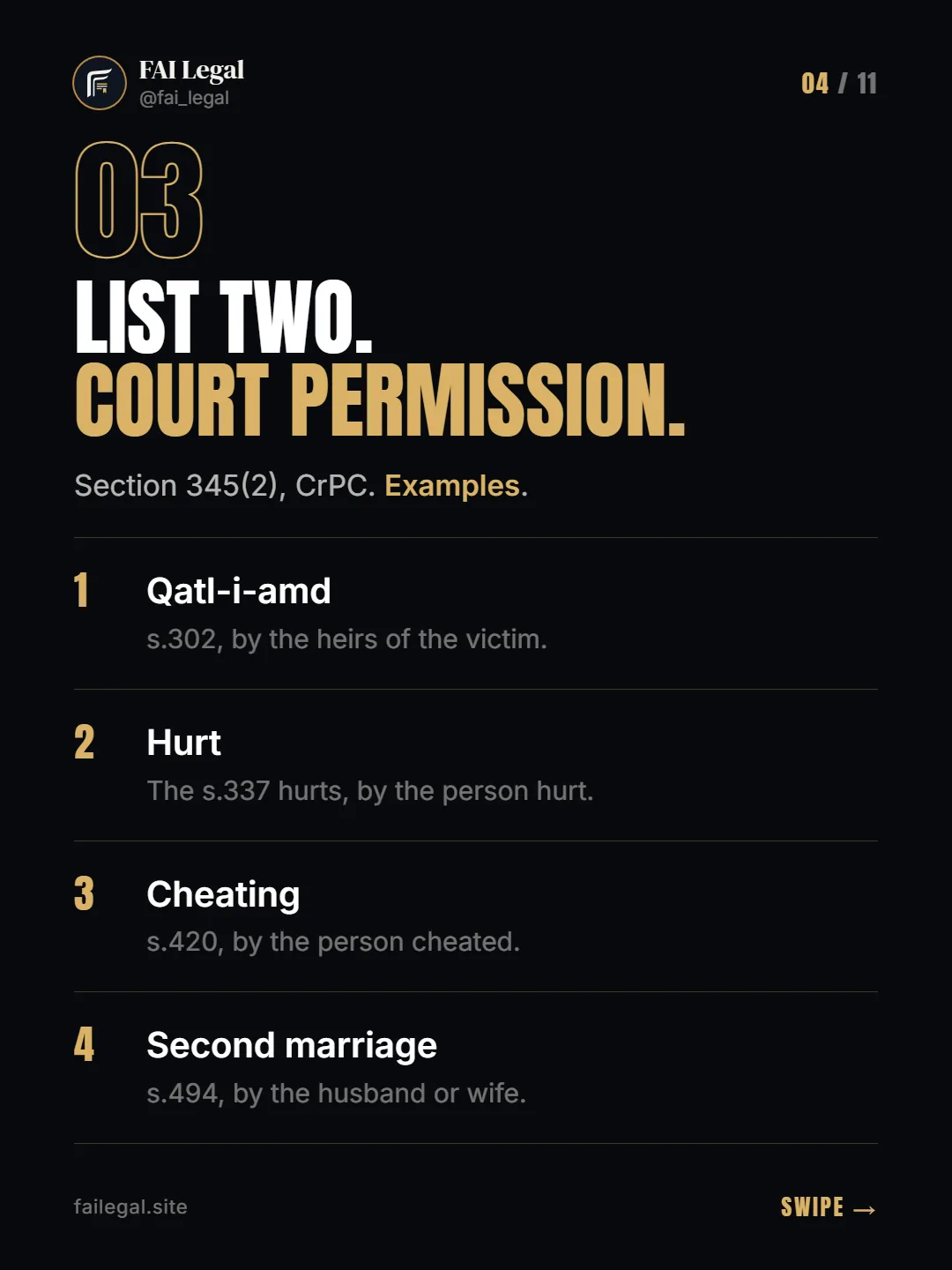
List two. Court permission.
Section 345(2), CrPC. Examples.
- Qatl-i-amds.302, by the heirs of the victim.
- HurtThe s.337 hurts, by the person hurt.
- Cheatings.420, by the person cheated.
- Second marriages.494, by the husband or wife.
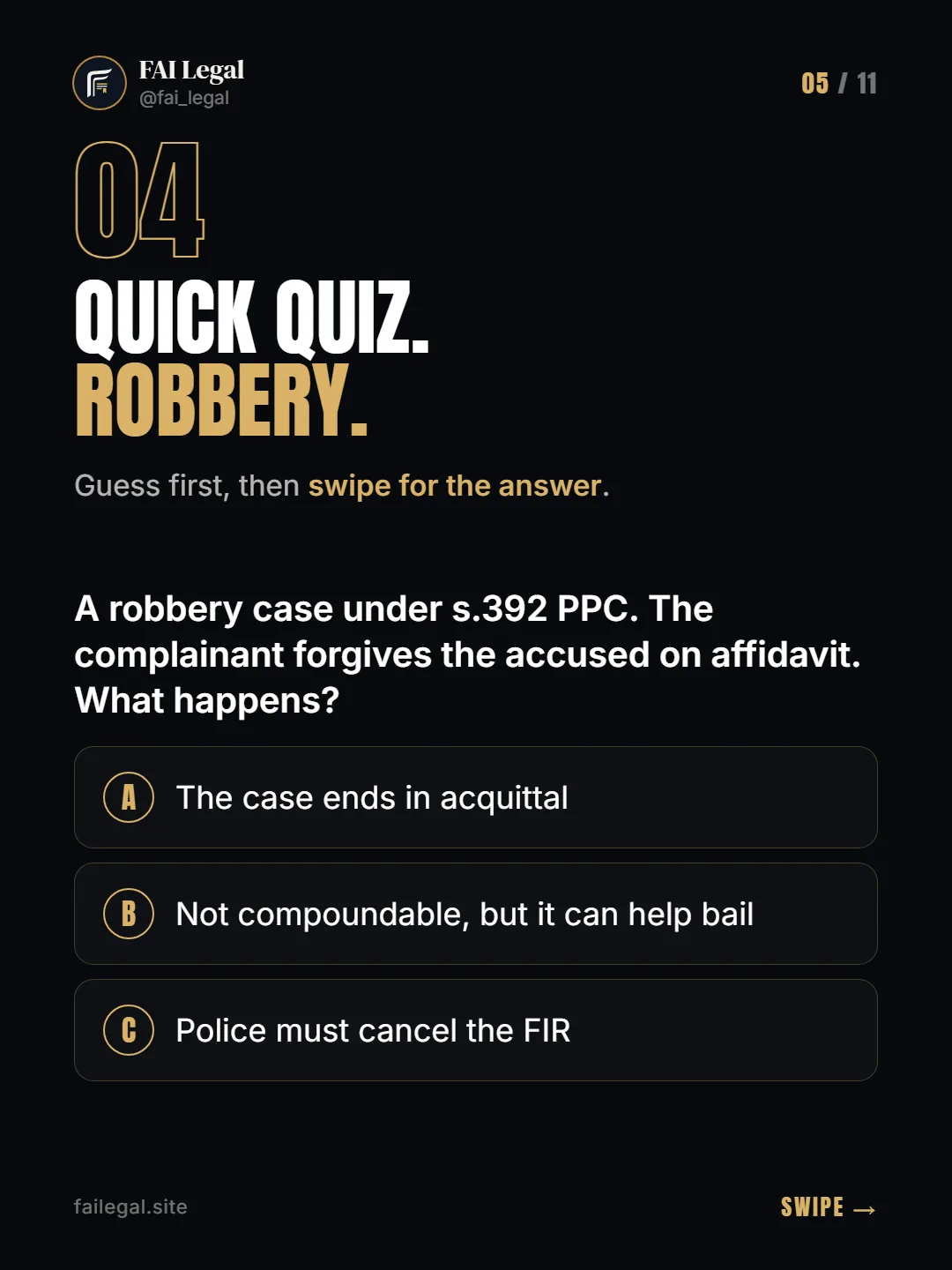
Quick quiz. Robbery.
Guess first, then swipe for the answer.
- A. The case ends in acquittal
- B. Not compoundable, but it can help bail
- C. Police must cancel the FIR
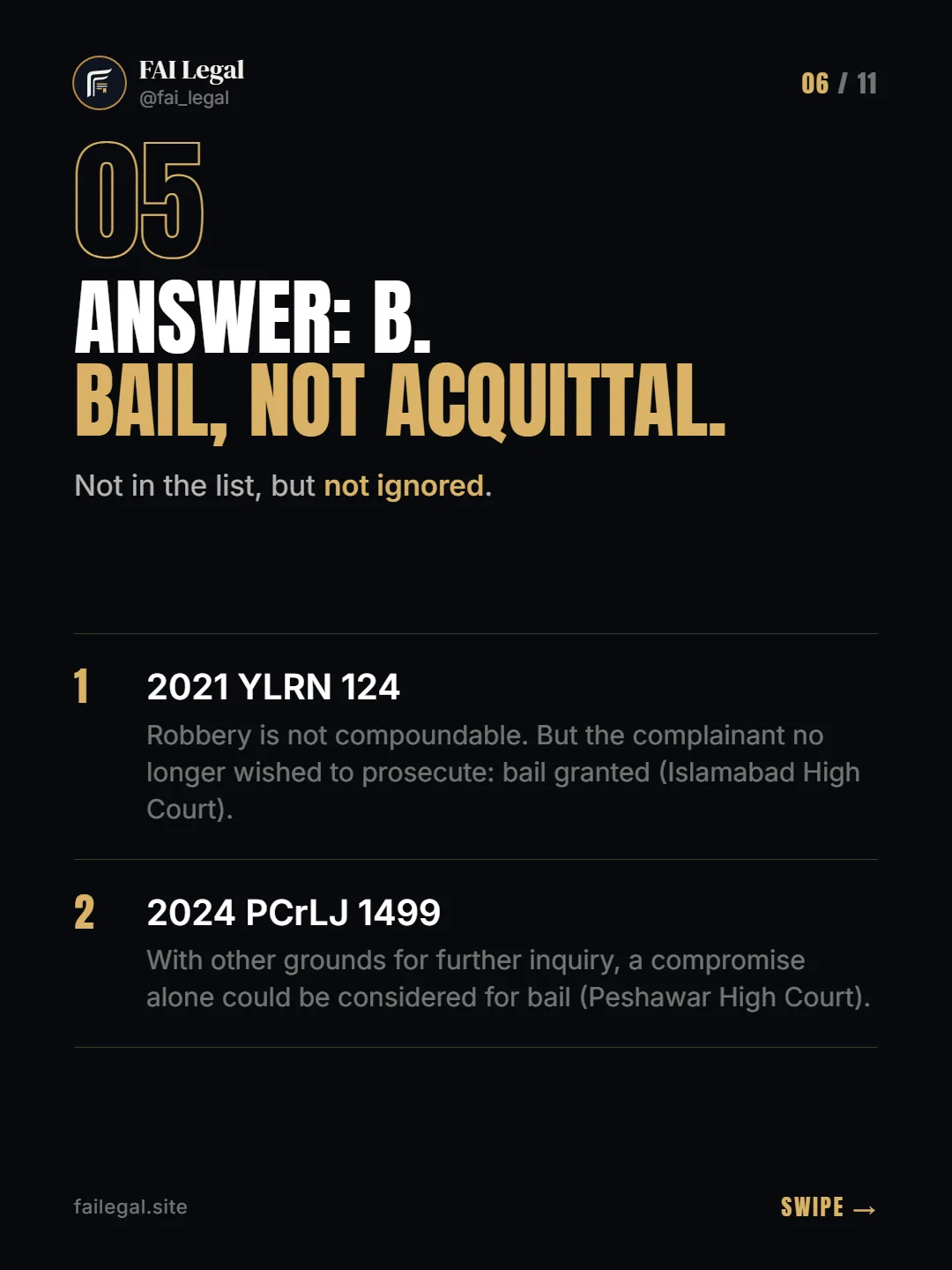
Answer: B. Bail, not acquittal.
Not in the list, but not ignored.
- 2021 YLRN 124Robbery is not compoundable. But the complainant no longer wished to prosecute: bail granted (Islamabad High Court).
- 2024 PCrLJ 1499With other grounds for further inquiry, a compromise alone could be considered for bail (Peshawar High Court).
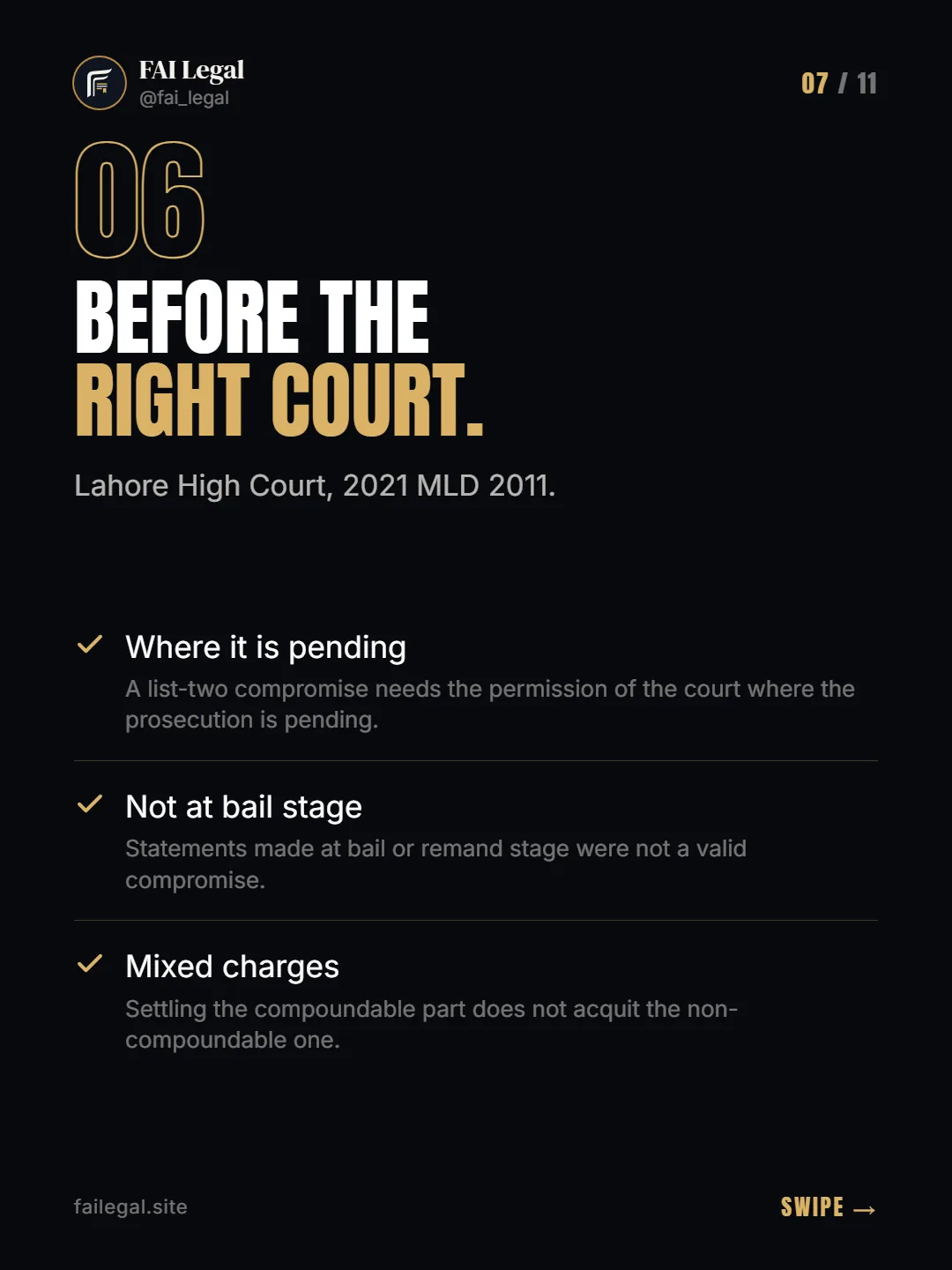
Before the right court.
Lahore High Court, 2021 MLD 2011.
- Where it is pendingA list-two compromise needs the permission of the court where the prosecution is pending.
- Not at bail stageStatements made at bail or remand stage were not a valid compromise.
- Mixed chargesSettling the compoundable part does not acquit the non-compoundable one.
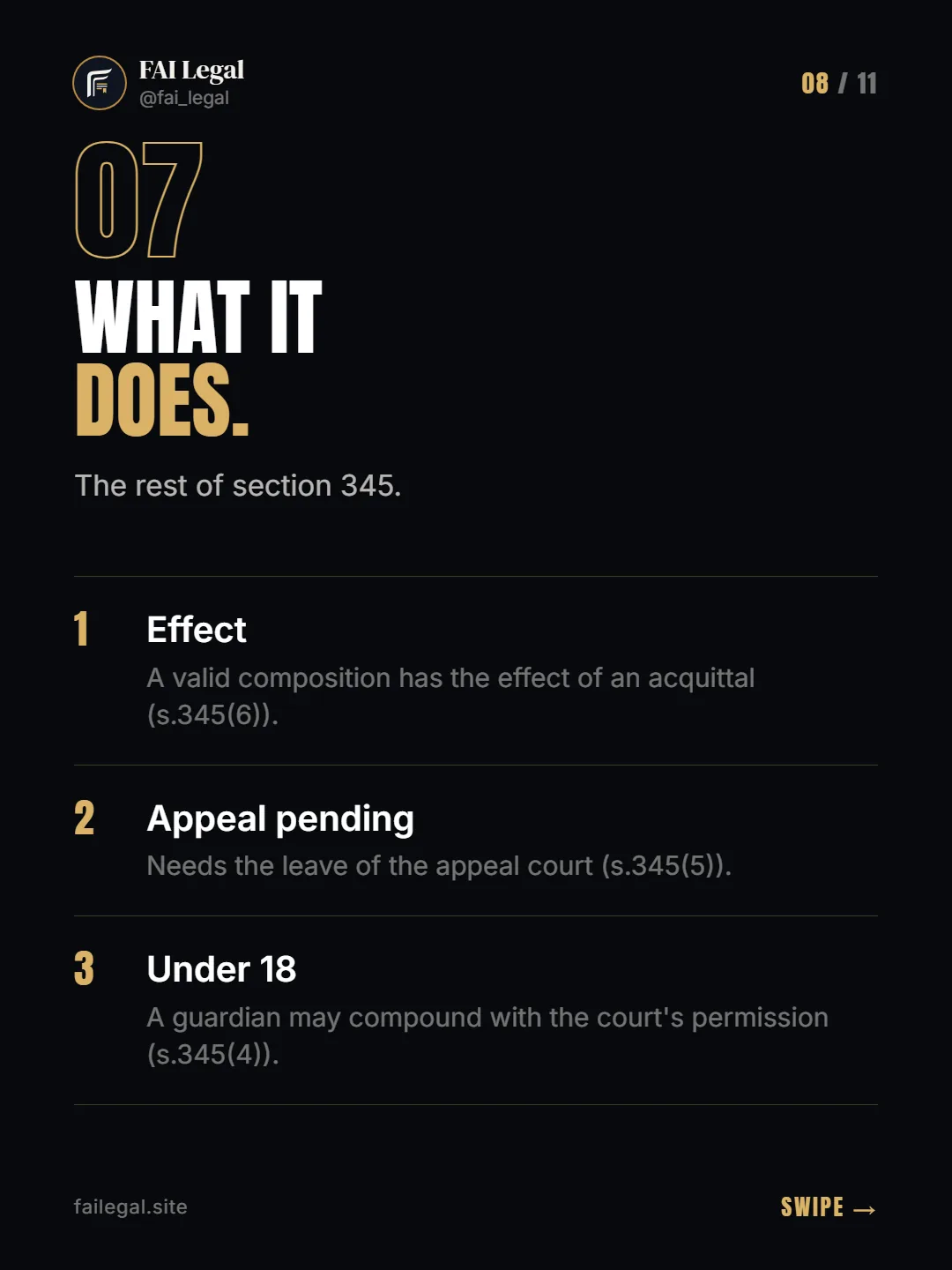
What it does.
The rest of section 345.
- EffectA valid composition has the effect of an acquittal (s.345(6)).
- Appeal pendingNeeds the leave of the appeal court (s.345(5)).
- Under 18A guardian may compound with the court's permission (s.345(4)).
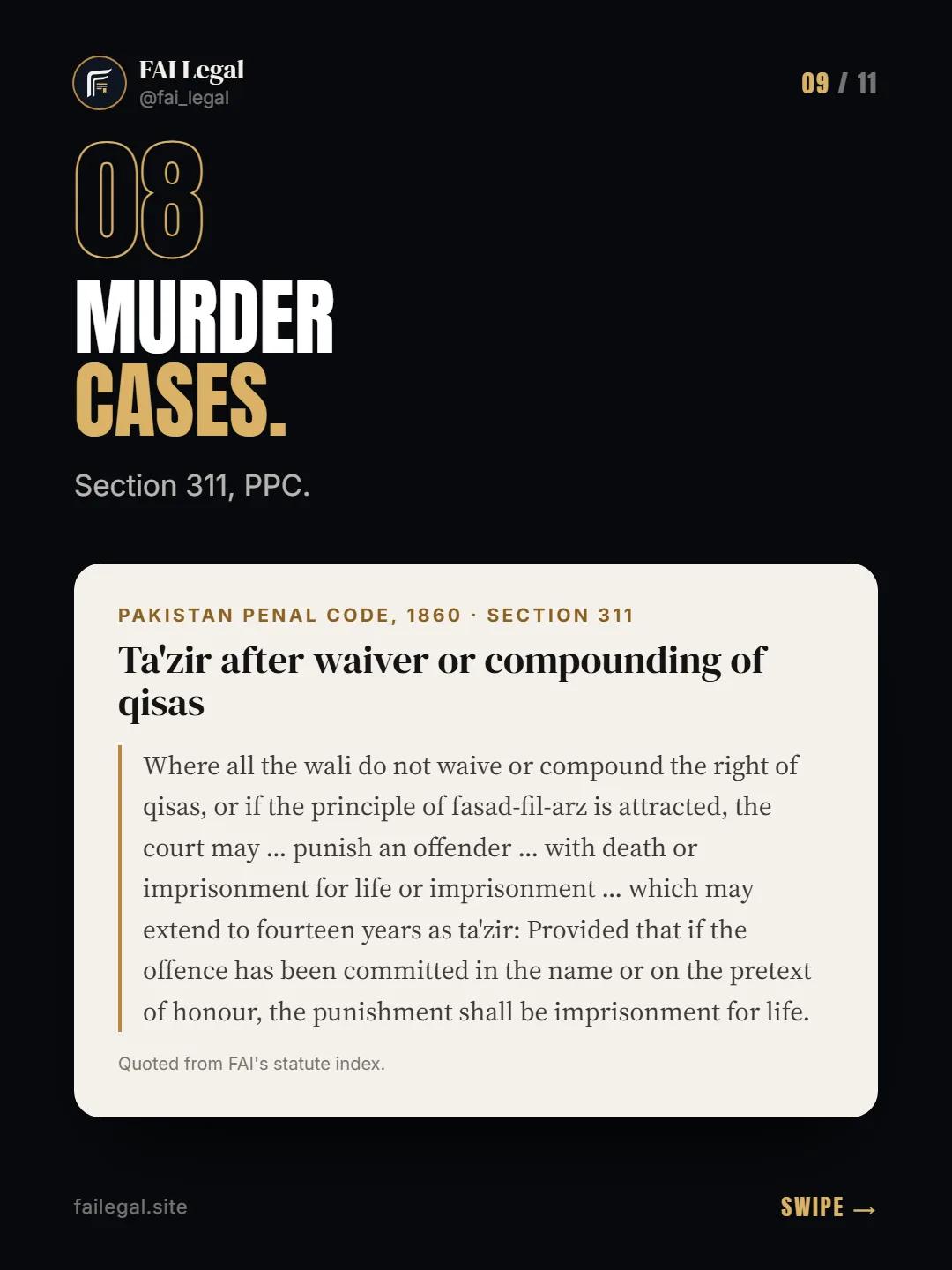
Murder cases.
Section 311, PPC.
“Where all the wali do not waive or compound the right of qisas, or if the principle of fasad-fil-arz is attracted, the court may … punish an offender … with death or imprisonment for life or imprisonment … which may extend to fourteen years as ta'zir: Provided that if the offence has been committed in the name or on the pretext of honour, the punishment shall be imprisonment for life.”
Pakistan Penal Code, 1860 · Section 311, Ta'zir after waiver or compounding of qisas
Thinking of a settlement?
Ask FAI in your own words. It answers with the exact section and the judgments behind it.
- Can a 420 PPC case be ended by compromise?
- Draft an application for permission to compound under section 345(2) CrPC.
Example questions
What this does not mean
- A settlement between the parties does not end every case. Only offences listed in section 345 CrPC can be compounded, and no other offence can be (s.345(7)).
- For offences in the second list, the parties cannot settle on their own. They need the permission of the court where the prosecution is pending (2021 MLD 2011).
- A compromise in a non compoundable case such as robbery does not bring an acquittal, though courts have weighed it for bail (2021 YLRN 124).
Questions people ask
Which offences are compoundable in Pakistan?
Only those listed in section 345 CrPC. Some, like s.489-F, s.500 and ss.447, 448 and 352, can be settled directly (s.345(1)). Others, like s.302, the s.337 hurts and s.420, need court permission (s.345(2)).
Is 302 PPC compoundable?
Yes, by the heirs of the victim, with the permission of the court (s.345(2)). But where all the wali do not waive or compound, the court may still punish the offender (PPC s.311).
Can a 420 PPC case end by compromise?
Yes. Cheating under s.420 can be compounded by the person cheated, with the permission of the court (s.345(2)).
What is the effect of a compromise in a criminal case?
A valid composition has the effect of an acquittal (s.345(6)). If an appeal is pending, it needs the leave of the appeal court (s.345(5)).
Can robbery be compromised?
Robbery is not compoundable. In 2021 YLRN 124 the complainant no longer wished to prosecute and bail was granted, but that is not an acquittal.
Sources
- Pakistan Penal Code, 1860 · Section 311
Ta'zir after waiver or compounding of qisas Pakistan Code
Educational legal information, not legal advice. Every case turns on its own facts. Speak to a qualified lawyer about your situation. Review status: Pending advocate review. How we check.