Criminal law · For citizens
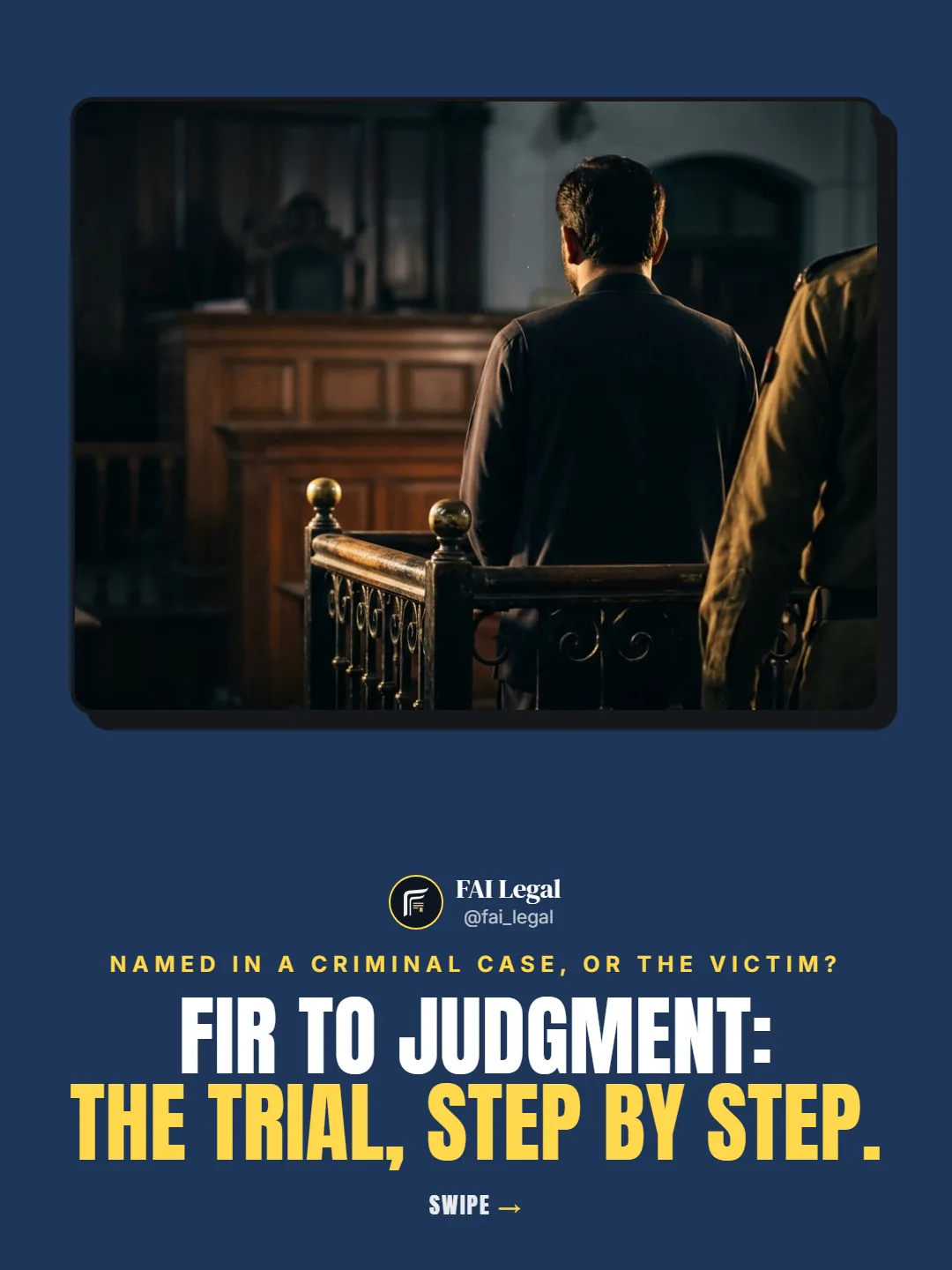
FIR to judgment: the trial, step by step.
In short
Police investigate and send a report to the Magistrate through the Public Prosecutor (CrPC s.173). The accused gets free copies 7 days before trial (s.265-C), a charge is framed only if there is ground to proceed (s.265-D), then come the plea, prosecution evidence, the accused's statement (s.342), defence, arguments and the verdict (s.265-H).
By the FAI Legal editorial desk · 12 October 2026 · 11 slides · 2 min read
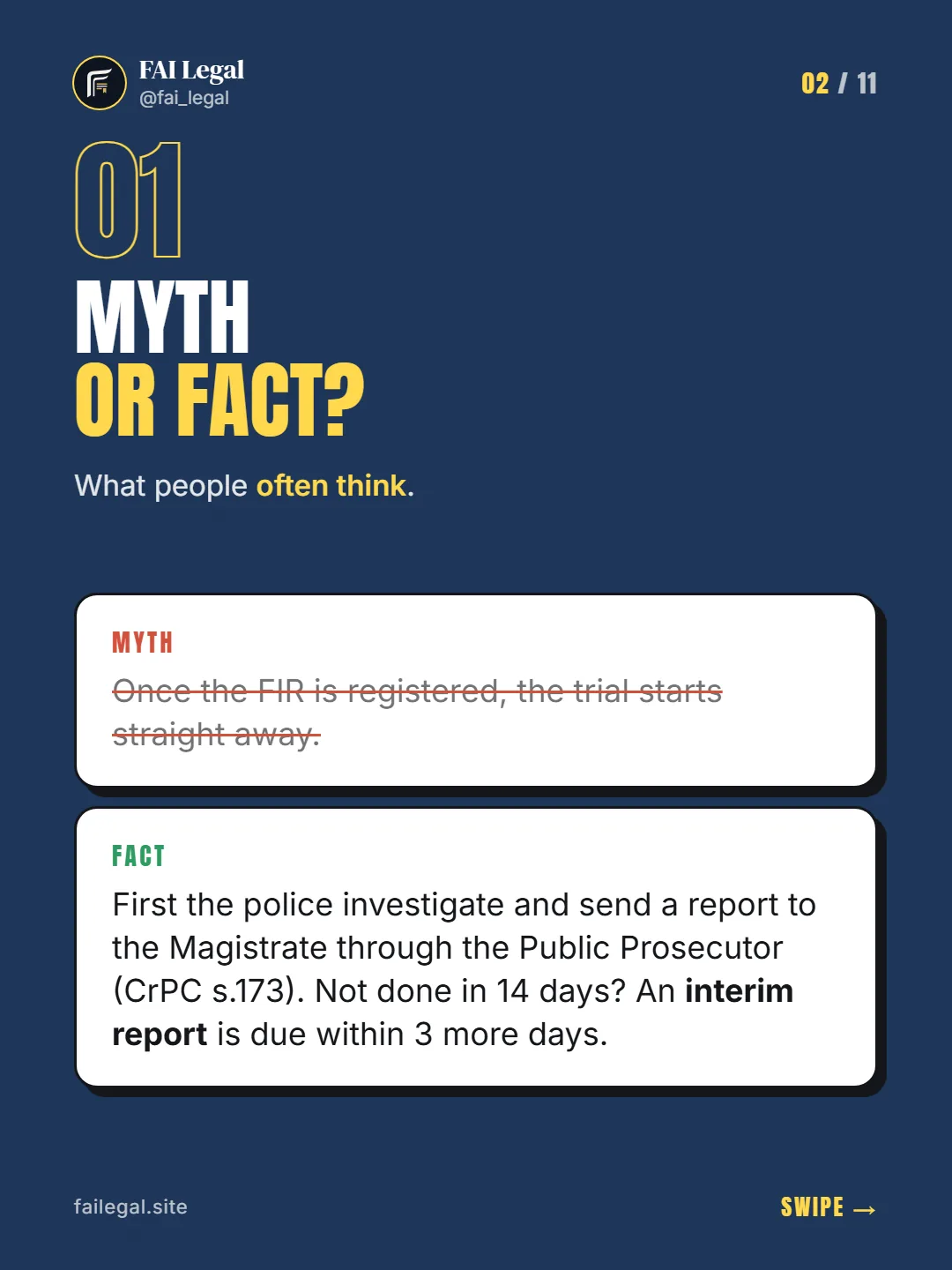

Myth or fact?
What people often think.
- Myth: Once the FIR is registered, the trial starts straight away.
- Fact: First the police investigate and send a report to the Magistrate through the Public Prosecutor (CrPC s.173). Not done in 14 days? An interim report is due within 3 more days.
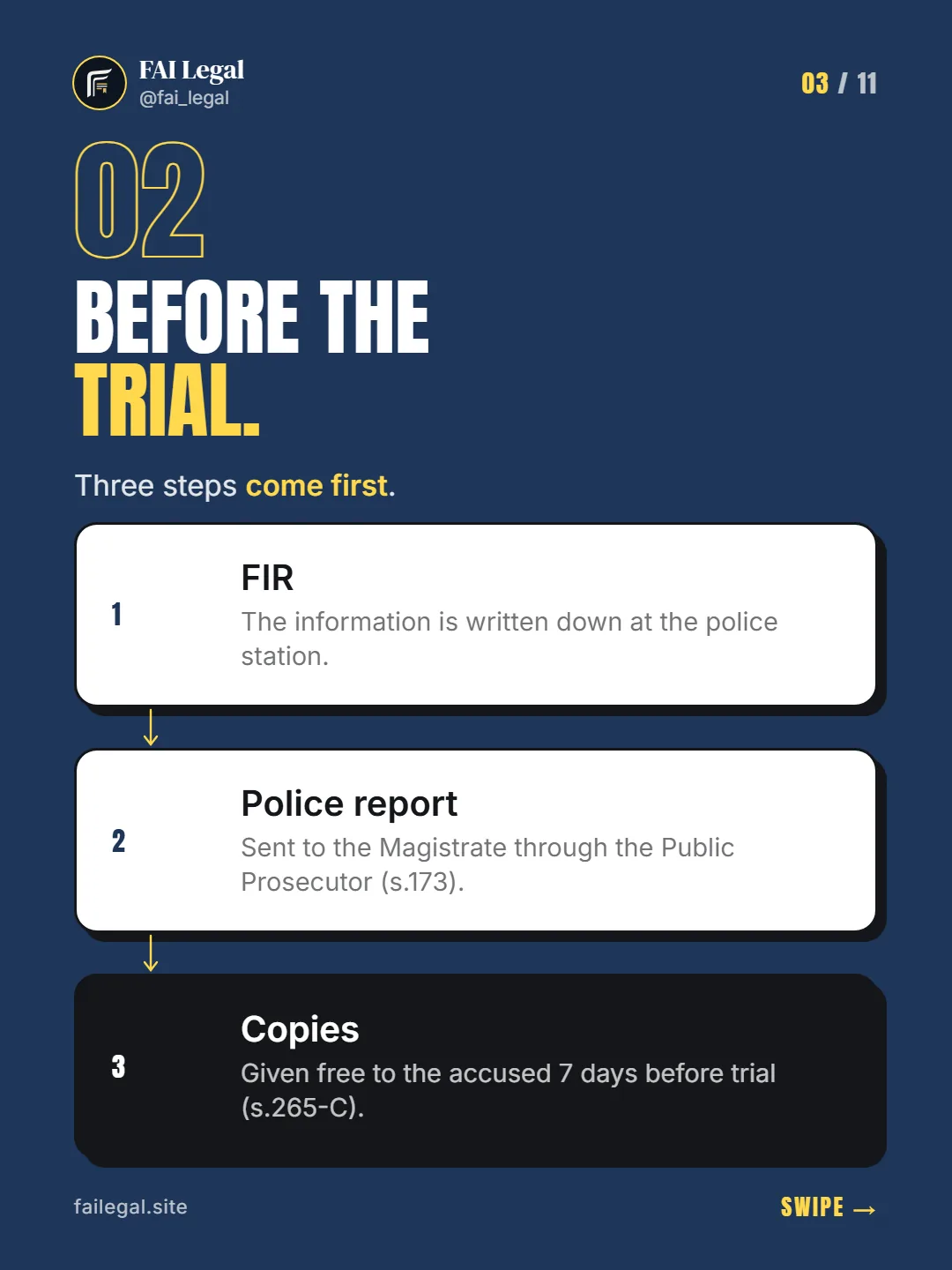
Before the trial.
Three steps come first.
- FIRThe information is written down at the police station.
- Police reportSent to the Magistrate through the Public Prosecutor (s.173).
- CopiesGiven free to the accused 7 days before trial (s.265-C).
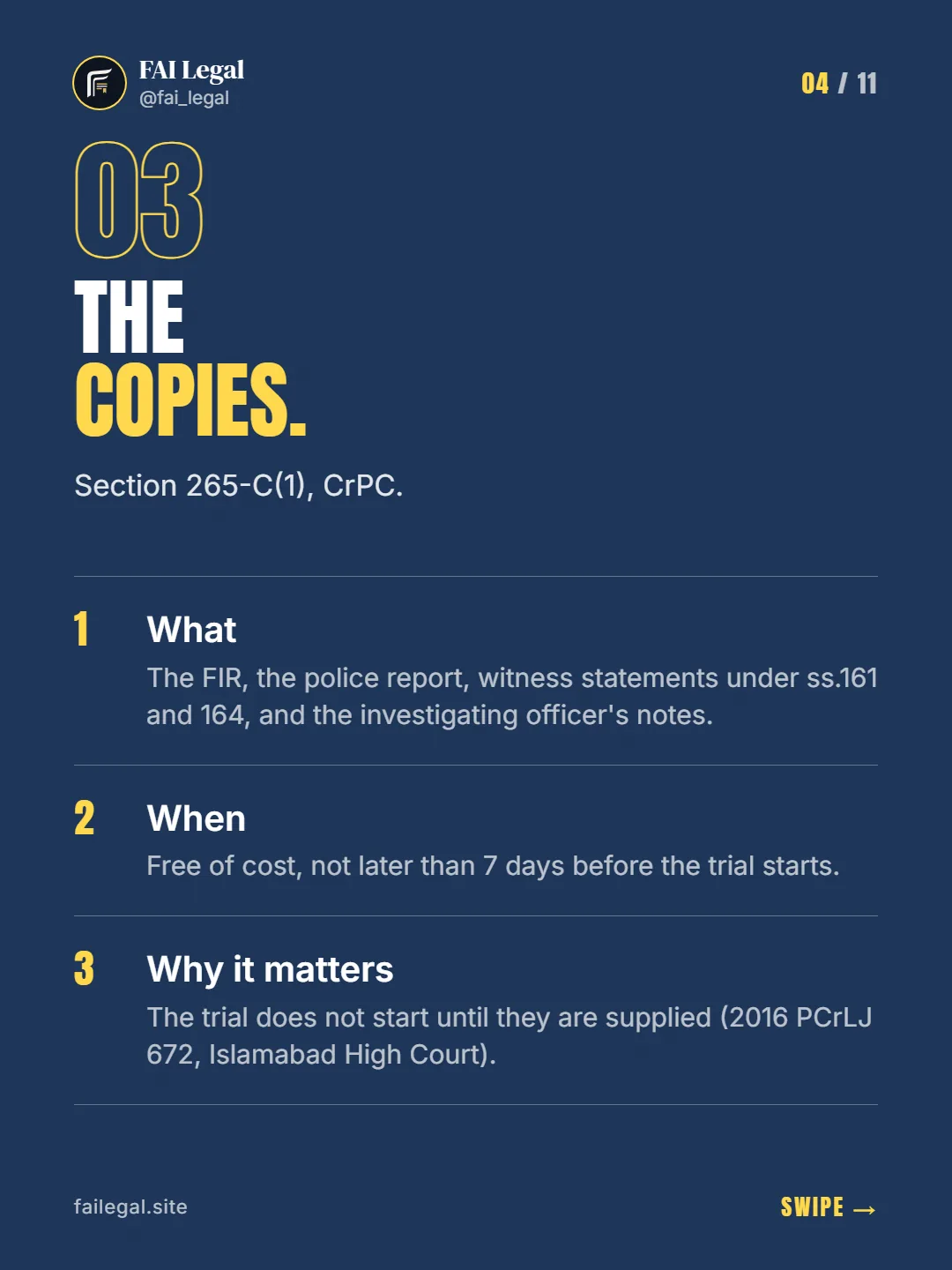
The copies.
Section 265-C(1), CrPC.
- WhatThe FIR, the police report, witness statements under ss.161 and 164, and the investigating officer's notes.
- WhenFree of cost, not later than 7 days before the trial starts.
- Why it mattersThe trial does not start until they are supplied (2016 PCrLJ 672, Islamabad High Court).
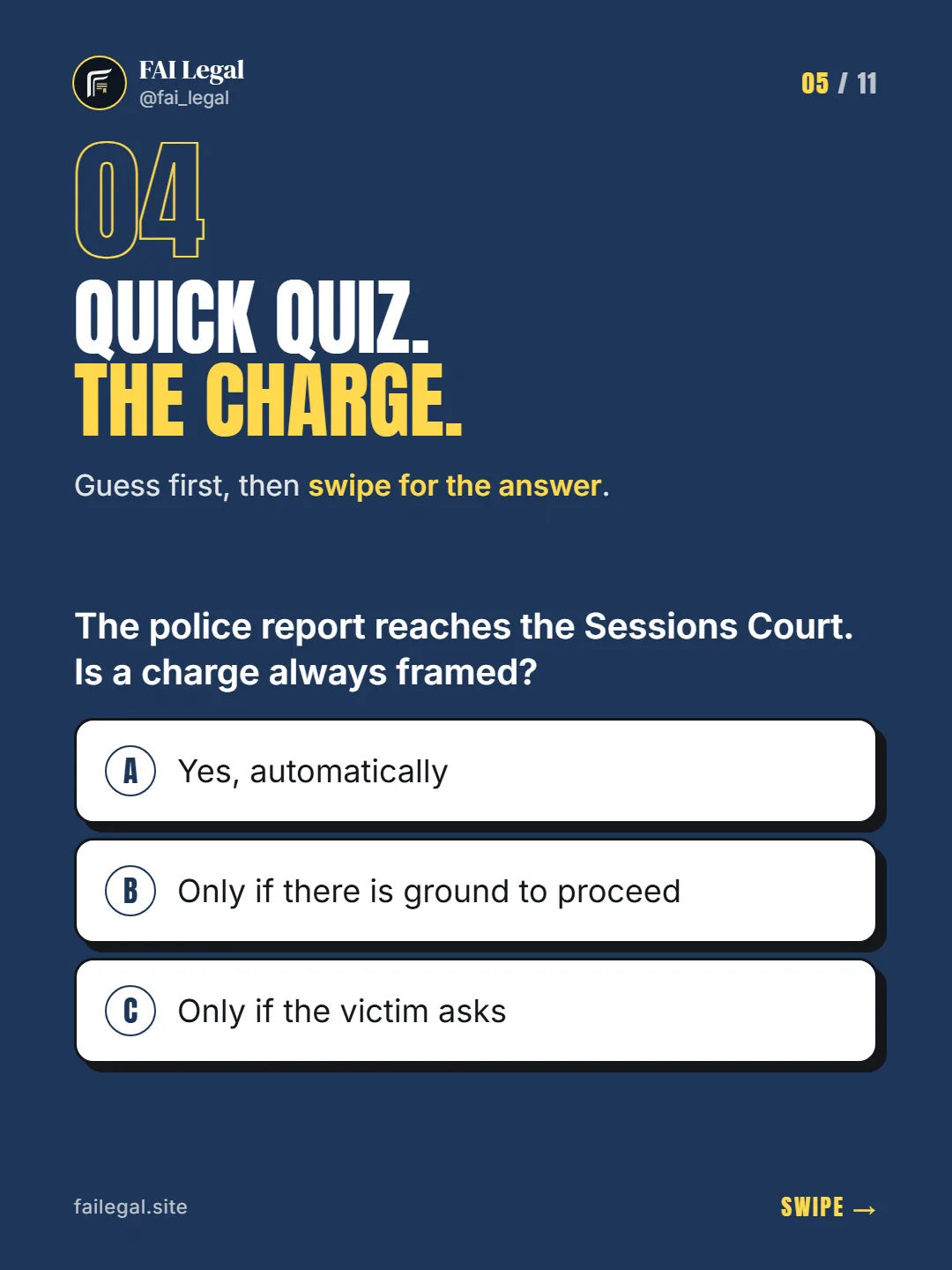
Quick quiz. The charge.
Guess first, then swipe for the answer.
- A. Yes, automatically
- B. Only if there is ground to proceed
- C. Only if the victim asks
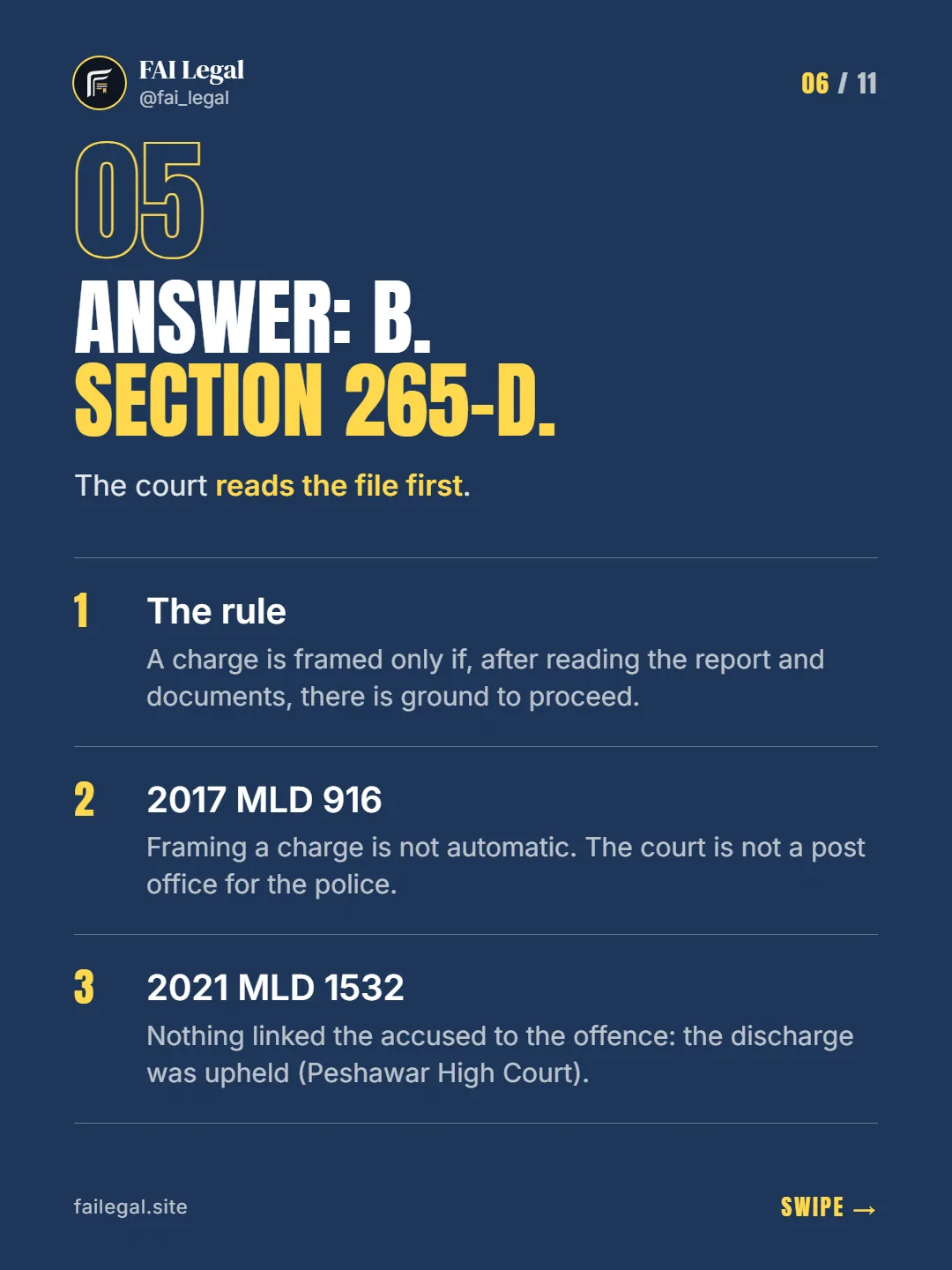
Answer: B. Section 265-D.
The court reads the file first.
- The ruleA charge is framed only if, after reading the report and documents, there is ground to proceed.
- 2017 MLD 916Framing a charge is not automatic. The court is not a post office for the police.
- 2021 MLD 1532Nothing linked the accused to the offence: the discharge was upheld (Peshawar High Court).
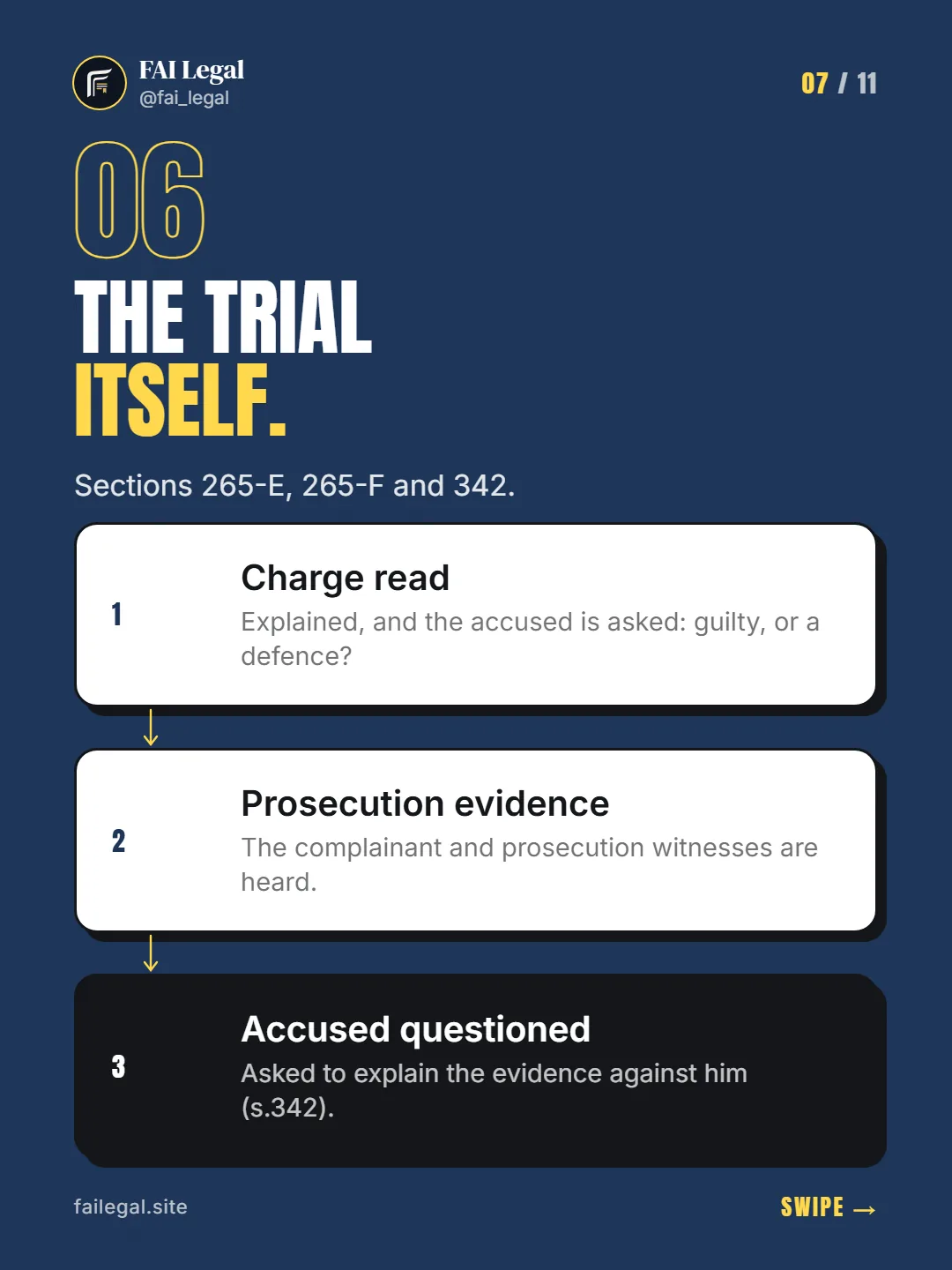
The trial itself.
Sections 265-E, 265-F and 342.
- Charge readExplained, and the accused is asked: guilty, or a defence?
- Prosecution evidenceThe complainant and prosecution witnesses are heard.
- Accused questionedAsked to explain the evidence against him (s.342).
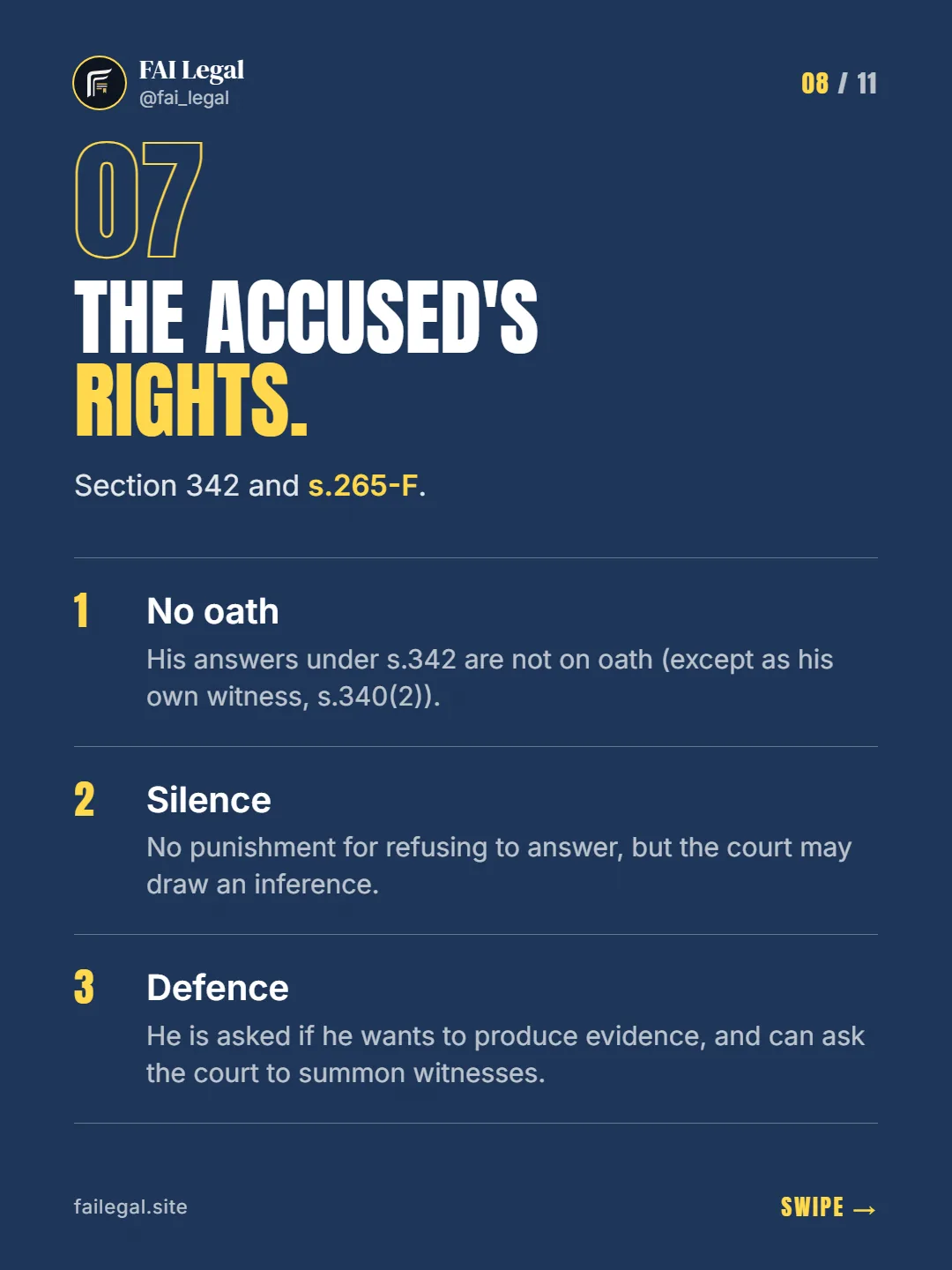
The accused's rights.
Section 342 and s.265-F.
- No oathHis answers under s.342 are not on oath (except as his own witness, s.340(2)).
- SilenceNo punishment for refusing to answer, but the court may draw an inference.
- DefenceHe is asked if he wants to produce evidence, and can ask the court to summon witnesses.
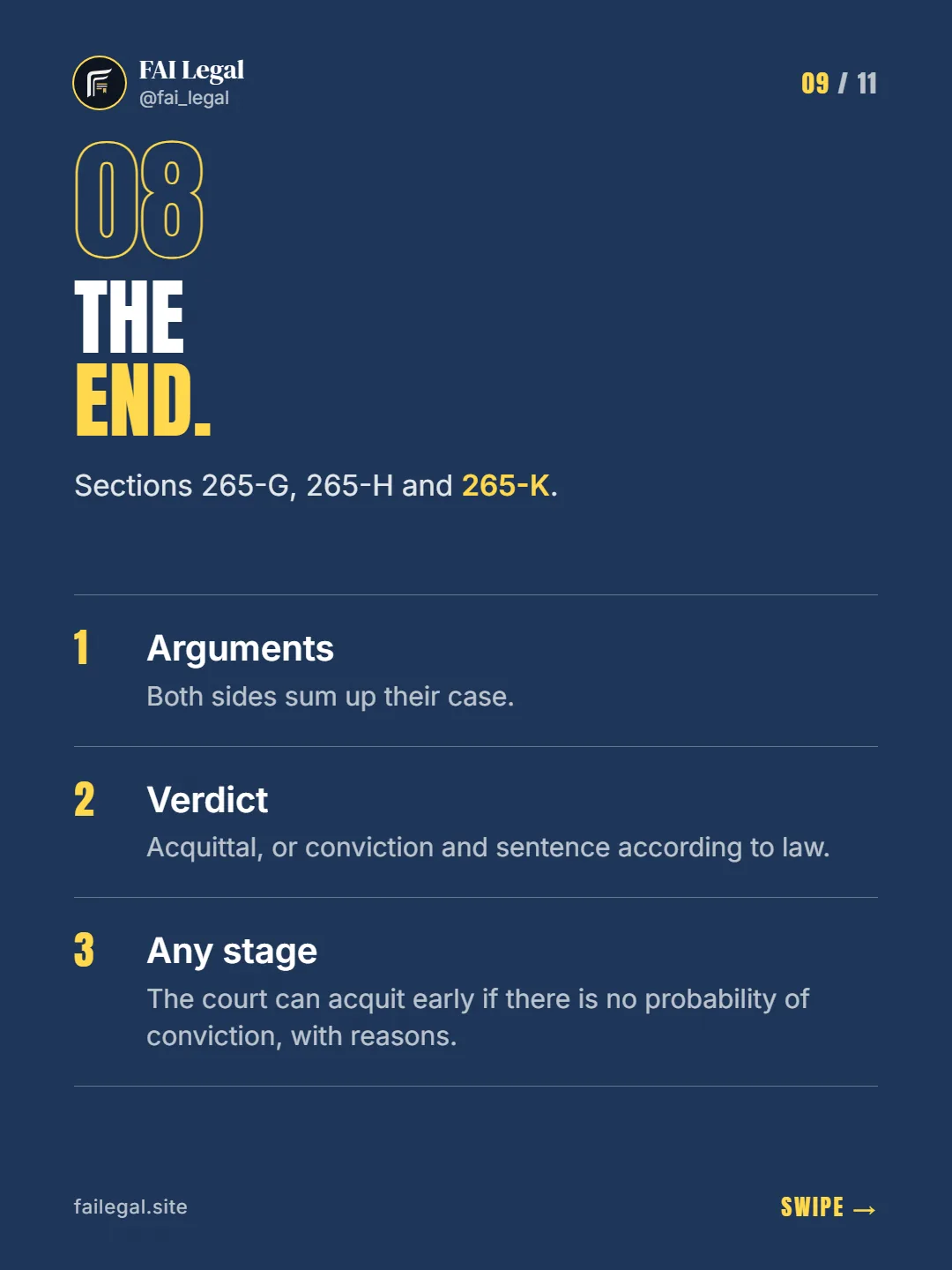
The end.
Sections 265-G, 265-H and 265-K.
- ArgumentsBoth sides sum up their case.
- VerdictAcquittal, or conviction and sentence according to law.
- Any stageThe court can acquit early if there is no probability of conviction, with reasons.
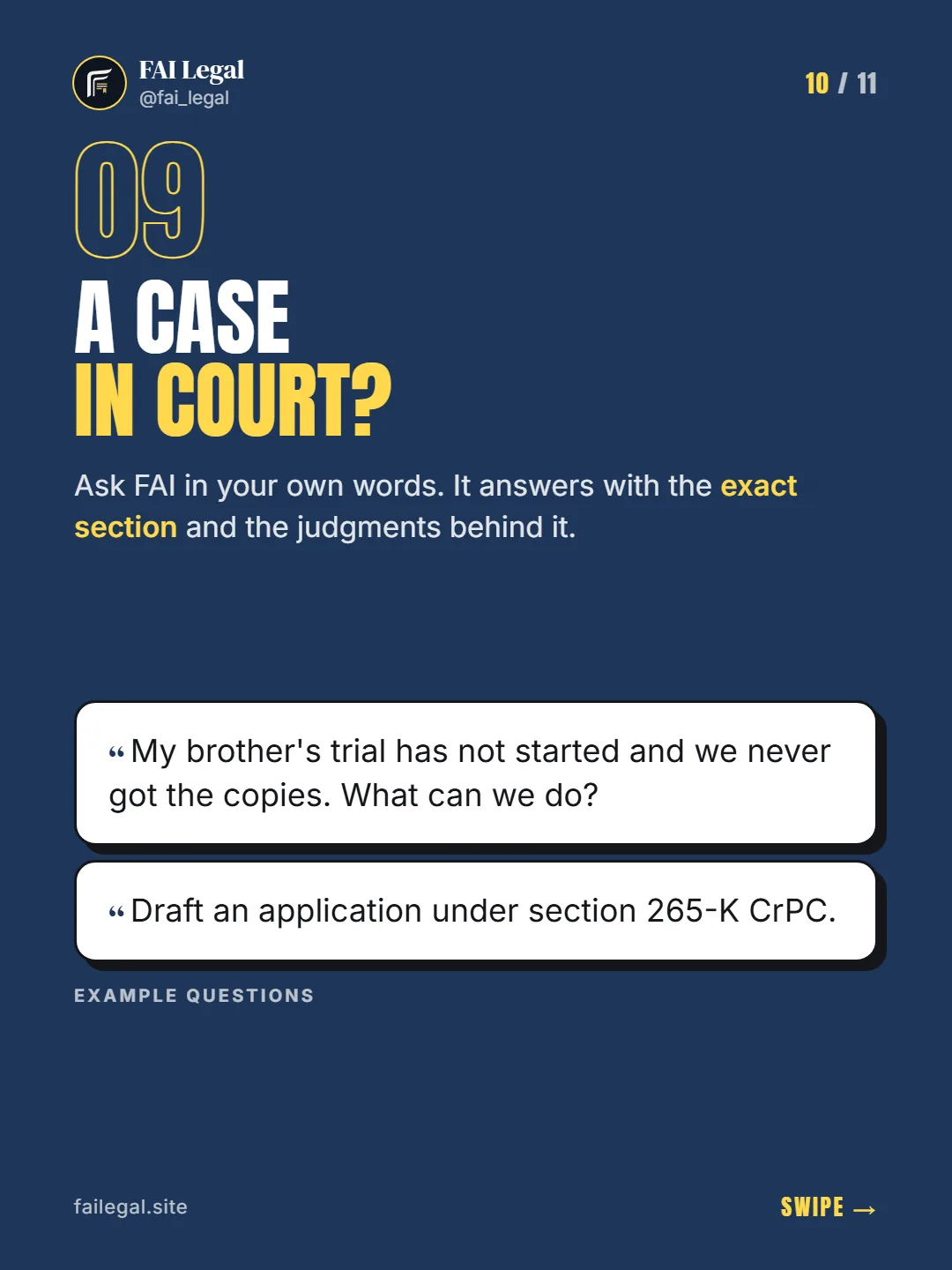
A case in court?
Ask FAI in your own words. It answers with the exact section and the judgments behind it.
- My brother's trial has not started and we never got the copies. What can we do?
- Draft an application under section 265-K CrPC.
Example questions
What this does not mean
- The trial does not start the day the FIR is registered. The police report under CrPC s.173 comes first.
- A charge is not framed automatically. Under s.265-D there must be ground to proceed after the court reads the report and documents.
- Answers given under s.342 are not on oath, unless the accused chooses to be his own witness under s.340(2).
Questions people ask
What happens after FIR in Pakistan?
The police investigate and send a report to the Magistrate through the Public Prosecutor (CrPC s.173). If it is not done in 14 days, an interim report is due within 3 more days.
When does the accused get copies of the FIR and police report?
Free of cost, not later than 7 days before the trial starts (CrPC s.265-C). This covers the FIR, the police report, statements under ss.161 and 164, and the notes of the investigating officer.
Is the charge framed automatically after challan?
No. Under s.265-D a charge is framed only if, after reading the report and documents, there is ground to proceed. The Peshawar High Court upheld a discharge where nothing linked the accused to the offence (2021 MLD 1532).
What is the statement of accused under section 342 CrPC?
The accused is asked to explain the evidence against him. His answers are not on oath, and he is not punished for refusing to answer, though the court may draw an inference.
Can the court acquit before the trial ends?
Yes. Under s.265-K the court can acquit at any stage if there is no probability of conviction, giving reasons.
Sources
- Code of Criminal Procedure, 1898 · Section 173
Report of police officer Pakistan Code - Code of Criminal Procedure, 1898 · Section 265-C
Supply of statements and documents to the accused Pakistan Code - Code of Criminal Procedure, 1898 · Section 265-D
When charge to be framed Pakistan Code - Code of Criminal Procedure, 1898 · Section 265-E
Plea Pakistan Code - Code of Criminal Procedure, 1898 · Section 265-F
Evidence for prosecution Pakistan Code - Code of Criminal Procedure, 1898 · Section 342
Power to examine the accused Pakistan Code - Code of Criminal Procedure, 1898 · Section 340
Right of person against whom proceedings are instituted to be defended and his competency to be a witness Pakistan Code - Code of Criminal Procedure, 1898 · Section 265-G
Summing up by prosecutor and defence Pakistan Code - Code of Criminal Procedure, 1898 · Section 265-H
Acquittal or conviction Pakistan Code - Code of Criminal Procedure, 1898 · Section 265-K
Power of Court to acquit accused at any stage Pakistan Code
Educational legal information, not legal advice. Every case turns on its own facts. Speak to a qualified lawyer about your situation. Review status: Pending advocate review. How we check.