Criminal law · For citizens
Police called you in? Know these rules first.
In short
The investigating officer calls you by an order in writing (CrPC s.160). You must answer questions about the case, except those that could expose you to a criminal charge (s.161(2)). You do not sign your statement (s.162), no one may threaten or tempt you (s.163), and a confession to the police cannot be proved against an accused (Qanun-e-Shahadat Art. 38).
By the FAI Legal editorial desk · 12 October 2026 · 11 slides · 2 min read

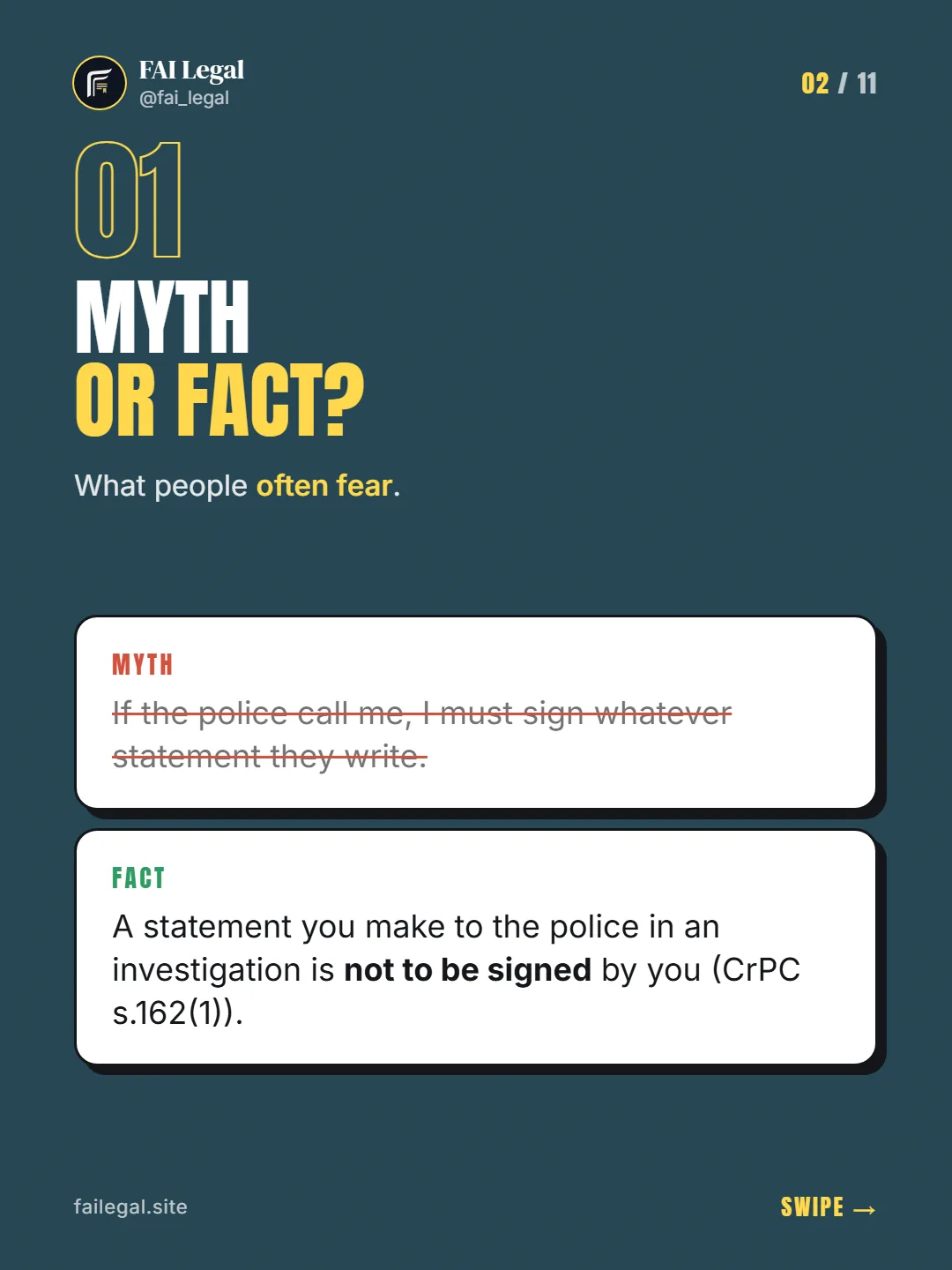

Myth or fact?
What people often fear.
- Myth: If the police call me, I must sign whatever statement they write.
- Fact: A statement you make to the police in an investigation is not to be signed by you (CrPC s.162(1)).
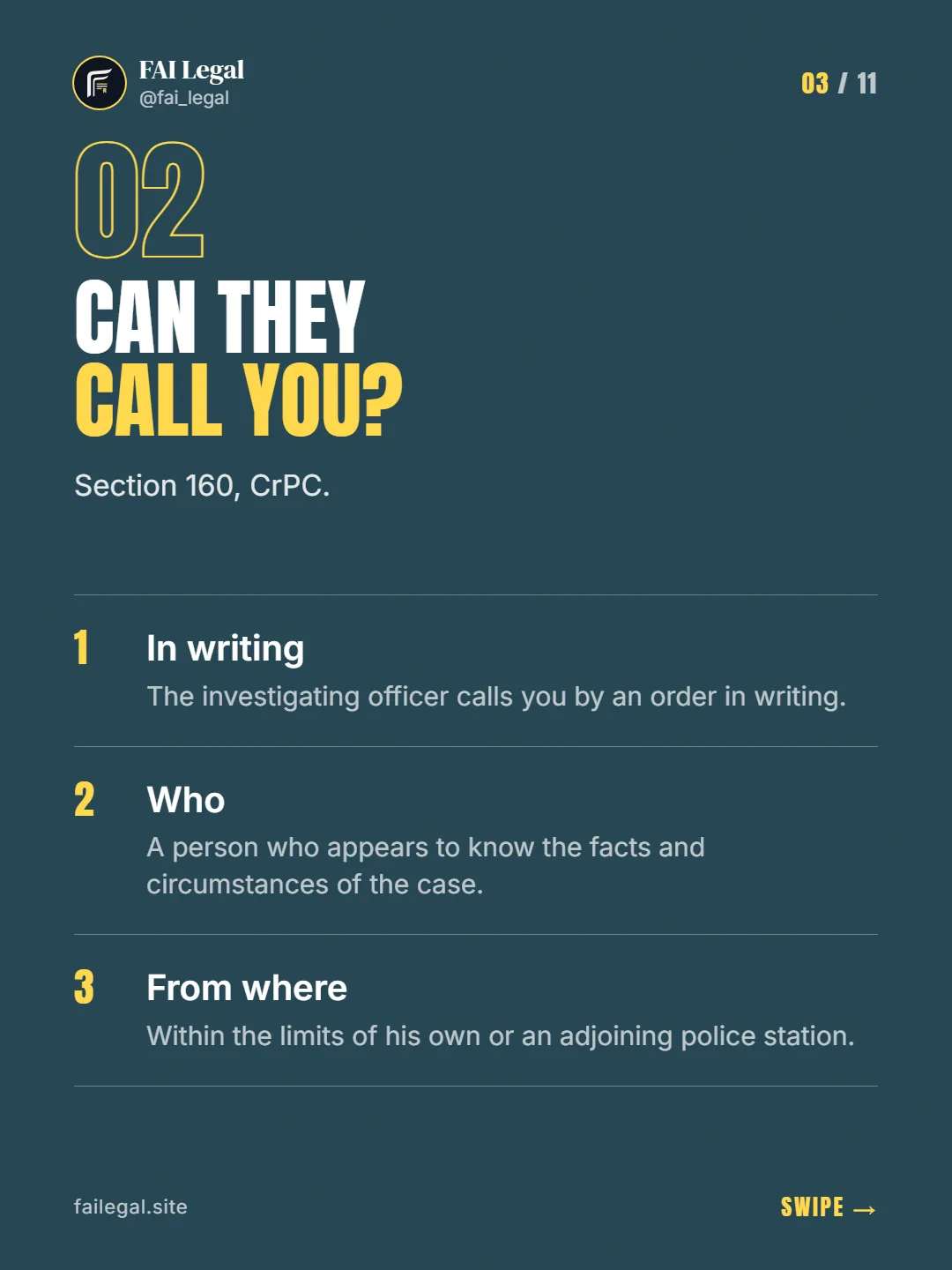
Can they call you?
Section 160, CrPC.
- In writingThe investigating officer calls you by an order in writing.
- WhoA person who appears to know the facts and circumstances of the case.
- From whereWithin the limits of his own or an adjoining police station.
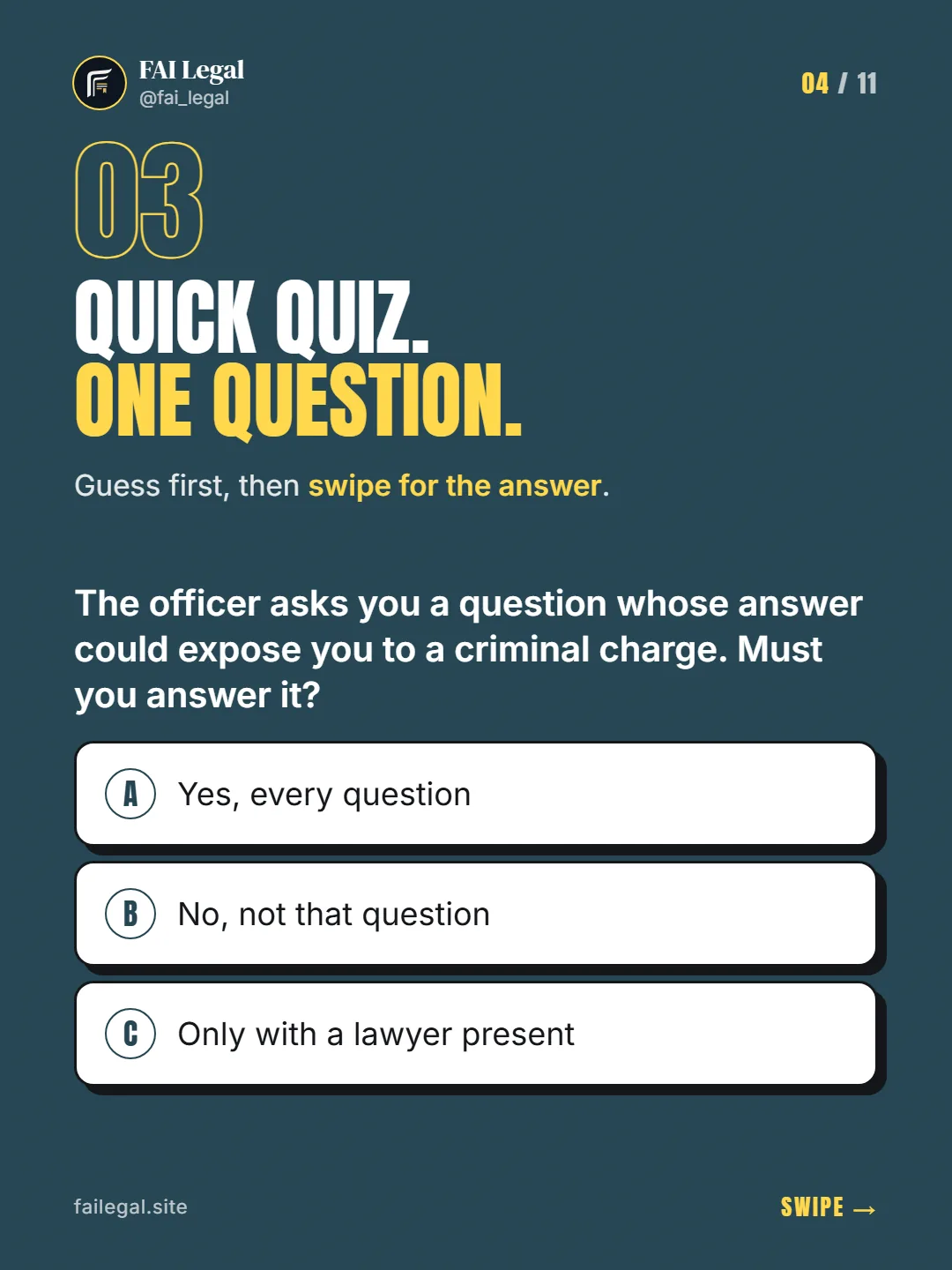
Quick quiz. One question.
Guess first, then swipe for the answer.
- A. Yes, every question
- B. No, not that question
- C. Only with a lawyer present
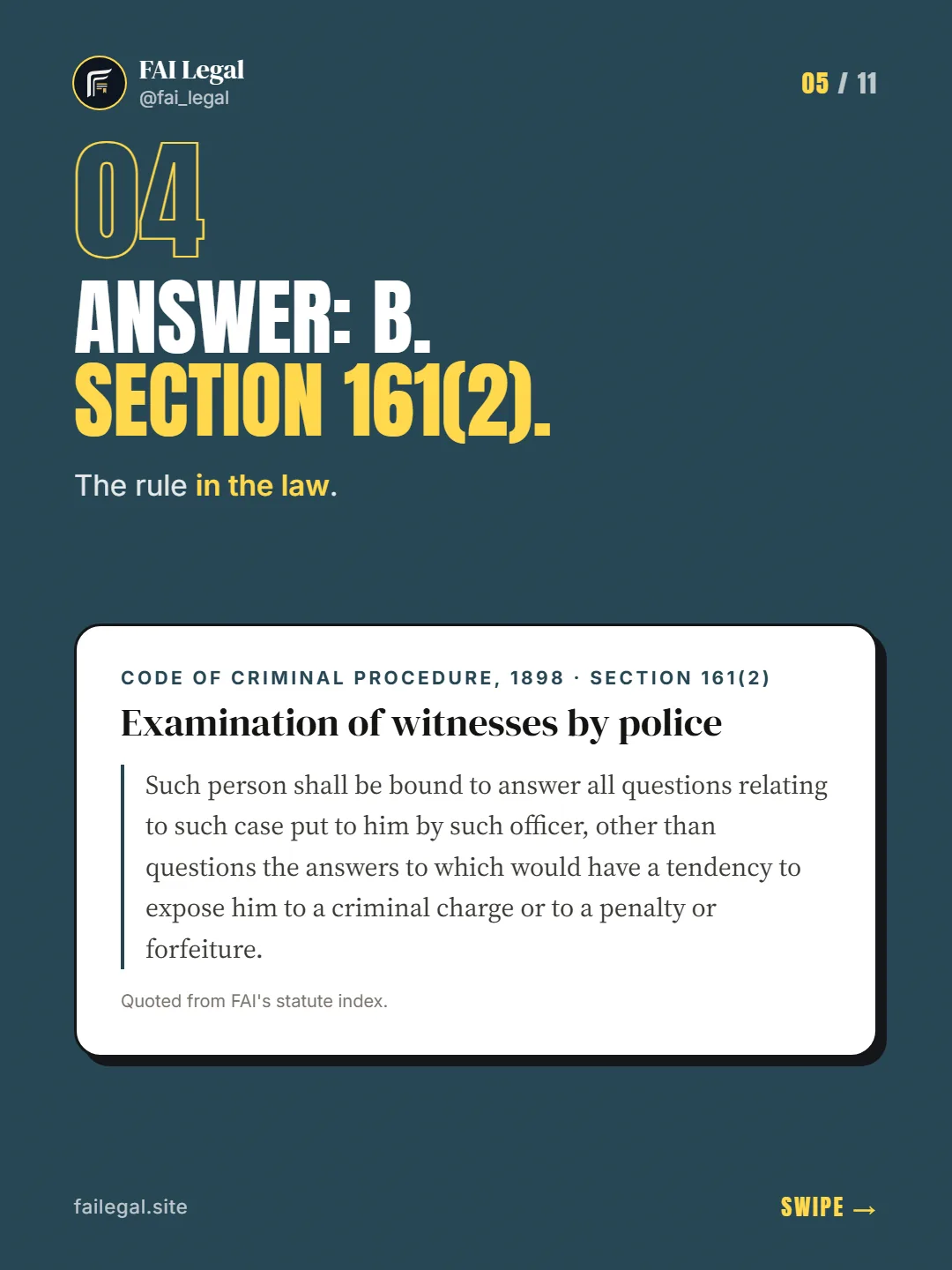
Answer: B. Section 161(2).
The rule in the law.
“Such person shall be bound to answer all questions relating to such case put to him by such officer, other than questions the answers to which would have a tendency to expose him to a criminal charge or to a penalty or forfeiture.”
Code of Criminal Procedure, 1898 · Section 161(2), Examination of witnesses by police
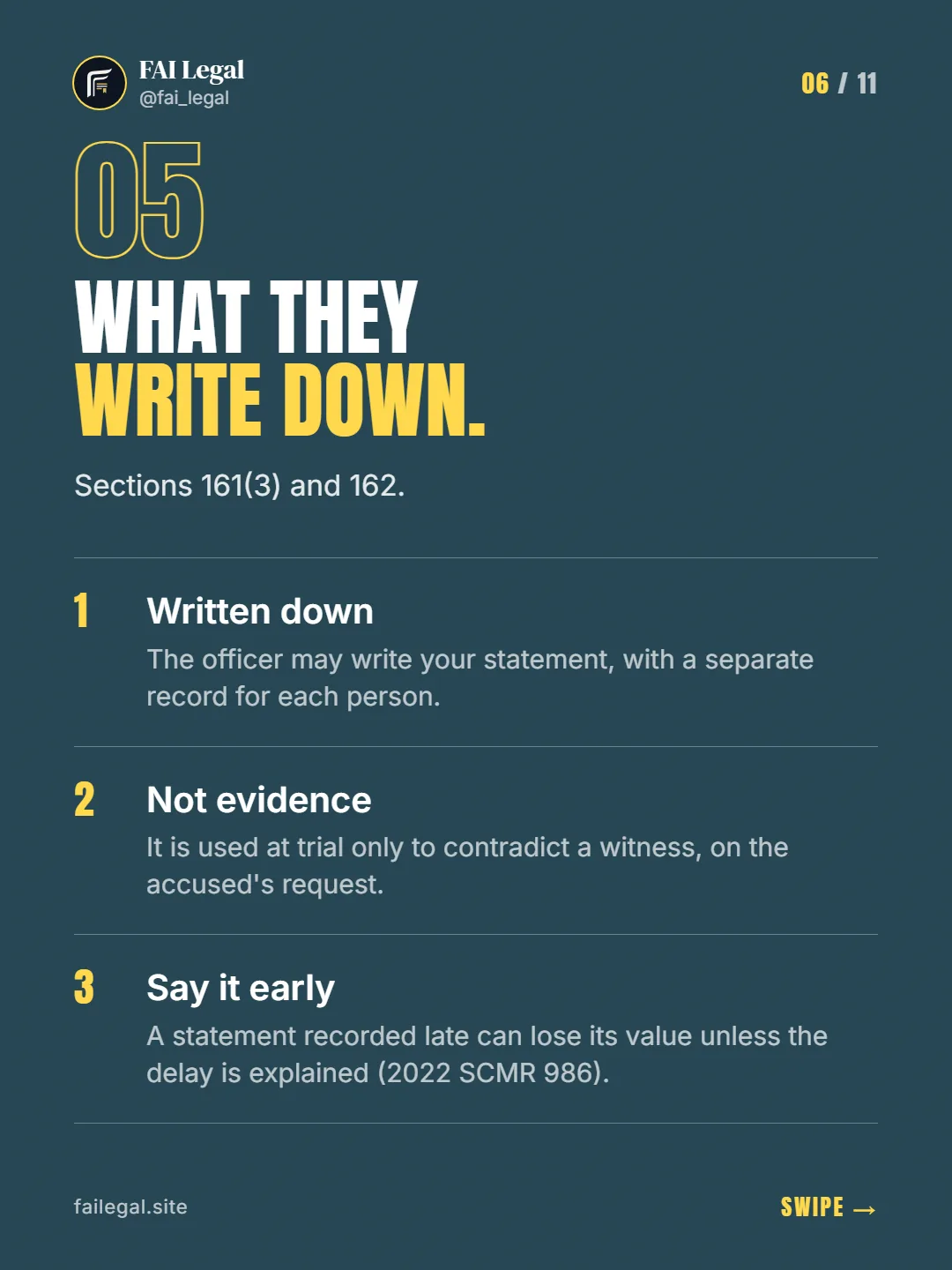
What they write down.
Sections 161(3) and 162.
- Written downThe officer may write your statement, with a separate record for each person.
- Not evidenceIt is used at trial only to contradict a witness, on the accused's request.
- Say it earlyA statement recorded late can lose its value unless the delay is explained (2022 SCMR 986).
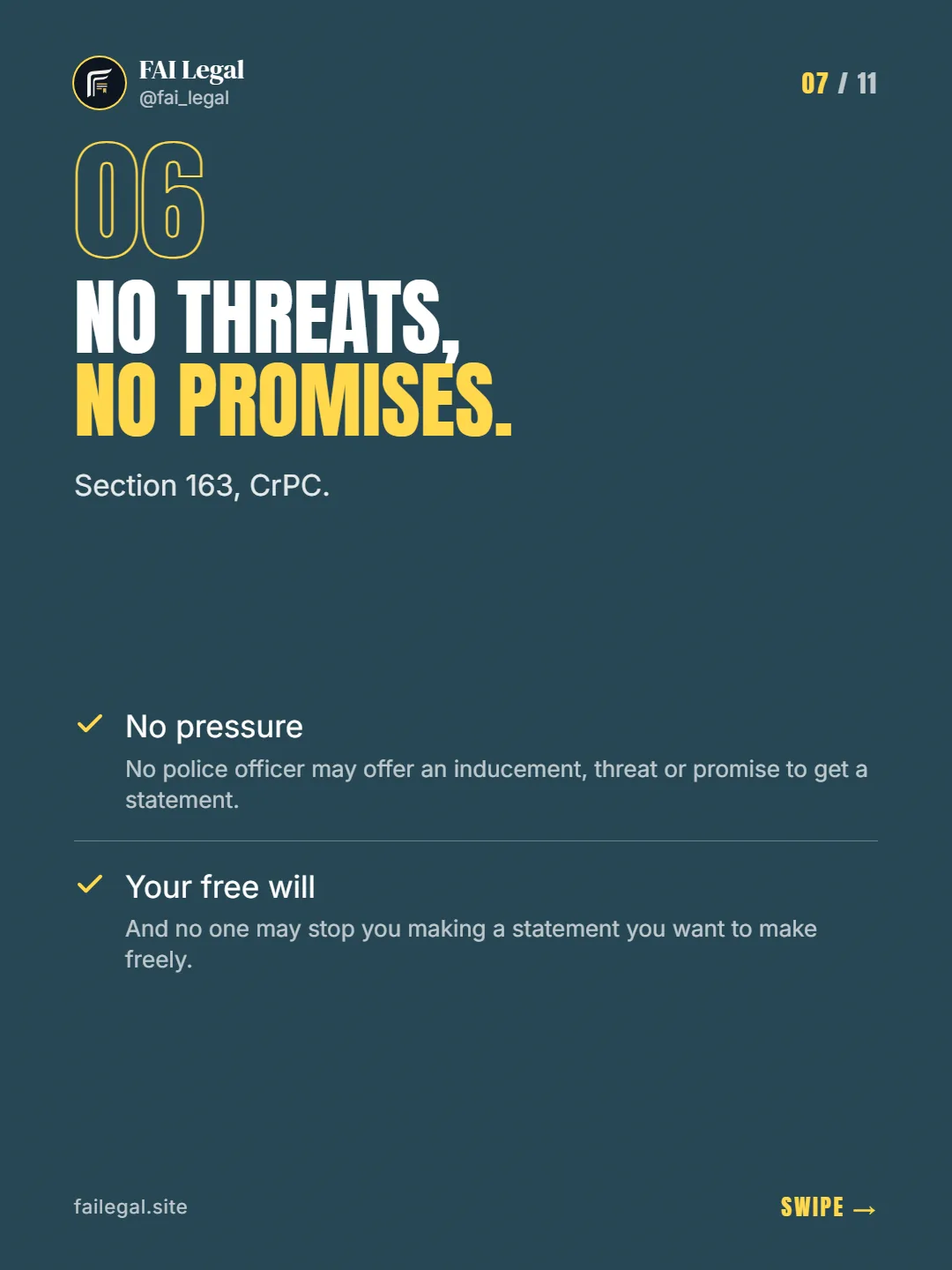
No threats, no promises.
Section 163, CrPC.
- No pressureNo police officer may offer an inducement, threat or promise to get a statement.
- Your free willAnd no one may stop you making a statement you want to make freely.
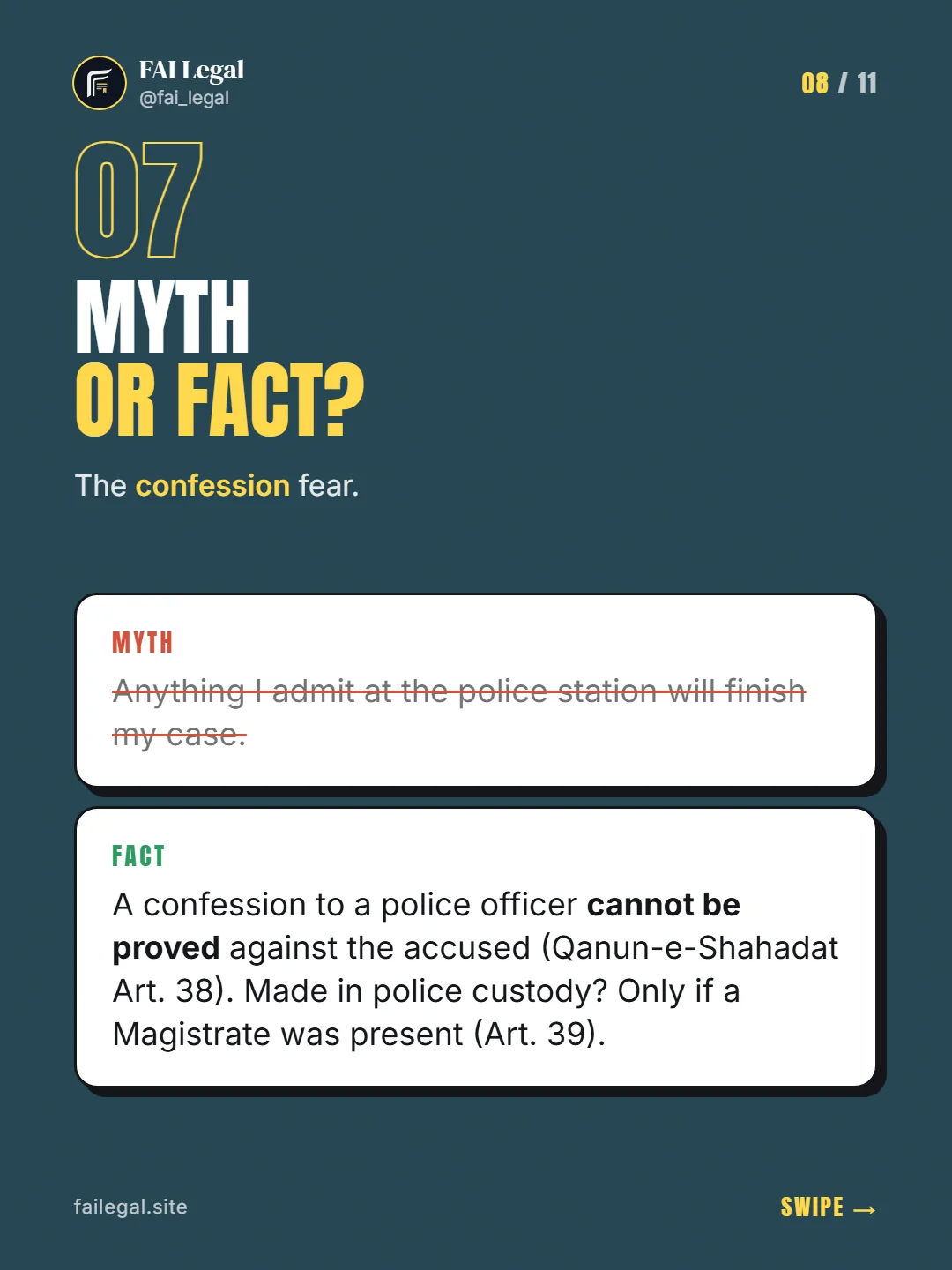
Myth or fact?
The confession fear.
- Myth: Anything I admit at the police station will finish my case.
- Fact: A confession to a police officer cannot be proved against the accused (Qanun-e-Shahadat Art. 38). Made in police custody? Only if a Magistrate was present (Art. 39).
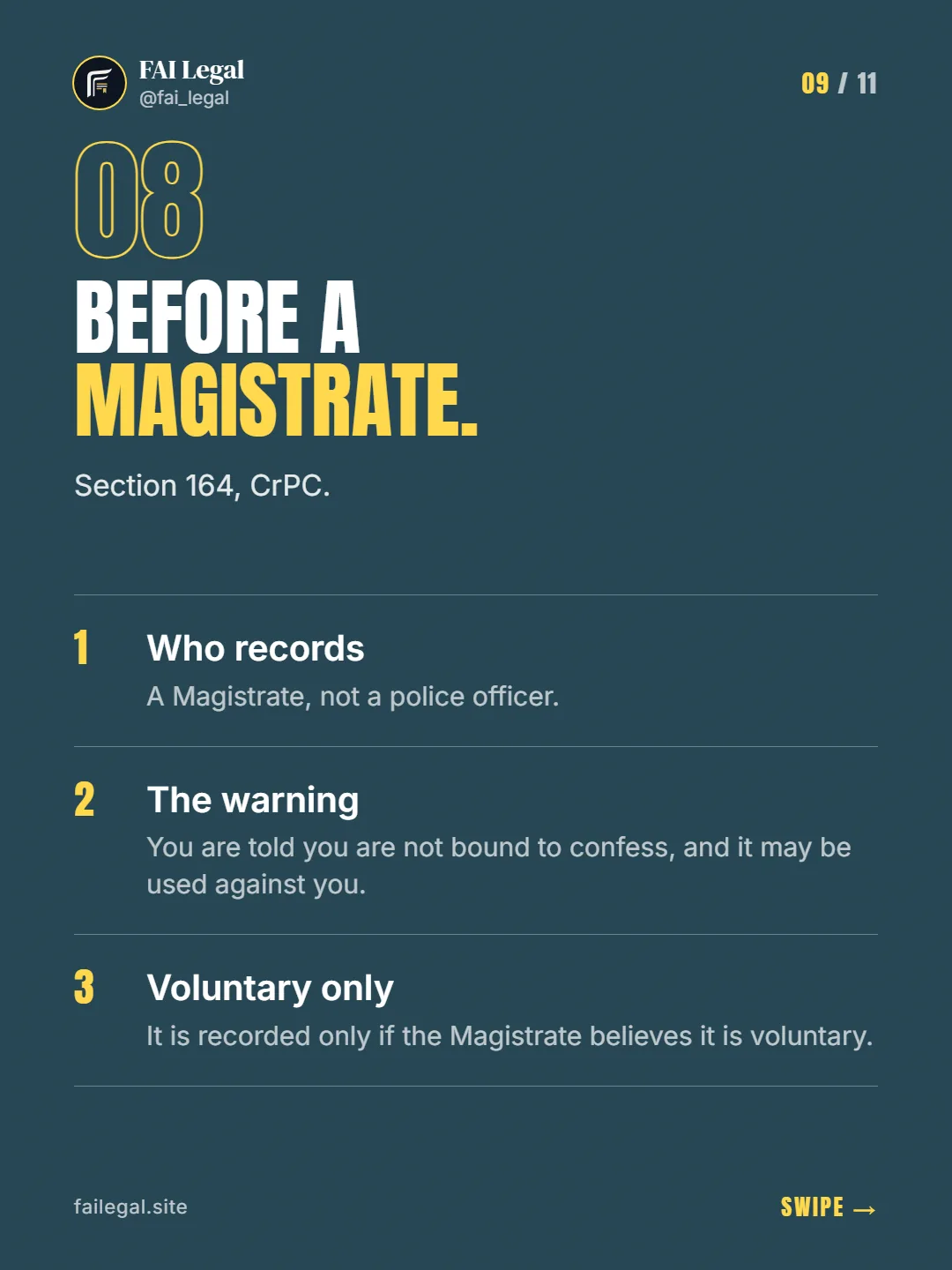
Before a Magistrate.
Section 164, CrPC.
- Who recordsA Magistrate, not a police officer.
- The warningYou are told you are not bound to confess, and it may be used against you.
- Voluntary onlyIt is recorded only if the Magistrate believes it is voluntary.
Called to the police station?
Ask FAI in your own words. It answers with the exact section and the judgments behind it.
- The police called my brother as a witness. Does he have to go, and can he refuse to sign?
- Is a confession made in police custody admissible?
Example questions
What this does not mean
- The duty to answer under CrPC s.161(2) does not cover questions whose answers could expose you to a criminal charge, a penalty or forfeiture.
- Section 160 is about a person who appears to know the facts of the case, called in writing from within the limits of his own or an adjoining police station.
- Art. 38 of the Qanun-e-Shahadat covers a confession to a police officer. A confession recorded by a Magistrate under s.164 is a different thing.
Questions people ask
Do I have to go if the police call me as a witness in Pakistan?
Under CrPC s.160 the investigating officer can require a person who appears to know the facts of the case to attend, by an order in writing. It applies within the limits of his own or an adjoining police station.
Do I have to sign my statement to the police?
No. A statement made to the police in an investigation is not to be signed by the person making it (CrPC s.162(1)).
Can I refuse to answer police questions?
You must answer questions about the case, but not those whose answers could expose you to a criminal charge, a penalty or forfeiture (CrPC s.161(2)).
Is a confession to the police valid in court in Pakistan?
A confession to a police officer cannot be proved against the accused (Qanun-e-Shahadat Art. 38). A confession made in police custody can be proved only if a Magistrate was present (Art. 39).
Can the police threaten me to give a statement?
No. Under CrPC s.163 no police officer may offer an inducement, threat or promise to get a statement, and no one may stop you making a statement freely.
Sources
- Code of Criminal Procedure, 1898 · Section 161(2)
Examination of witnesses by police Pakistan Code
Educational legal information, not legal advice. Every case turns on its own facts. Speak to a qualified lawyer about your situation. Review status: Pending advocate review. How we check.