Criminal law · For citizens
Police not acting? Go to the court yourself.
In short
Yes. A Magistrate can take cognizance on a complaint of the facts (CrPC s.190(1)(a)). The court examines you on oath (s.200), may inquire first or order an inquiry (s.202), then either dismisses the complaint with reasons (s.203) or summons the accused (s.204).
By the FAI Legal editorial desk · 12 October 2026 · 11 slides · 2 min read

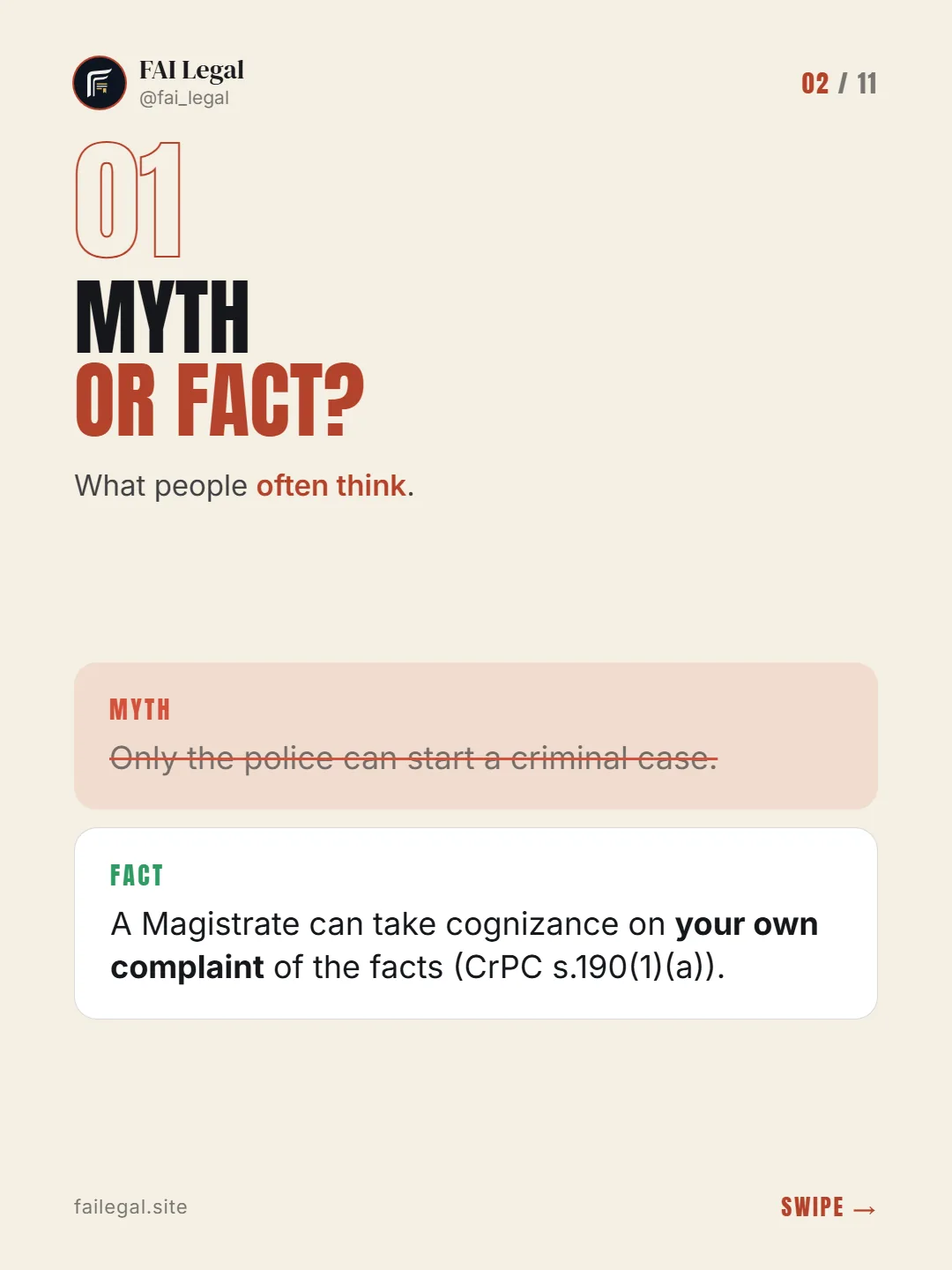

Myth or fact?
What people often think.
- Myth: Only the police can start a criminal case.
- Fact: A Magistrate can take cognizance on your own complaint of the facts (CrPC s.190(1)(a)).
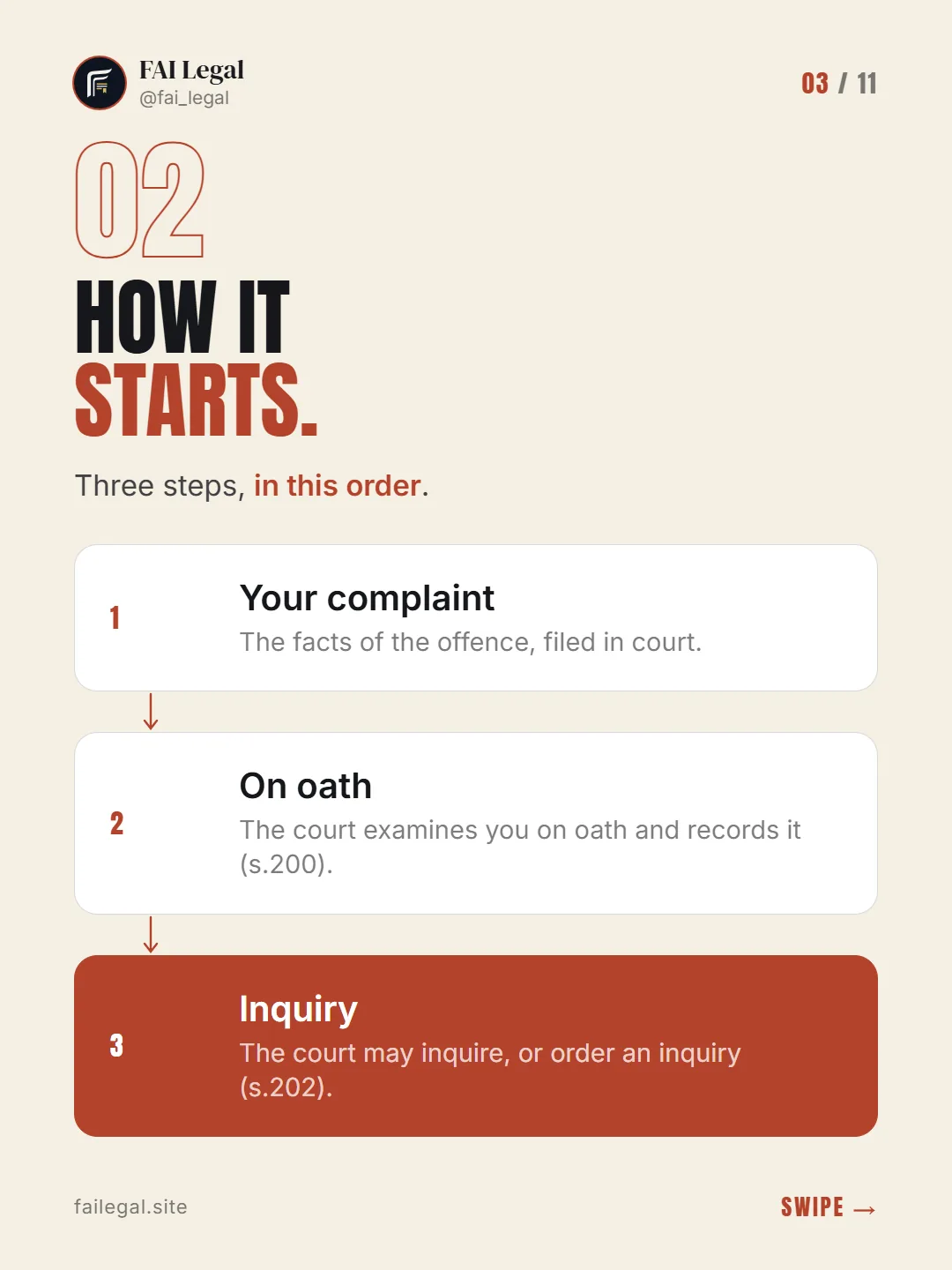
How it starts.
Three steps, in this order.
- Your complaintThe facts of the offence, filed in court.
- On oathThe court examines you on oath and records it (s.200).
- InquiryThe court may inquire, or order an inquiry (s.202).
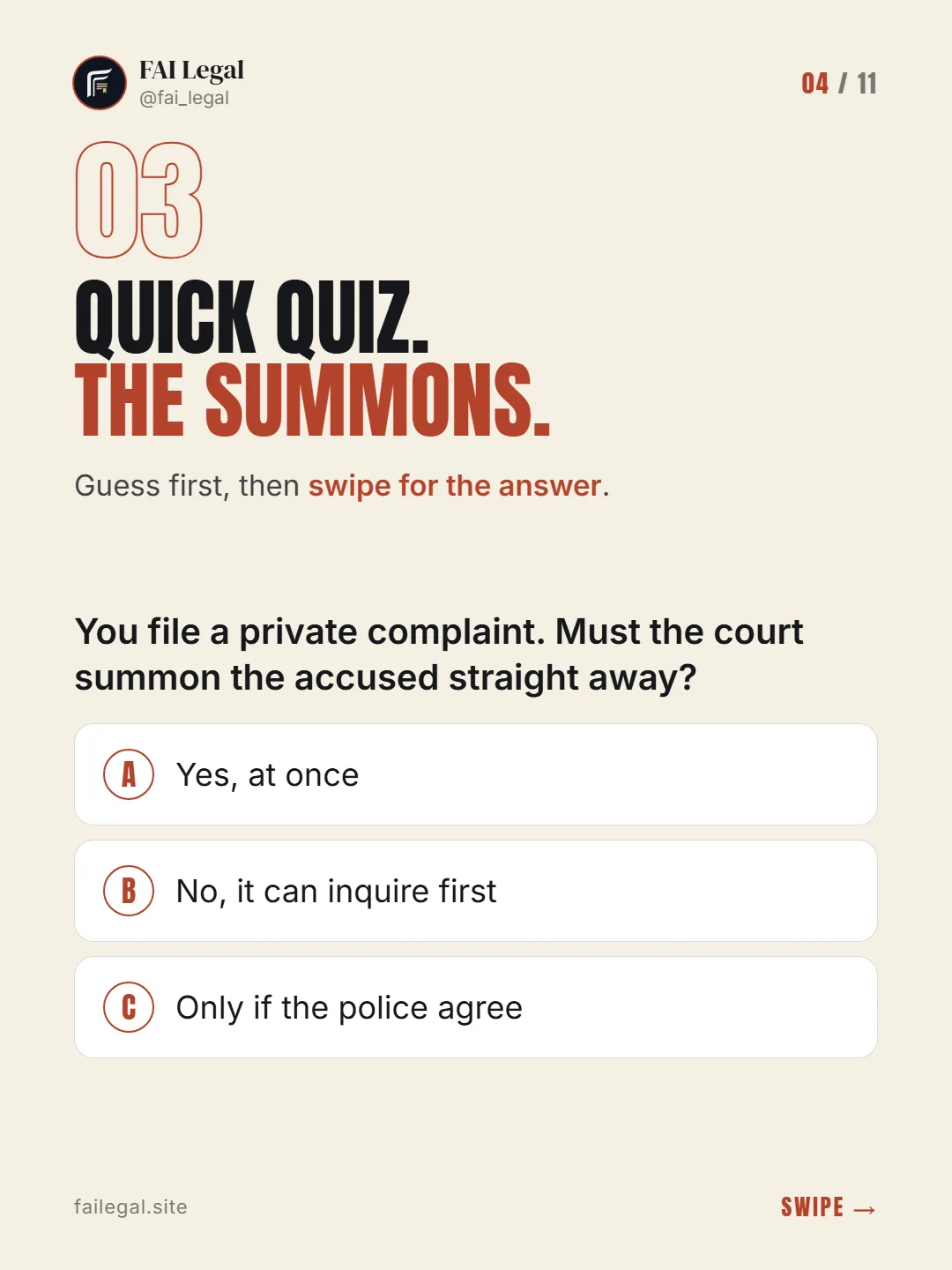
Quick quiz. The summons.
Guess first, then swipe for the answer.
- A. Yes, at once
- B. No, it can inquire first
- C. Only if the police agree
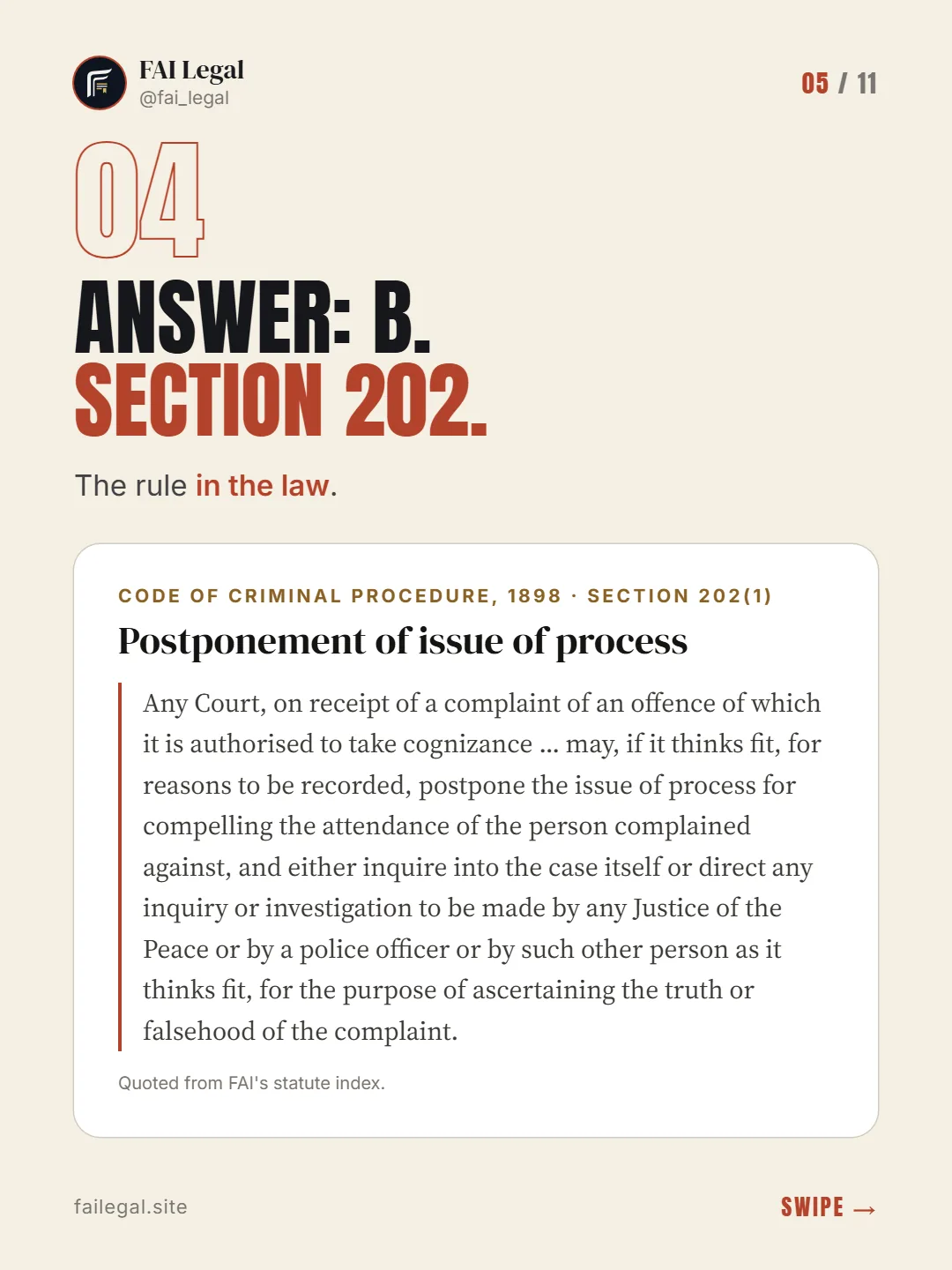
Answer: B. Section 202.
The rule in the law.
“Any Court, on receipt of a complaint of an offence of which it is authorised to take cognizance ... may, if it thinks fit, for reasons to be recorded, postpone the issue of process for compelling the attendance of the person complained against, and either inquire into the case itself or direct any inquiry or investigation to be made by any Justice of the Peace or by a police officer or by such other person as it thinks fit, for the purpose of ascertaining the truth or falsehood of the complaint.”
Code of Criminal Procedure, 1898 · Section 202(1), Postponement of issue of process
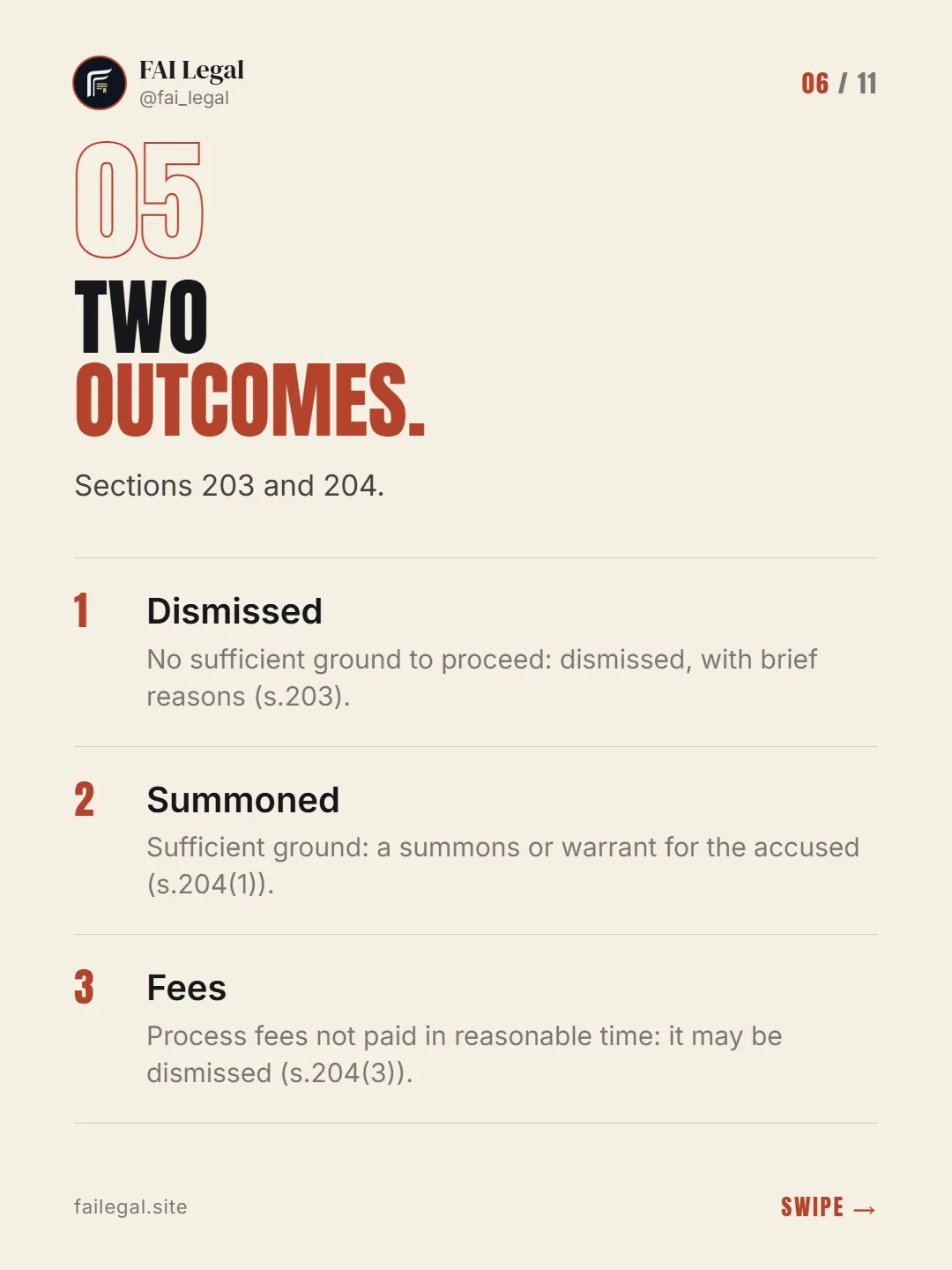
Two outcomes.
Sections 203 and 204.
- DismissedNo sufficient ground to proceed: dismissed, with brief reasons (s.203).
- SummonedSufficient ground: a summons or warrant for the accused (s.204(1)).
- FeesProcess fees not paid in reasonable time: it may be dismissed (s.204(3)).
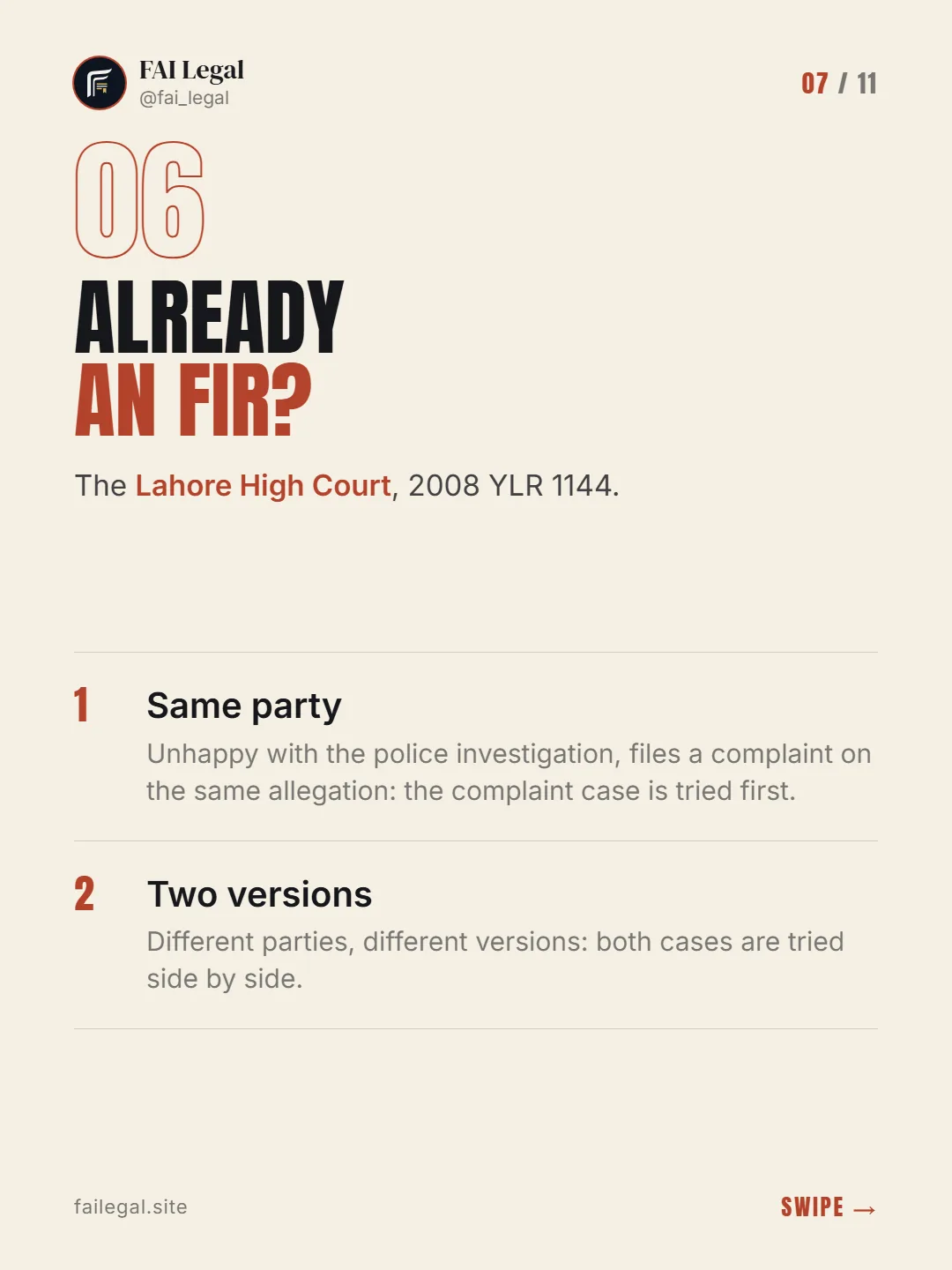
Already an FIR?
The Lahore High Court, 2008 YLR 1144.
- Same partyUnhappy with the police investigation, files a complaint on the same allegation: the complaint case is tried first.
- Two versionsDifferent parties, different versions: both cases are tried side by side.
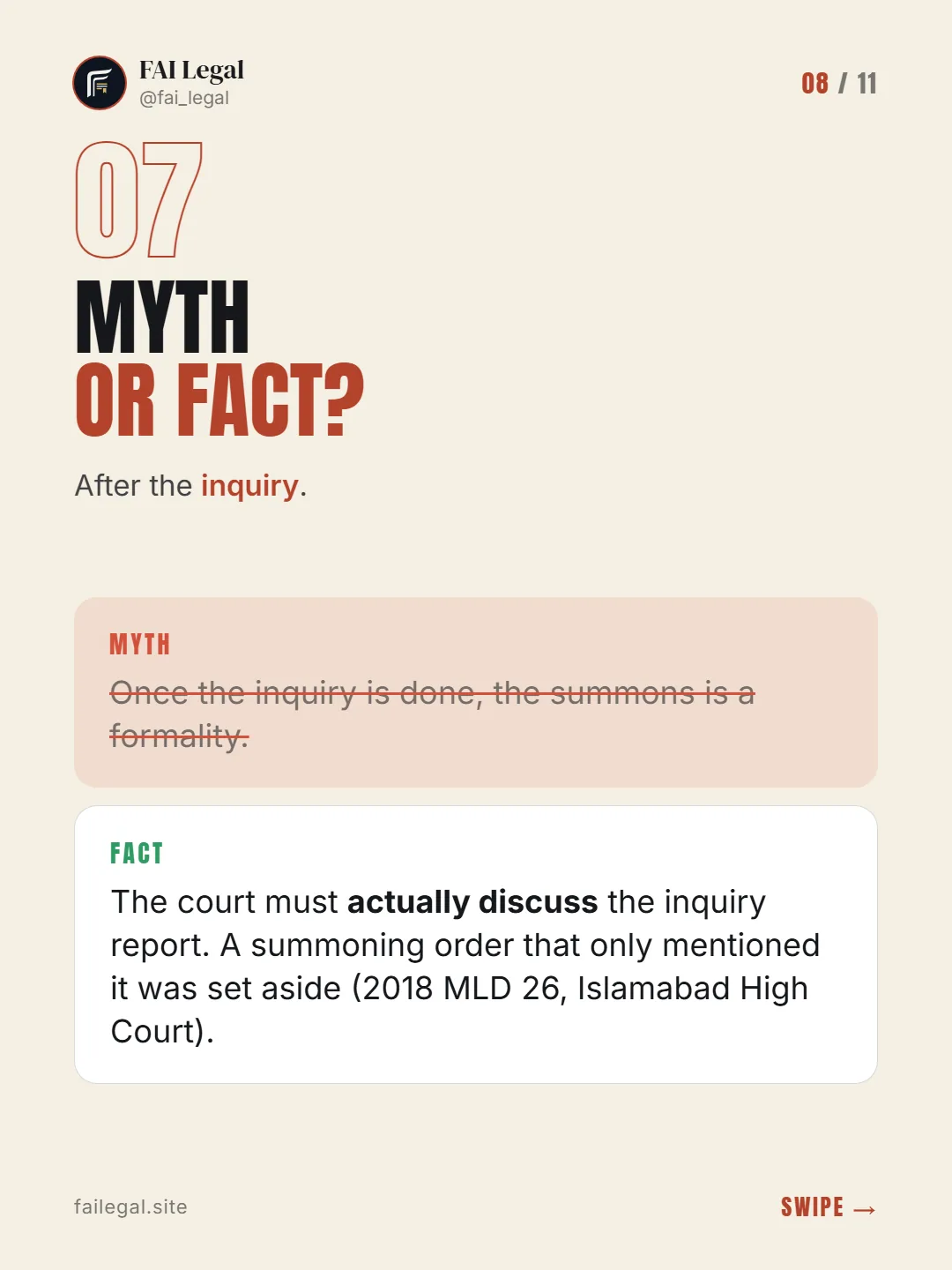
Myth or fact?
After the inquiry.
- Myth: Once the inquiry is done, the summons is a formality.
- Fact: The court must actually discuss the inquiry report. A summoning order that only mentioned it was set aside (2018 MLD 26, Islamabad High Court).
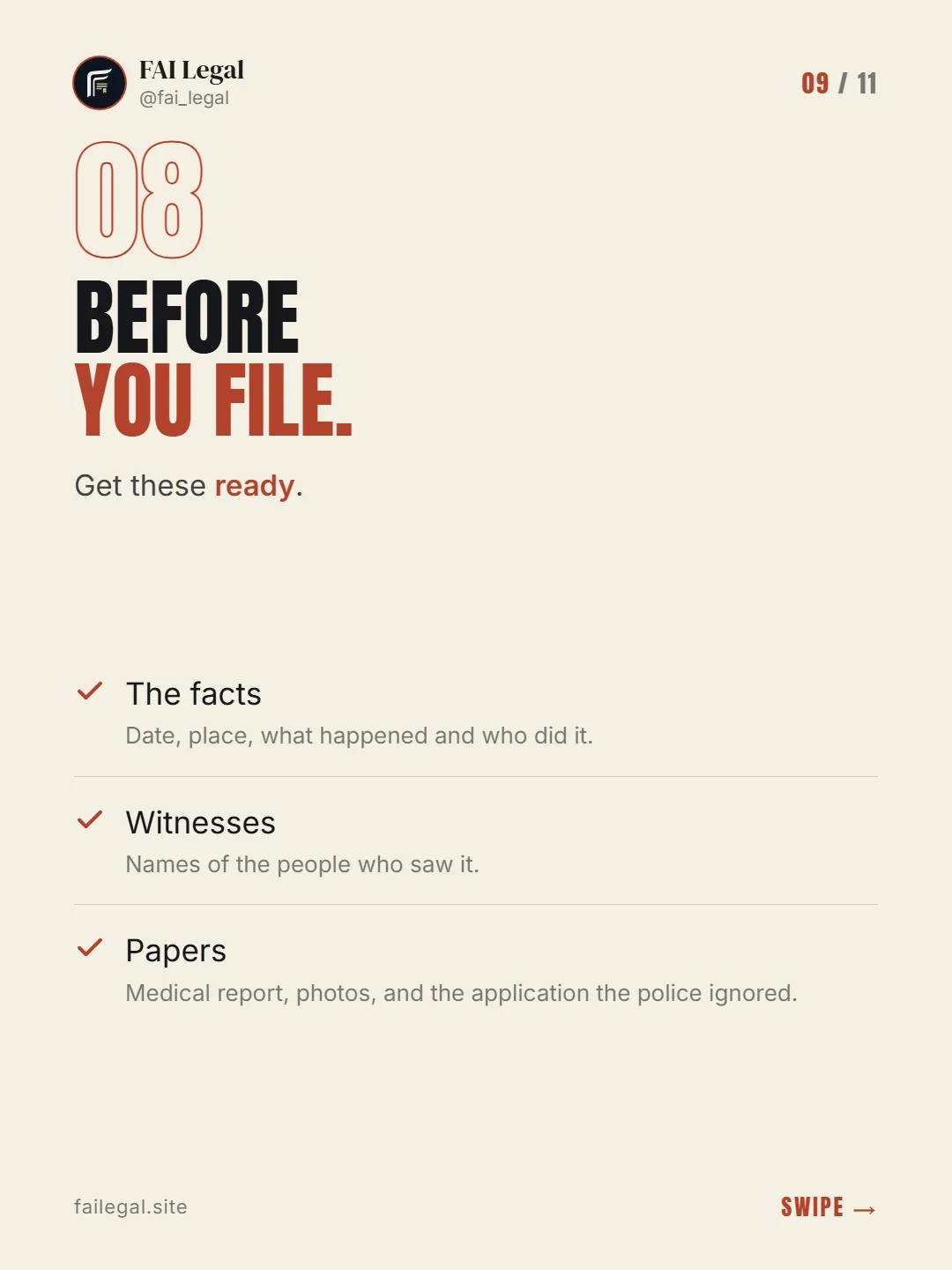
Before you file.
Get these ready.
- The factsDate, place, what happened and who did it.
- WitnessesNames of the people who saw it.
- PapersMedical report, photos, and the application the police ignored.
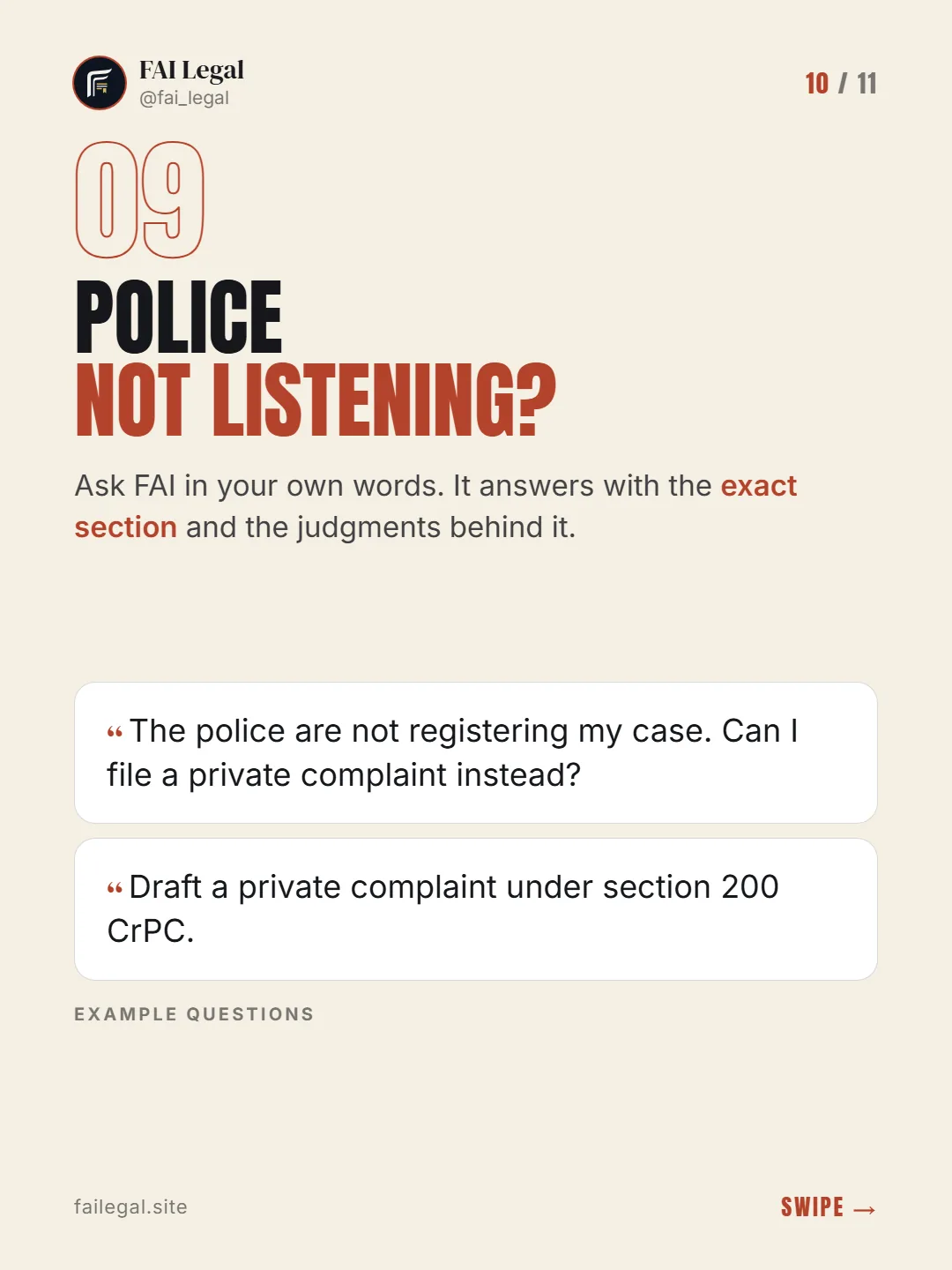
Police not listening?
Ask FAI in your own words. It answers with the exact section and the judgments behind it.
- The police are not registering my case. Can I file a private complaint instead?
- Draft a private complaint under section 200 CrPC.
Example questions
What this does not mean
- A private complaint does not mean the accused is summoned at once. The court may first inquire itself or order an inquiry (s.202).
- The court is not bound to go ahead. With no sufficient ground to proceed, it dismisses the complaint with brief reasons (s.203).
- If the process fees are not paid in reasonable time, the complaint may be dismissed (s.204(3)).
Questions people ask
What can I do if police refuse to register my FIR in Pakistan?
You can take a complaint of the facts straight to a Magistrate. Under CrPC s.190(1)(a) a Magistrate can take cognizance on a complaint, and the court then examines you on oath (s.200).
What is a private complaint under section 200 CrPC?
It is a complaint of an offence filed directly in court. The court examines the complainant on oath and records it (s.200), and may then inquire or order an inquiry (s.202).
Will the court summon the accused straight away on my complaint?
Not always. Under s.202 the court may, for reasons recorded, postpone the summons and inquire itself, or direct an inquiry by a Justice of the Peace, a police officer or another person. If there is sufficient ground, it issues a summons or warrant (s.204(1)).
Can I file a private complaint if an FIR is already registered?
Yes. In 2008 YLR 1144 the Lahore High Court said that where the same party, unhappy with the police investigation, files a complaint on the same allegation, the complaint case is tried first. Where different parties give different versions, both cases are tried side by side.
What should I prepare before filing a private complaint?
Write down the date, place, what happened and who did it. Keep the names of witnesses, and papers such as a medical report, photos and the application the police ignored.
Sources
- Code of Criminal Procedure, 1898 · Section 202(1)
Postponement of issue of process Pakistan Code
Educational legal information, not legal advice. Every case turns on its own facts. Speak to a qualified lawyer about your situation. Review status: Pending advocate review. How we check.