Criminal law · Supreme Court of Pakistan
9C case bail: what if the police made no video of the recovery?
The myth: “If the police say they recovered drugs from you, their word alone is enough.”Wrong: no video, only police witnesses: bail
The short answer
The police's word is not always enough. In a 9C case from Layyah, the police made no video or photographs of the recovery and brought no one from the area as a witness; the Supreme Court held that the testimony of the raiding officers alone was "insufficient to meet the required standard of proof" and granted bail on 27 February 2025 (2025 SCMR 721, paras 6 and 9).
Muhammad Abid Hussain v. The State and another · Supreme Court of Pakistan · 2025 SCMR 721 · decided 27 February 2025
By the FAI Legal editorial desk · 3 November 2026 · 6 min read
Bail is not an acquittal. The Court said its observations were tentative and would not influence the trial (para 9), and the law does not make the police bring local witnesses to a narcotics search (Control of Narcotic Substances Act 1997, section 25; 2024 SCMR 934, para 5). What the Supreme Court keeps asking is why the recovery was not filmed.
Key points
- A recovery with no video, no photographs and no independent witness rests on the police officers' own testimony, which the Supreme Court found insufficient at the bail stage (2025 SCMR 721, para 6).
- Filming a search is "not merely a procedural formality but a crucial safeguard to protect innocent persons from potential police atrocities" (2025 SCMR 721, para 6).
- In 2023 the Supreme Court said policemen surely have a phone with a camera and asked why searches, seizures and arrests are not recorded; it sent its order to every Inspector General of Police (2024 SCMR 934, paras 5, 6 and 9).
- Section 25 of the Control of Narcotic Substances Act 1997 excludes section 103 of the Criminal Procedure Code, so local witnesses are not required by law in a narcotics search (2024 SCMR 934, para 5).
- Bail is not acquittal: the observations are tentative and the trial still decides the case (2025 SCMR 721, para 9).
9C case bail with no video of the recovery: the short answer
In 2025 SCMR 721 the Supreme Court granted bail after arrest to a man said to have been caught with 1,100 grams of heroin, because "neither any video in the shape of recording and photographs of the alleged recovery has been collected by the police nor any private witness from the locality was associated" (para 6). With only the raiding officers to prove the recovery, the case was "insufficient to meet the required standard of proof" at that stage (para 6).
This is the bail stage, not the end of the case: the Court said its observations were "tentative in nature and shall not influence the Trial" (para 9).
Layyah, December 2024: what the police said
According to the FIR registered at Police Station Chowk Azam, Layyah, on 9 December 2024 at 4:49 pm, the police acted on spy information, apprehended the man at Chak No. 353/TDA and recovered heroin weighing 1,100 grams, said to be for sale, under section 9(c) of the Control of Narcotic Substances Act 1997 (paras 1 and 2).
His lawyer argued that no private witness was associated with the recovery and that the raiding party had failed to film it "despite clear and repeated directions from this Court to do so" (para 3). The Lahore High Court refused bail on 22 January 2025 (para 1).
We checked it in FAI Legal
Both orders are on FAI Legal's Judgment Search, under 2025 SCMR 721 and 2024 SCMR 934, with every paragraph open in the judgment reader. The paragraphs quoted on this page are 2, 6, 7 and 9 of the first and 3, 5 and 6 of the second.
Supreme Court, February 2025: police words alone were not enough
Muhammad Hashim Khan Kakar, J, writing for a bench of two, said the Act's severe punishments call for a correspondingly high standard of proof (para 5), and that the use of modern devices during recoveries "is not merely a procedural formality but a crucial safeguard to protect innocent persons from potential police atrocities", giving "an objective and unbiased account of the recovery process" (para 6).
"The failure to record the recovery on video, non-association of private witnesses and failure to adhere clear judicial directives, tilts the balance in favour of the petitioner" (para 7). The petition was converted into an appeal and allowed, and bail was granted on bonds of Rs 200,000 with two sureties (para 9).
The rule before it: every policeman has a phone camera
In Zahid Sarfaraz Gill v. The State (2024 SCMR 934), the man was said to have been caught with 1,833 grams of charas in a popular public park in Islamabad at 6 pm in May, and "the only witnesses were policemen, none of whom made a video recording, nor took any photographs of the seizure and arrest" (para 3). The Supreme Court granted bail as a case of further inquiry (para 4).
The Court added that policemen "surely would have a cell phone with an in-built camera", that filming the search, seizure and arrest would be useful evidence and "may also prevent false allegations", and sent its order to the Inspectors General of Police of every province and Islamabad to consider amending their rules (paras 6 and 9).
The catch: bail is not acquittal
Both orders grant bail. They do not acquit anyone and do not decide whether the drugs were really recovered: the observations are tentative and "shall not influence the Trial" (2025 SCMR 721, para 9).
Local witnesses are not a legal requirement in a narcotics search: section 25 of the Control of Narcotic Substances Act 1997 applies the Criminal Procedure Code to such searches "except those of section 103", the section that asks for two respectable inhabitants of the locality (2024 SCMR 934, para 5). The missing witness counted together with the missing video, not on its own.
If it happens to you
Stay calm and do not resist. Afterwards, write down the time, the place and who was there, including anyone from the area who saw the search, and give it to your lawyer.
Your lawyer can ask the court where the video and the photographs of the recovery are, and rely on 2025 SCMR 721 and 2024 SCMR 934 in a bail application. The Court called filming the recovery a safeguard for the innocent; it is not a way out of a real case, and the trial still decides.
Find rulings like this on FAI Legal
Both orders are on FAI Legal's Judgment Search (search for 2025 SCMR 721 or 2024 SCMR 934), with their paragraphs open in the judgment reader. Ask FAI Legal your own question about a 9C case, bail or a police search and see the law and the judgments behind the answer.
The case at a glance
- Facts
- FIR of 9 December 2024, Police Station Chowk Azam, Layyah: on spy information, the man was apprehended at Chak No. 353/TDA and 1,100 grams of heroin were said to be recovered from him, under section 9(c) of the Control of Narcotic Substances Act 1997. No video, no photographs and no private witness. The Lahore High Court refused bail on 22 January 2025 (paras 1 to 3 and 6).
- The question
- Should bail after arrest be granted where the recovery rests only on the raiding officers' testimony, with no video, photographs or independent witness (paras 3 to 6)?
- What the Court held
- Yes. The police officers' testimony alone was insufficient at that stage; the failure to film the recovery, to associate private witnesses and to follow the Court's directions tilted the balance; the petition was converted into an appeal and bail was granted (paras 6, 7 and 9).
- Why
- Severe punishments call for a high standard of proof (para 5); Article 164 of the Qanun-e-Shahadat Order 1984 allows evidence from modern devices, and 2024 SCMR 934 had asked the police to film searches, seizures and arrests (para 5); filming is a crucial safeguard for the innocent (para 6); an innocent man's detention cannot be repaired by a later acquittal (para 8, citing PLD 1972 SC 81).
- Limits
- A bail order of a two-judge bench: its observations are tentative and do not bind the trial court on the facts (para 9). Section 25 of the 1997 Act excludes section 103 of the Criminal Procedure Code, so local witnesses are not required by law in narcotics searches (2024 SCMR 934, para 5). It does not say a case without video always fails at trial.
The law it relies on
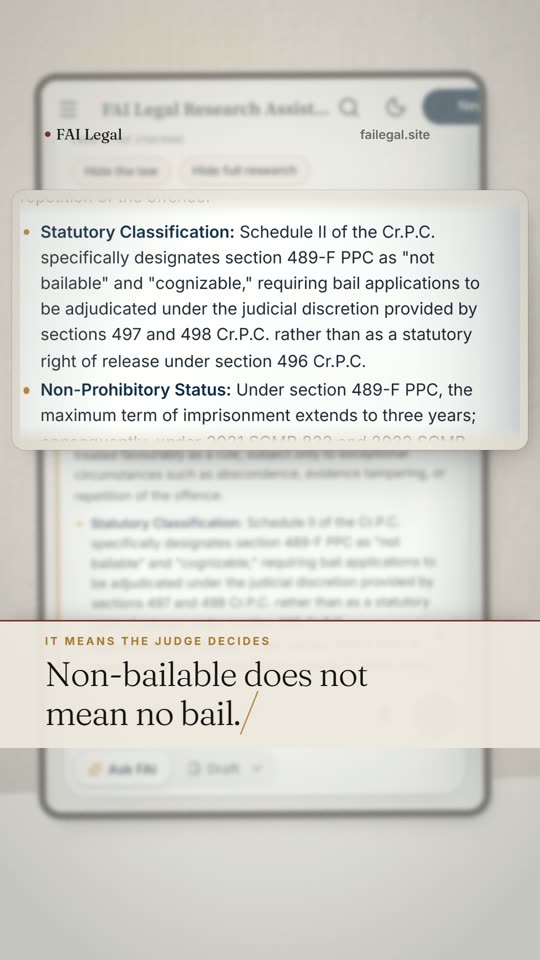
"In such cases as the Court may consider appropriate, the Court may allow to be produced any evidence that may have become available because of modern devices or techniques."
The provisions of the Code of Criminal Procedure, 1898, "except those of section 103", apply to searches and arrests under the Act. This is why local witnesses are not required by law in a narcotics search.
Before an ordinary search, the officer "shall call upon two or more respectable inhabitants of the locality" to attend and witness it. Excluded in narcotics searches by section 25 of the 1997 Act.
What this does not mean
- It does not mean a drugs case without video is thrown out: these are bail orders, and the trial decides guilt (2025 SCMR 721, para 9).
- It does not mean the police must bring local witnesses to a narcotics search: section 25 of the 1997 Act excludes section 103 of the Criminal Procedure Code (2024 SCMR 934, para 5).
- It does not mean police witnesses are never believed: the Court weighed the missing video, the missing independent witness and the ignored directions together (2025 SCMR 721, paras 6 and 7).
- It is not a way out of a real drugs case. The Court said it strongly recognises the need to combat narcotics while protecting the rights of the accused (2025 SCMR 721, para 7).
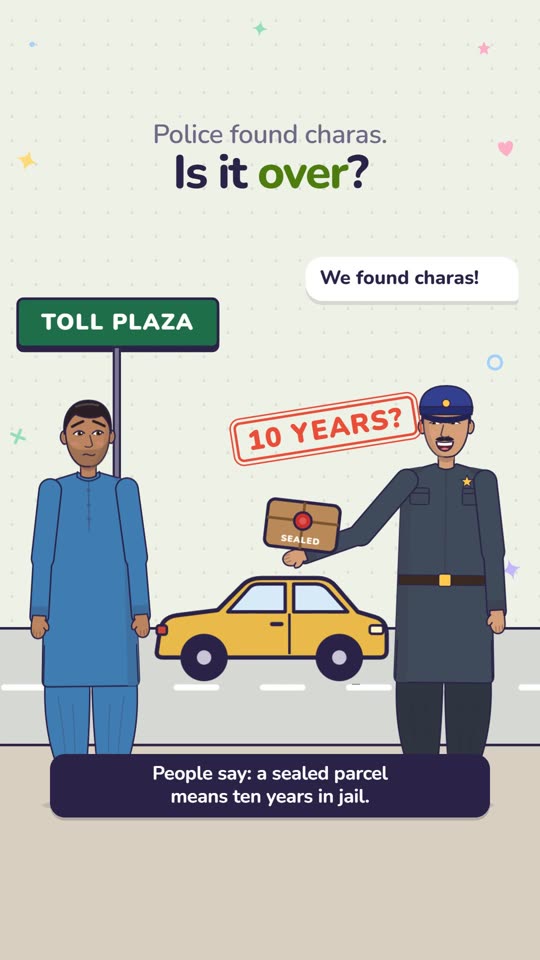
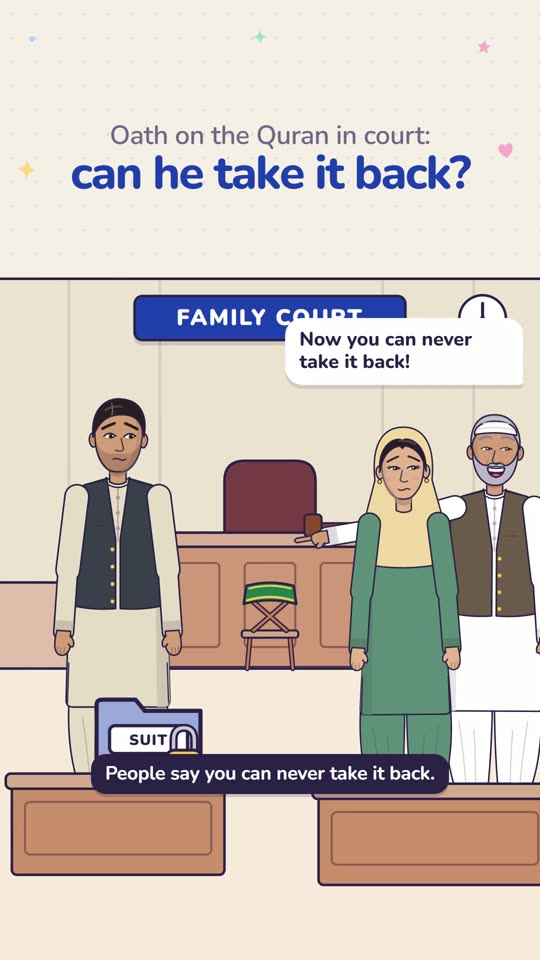
- The reel's opening scene, a sealed parcel landing on a table and an elder saying the police's word is enough, is a drawing of the common claim, not the case's own words.
Questions people ask
Can I get bail in a 9C case if the police made no video of the recovery?
It can count strongly in your favour. In 2025 SCMR 721 the Supreme Court granted bail where there was no video, no photographs and no independent witness, holding the police officers' testimony alone insufficient at that stage (paras 6, 7 and 9). Each case turns on its facts.
Is a 9C case bailable?
Not as of right. Under section 51(2) of the Control of Narcotic Substances Act 1997, bail "shall not be normally granted unless the Court is of the opinion that it is a fit case for the grant of bail" (offences punishable with death get no bail under section 51(1)). The Supreme Court found it a fit case where the recovery rested only on police testimony with no video (2025 SCMR 721; 2024 SCMR 934).
Do the police have to record a search on video in Pakistan?
No section of the law found in FAI's index requires it in so many words, but the Supreme Court has asked the police to film searches, seizures and arrests, sent its order to every Inspector General of Police (2024 SCMR 934, paras 5 to 9), and treated the failure to follow those directions as a point for the accused (2025 SCMR 721, paras 3 and 7).
Do the police need witnesses from the area for a drugs search?
Not by law. Section 25 of the Control of Narcotic Substances Act 1997 excludes section 103 of the Criminal Procedure Code, which asks for two respectable inhabitants of the locality (2024 SCMR 934, para 5). The absence of independent witnesses still counted, together with the missing video, in 2025 SCMR 721 (paras 6 and 7).
Does bail mean I am acquitted?
No. The Supreme Court said its observations were tentative and would not influence the trial (2025 SCMR 721, para 9). The case is decided at trial on the evidence.
What is a 9C case?
A case under section 9(c) of the Control of Narcotic Substances Act 1997, the clause for larger quantities of narcotics; the 2025 case was under it for 1,100 grams of heroin (para 1), and the 2023 case for 1,833 grams of charas, which carries nine to fourteen years under the Act's table (2024 SCMR 934, para 2).
Check yourself
True or false? “If the police say they recovered drugs from you, their word alone is enough.”
Wrong: no video, only police witnesses: bail. The police's word is not always enough. In a 9C case from Layyah, the police made no video or photographs of the recovery and brought no one from the area as a witness; the Supreme Court held that the testimony of the raiding officers alone was "insufficient to meet the required standard of proof" and granted bail on 27 February 2025 (2025 SCMR 721, paras 6 and 9).
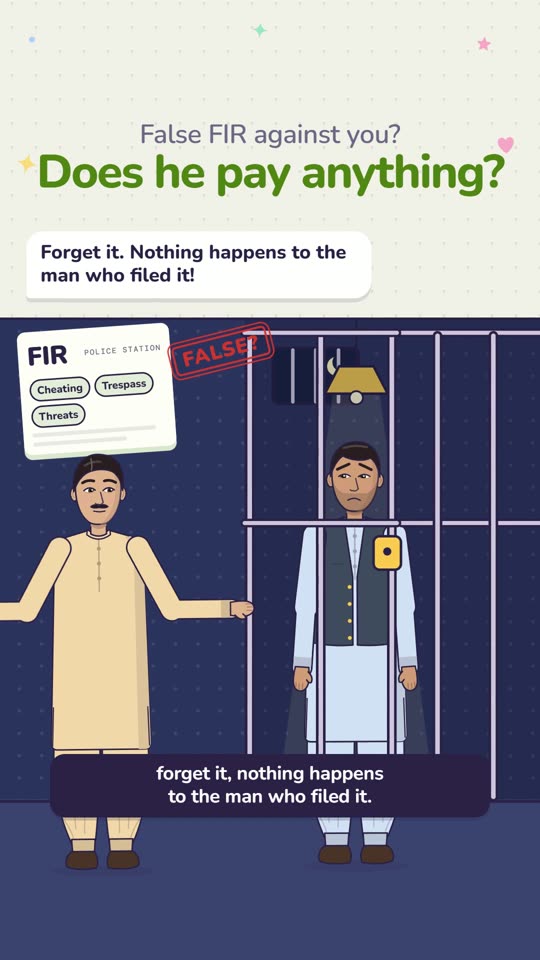
Next one: true or false? “Nothing happens to someone who files a false FIR.”
Sources
- Muhammad Abid Hussain v. The State and another, 2025 SCMR 721 (Supreme Court of Pakistan, 27 February 2025)
No video, no photographs and no independent witness of the recovery: the raiding officers' testimony alone was insufficient at the bail stage; bail after arrest granted. - Zahid Sarfaraz Gill v. The State, 2024 SCMR 934 (Supreme Court of Pakistan, 22 November 2023)
Only policemen as witnesses, no video or photographs: further inquiry, bail; the police and ANF asked to film searches, seizures and arrests. - Qanun-e-Shahadat Order, 1984, Article 164 text checked in FAI Statute Search, 3 November 2026 Pakistan Code
- Control of Narcotic Substances Act, 1997, Section 25 text checked in FAI Statute Search, 3 November 2026
- Code of Criminal Procedure, 1898, Section 103 text checked in FAI Statute Search, 3 November 2026 Pakistan Code
Every quote and section above is traced to the full judgment or statute text by an automatic check that runs on every update.
What the reel says
Read the words of the reel
Police say they found heroin on you, with no video? Think the police's word is enough?
9C case bail: video na ho to kya hota hai?
Wrong. The Supreme Court asks: where is the video?
Layyah, December 2024: the police said a man had 1,100 grams of heroin. The only witnesses were policemen: no video, no photos, no one from the area. The High Court refused bail. On 27 February 2025 the Supreme Court granted it: filming a recovery "is not merely a procedural formality but a crucial safeguard to protect innocent persons", and the raiding officers' word alone was "insufficient to meet the required standard of proof" (2025 SCMR 721). In 2023 the same Court said policemen "surely would have a cell phone with an in-built camera" (2024 SCMR 934).
But bail is not acquittal: the trial still decides.
If it happens to you:
1. Stay calm and do not resist.
2. Remember the time, the place and who was there, and write it down.
3. Have your lawyer ask the court: where is the video of the recovery?
Educational legal information, not legal advice. Every case turns on its own facts. Speak to a lawyer about your own case. Last checked: 3 November 2026. Review status: Pending advocate review. How we check.