Family · Lahore High Court
Oath on the Quran in court: can a husband take back his offer?
The myth: “Once you offer an oath on the Quran in court, you can never take it back.”Wrong: only once she accepts it
The short answer
Only if she accepts it at the time. In a Family Court, an offer to be bound by the other side's oath on the Quran is a proposal: if it is not accepted at the same stage of the trial, no agreement is formed and the case goes on to be decided on the evidence (2025 MLD 1361, paras 9, 10 and 12).
Ahmed Raza v. Judge Family Court and others · Lahore High Court · 2025 MLD 1361 · decided 22 May 2025
By the FAI Legal editorial desk · 3 November 2026 · 7 min read
The flip side is strict. If she accepts and takes the oath, the Supreme Court says that oath is conclusive proof against the one who offered it, and he cannot back out (2023 SCMR 153, paras 5 and 6). No one can be forced to swear, and an offer can be withdrawn before it is accepted (para 6).
Key points
- Sections 8 to 11 of the Oaths Act 1873 apply in Family Courts, so a party may offer to be bound by an oath taken by the other side (Family Courts Act 1964, section 17(2); 2023 SCMR 153, para 5).
- An offer that is not accepted at the same stage of the trial is not open for all time; the agreement does not mature (2025 MLD 1361, para 9).
- Silence counts as refusal when the parties move on to the next stages of the trial: in the court's words, she missed the train (2025 MLD 1361, para 10).
- Once the offer is accepted and the oath is taken, the oath is conclusive proof against the one who offered, and he cannot resile (2023 SCMR 153, paras 5 and 6).
- No one can be compelled to take a special oath, and an offer can be withdrawn before the other side accepts it (2023 SCMR 153, para 6).
Oath on the Quran in court: can a husband take his offer back? The short answer
Before she accepts, yes; after she accepts and swears, no. In 2025 MLD 1361 the Lahore High Court held that an offer to be bound by a special oath on the Holy Quran "was not for all times to come": when it was not accepted at the same stage of the trial, no agreement was formed and the suits had to be decided on merit (paras 9 and 12).
The Supreme Court has set out the other half of the rule: once the other side accepts the offer and takes the oath, a binding agreement exists and the party who made the offer "has no right and authority in law to resile from it" (2023 SCMR 153, para 6).
Sahiwal, 2020: an offer made in cross-examination
A wife filed two suits in the Family Court at Sahiwal: one for maintenance and one for her dowry articles with gold ornaments. On 2 November 2020, while the husband was being cross-examined as his own witness, he said that if she, her parents or her real brothers took a special oath on the Holy Quran that her suits were true, he had no objection to both suits being decreed (para 2).
Nobody answered the offer that day. He closed his oral evidence, produced his documents on 10 November 2020, and the case was posted for final arguments, which were adjourned again and again: 16 November, 1, 7, 9 and 15 December 2020, and 5, 19 and 20 January 2021 (paras 2 and 3).
Months later, her side asks to take the oath
On 20 January 2021 an application was filed on her side asking for the suits to be decided on special oath on the Holy Quran, relying on his offer of 2 November 2020. He opposed it and asked for a decision on merit (para 3).
On 26 March 2021 the Family Court held that he could not back out of his offer, and directed that she, her parents or her real brothers attend to take the special oath, with the husband choosing which of them (para 1).
We checked it in FAI Legal
Both judgments are on FAI Legal's Judgment Search: the Lahore High Court's under 2025 MLD 1361 and the Supreme Court's under 2023 SCMR 153, with every paragraph open in the judgment reader. The paragraphs quoted on this page are 9, 10 and 12 of the first and 6 of the second; the story is from paras 1 to 3 of the first.
Lahore High Court, May 2025: the offer had lapsed
Malik Waqar Haider Awan, J allowed the husband's writ petition on 22 May 2025. The court held that the offer "was not for all times to come and there was no mutuality of promise between the parties", and that when the other side did not accept it at the same stage of trial, the agreement could not mature (para 9).
Refusal can be express or implied, by actions, behaviour or silence. When the parties moved on to the next stages of the trial and left the offer unanswered, it became ineffective: she "missed the train by not expressly accepting the offer/proposal promptly" (para 10). The Supreme Court case her lawyer relied on, 2023 SCMR 153, was on different facts (para 11). The Family Court's order was set aside and the suits are to be decided on merit (para 12).
The catch: when she says yes, the oath decides it
In the Supreme Court case, a husband in a Rawalpindi Family Court himself applied for his wife and her father to take a special oath about her dowry articles, worth Rs 3,20,000, and his alleged sale of her gold ornaments. She accepted and took the oath on 4 October 2013, and the Family Court decreed her suit for dower and dowry articles the same day (2023 SCMR 153, paras 2 and 3).
He argued the case should have been decided on merit. The Supreme Court refused leave on 7 November 2022: under section 11 of the Oaths Act 1873 the evidence given on oath is, against the person who offered to be bound by it, "conclusive proof of the matter stated", and "The petitioner cannot wriggle out or withdraw his offer which was given by him voluntarily before the Family Court and the same acted upon according to his will." (paras 5, 6 and 8).
Before you offer an oath in a Family Court case
Offer it only if you will accept the answer. If the other side accepts at that stage and takes the oath, the oath decides the matter against you and you cannot withdraw (2023 SCMR 153, para 6).
You can withdraw an offer before it is accepted, and no one can be compelled to take a special oath (para 6). If your offer was left unanswered and the trial moved on, ask the court to decide the case on the evidence (2025 MLD 1361, paras 9, 10 and 12).
Make an offer, or accept one, only in clear words recorded by the court, and keep a copy of the order sheet for that date: the court looked at exactly when the offer was made and whether it was answered (2025 MLD 1361, paras 7 and 8).
Find rulings like this on FAI Legal
Both judgments are on FAI Legal's Judgment Search (search for 2025 MLD 1361 or 2023 SCMR 153), with their paragraphs open in the judgment reader. Ask FAI Legal your own question about a Family Court case, an oath or a dowry claim and see the law and the judgments behind the answer.
The case at a glance
- Facts
- Sahiwal: a wife's suits for maintenance and for dowry articles with gold ornaments. On 2 November 2020, in his cross-examination, the husband offered that if she, her parents or her real brothers took a special oath on the Holy Quran that her suits were true, both could be decreed. No one responded; the trial moved on through eight dates; on 20 January 2021 her side applied to take the oath; on 26 March 2021 the Family Court held he could not back out (paras 1 to 3).
- The question
- Can an offer to be bound by a special oath, left unanswered while the trial moved on, be accepted months later and enforced against the party who made it (paras 4 to 6)?
- What the Court held
- No. The offer was not open for all time; not accepted at the same stage of trial, no agreement matured, and the silence and further proceedings amounted to an implied refusal. The order was set aside and the suits are to be decided on merit (paras 9, 10 and 12).
- Why
- Offer and acceptance: there was no mutuality of promise (para 9); refusal can be express or implied by actions, behaviour or silence (para 10); the Supreme Court judgment relied on, 2023 SCMR 153, was on different facts: there the offer was accepted and the oath taken (para 11; 2023 SCMR 153, paras 2 and 6).
- Limits
- A single-judge decision of the Lahore High Court in a writ petition, binding on the courts subordinate to it. It turns on an offer nobody answered while the trial moved on; once an offer is accepted and the oath taken, the Supreme Court's rule in 2023 SCMR 153 applies and the offer cannot be withdrawn. It does not decide the suits themselves, which go back to be decided on merit.
In the Court’s words
“It is a well-established jurisprudence that refusal can be either expressed or implied.”
2025 MLD 1361, para 10
“learned Family Court is directed to decide the lis on merit strictly in accordance with law expeditiously”
2025 MLD 1361, para 12
“The letter of the law makes it unequivocally clear that under the provisions of the Oaths Act, a party in litigation can offer the opposite party to accept or reject the claim on special oath, but they cannot compel each other to take the special oath”
2023 SCMR 153, para 6
The law it relies on
"Sections 8 to 11 of the Oaths Act, 1873, shall apply to all proceedings before the Family Courts" (in respect of Part I of the Schedule). This is why a maintenance or dowry suit can be decided on a special oath.
As the Supreme Court quotes it (2023 SCMR 153, para 5): the evidence so given shall, "as against the person who offered to be bound as aforesaid, be conclusive proof of the matter stated". The Act itself is not yet in FAI's statute index.
"Subject to Article 189, any decision of a High Court shall, to the extent that it decides a question of law or is based upon or enunciates a principle of law, be binding on all courts subordinate to it."
What this does not mean
- It does not mean an unanswered offer can be taken up whenever the other side likes: an offer not accepted at the same stage of trial lapses (2025 MLD 1361, paras 9 and 10).
- It does not mean an accepted oath can be undone: once the other side accepts and takes the oath, the one who offered cannot withdraw (2023 SCMR 153, para 6).
- It does not mean anyone can be made to swear: a party can be asked, never compelled (2023 SCMR 153, para 6).
- It does not decide who is right about the maintenance or the dowry: the Lahore High Court sent the suits back to be decided on merit (2025 MLD 1361, para 12).
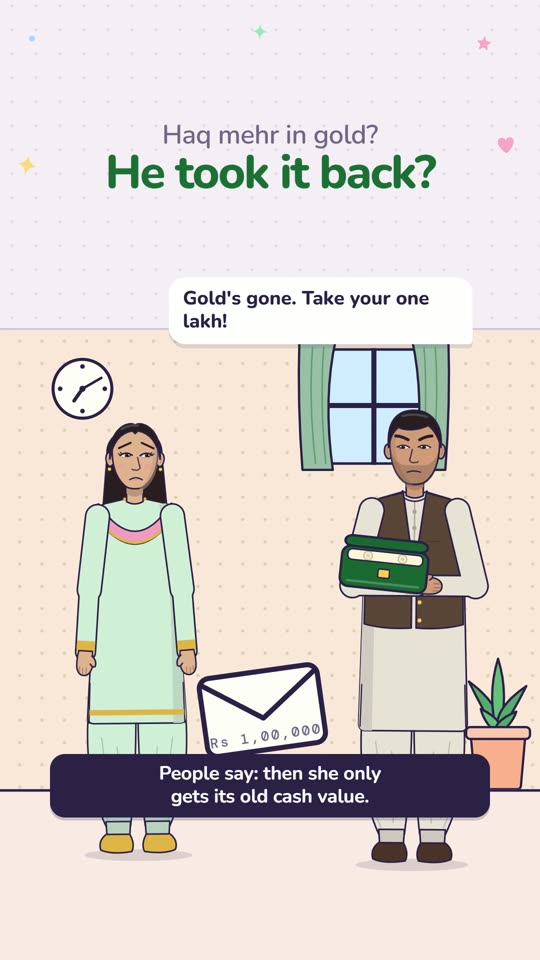
- The reel's opening scene, a case file landing and her father saying the offer can never be taken back, is a drawing of the common claim, not the case's own words.
Questions people ask
Can a husband take back his offer of an oath on the Quran in court?
Before the other side accepts it, yes: the offer can be withdrawn before its acceptance (2023 SCMR 153, para 6). An offer left unanswered while the trial moves on also lapses (2025 MLD 1361, paras 9 and 10). Once it is accepted and the oath is taken, it cannot be withdrawn.
Can you refuse to take an oath in court?
Yes. A party can offer the other side the chance to settle the claim on a special oath, but neither side can compel the other to take it (2023 SCMR 153, para 6).
What is a special oath in a Family Court case?
An oath, such as on the Holy Quran, that one party offers to be bound by if the other party or a witness takes it. Sections 8 to 11 of the Oaths Act 1873 apply in Family Courts (Family Courts Act 1964, section 17(2)); if the oath is taken on the offer, it is conclusive proof against the one who offered (section 11, as quoted in 2023 SCMR 153, para 5).
What happens if she swears on the Quran after I offered it?
If she accepts the offer at that stage and takes the oath as you proposed, the court decides the matter on it: in 2023 SCMR 153 the dower and dowry suit was decreed the same day, and the Supreme Court said the husband could not back out (paras 3 and 6).
How long does an offer of special oath stay open?
Not for all time. In 2025 MLD 1361 an offer made on 2 November 2020 and left unanswered while the case went through eight more dates could not be accepted on 20 January 2021 (paras 3, 9 and 10).
What is the special oath act?
People usually mean the Oaths Act 1873. Its sections 8 to 11 deal with special oaths and apply in Family Courts (Family Courts Act 1964, section 17(2)). FAI Legal's statute index does not hold the Act yet, so this page quotes section 11 as the Supreme Court quoted it (2023 SCMR 153, para 5).
Check yourself
True or false? “Once you offer an oath on the Quran in court, you can never take it back.”
Wrong: only once she accepts it. Only if she accepts it at the time. In a Family Court, an offer to be bound by the other side's oath on the Quran is a proposal: if it is not accepted at the same stage of the trial, no agreement is formed and the case goes on to be decided on the evidence (2025 MLD 1361, paras 9, 10 and 12).
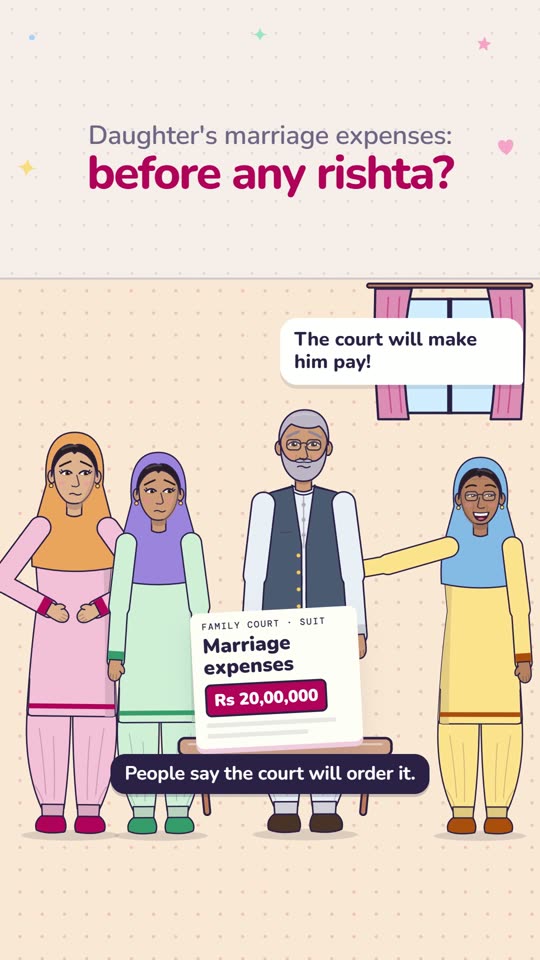
Next one: true or false? “Daughters can make their father pay their wedding money now, even before any rishta is fixed.”
Sources
- Ahmed Raza v. Judge Family Court and others, 2025 MLD 1361 (Lahore High Court, 22 May 2025)
An offer to be bound by a special oath on the Holy Quran, not accepted at the same stage of trial, lapses as impliedly refused; the suits are to be decided on merit. - Sajid Mehmood v. Mst. Shazia Azad and others, 2023 SCMR 153 (Supreme Court of Pakistan, 7 November 2022)
Once an offer of special oath is accepted and the oath taken, the party who offered cannot resile; no one can be compelled to take the oath; an offer can be withdrawn before acceptance. - Family Courts Act, 1964, Section 17 text checked in FAI Statute Search, 3 November 2026 Punjab Code
- Oaths Act, 1873, Section 11 not yet in FAI's statute index; quoted as the Supreme Court quotes it (2023 SCMR 153, para 5)
- Constitution of the Islamic Republic of Pakistan, 1973, Article 201 text checked in FAI Statute Search, 3 November 2026
Every quote and section above is traced to the full judgment or statute text by an automatic check that runs on every update.
What the reel says
Read the words of the reel
Dared your wife to take an oath on the Quran in court? Think you can never take it back?
Oath on the Quran in court: Quran par halaf ki peshkash wapis ho sakti hai?
Wrong. It binds you only if she says yes right then.
Sahiwal, 2020: in his cross-examination in the Family Court, a husband said that if his wife, her parents or her brothers swore on the Quran that her claims were true, both her suits could be decreed. Nobody answered, and the case moved on through eight more dates. On 20 January 2021 her side asked to take the oath, and the Family Court said he could not back out. On 22 May 2025 the Lahore High Court disagreed: his offer "was not for all times to come"; not accepted at that stage, it lapsed, and she "missed the train". The suits now go by the evidence (2025 MLD 1361).
The flip side: if she accepts right then and swears, the Supreme Court says her oath is conclusive proof against the one who offered it, and he cannot wriggle out (2023 SCMR 153). And no one can be forced to swear.
Before you offer a special oath:
1. Offer it only if you will live with the answer.
2. You can withdraw the offer before she accepts it.
3. If it was not accepted then and the trial moved on, ask for a decision on the evidence.
Educational legal information, not legal advice. Every case turns on its own facts. Speak to a lawyer about your own case. Last checked: 3 November 2026. Review status: Pending advocate review. How we check.