Law study · For law students
9 things a court may presume.
In short
Article 129 of the Qanun-e-Shahadat in nine flashcards, plus the difference between "may presume", "shall presume" and "conclusive proof".
By the FAI Legal editorial desk · 10 October 2026 · 11 slides · 2 min read
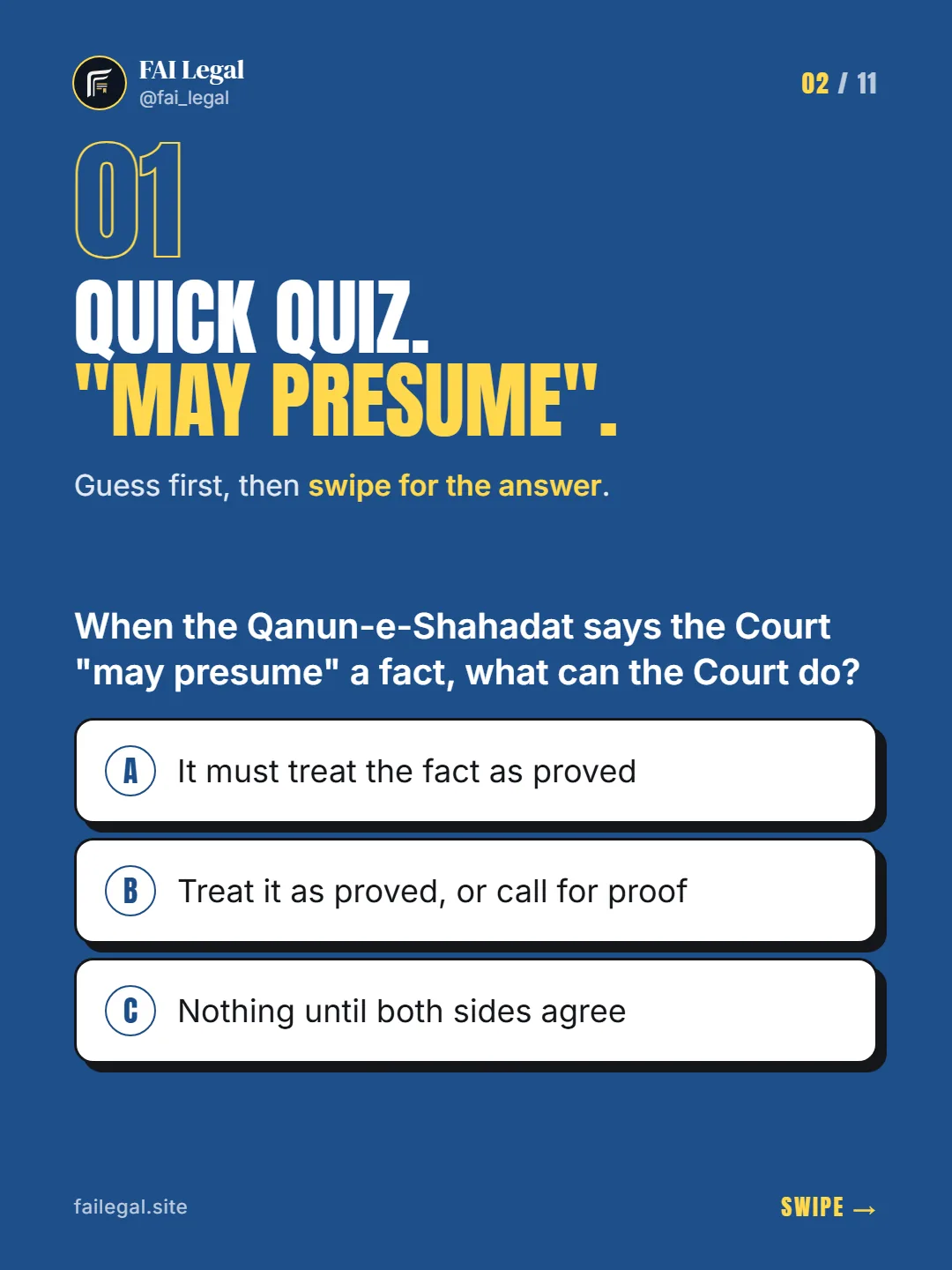

Quick quiz. "May presume".
Guess first, then swipe for the answer.
- A. It must treat the fact as proved
- B. Treat it as proved, or call for proof
- C. Nothing until both sides agree
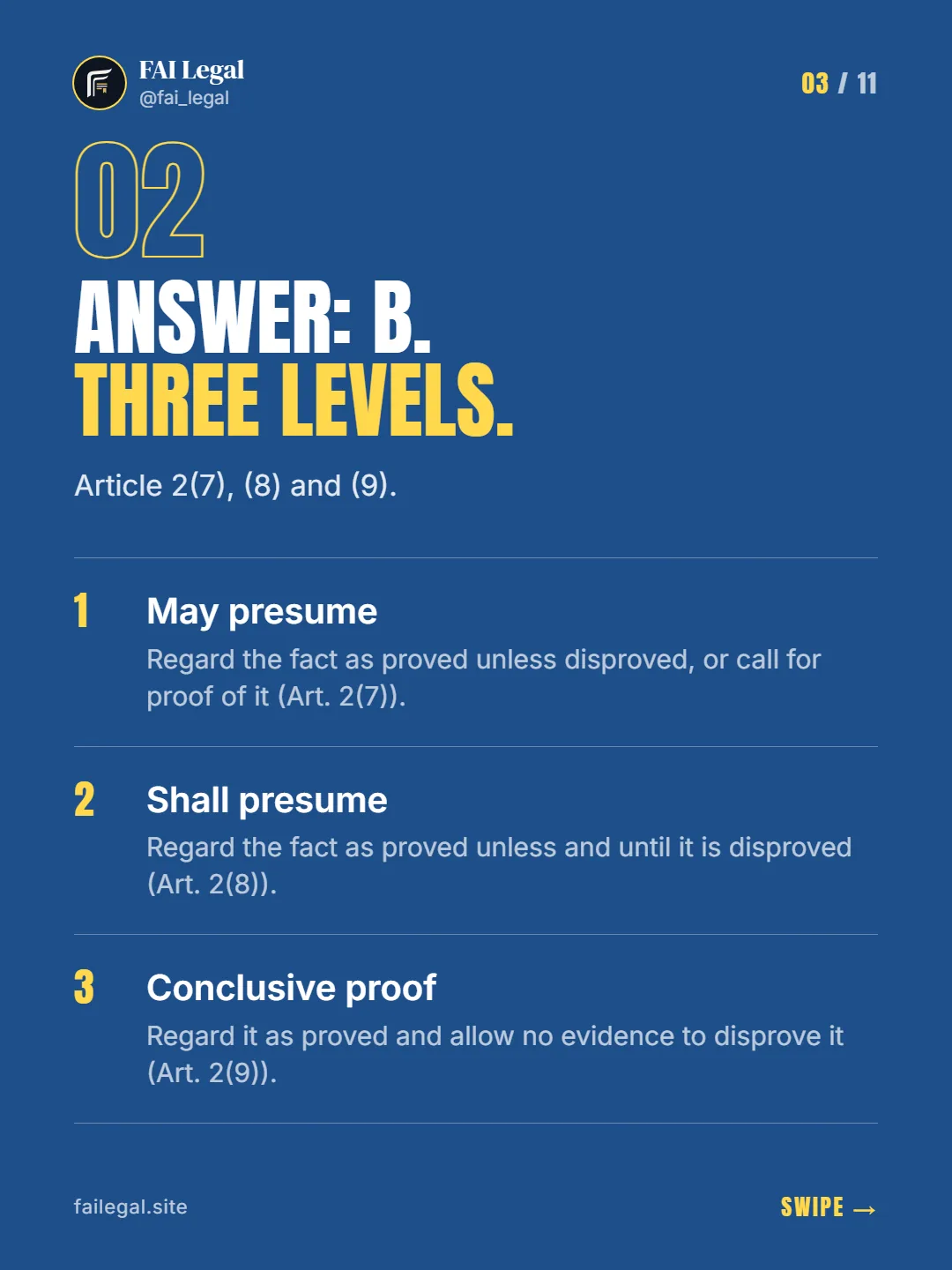
Answer: B. Three levels.
Article 2(7), (8) and (9).
- May presumeRegard the fact as proved unless disproved, or call for proof of it (Art. 2(7)).
- Shall presumeRegard the fact as proved unless and until it is disproved (Art. 2(8)).
- Conclusive proofRegard it as proved and allow no evidence to disprove it (Art. 2(9)).
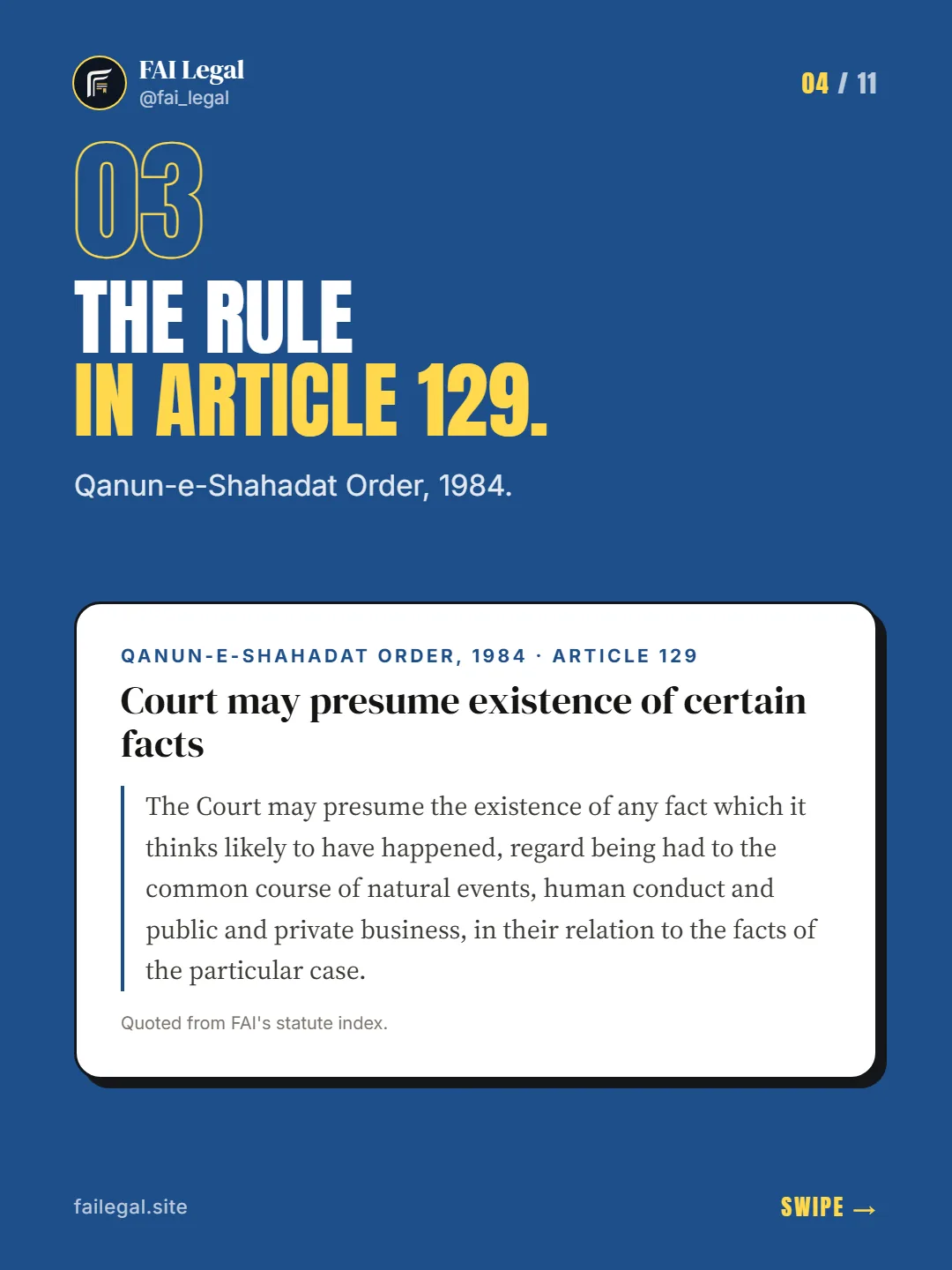
The rule in Article 129.
Qanun-e-Shahadat Order, 1984.
“The Court may presume the existence of any fact which it thinks likely to have happened, regard being had to the common course of natural events, human conduct and public and private business, in their relation to the facts of the particular case.”
Qanun-e-Shahadat Order, 1984 · Article 129, Court may presume existence of certain facts
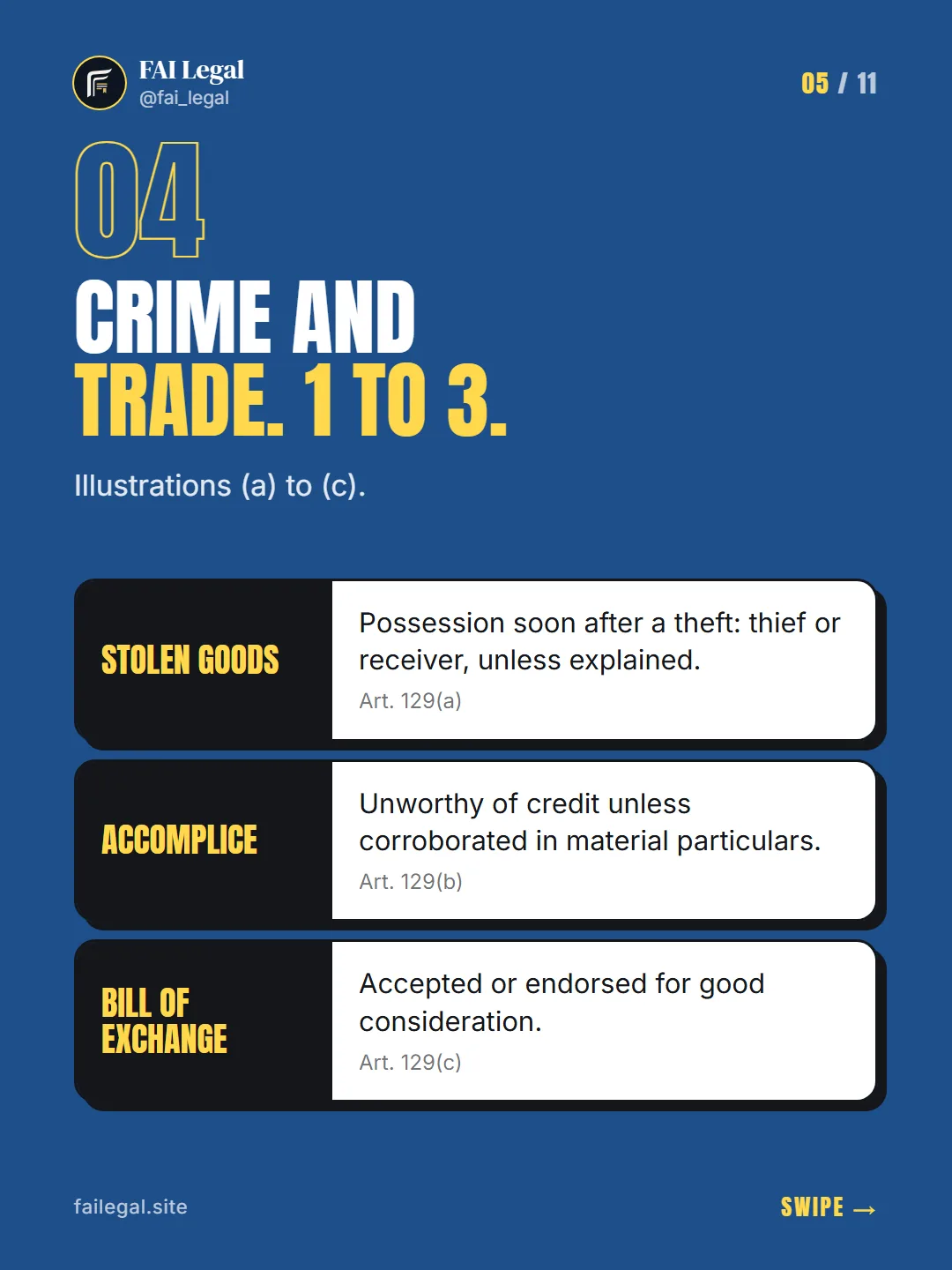
Crime and trade. 1 to 3.
Illustrations (a) to (c).
- Stolen goodsPossession soon after a theft: thief or receiver, unless explained. (Art. 129(a))
- AccompliceUnworthy of credit unless corroborated in material particulars. (Art. 129(b))
- Bill of exchangeAccepted or endorsed for good consideration. (Art. 129(c))
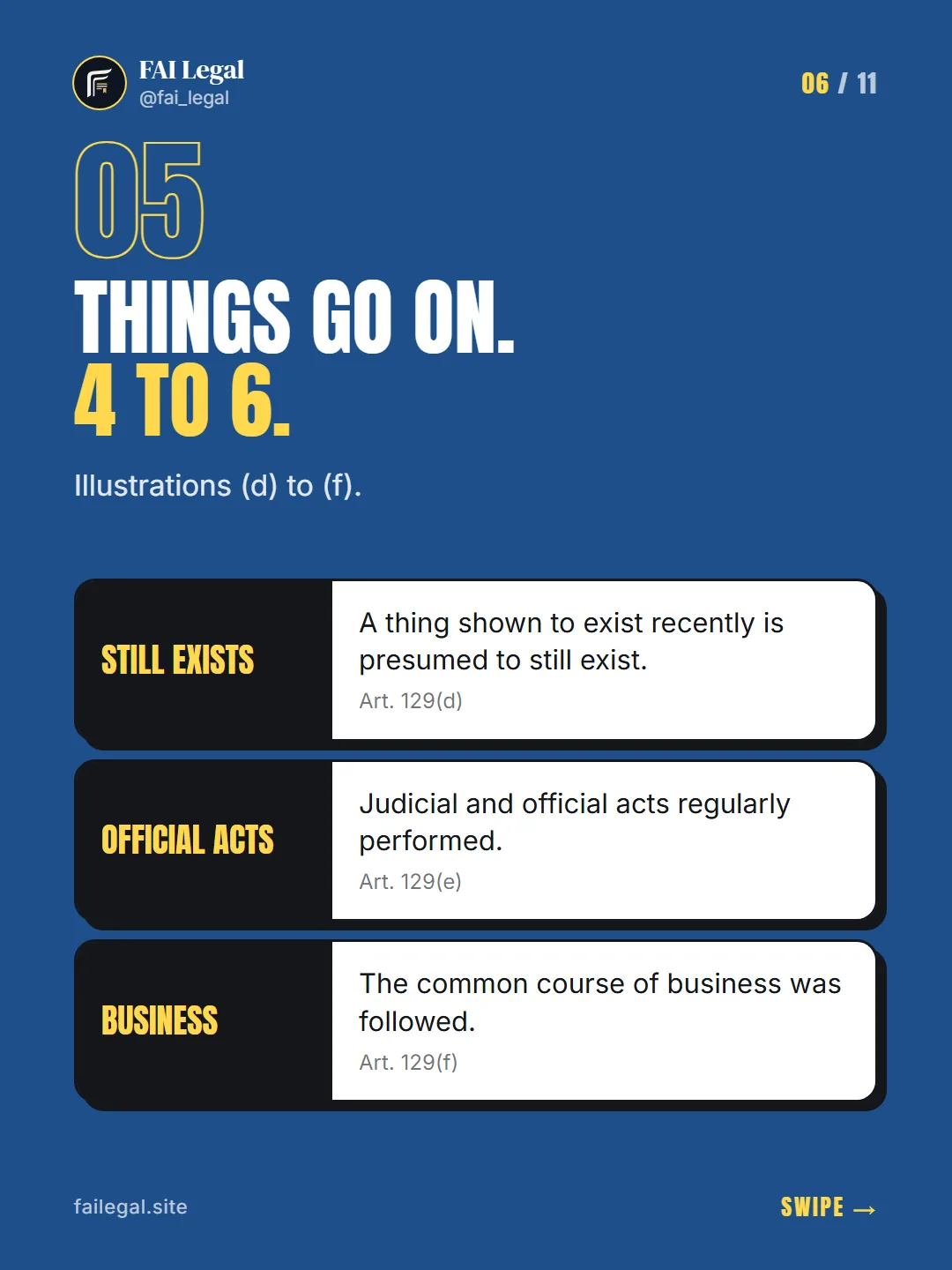
Things go on. 4 to 6.
Illustrations (d) to (f).
- Still existsA thing shown to exist recently is presumed to still exist. (Art. 129(d))
- Official actsJudicial and official acts regularly performed. (Art. 129(e))
- BusinessThe common course of business was followed. (Art. 129(f))
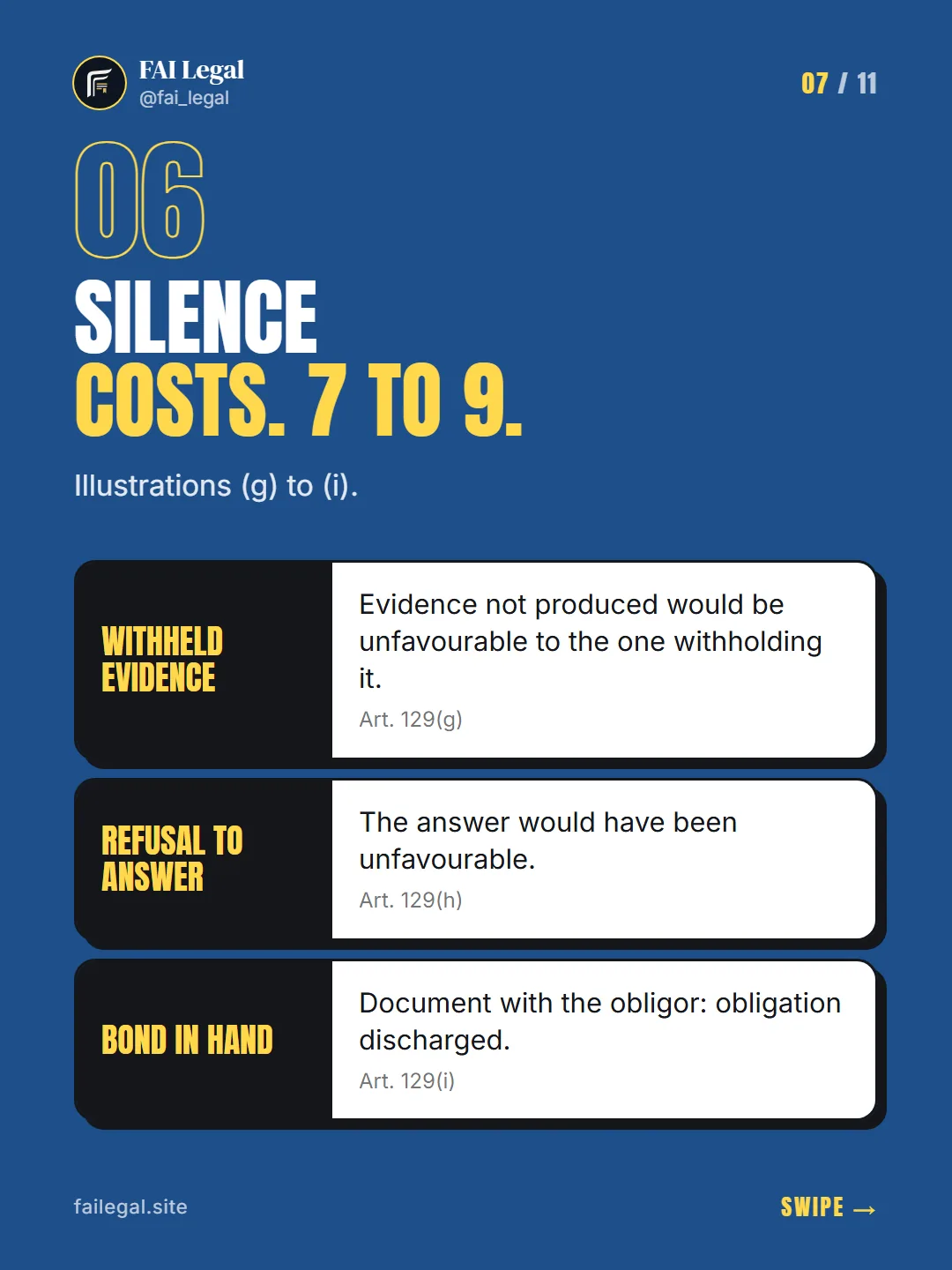
Silence costs. 7 to 9.
Illustrations (g) to (i).
- Withheld evidenceEvidence not produced would be unfavourable to the one withholding it. (Art. 129(g))
- Refusal to answerThe answer would have been unfavourable. (Art. 129(h))
- Bond in handDocument with the obligor: obligation discharged. (Art. 129(i))
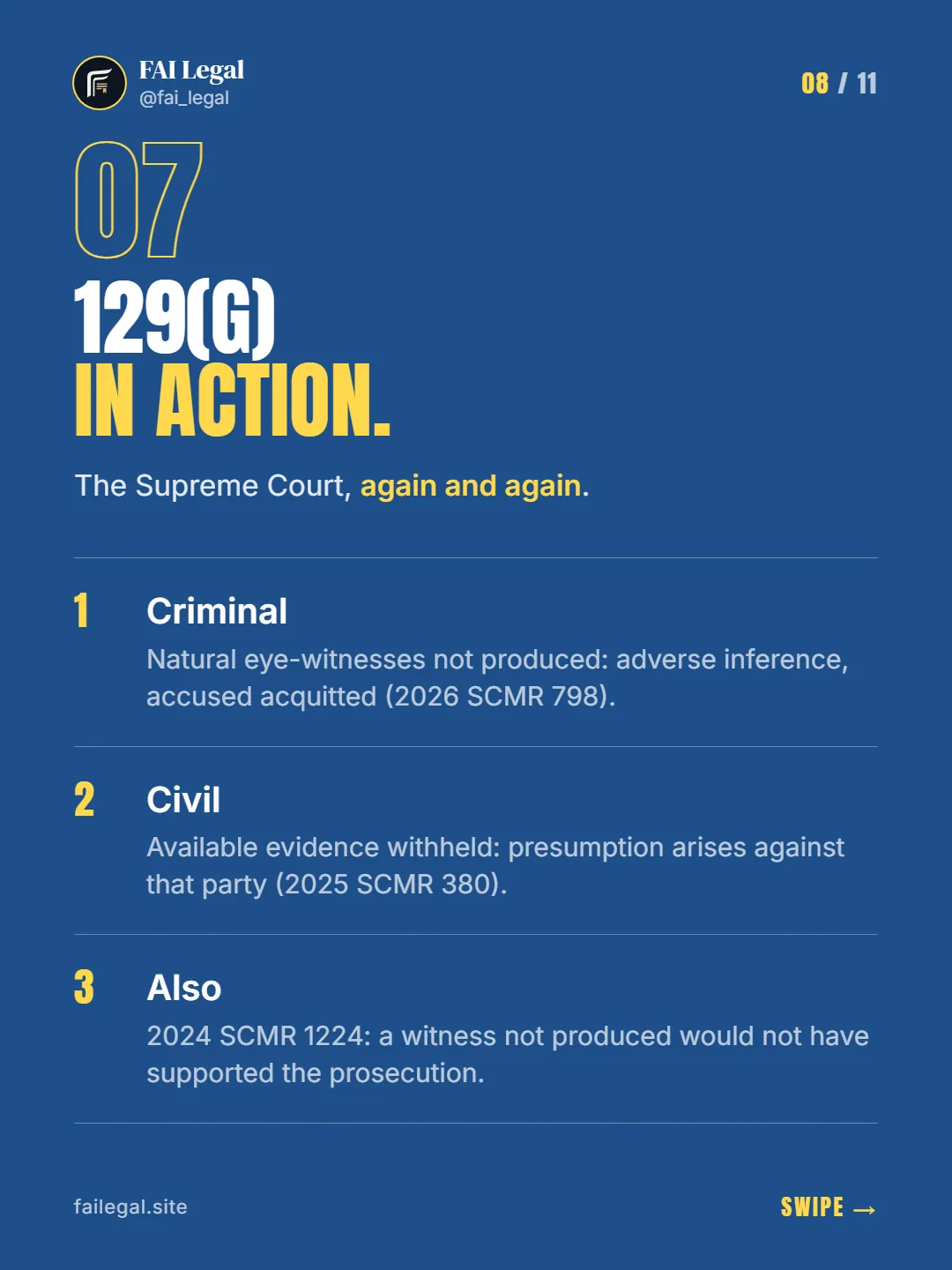
129(g) in action.
The Supreme Court, again and again.
- CriminalNatural eye-witnesses not produced: adverse inference, accused acquitted (2026 SCMR 798).
- CivilAvailable evidence withheld: presumption arises against that party (2025 SCMR 380).
- Also2024 SCMR 1224: a witness not produced would not have supported the prosecution.
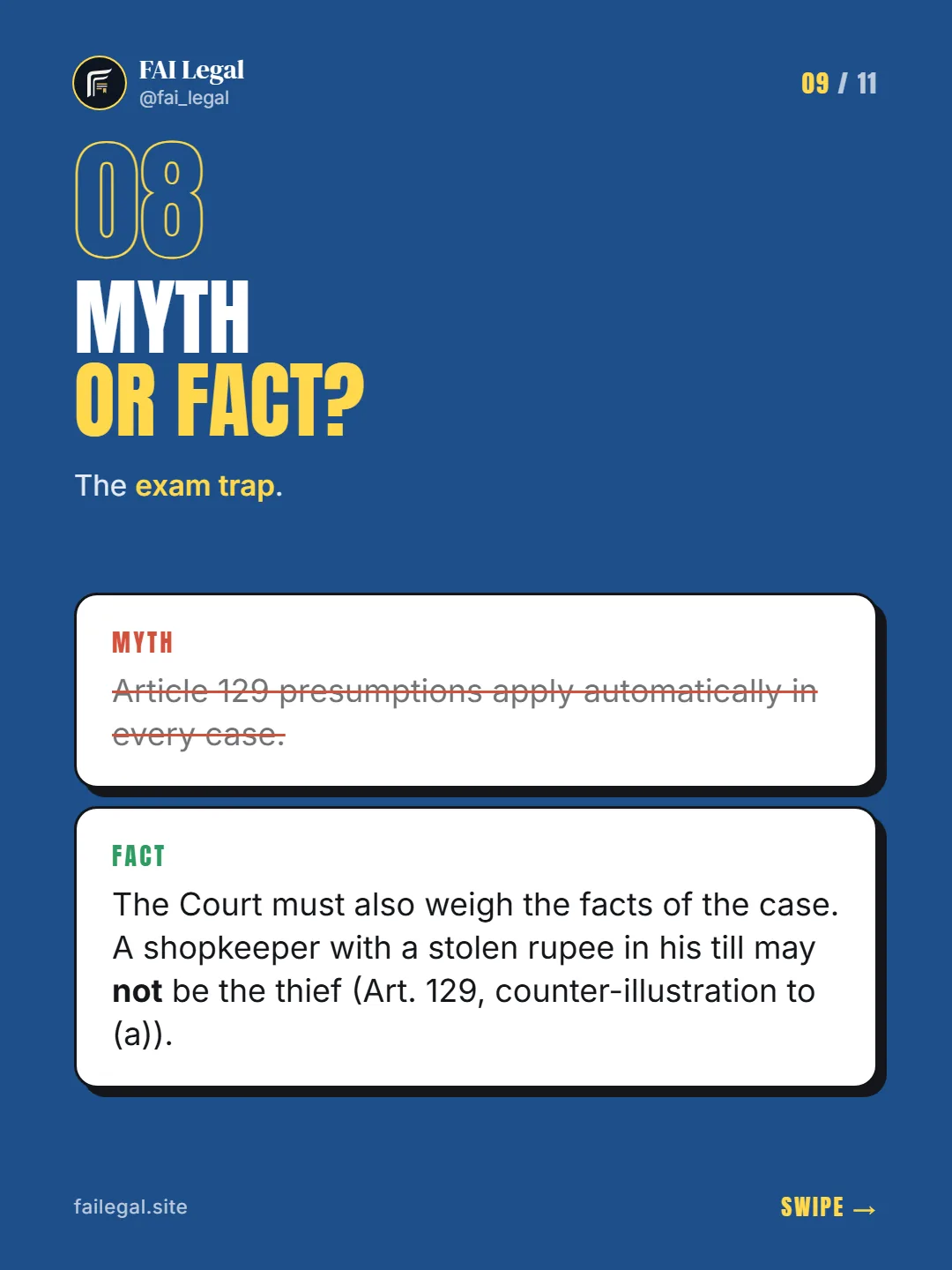
Myth or fact?
The exam trap.
- Myth: Article 129 presumptions apply automatically in every case.
- Fact: The Court must also weigh the facts of the case. A shopkeeper with a stolen rupee in his till may not be the thief (Art. 129, counter-illustration to (a)).
Revise with FAI.
Ask FAI in your own words. It answers with the exact article and the leading judgments.
- Explain the difference between may presume and shall presume with examples.
- Leading Supreme Court cases on Article 129(g) of the Qanun-e-Shahadat.
Example questions
What this does not mean
- Article 129 lets the court presume a fact. It does not force it, and the court must weigh the facts of the particular case.
- A fact the court may presume can still be disproved, unlike conclusive proof, where no evidence to disprove it is allowed (Art. 2(9)).
- Possession of stolen goods soon after a theft does not always make a person the thief. A shopkeeper with a stolen rupee in his till may not be the thief (counter-illustration to Art. 129(a)).
Questions people ask
What is Article 129 of Qanun-e-Shahadat?
It allows the court to presume a fact it thinks likely to have happened, having regard to the common course of natural events, human conduct and public and private business, in relation to the facts of the case.
What is the difference between may presume and shall presume?
May presume means the court can regard the fact as proved unless disproved, or call for proof (Art. 2(7)). Shall presume means it regards the fact as proved unless and until disproved (Art. 2(8)). Conclusive proof allows no evidence to disprove it (Art. 2(9)).
What is adverse inference under Article 129(g)?
Evidence not produced may be presumed unfavourable to the party withholding it. The Supreme Court acquitted an accused where natural eye-witnesses were not produced (2026 SCMR 798) and applied it in a civil case too (2025 SCMR 380).
Can an accomplice be believed without corroboration?
The court may presume an accomplice is unworthy of credit unless corroborated in material particulars (Art. 129(b)).
Are official acts presumed to be regular in Pakistan?
The court may presume that judicial and official acts were regularly performed (Art. 129(e)).
Sources
- Qanun-e-Shahadat Order, 1984 · Article 129
Court may presume existence of certain facts Pakistan Code
Educational legal information, not legal advice. Every case turns on its own facts. Speak to a qualified lawyer about your situation. Review status: Pending advocate review. How we check.