Law study · For law students
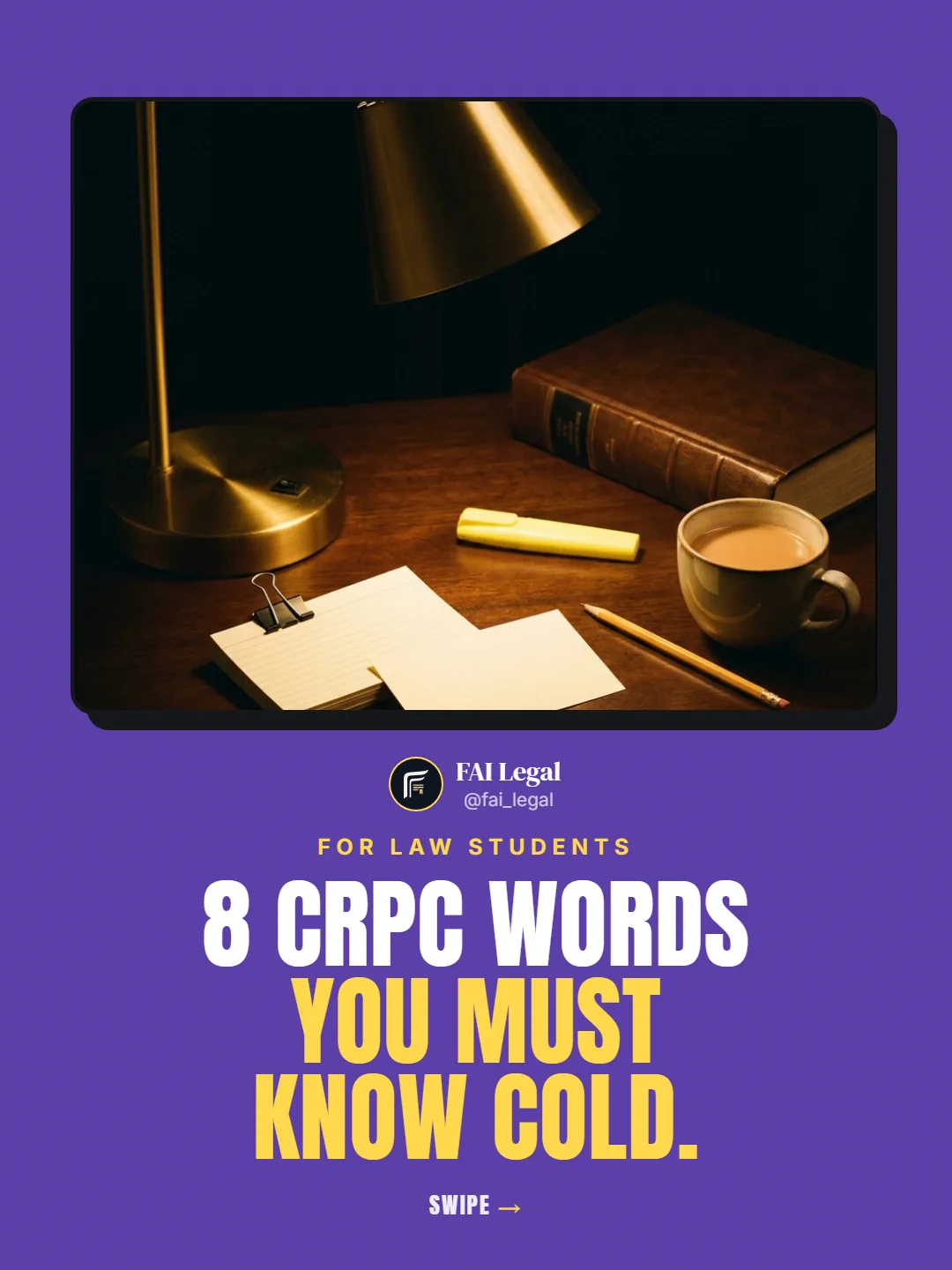
8 CrPC words you must know cold.
In short
Flashcards straight from section 4(1) of the Code of Criminal Procedure, with a quick self-test.
By the FAI Legal editorial desk · 10 October 2026 · 9 slides · 2 min read
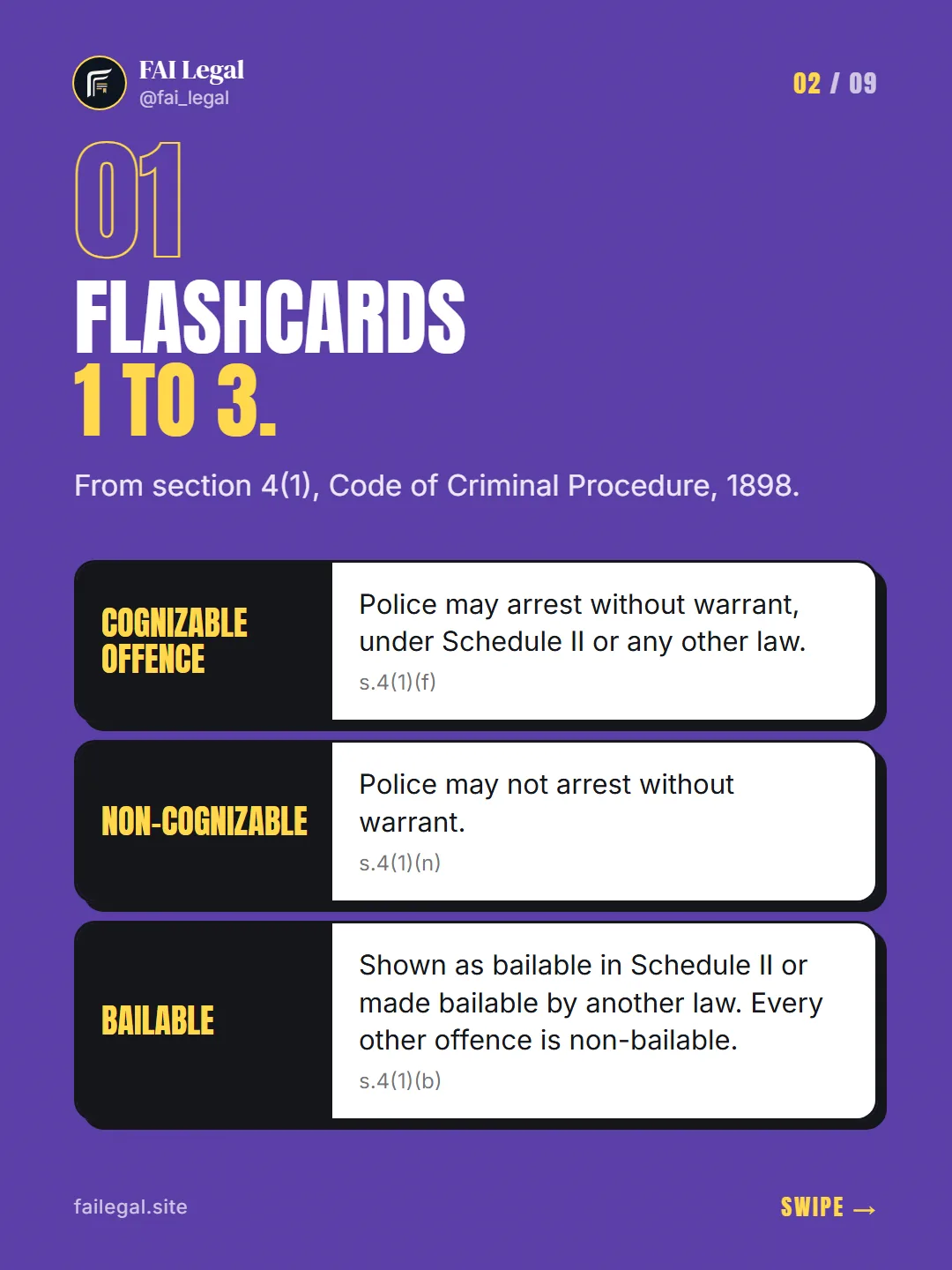

Flashcards 1 to 3.
From section 4(1), Code of Criminal Procedure, 1898.
- Cognizable offencePolice may arrest without warrant, under Schedule II or any other law. (s.4(1)(f))
- Non-cognizablePolice may not arrest without warrant. (s.4(1)(n))
- BailableShown as bailable in Schedule II or made bailable by another law. Every other offence is non-bailable. (s.4(1)(b))
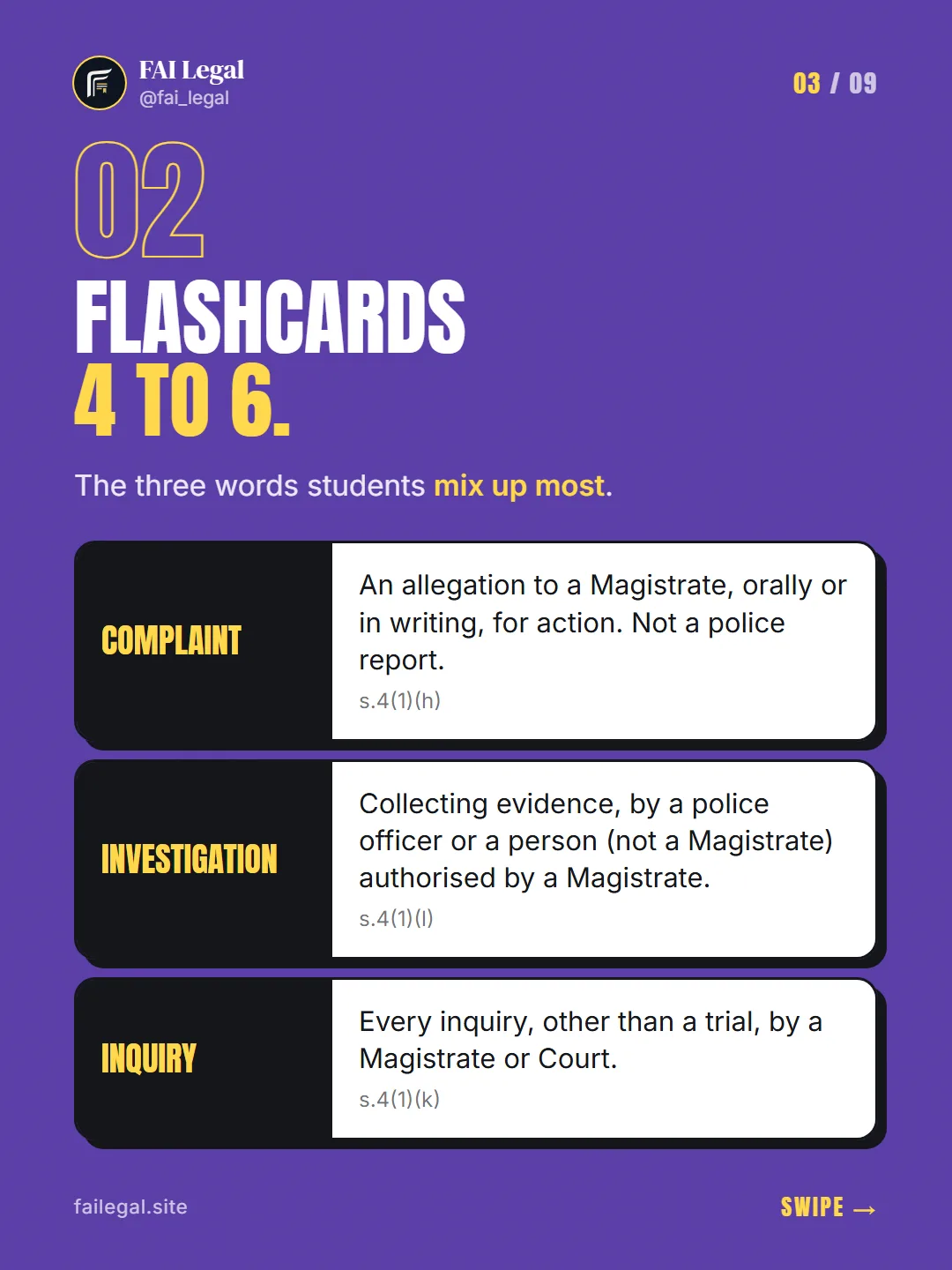
Flashcards 4 to 6.
The three words students mix up most.
- ComplaintAn allegation to a Magistrate, orally or in writing, for action. Not a police report. (s.4(1)(h))
- InvestigationCollecting evidence, by a police officer or a person (not a Magistrate) authorised by a Magistrate. (s.4(1)(l))
- InquiryEvery inquiry, other than a trial, by a Magistrate or Court. (s.4(1)(k))
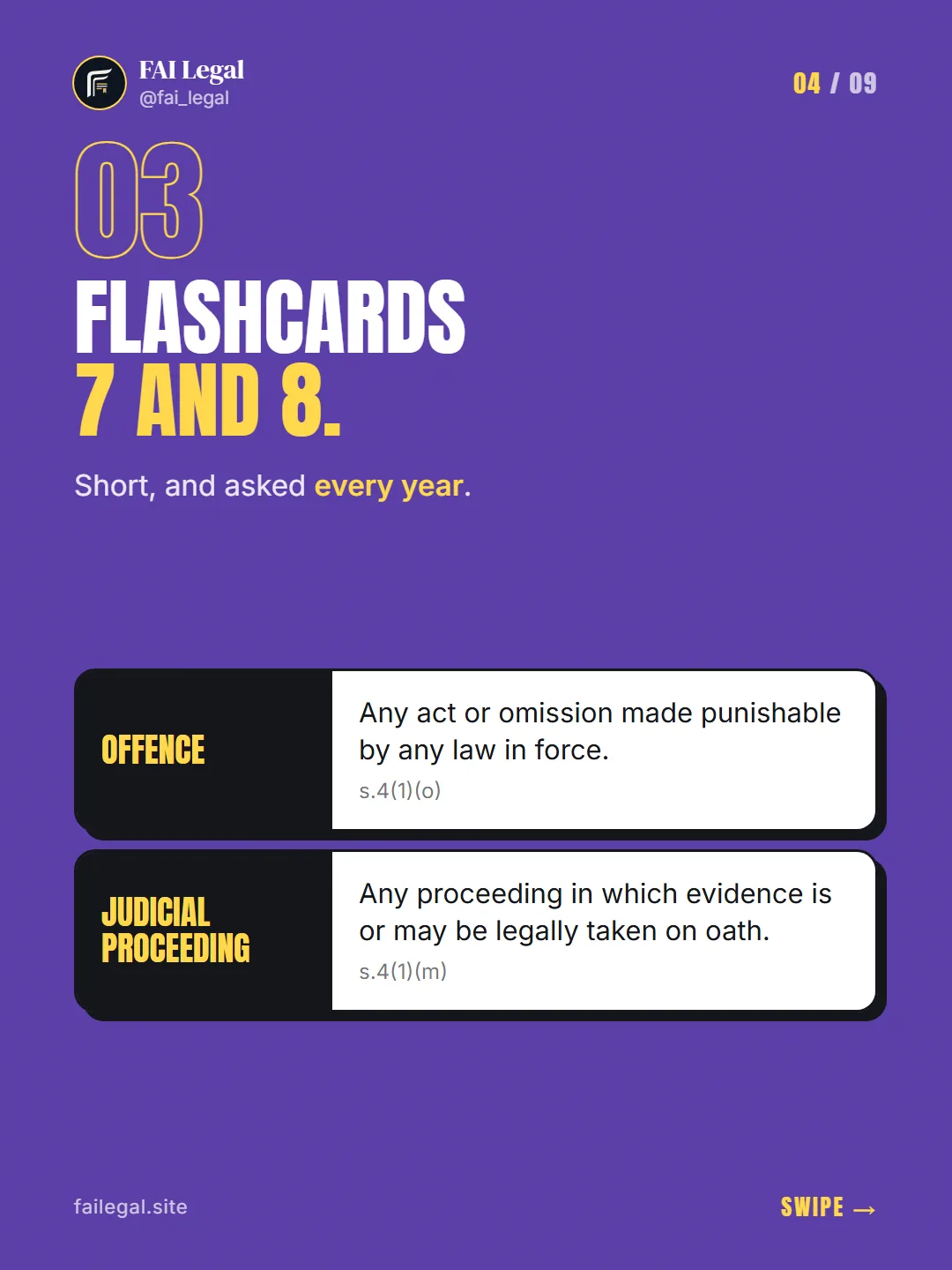
Flashcards 7 and 8.
Short, and asked every year.
- OffenceAny act or omission made punishable by any law in force. (s.4(1)(o))
- Judicial proceedingAny proceeding in which evidence is or may be legally taken on oath. (s.4(1)(m))
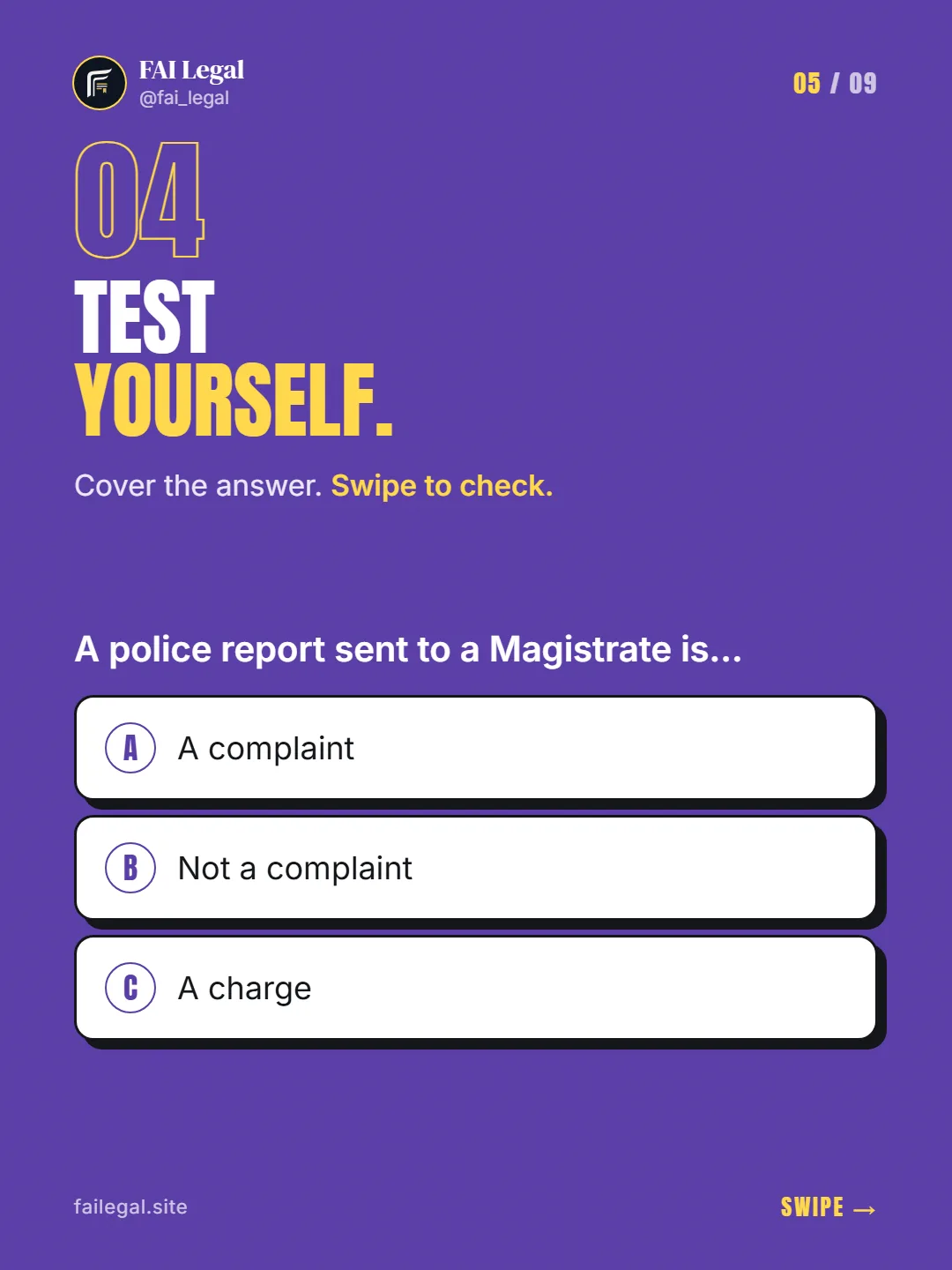
Test yourself.
Cover the answer. Swipe to check.
- A. A complaint
- B. Not a complaint
- C. A charge
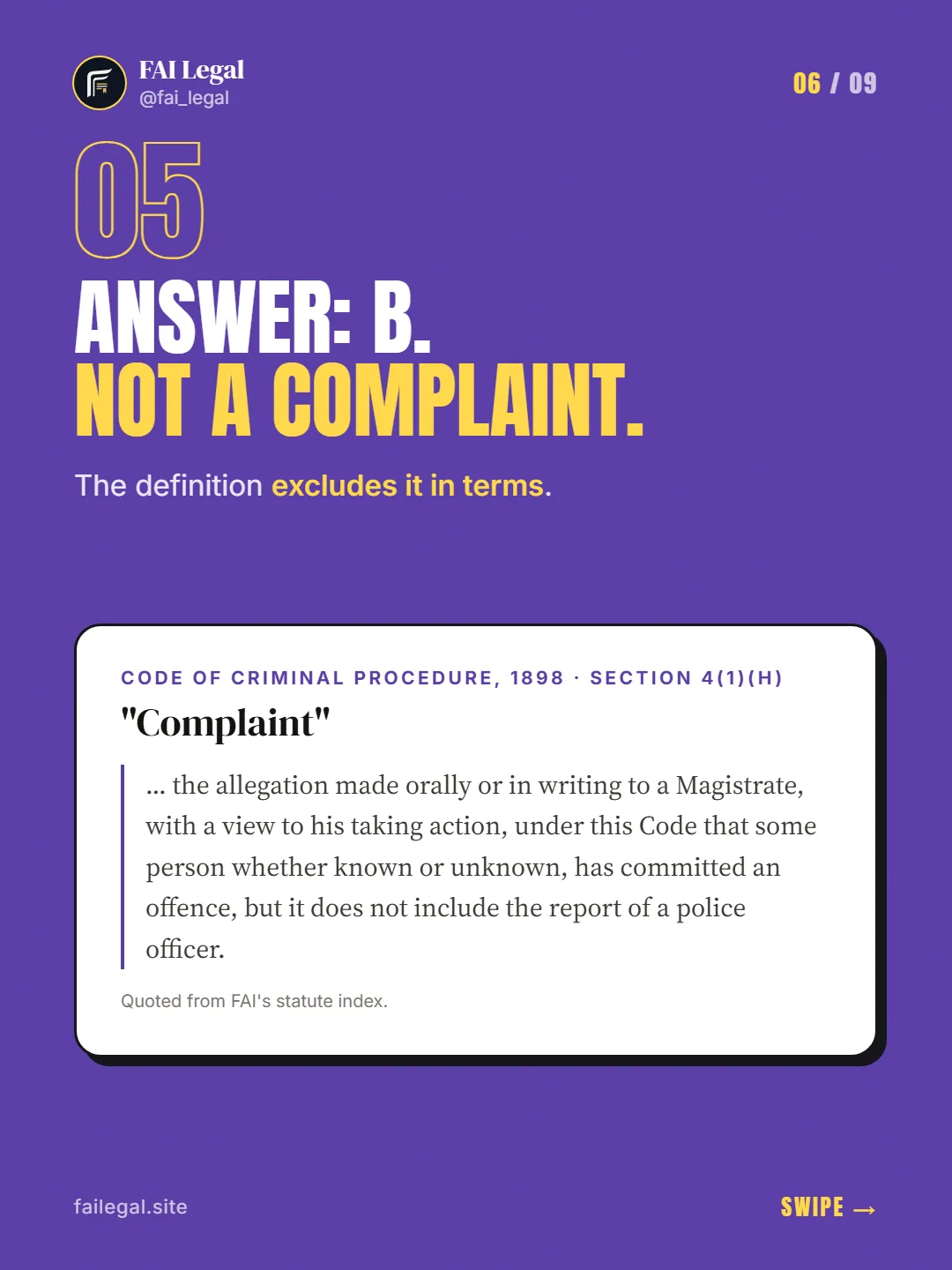
Answer: B. Not a complaint.
The definition excludes it in terms.
“the allegation made orally or in writing to a Magistrate, with a view to his taking action, under this Code that some person whether known or unknown, has committed an offence, but it does not include the report of a police officer.”
Code of Criminal Procedure, 1898 · Section 4(1)(h), "Complaint"
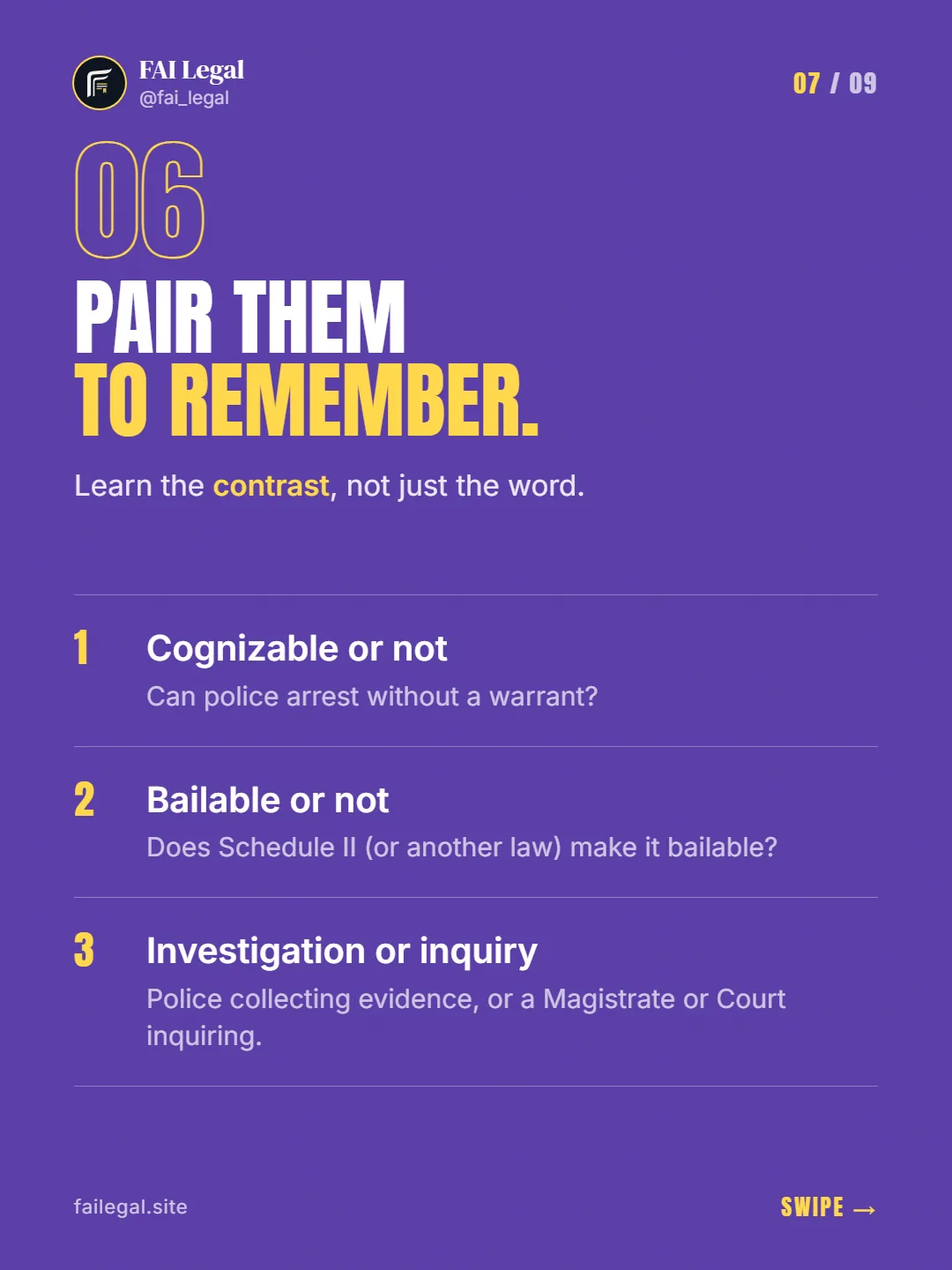
Pair them to remember.
Learn the contrast, not just the word.
- Cognizable or notCan police arrest without a warrant?
- Bailable or notDoes Schedule II (or another law) make it bailable?
- Investigation or inquiryPolice collecting evidence, or a Magistrate or Court inquiring.
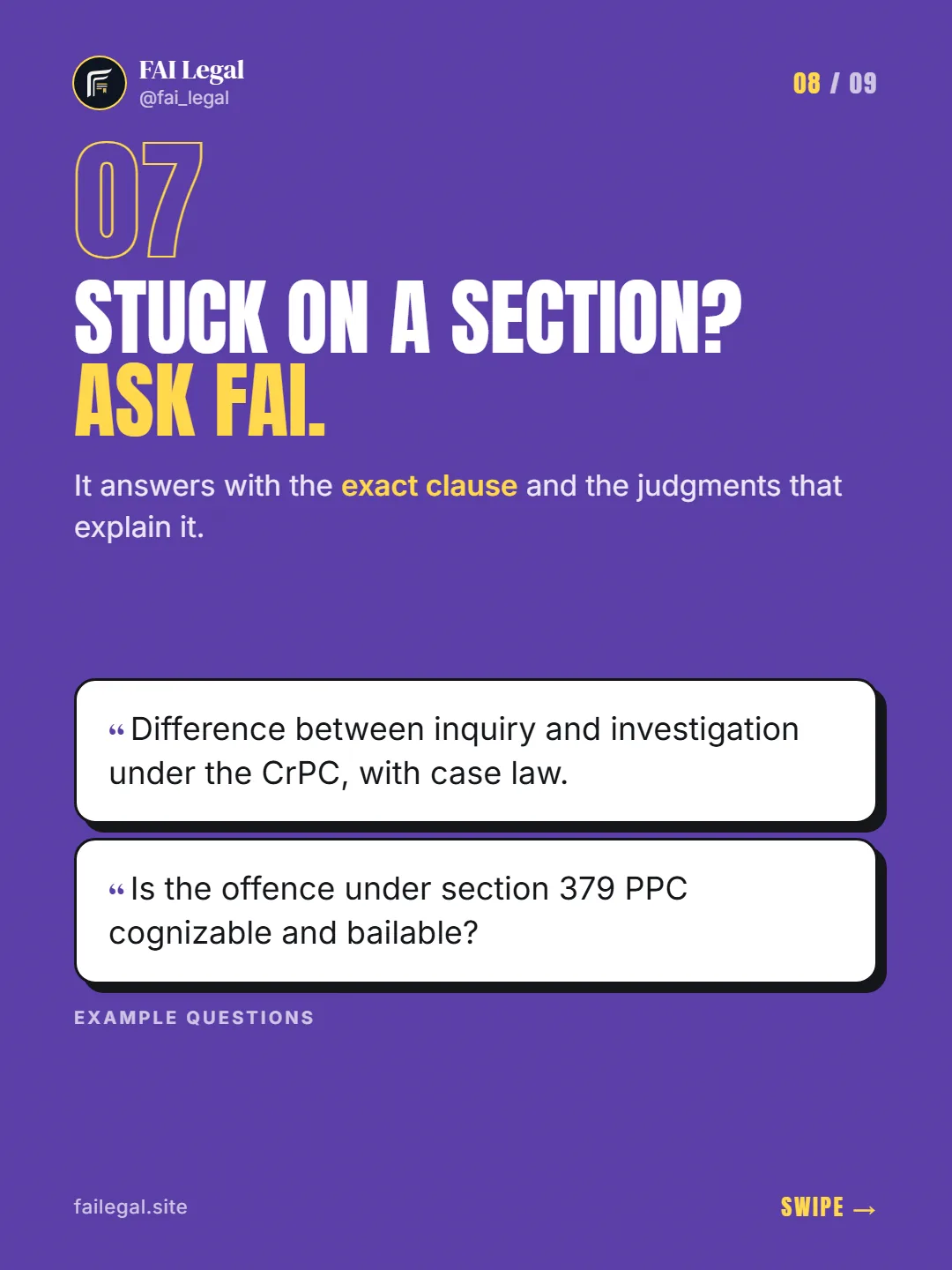
Stuck on a section? Ask FAI.
It answers with the exact clause and the judgments that explain it.
- Difference between inquiry and investigation under the CrPC, with case law.
- Is the offence under section 379 PPC cognizable and bailable?
Example questions
What this does not mean
- A police report is not a complaint. The definition in s.4(1)(h) excludes it in terms.
- A Magistrate does not investigate. Investigation is by a police officer or a person, not a Magistrate, authorised by a Magistrate (s.4(1)(l)).
- Bailable status comes only from Schedule II or another law. Every other offence is non-bailable (s.4(1)(b)).
Questions people ask
What is a cognizable offence in Pakistan?
One for which police may arrest without a warrant, under Schedule II or any other law (s.4(1)(f) CrPC).
What is a non-cognizable offence?
One for which police may not arrest without a warrant (s.4(1)(n) CrPC).
Is a police report a complaint under the CrPC?
No. A complaint is an allegation, oral or written, made to a Magistrate for action, and the definition does not include the report of a police officer (s.4(1)(h)).
What is the difference between inquiry and investigation in CrPC?
Investigation is collecting evidence by a police officer or a person authorised by a Magistrate (s.4(1)(l)). Inquiry is every inquiry, other than a trial, by a Magistrate or Court (s.4(1)(k)).
How do I know if an offence is bailable or not?
An offence is bailable if Schedule II shows it as bailable or another law makes it bailable. Every other offence is non-bailable (s.4(1)(b)).
Sources
- Code of Criminal Procedure, 1898 · Section 4(1)(h)
"Complaint" Pakistan Code
Educational legal information, not legal advice. Every case turns on its own facts. Speak to a qualified lawyer about your situation. Review status: Pending advocate review. How we check.