Law study · For law students
10 sections every LLB student must know.
In short
These come up again and again, in exams, moots and the first year of practice.
By the FAI Legal editorial desk · 10 October 2026 · 8 slides · 2 min read

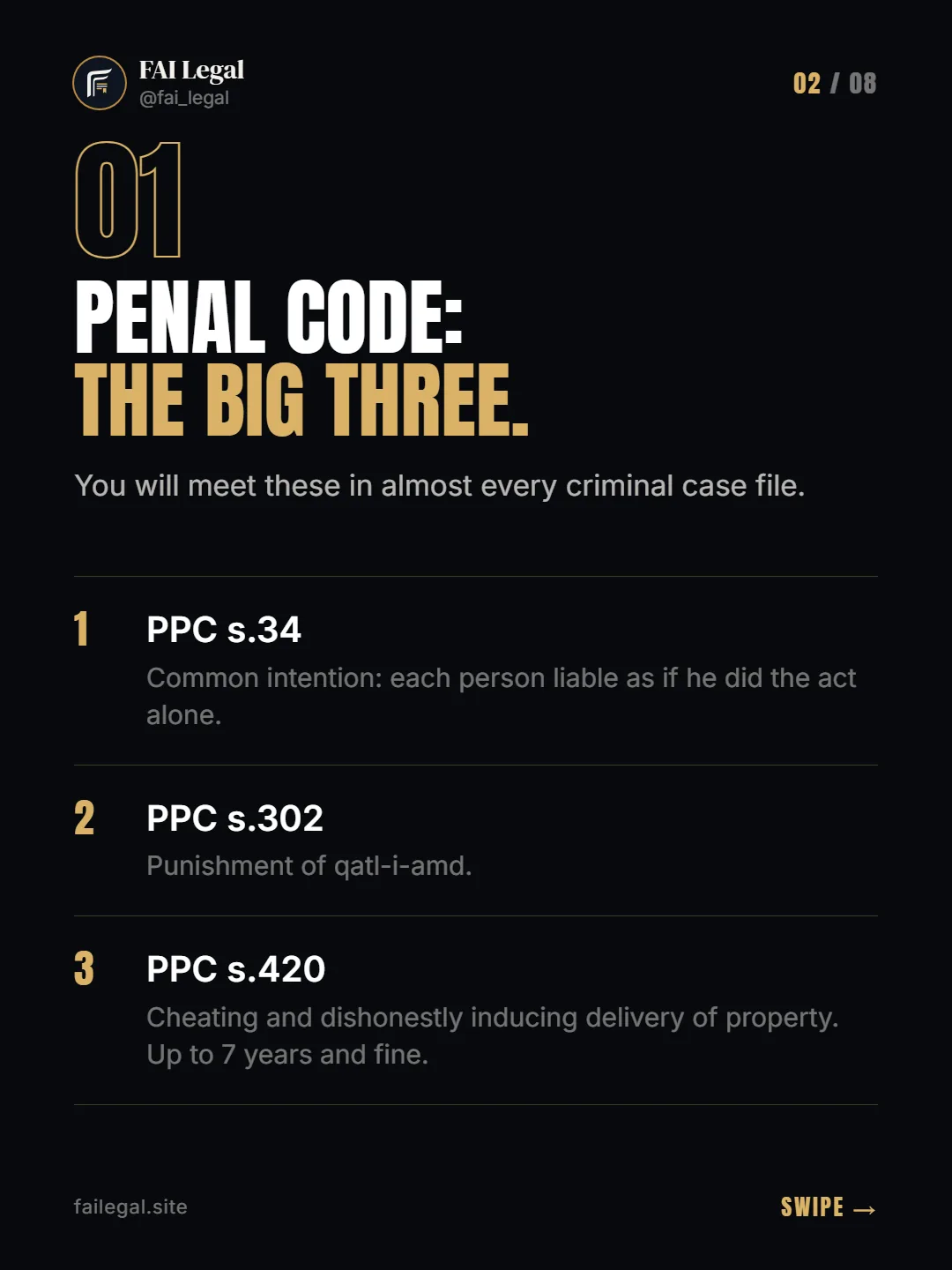
Penal Code: the big three.
You will meet these in almost every criminal case file.
- PPC s.34Common intention: each person liable as if he did the act alone.
- PPC s.302Punishment of qatl-i-amd.
- PPC s.420Cheating and dishonestly inducing delivery of property. Up to 7 years and fine.
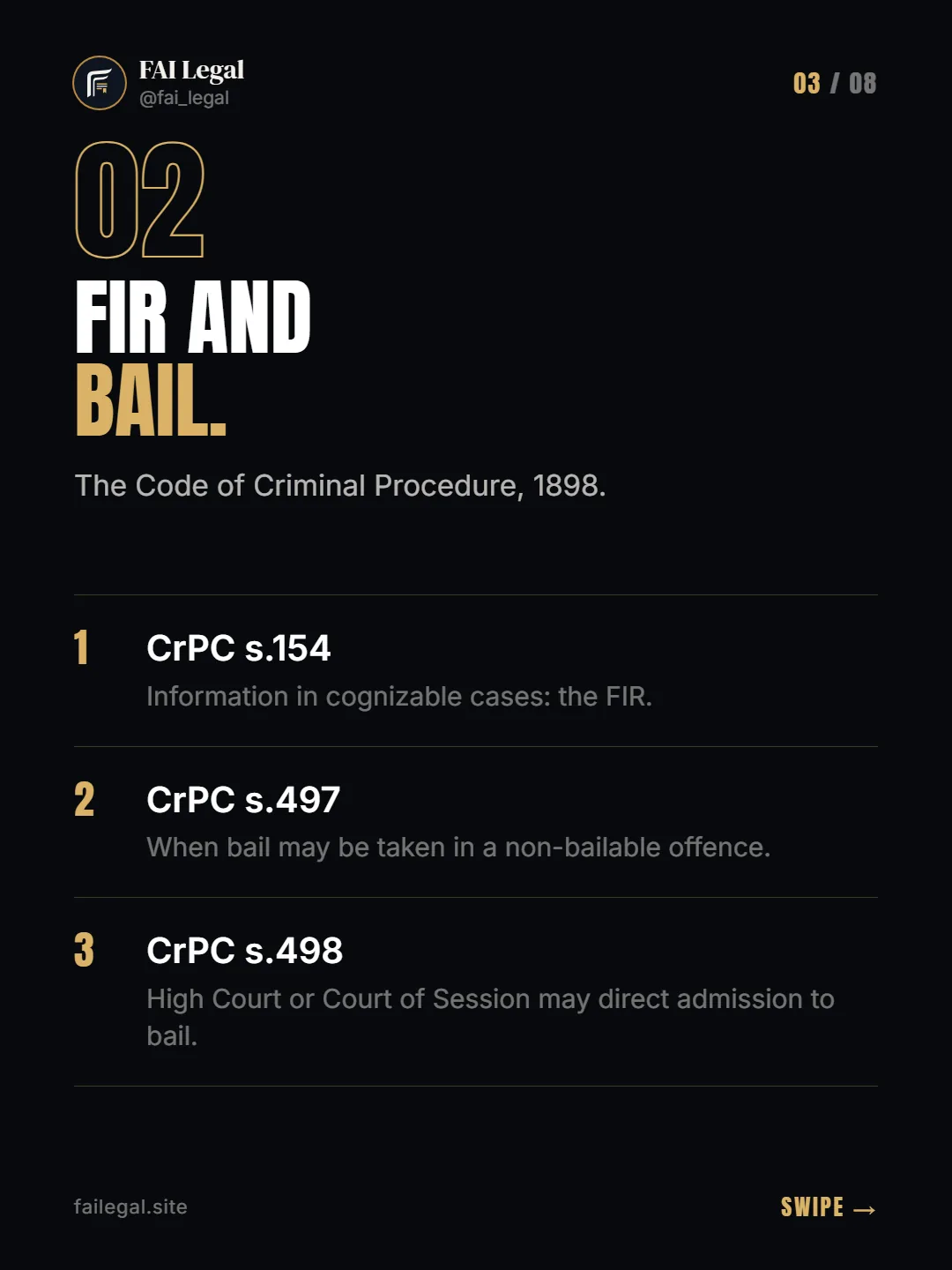
FIR and bail.
The Code of Criminal Procedure, 1898.
- CrPC s.154Information in cognizable cases: the FIR.
- CrPC s.497When bail may be taken in a non-bailable offence.
- CrPC s.498High Court or Court of Session may direct admission to bail.
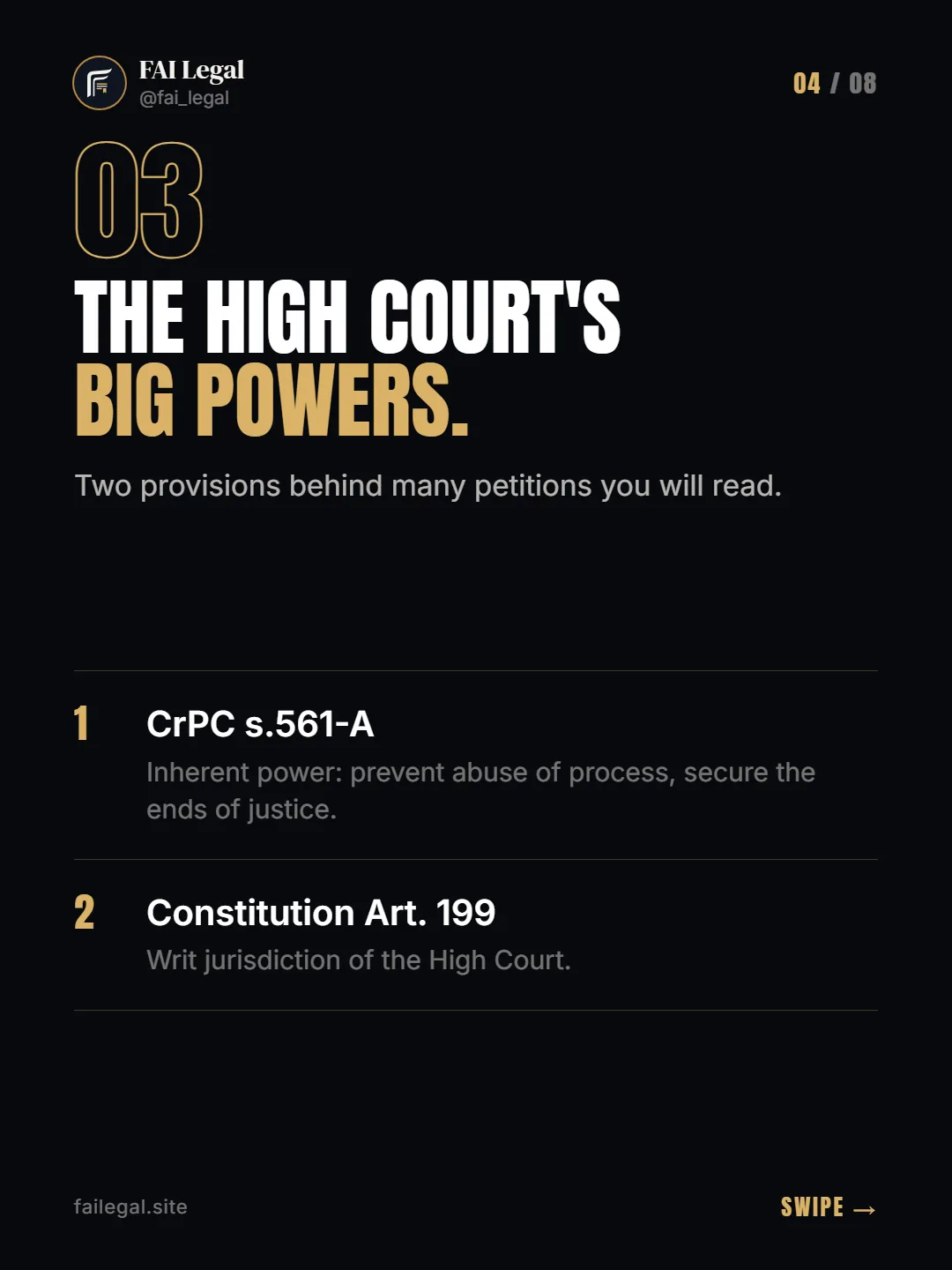
The High Court's big powers.
Two provisions behind many petitions you will read.
- CrPC s.561-AInherent power: prevent abuse of process, secure the ends of justice.
- Constitution Art. 199Writ jurisdiction of the High Court.
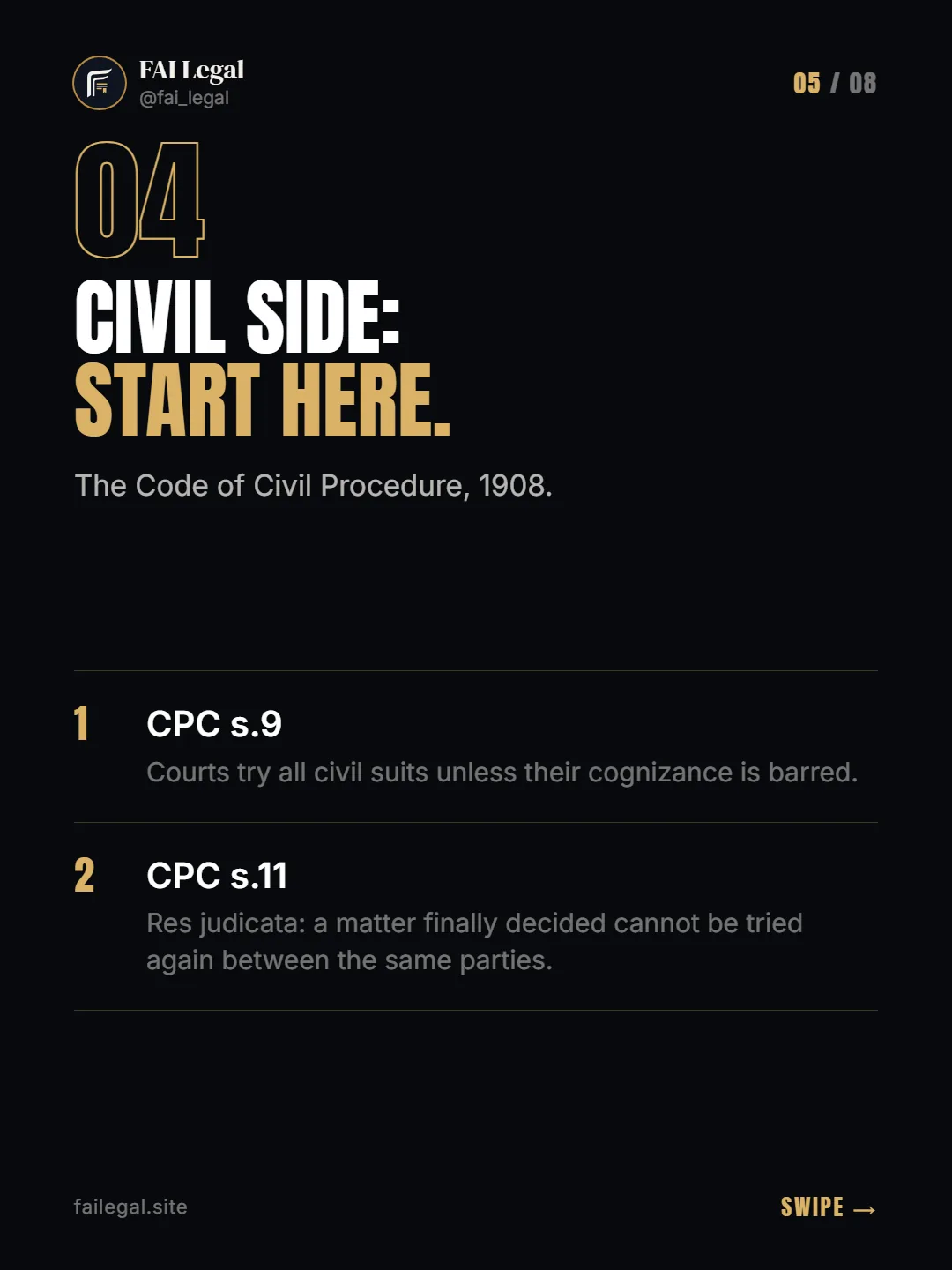
Civil side: start here.
The Code of Civil Procedure, 1908.
- CPC s.9Courts try all civil suits unless their cognizance is barred.
- CPC s.11Res judicata: a matter finally decided cannot be tried again between the same parties.
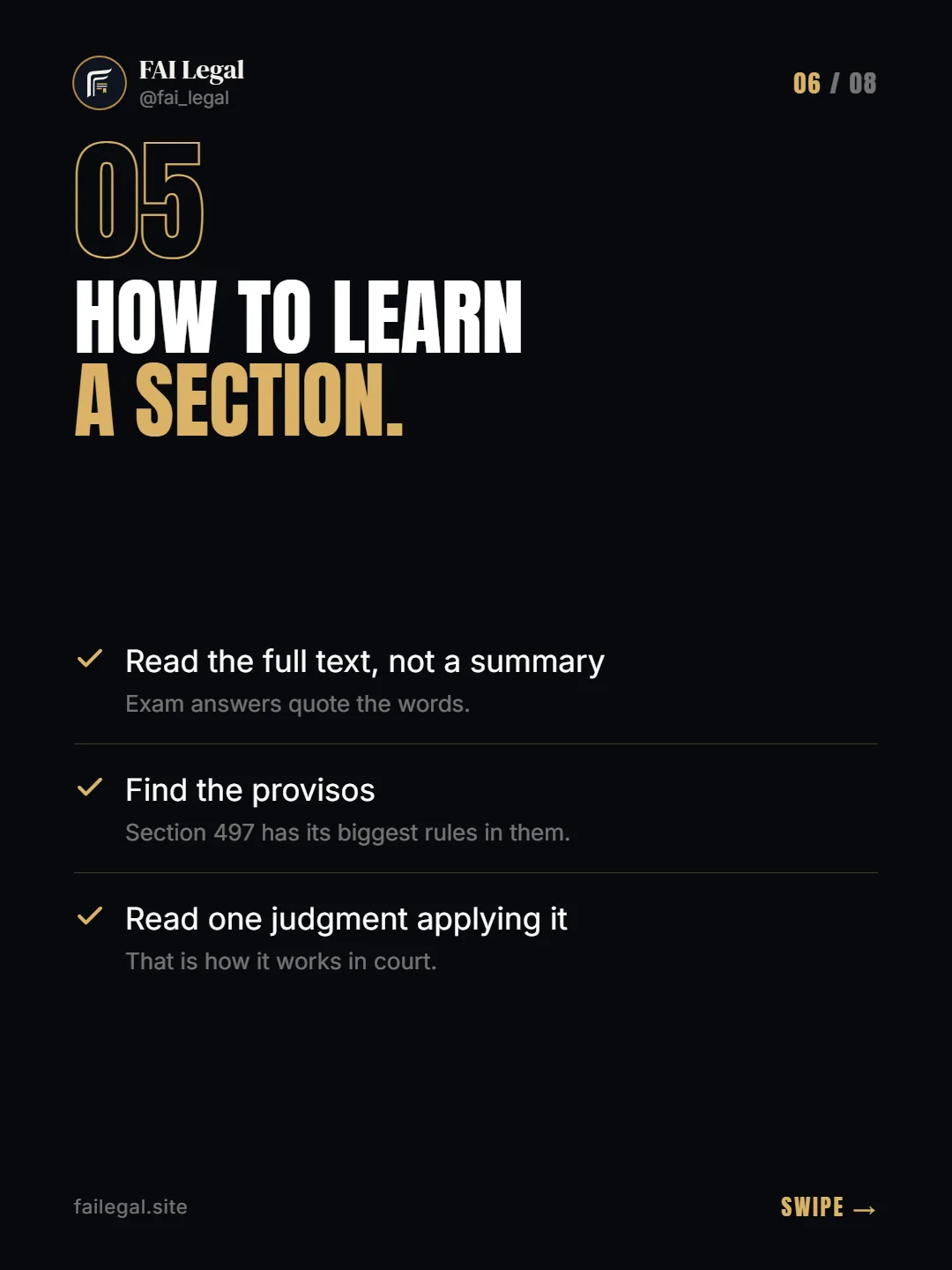
How to learn a section.
- Read the full text, not a summaryExam answers quote the words.
- Find the provisosSection 497 has its biggest rules in them.
- Read one judgment applying itThat is how it works in court.
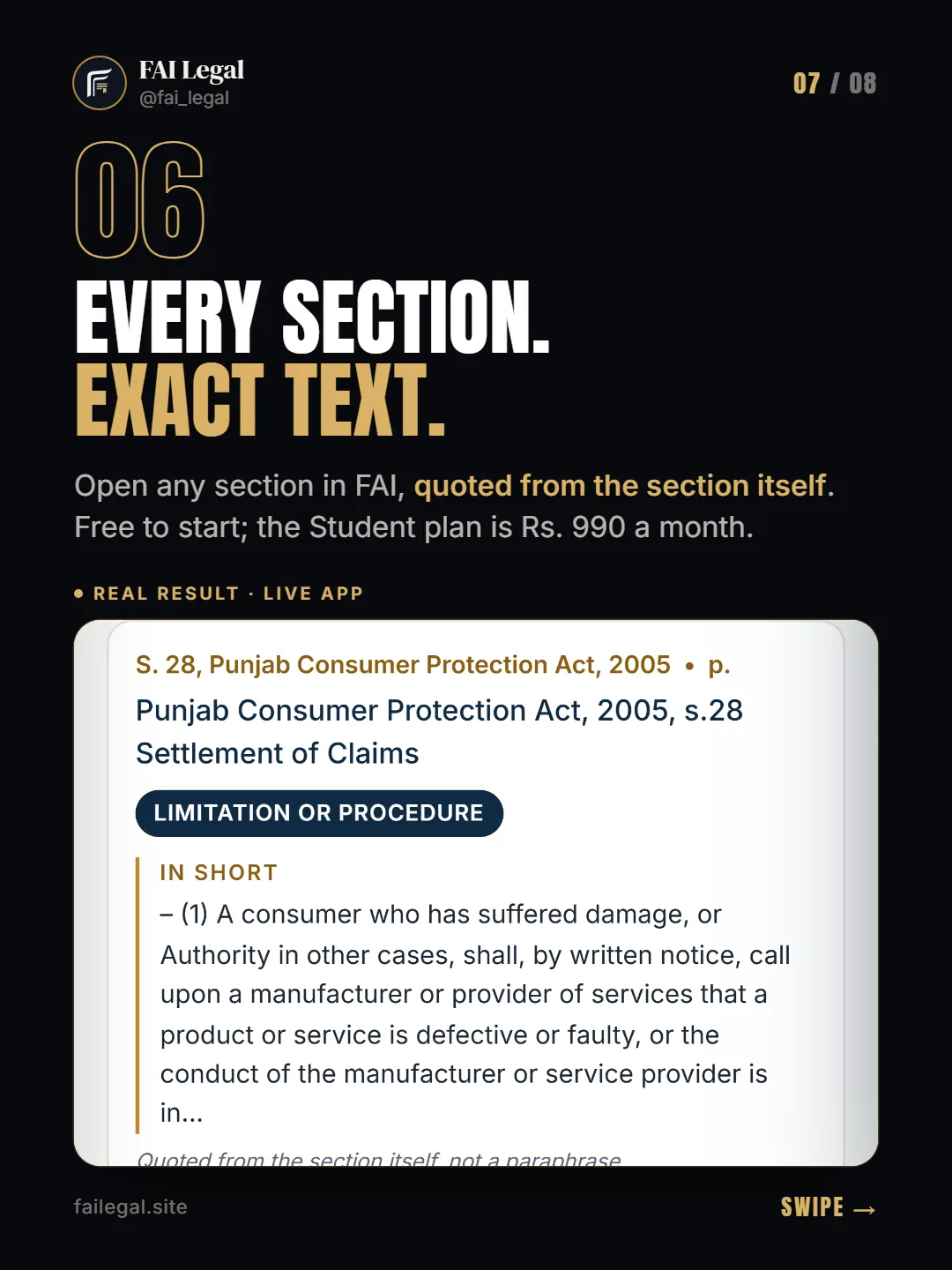
Every section. Exact text.
Open any section in FAI, quoted from the section itself. Free to start; the Student plan is Rs. 990 a month.
What this does not mean
- This is a starting list for students, not a full syllabus.
- The carousel names each section and its subject. It does not set out the full text, so read each section in full, provisos included.
Questions people ask
What is section 34 PPC?
Common intention: each person is liable as if he did the act alone.
What is section 420 PPC?
Cheating and dishonestly inducing delivery of property. The punishment is up to 7 years and fine.
What is the difference between section 497 and 498 CrPC?
Section 497 is about when bail may be taken in a non-bailable offence. Section 498 lets the High Court or Court of Session direct admission to bail.
What is section 561-A CrPC?
The inherent power to prevent abuse of process and secure the ends of justice.
What is res judicata under section 11 CPC?
A matter finally decided cannot be tried again between the same parties.
Sources
- Pakistan Penal Code, 1860 · Section 34
Acts done by several persons in furtherance of common intention Pakistan Code - Pakistan Penal Code, 1860 · Section 302
Punishment of qatl-i-amd Pakistan Code - Pakistan Penal Code, 1860 · Section 420
Cheating and dishonestly inducing delivery of property Pakistan Code - Code of Criminal Procedure, 1898 · Section 154
Information in cognizable cases Pakistan Code - Code of Criminal Procedure, 1898 · Section 497
When bail may be taken in case of non-bailable offence Pakistan Code - Code of Criminal Procedure, 1898 · Section 498
Power to direct admission to bail or reduction of bail Pakistan Code - Code of Criminal Procedure, 1898 · Section 561-A
Saving of inherent power of High Court Pakistan Code - Constitution of Pakistan, 1973 · Article 199
Jurisdiction of High Court Pakistan Code - Code of Civil Procedure, 1908 · Section 9
Courts to try all civil suits unless barred Pakistan Code - Code of Civil Procedure, 1908 · Section 11
Res judicata Pakistan Code
Educational legal information, not legal advice. Every case turns on its own facts. Speak to a qualified lawyer about your situation. Review status: Pending advocate review. How we check.