Family · Lahore High Court
Haq mehr after husband's death: is the widow too late?
The myth: “Haq mehr can be claimed in court any time after the husband dies.”Wrong: the court's help lasts three years from his death
The short answer
Mehr is a debt and does not end with him. But a suit for it has three years, counted from his death.
A v. B (names withheld) · Lahore High Court · Writ Petition No. 56215 of 2019 · decided 23 June 2023
By the FAI Legal editorial desk · 11 November 2026 · 6 min read
A widow can claim her unpaid haq mehr after her husband's death, but a suit for it has to be filed within three years of the death. On 23 June 2023 the Lahore High Court dismissed a widow's suit that came almost six years after her husband died: the Limitation Act, 1908 gives three years for a suit for dower, counted from the day the marriage ends by death (Articles 103 and 104).
The Court also said what mehr is, a debt payable to the wife, and that a debt which is out of time is not wiped out: it only loses the court's help (para 5).
Key points
- A suit for haq mehr has a time limit of three years (Limitation Act, 1908, First Schedule, Articles 103 and 104).
- For a widow the three years run from her husband's death. Article 104, as the Court set it out: "104. By a Muslim for deferred dower (mu'wajjal) Three years When the marriage is dissolved by death or divorce." (para 3).
- She sued almost six years after the death, so the suit "was blatantly barred by limitation" (para 3).
- Her silence counted against her: "Had the deceased not paid her dower during his life time, she would not have been quiet at the time of devolution of his legacy upon his legal heirs as well as at the time of execution of inheritance mutation, etc." (para 4).
- Mehr is still a debt: "the dower money is a debt payable to a wife and she is within her legal right to even press for its payment." (para 5).
Haq mehr after husband's death: the short answer
Your husband has died and your haq mehr was never paid. Can you still claim it in court? Yes, but not for ever. The Limitation Act, 1908 gives three years for a suit for dower, and for a widow those years are counted from the day the marriage ends by her husband's death (Articles 103 and 104). The Lahore High Court applied this on 23 June 2023 and dismissed a suit filed almost six years after the death.
People search this as widow rights in husband's property (bewa ki jaidad mein haq), haq mehr rules and the haq mehr debt ruling. What haq mehr is, prompt and deferred mehr, and whether it can be forgiven, is on our guide failegal.site/media/haq-mehr-pakistan-what-it-is-can-it-be-forgiven.
2001 to 2016: the nikah, his death, the suit
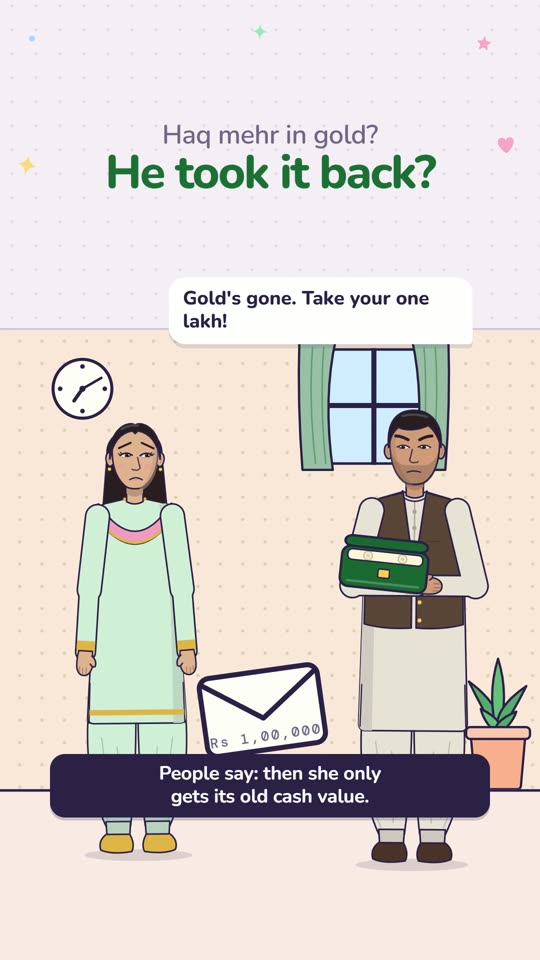
The marriage was on 3 August 2001. The dower was fixed at Rs 50,000 (prompt) and ten tolas of gold ornaments, which she said remained unpaid. Her husband died on 7 March 2010 (para 1).
His property passed to his legal heirs according to their shares (para 4). On 13 January 2016 she and her minor daughter sued his children, her stepchildren, in the Family Court: maintenance from March 2010, and the dower of Rs 50,000 and ten tolas of gold ornaments (para 1).
Two courts said: pay her
The Family Court decided on 15 September 2018 that she could recover the dower, Rs 50,000 and ten tolas of gold ornaments; the claim of maintenance was refused (para 1).
The stepchildren appealed, and the appeal court dismissed their appeal on 4 July 2019 (para 1). It held the suit within time because no demand and refusal had taken place during the husband's life (para 3). The stepchildren then filed a constitutional petition in the Lahore High Court.
We checked it in FAI Legal
The judgment is on FAI Legal's Judgment Search, marked as a citation from the court record, with every paragraph open in the judgment reader. The paragraphs quoted on this page are paras 1, 3, 4, 5 and 6. Articles 103 and 104 of the Limitation Act, 1908 are on Statute Search.
You be the judge: is she too late?
The High Court began with the dates, which nobody disputed. He died on 7 March 2010 and the suit came on 13 January 2016, which means "the same has been instituted after nearly about six years" of his death (para 3). Then it read the two Articles. For deferred dower: "104. By a Muslim for deferred dower (mu'wajjal) Three years When the marriage is dissolved by death or divorce." For prompt dower, Article 103: three years from the day the dower is demanded and refused or, where no such demand was made during the marriage, from the day the marriage is dissolved by death or divorce.
The appeal court had read only the first part of Article 103. The High Court pointed to the second part, "which enunciates that 'when marriage is dissolved by death or divorce', even then the limitation for filing such suit would be 'three years' and Article 104 ibid." (para 3). The suit "was blatantly barred by limitation". Both decrees were set aside, and "the suit instituted by the respondents Nos. 1 and 2 being barred by limitation as well as on merits stands dismissed." (para 6).
Why: three years, and her silence
The Court did not stop at the dates. His property had passed to his heirs, and for six years she had said nothing about her dower: "Had the deceased not paid her dower during his life time, she would not have been quiet at the time of devolution of his legacy upon his legal heirs as well as at the time of execution of inheritance mutation, etc." (para 4). The Court also read column 17 of the nikah nama as showing that the ten tolas of gold were handed over at the nikah, and held that she had failed to prove the dower was unpaid (paras 4 and 5).
It also said what mehr is: "the dower money is a debt payable to a wife and she is within her legal right to even press for its payment." And what a late claim loses: "the only consequence which follows is that the aid of the Courts cannot be invoked for its recovery but the debt itself does not become extinct"; such a debt can still be settled out of court and paid with the consent of the parties (para 5).
Mehr unpaid after his death? What to do
Do not stay silent. When your husband's property is being divided among the heirs, say that your mehr is unpaid, and keep your nikah nama safe. If it is not paid, a suit for dower goes to the Family Court, and under Articles 103 and 104 of the Limitation Act, 1908 a widow's suit has to be filed within three years of his death. For prompt mehr that was demanded and refused while he was alive, the three years run from that refusal.
After the three years the debt is not wiped out, and the family can still pay it by agreement, but a court can no longer be asked to order it (para 5). Your case may be different: talk to a lawyer about your own papers and dates.
Find rulings like this on FAI Legal
FAI Legal is a website: open failegal.site in your phone's browser, there is nothing to download. Ask your question in plain words, read Articles 103 and 104 of the Limitation Act on Statute Search, and see this judgment in full on Judgment Search. Don't wait: check the law first.
The case at a glance
- Facts
- The marriage was on 3 August 2001, with dower of Rs 50,000 (prompt) and ten tolas of gold ornaments, which the wife said remained unpaid; the husband died on 7 March 2010 (para 1). On 13 January 2016 she and her minor daughter sued his children, her stepchildren, for maintenance and the dower; the Family Court gave her the dower on 15 September 2018 and refused maintenance; the appeal court dismissed the stepchildren's appeal on 4 July 2019 (para 1).
- The question
- Whether a widow's suit for dower filed almost six years after her husband's death was within time under Articles 103 and 104 of the Limitation Act, 1908, and whether she had proved the dower was unpaid (paras 3 to 5).
- What the Court held
- The suit was barred by limitation: three years, counted from when the marriage is dissolved by death (para 3). On the merits she had also failed to prove that the dower was unpaid (paras 4 and 5). The petition was allowed, both decrees were set aside and the suit was dismissed (para 6).
- Why
- The appeal court read only the first part of Article 103 and skipped the second, which fixes three years where the marriage is dissolved by death or divorce, as Article 104 does (para 3). Column 17 of the nikah nama, her six years of silence while the legacy passed to the heirs and the inheritance mutation showed that the dower had been paid (para 4). Dower is a debt payable to a wife, but she did not prove it was unpaid (para 5).
- Limits
- This is a single judge's ruling of the Lahore High Court on its own facts: the suit was out of time, and the Court also found on the nikah nama and her conduct that non-payment was not proved (paras 4 to 6). A widow who sues within three years of the death, or whose prompt dower was demanded and refused less than three years before the suit, is in a different position. A debt that is out of time is not extinct; it can still be paid with the consent of the parties (para 5).
The law it relies on
Article 104: a suit by a Muslim for deferred dower, three years, counted from when the marriage is dissolved by death or divorce. Article 103: a suit by a Muslim for prompt (exigible) dower, three years, counted from when the dower is demanded and refused or, where no such demand was made during the marriage, from when the marriage is dissolved by death or divorce.
What this does not mean
- It does not mean haq mehr ends when the husband dies. The Court called it a debt payable to the wife; a claim that is out of time only loses the court's help (para 5).
- It does not mean every widow loses after three years whatever the facts. The Court also found, on column 17 of the nikah nama and her six years of silence, that she had not proved the dower was unpaid (paras 4 and 5). Every case turns on its own dates and papers.
- It is not a way for heirs to wipe the mehr out by waiting: the Court said the debt itself does not become extinct, and it can still be paid with the consent of the parties (para 5).
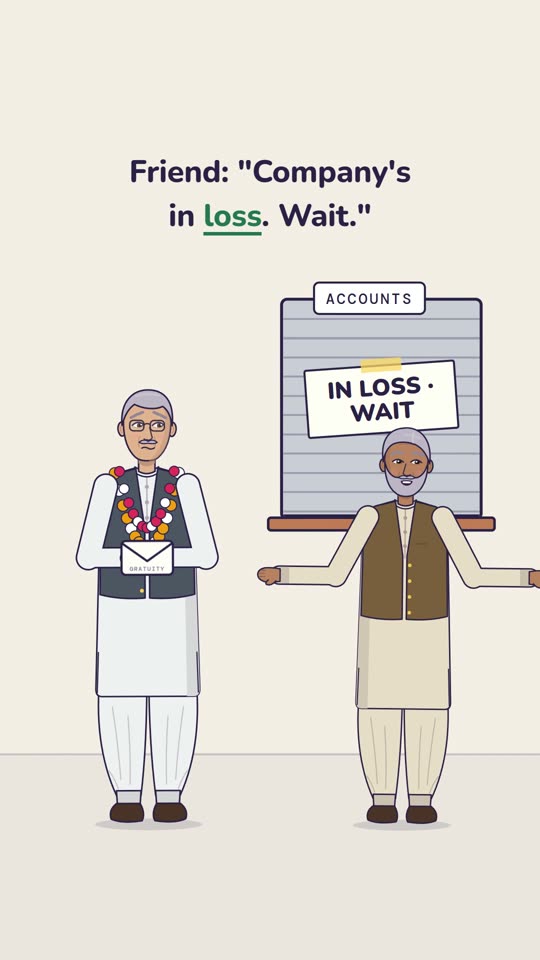
- The reel's sitting room, the sideboard and the stairs are a picture of the question; the judgment gives the dates and the courts, not the rooms. Nobody in the case is named here.
Questions people ask
How long after her husband's death can a widow claim haq mehr in court?
Three years. The Limitation Act, 1908 gives three years for a suit for dower, counted from when the marriage is dissolved by death (Articles 103 and 104). On 23 June 2023 the Lahore High Court dismissed a suit filed almost six years after the death (Writ Petition No. 56215 of 2019, paras 3 and 6).
Does haq mehr end when the husband dies?
No. The Lahore High Court said the dower money is a debt payable to a wife and she can press for its payment. But a suit for it has to come within three years of his death; after that the court's help is gone, though the debt itself is not extinct (para 5).
Is haq mehr a debt? Which ruling says so?
Yes. In this ruling the Lahore High Court said: "the dower money is a debt payable to a wife and she is within her legal right to even press for its payment." (Writ Petition No. 56215 of 2019, 23 June 2023, para 5).
What are a widow's rights in her husband's property when her mehr is unpaid?
Two different things. As an heir she takes her own share of what he leaves. Separately, unpaid haq mehr is a debt she can claim, by a suit in the Family Court within three years of his death (Limitation Act, 1908, Articles 103 and 104). In this case the widow raised her mehr almost six years later, and the suit was dismissed as too late.
Shohar ki wafat ke baad haq mehr kab tak maang sakte hain?
Court mein teen saal ke andar. Limitation Act ke Article 103 aur 104 ke mutabiq yeh muddat shohar ki wafat se shuru hoti hai. Lahore High Court ne 23 June 2023 ko taqreeban chhe saal baad aane wala dawa kharij kar diya.
Check yourself
True or false? “Haq mehr can be claimed in court any time after the husband dies.”
Wrong: the court's help lasts three years from his death. Mehr is a debt and does not end with him. But a suit for it has three years, counted from his death.
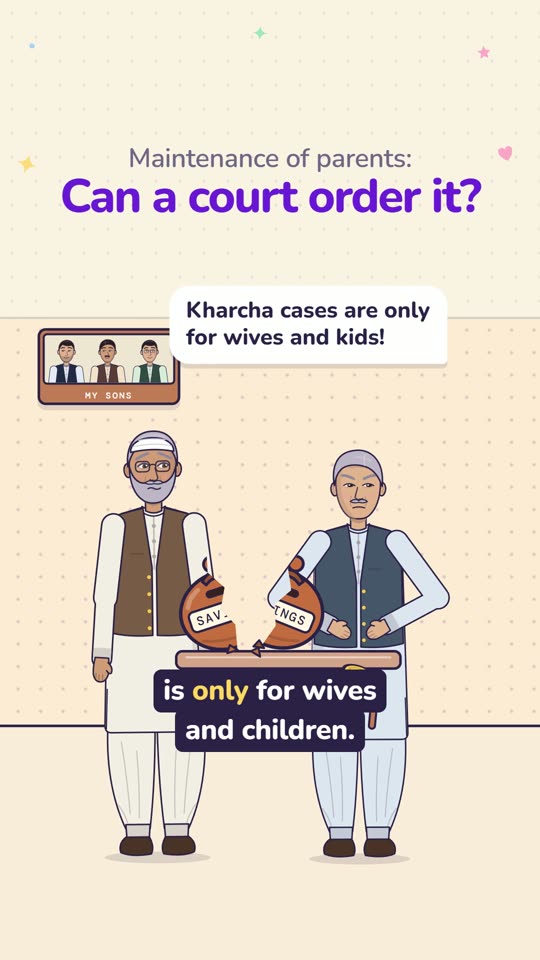
Next one: true or false? “Maintenance (kharcha) cases are only for wives and children.”
Sources
- A v. B (names withheld), Writ Petition No. 56215 of 2019 (Lahore High Court, 23 June 2023)
A widow's suit for dower filed almost six years after her husband's death is barred by limitation: three years under Articles 103 and 104 of the Limitation Act, 1908, counted from the dissolution of the marriage by death. Dower is a debt payable to a wife; a time-barred debt loses the court's help but is not extinct. - Limitation Act, 1908, First Schedule, Articles 103 and 104 text checked in FAI Statute Search, 11 November 2026 Pakistan Code
Every quote and section above is traced to the full judgment or statute text by an automatic check that runs on every update.
What the reel says
Read the words of the reel
Haq mehr after your husband's death: is it ever too late to claim it?
Here's a real case. She married in 2001, and her mehr was Rs 50,000 and ten tolas of gold. She says it was never paid. In 2010 her husband died. His property went to the heirs, and she didn't say a word about the mehr. Almost six years later, in 2016, she took her stepchildren to the Family Court.
Two courts told them to pay her. They didn't give up. They went to the Lahore High Court.
Here's what the High Court said on 23 June 2023:
1. You can't sue for mehr forever. There's a time limit, and it's three years.
2. If you're a widow, your clock starts the day your husband dies.
3. She came after almost six years. That's too late, so she lost.
4. Her silence didn't help her either. If the mehr was unpaid, the Court said, she wouldn't have kept quiet when his property was divided.
5. Mehr is still a debt. After three years it isn't wiped out, and the family can still pay it, but a court can't order it any more.
So if it's your mehr, don't stay silent. Say it's unpaid when the property is divided, and go to the Family Court within three years. We can't tell you about your own case here, so talk to a lawyer.
Full story: failegal.site/media/haq-mehr-after-husband-death-widow-time-limit-2023 Was the court right? Tell us in the comments, no names.
Educational legal information, not legal advice. Every case turns on its own facts. Speak to a lawyer about your own case. Last checked: 11 November 2026. Review status: Pending advocate review. How we check.