Family · Supreme Court of Pakistan
Father not paying child maintenance: can the court take the grandfather's land?
The myth: “If the father won't pay his child's maintenance, the court can seize the grandfather's property.”Wrong
The short answer
Bashir Ahmad v. Additional District Judge, Hafizabad and others, Supreme Court of Pakistan, PLD 2024 SC 67, decided 3 November 2023
Bashir Ahmad v. Additional District Judge, Hafizabad and others · Supreme Court of Pakistan · PLD 2024 SC 67 · decided 3 November 2023
By the FAI Legal editorial desk · 27 October 2026 · 7 min read
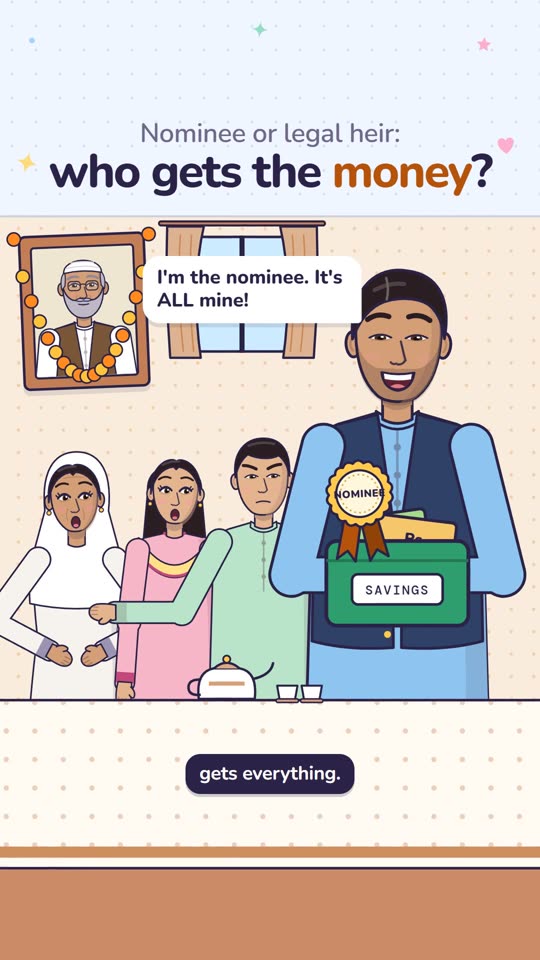
Not through the father's case. In November 2023 the Supreme Court held that "a decree for maintenance passed against the father of a child cannot be executed against the grandfather, and the child has to institute a suit for maintenance against his grandfather, in case no property of his father, the judgment debtor, is found for the execution of the decree." (PLD 2024 SC 67, para 7). The grandfather's land, attached in the father's case, was released.
But the child is not left without help. The child can file a separate maintenance case against the grandfather, who must pay if the father is truly unable to and the grandfather can afford it, and in that case the family court can order interim maintenance (paras 5 and 8).
Key points
- A decree binds the people it was passed against: "A decree that was not passed against the petitioner cannot be executed against him or his property" (para 8).
- Under Islamic law a grandfather must maintain his grandchild only if the father is poor with no means to do it, and the grandfather is "financially in easy circumstances" (paras 4 and 5).
- Those are facts to prove in a properly instituted suit against the grandfather, where he gets a fair trial and due process under Article 10A (para 6).
- In that suit the family court can order interim maintenance if both conditions are met on a first look (para 8).
- The Supreme Court called the attachment "a classic instance of doing a right thing in a wrong way" (para 1).
Father not paying child maintenance: can the grandfather's property be taken? The short answer
Not on the father's decree. In Bashir Ahmad v. Additional District Judge, Hafizabad (PLD 2024 SC 67), decided on 3 November 2023, the Supreme Court held that "a decree for maintenance passed against the father of a child cannot be executed against the grandfather, and the child has to institute a suit for maintenance against his grandfather, in case no property of his father, the judgment debtor, is found for the execution of the decree." (para 7).
So the order runs: the decree is enforced against the father and his property; if nothing of his can be found, the child (through the mother) files a new maintenance case against the grandfather, and the court decides whether he has to pay.
Hafizabad, 2018: a decree against the father, land taken from the grandfather
In 2018 a child of about three, through his mother, sued his father for maintenance and got a decree. When she tried to enforce it, a warrant was issued for the father's arrest, but he could not be produced and none of his property could be traced (PLD 2024 SC 67, para 2).
The decree holder then found land owned by the child's grandfather in the revenue record. The executing court attached it on 7 September 2018 and refused to release it on 17 October 2018, although the grandfather had never been a party to the suit and no decree had been passed against him. The Lahore High Court dismissed his writ petition (para 2).
What the Supreme Court decided in November 2023
A bench of Syed Mansoor Ali Shah, Syed Hasan Azhar Rizvi and Irfan Saadat Khan, JJ converted the grandfather's petition into an appeal and allowed it. The judgment, written by Syed Mansoor Ali Shah, J, opens: "The present case is a classic instance of doing a right thing in a wrong way" (para 1).
It held that "A decree that was not passed against the petitioner cannot be executed against him or his property", declared both attachment orders "without lawful authority" and of no legal effect, and released the land (para 8). It added that the High Court had failed to use its writ jurisdiction under Article 199.
When a grandfather must pay: the two conditions
The Court restated the Islamic law of maintenance: if the father has died, or is a poor person with no financial resources to maintain the child, the duty passes to the grandfather "provided he is financially in easy circumstances" (para 4).
Both conditions must be met: the father must be unable to pay, and the grandfather must be able to. "In case either of these conditions is not fulfilled, the grandfather is not under any obligation to maintain his grandchild" (para 5). They are facts, so they have to be proved with evidence in a properly instituted suit, where the grandfather can defend himself, as Article 10A's fair trial and due process require (para 6).
Mothers: what to do if the father doesn't pay
First enforce the decree against the father: the family court can act against him and his property (in this case it issued a warrant for his arrest). If nothing of his can be found, do not ask the court to attach the grandfather's property in the father's case. File a separate maintenance suit against the grandfather in the family court (para 7).
In that suit, ask for interim maintenance. The Supreme Court said the family court may order it at an appropriate stage if it is satisfied that the two conditions are prima facie fulfilled (para 8).
Grandfathers: if your property is attached in someone else's case
Apply to the executing court to release it, pointing out that you were not a party and no decree was passed against you. If it refuses, the High Court's writ jurisdiction is open, and the Supreme Court has now said what the answer should be (para 8).
That does not end the matter for good: you can still be sued for your grandchild's maintenance in your own case, and you will have to pay if the father truly cannot and you can afford it.
For law students and lawyers
The Court approved the view of the Lahore High Court in Nawazish Ali v. Family Judge, 2021 CLC 1841, while disapproving its declaring earlier co-equal Bench judgments "not good law" (the right course was a reference to the Chief Justice for a larger Bench, as in PLD 1995 SC 423). It distinguished Mavra Arshad v. Ehsan Ghani, 2005 SCMR 1293, where the grandfather had been a defendant along with the father (para 7).
The grounding is constitutional: Article 4 (dealt with in accordance with law) and Article 10A (fair trial and due process for civil rights and obligations), with the Family Courts Act 1964 as the procedure for maintenance claims (para 6). An executing court cannot go behind the decree or execute it against a non-party.
The case at a glance
- Facts
- In 2018 a child of about three, through his mother, won a maintenance decree against his father. The father could not be produced on an arrest warrant and no property of his was found. The executing court attached the grandfather's land (7 September 2018) and refused to release it (17 October 2018); the Lahore High Court dismissed his writ petition.
- The question
- Can a maintenance decree against a child's father be executed against the grandfather's property, or must the child sue the grandfather?
- What the Court held
- It cannot be executed against the grandfather. The child has to institute a suit against him, where his liability (the father's inability, his own means) is decided. The attachment orders were without lawful authority; the land was released (paras 7 and 8).
- Why
- A decree binds only the parties to it. A grandfather's duty to maintain depends on two facts that need evidence and a fair trial under Article 10A, through the Family Courts Act procedure (Article 4); an executing court cannot decide them or modify the decree (paras 4 to 8).
- Limits
- It does not say grandfathers never pay: in a proper suit, with both conditions proved, they must, and interim maintenance is possible. It does not release the father from his decree. The minor remains free to sue the grandfather (para 8).
The law it relies on
"For the determination of his civil rights and obligations or in any criminal charge against him a person shall be entitled to a fair trial and due process."
Everyone is to be dealt with in accordance with law; no action against a person's property except in accordance with law.
Family Courts decide maintenance claims under the Act's own procedure, which a claim against a grandfather must follow.
What this does not mean
- It does not mean grandfathers never pay. In a separate suit, if the father truly cannot pay and the grandfather can afford it, he must (paras 4 and 5).
- It does not let the father off. The decree against him stands and can be enforced against him and his property.
- It does not leave the child waiting with nothing: interim maintenance can be ordered in the suit against the grandfather (para 8).
- It does not cover a grandfather who was made a party to the maintenance suit from the start; that was the different situation in Mavra Arshad (2005 SCMR 1293), which the Court distinguished.
Questions people ask
What happens if the father doesn't pay child maintenance?
The decree is enforced against him and his property; in this case the court issued an arrest warrant. If nothing of his can be found, the child can sue the grandfather in a separate case (PLD 2024 SC 67, para 7).
Can the grandfather's property be attached for the father's maintenance decree?
No. "A decree that was not passed against the petitioner cannot be executed against him or his property" (PLD 2024 SC 67, para 8).
When does a grandfather have to pay his grandchild's maintenance?
Only if the father is poor with no means to pay and the grandfather is "financially in easy circumstances". If either is missing, he has no obligation (paras 4 and 5).
Can the mother get money while the case against the grandfather runs?
Yes, she can ask for interim maintenance; the family court may order it if both conditions look met on a first view (para 8).
Dada ki property mein pote ka haq?
Kharche ke liye: baap ki decree par Dada ki zameen qurq nahin ho sakti. Bachcha Dada par alag case kare; Dada tabhi dega jab baap waqai na de sake aur Dada ki istita'at ho (PLD 2024 SC 67).
What should a grandfather do if his land is attached in his son's case?
Apply to the executing court for release, then to the High Court if refused. The Supreme Court declared such attachment orders without lawful authority (para 8).
Check yourself
True or false? “If the father won't pay his child's maintenance, the court can seize the grandfather's property.”
Wrong. Bashir Ahmad v. Additional District Judge, Hafizabad and others, Supreme Court of Pakistan, PLD 2024 SC 67, decided 3 November 2023
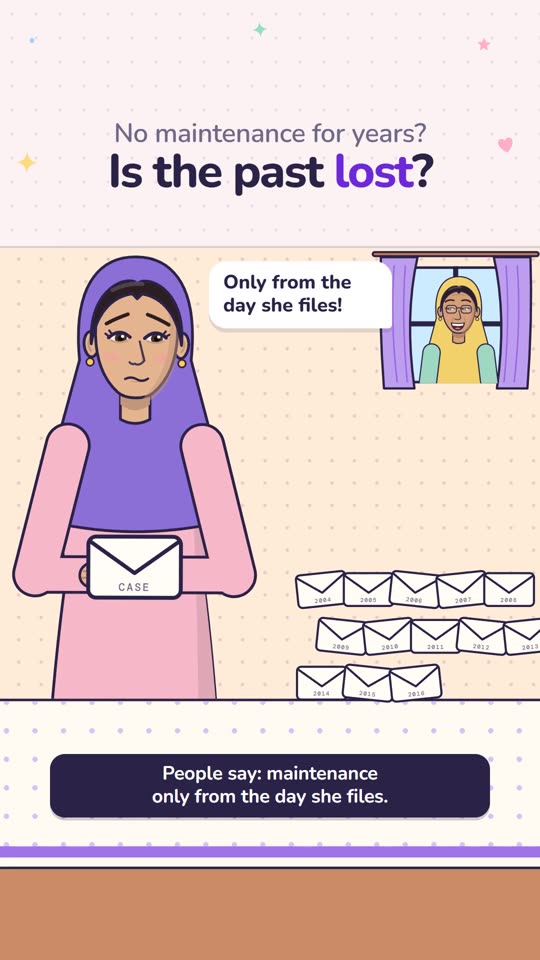
Next one: true or false? “A wife only gets maintenance from the day she files; the years before are lost.”
Sources
- Bashir Ahmad v. Additional District Judge, Hafizabad and others, PLD 2024 SC 67 (Supreme Court of Pakistan, 3 November 2023), paras 1, 2, 4 to 8
A maintenance decree against the father cannot be executed against the grandfather; the child must sue the grandfather, who is liable only if the father is poor and he is financially in easy circumstances; attachment orders set aside; interim maintenance possible in the new suit. verified against full text - Constitution of the Islamic Republic of Pakistan, 1973, Articles 4 and 10A text checked in FAI Statute Search, 27 October 2026
- West Pakistan Family Courts Act, 1964, Section 5 and the Schedule listed from the official Punjab text
Every quote and section above is traced to the full judgment or statute text by an automatic check that runs on every update.
What the reel says
Read the words of the reel
Father not paying child maintenance? Can they take Dada's land?
Baap kharcha na de, to kya Dada ki zameen qurq ho sakti hai?
People say yes: if the son won't pay, the grandfather's property can be seized. Wrong, not like that.
Hafizabad, 2018: a mother won her child's maintenance case against the father. He couldn't be found, so the court attached the grandfather's land, though he was never part of the case. In November 2023 the Supreme Court called it "a right thing in a wrong way": the father's decree can't be enforced against the grandfather. Land released (PLD 2024 SC 67).
But the child is not left alone:
1. The child can file a separate case against the grandfather.
2. Dada pays only if the father truly can't, and Dada can afford it.
3. In that case, ask for interim maintenance.
Educational legal information, not legal advice. Every case turns on its own facts. Speak to a lawyer about your own matter. Last checked: 27 October 2026. Review status: Pending advocate review. How we check.