Family · Supreme Court of Pakistan
Married without her father's consent: can he take her back?
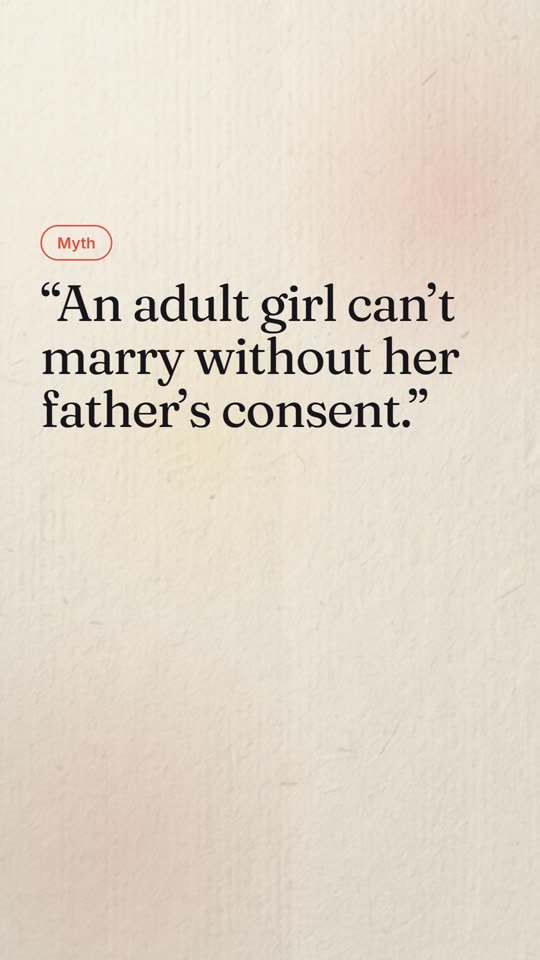
The myth: “If a daughter marries without her father's consent, he can bring her home by force.”Wrong
The short answer
Hilal Khattak v. The State, Supreme Court of Pakistan, 2023 SCMR 1182, decided 24 May 2023 (Syed Mansoor Ali Shah and Syed Hasan Azhar Rizvi JJ).
Hilal Khattak v. The State and another · Supreme Court of Pakistan · 2023 SCMR 1182 · decided 24 May 2023
By the FAI Legal editorial desk · 12 October 2026 · 5 min read
No. An adult woman can marry by her own choice, and taking any person away by force to hold them secretly and wrongfully is abduction under section 365 of the Pakistan Penal Code, punishable with up to seven years. In 2023 SCMR 1182 the Supreme Court refused bail to a father accused of taking his married daughter by force.
Being her father does not change the crime. The Court also ordered the police to find her and let her speak freely to a magistrate.
Key points
- Section 365 PPC: kidnapping or abducting any person with intent to have them secretly and wrongfully confined is punishable with up to seven years and a fine.
- Section 458 PPC: house-breaking by night after preparing to hurt, assault or restrain anyone is punishable with up to fourteen years.
- Hilal Khattak (2023): the Supreme Court refused bail to a father accused of breaking into his daughter's marital home with armed men and taking her; her husband was shot dead in the attack.
- The Court ordered the head of the Islamabad Police to supervise the search, and said that once found she should spend at least two days in a Dar-ul-Aman before giving her statement, so she could speak without pressure from anyone.
Her choice, and the law on abduction
The Supreme Court settled long ago that an adult Muslim woman can marry without her guardian's consent (Hafiz Abdul Waheed v. Asma Jehangir, PLD 2004 SC 219). A family that disagrees with the marriage can go to court. It cannot use force.
Section 365 of the Pakistan Penal Code reads: "Whoever kidnaps or abducts any person with intent to cause that person to be secretly and wrongfully confined, shall be punished with imprisonment of either description for a term which may extend to seven years, and shall also be liable to fine." The section says any person. It has no exception for a parent.
That morning in Islamabad
These are the facts as the police case (FIR No. 01/2023, Police Station Aabpara, Islamabad) alleges them, not facts proved at a trial. The accused man's daughter had married the son of his paternal cousin without his consent (paragraph 2).
On 1 January 2023, at about 6:45 in the morning, he and others, all armed with pistols, climbed over the wall of the husband's family home. Some held the family at gunpoint. He and another man dragged his daughter into the street by her hair. Her husband tried to rescue her and was shot; he later died. A shot was fired at the husband's father, and his younger son was injured on the head. The men took her away (paragraph 2).
The case was registered for murder, attempted murder, abduction under section 365, house-trespass, hurt and rioting. The Islamabad High Court refused the father post-arrest bail on 28 March 2023.
Why the Supreme Court refused bail
The Court found enough material to connect him to the offences: statements of the injured witness, three women of the house and the complainant, and CCTV footage from a neighbouring house (paragraph 6).
His lawyer argued that abduction and house-trespass are offences where bail is normally granted. The Court answered that bail in such offences is the rule but not a right, and it can be refused if the accused may abscond, tamper with evidence or repeat the offence. Here, "the petitioner being the father of the alleged abductee appears to have had the real motive", most co-accused were absconding, and she had not been recovered: "No one knows whether she is alive or not" (paragraph 9).
The Court added that the facts alleged were really house-breaking by night under section 458, punishable with up to fourteen years, which falls within the prohibitory clause for bail (paragraph 10). The petition was dismissed and leave refused (paragraph 12).
What the Court ordered for her
About five months after that morning she still had not been found. The Court called this a serious matter and directed the Inspector General of the Islamabad Police to look into it personally and to put an officer of at least Superintendent rank in charge of finding her (paragraph 13).
Once found, she was to be kept in a Dar-ul-Aman or a similar shelter for at least two days before her statement was recorded, "so that she may be in a position to make her statement voluntarily without the undue influence of anyone", preferably before a Magistrate under section 164 of the Criminal Procedure Code (paragraph 13).
The case at a glance
- Facts
- According to the FIR, a father whose adult daughter married without his consent broke into her husband's family home at dawn with armed men, dragged her out and took her; her husband was shot and died. The father was arrested and sought post-arrest bail.
- The question
- Should the father get post-arrest bail, given that some of the offences (abduction under s.365, house-trespass under s.452) do not fall within the prohibitory clause of s.497(1) CrPC?
- What the Court held
- No. There was enough material to connect him to the offences; he was likely to abscond and might harm or pressure the still-missing woman; and the facts alleged amount to house-breaking by night under s.458, punishable with up to fourteen years. Bail was refused.
- Why
- Bail in non-prohibitory offences is a rule, not a right, and gives way where the accused may abscond, tamper with evidence or repeat the offence. Being her father gave him the motive, not an excuse.
- Limits
- This is a bail order. Its findings are tentative and do not decide guilt; the trial court decides that on the evidence. The Court did not rule on the validity of the marriage, and it did not decide who fired the fatal shot.
The law it relies on
"Whoever kidnaps or abducts any person with intent to cause that person to be secretly and wrongfully confined, shall be punished with imprisonment of either description for a term which may extend to seven years, and shall also be liable to fine."
Lurking house-trespass or house-breaking by night, having made preparation for causing hurt, assault or wrongful restraint: imprisonment up to fourteen years and fine.
What this does not mean
- It does not mean the father has been convicted. This was a bail order; the trial decides guilt.
- It does not mean every parent who objects to a marriage commits a crime. Objecting, or going to court, is lawful. Taking a person by force to confine them is what section 365 punishes.
- It does not decide whether any particular marriage is valid. That question was not before the Court.
Questions people ask
Can my father take me back if I marry without his consent?
Not by force. An adult woman can marry by her own choice, and taking any person away by force to hold them secretly and wrongfully is abduction under section 365 PPC, punishable with up to seven years.
Is a court marriage valid without the parents' consent?
For an adult Muslim woman, the Supreme Court held in PLD 2004 SC 219 that her guardian's consent is not required. See our page on that judgment.
What can a woman do if her family threatens her after marriage?
She can report it to the police and can ask the High Court for protection. Keep copies of the nikah nama and any threats. Speak to a lawyer about the right petition.
Did the Supreme Court convict the father?
No. It refused him bail. The trial court will decide whether he is guilty.
Check yourself
True or false? “If a daughter marries without her father's consent, he can bring her home by force.”
Wrong. Hilal Khattak v. The State, Supreme Court of Pakistan, 2023 SCMR 1182, decided 24 May 2023 (Syed Mansoor Ali Shah and Syed Hasan Azhar Rizvi JJ).
Next one: true or false? “If a mother remarries, she loses custody of her children.”
Sources
- Hilal Khattak v. The State and another, 2023 SCMR 1182 (Supreme Court of Pakistan, 24 May 2023), paras 2, 6, 8-13
Post-arrest bail refused to a father accused of abducting his married daughter from her husband's home; s.458 PPC attracted; IG Islamabad Police directed to supervise her recovery and a voluntary statement before a Magistrate after two days in a Dar-ul-Aman. verified against full text - Hafiz Abdul Waheed v. Mrs. Asma Jehangir, PLD 2004 SC 219 (Supreme Court of Pakistan)
An adult Muslim woman can marry without her wali's consent (para 29). verified against full text (reel 30) - Pakistan Penal Code, 1860, s.365, s.458 text checked in FAI Statute Search, 12 October 2026 Pakistan Code
Every quote and section above is traced to the full judgment or statute text by an automatic check that runs on every update.
What the reel says
Read the words of the reel
Married without her father's consent: can he bring her back by force?
No. Taking her by force is abduction (Pakistan Penal Code s.365), and the Supreme Court refused bail to a father accused of it (2023 SCMR 1182).
Her right: an adult woman can marry by her own choice (Supreme Court, PLD 2004 SC 219).
The law: abduct anyone to hold them secretly and wrongfully, and it is up to seven years in jail (s.365 PPC).
The case: Islamabad, January 2023. The police case says that at dawn her father and armed men climbed into her husband's family home and dragged her out by her hair. Her husband tried to stop them. He was shot, and died.
Supreme Court (May 2023): bail refused. Breaking into a home at night, armed, carries up to fourteen years (s.458 PPC).
Five months on she had not been found, so the Court ordered the Islamabad police chief to see to it personally, and said that once found she should have two days in a Dar-ul-Aman "so that she may be in a position to make her statement voluntarily without the undue influence of anyone" (para 13).
This was a bail order. The trial decides guilt.
Share this with someone who thinks a father's anger is a right.
Educational legal information, not legal advice. Every case turns on its own facts. Speak to a qualified lawyer about your situation. Reading this page does not create a lawyer and client relationship. Review status: Pending advocate review. How we check.