Cyber crime · Peshawar High Court
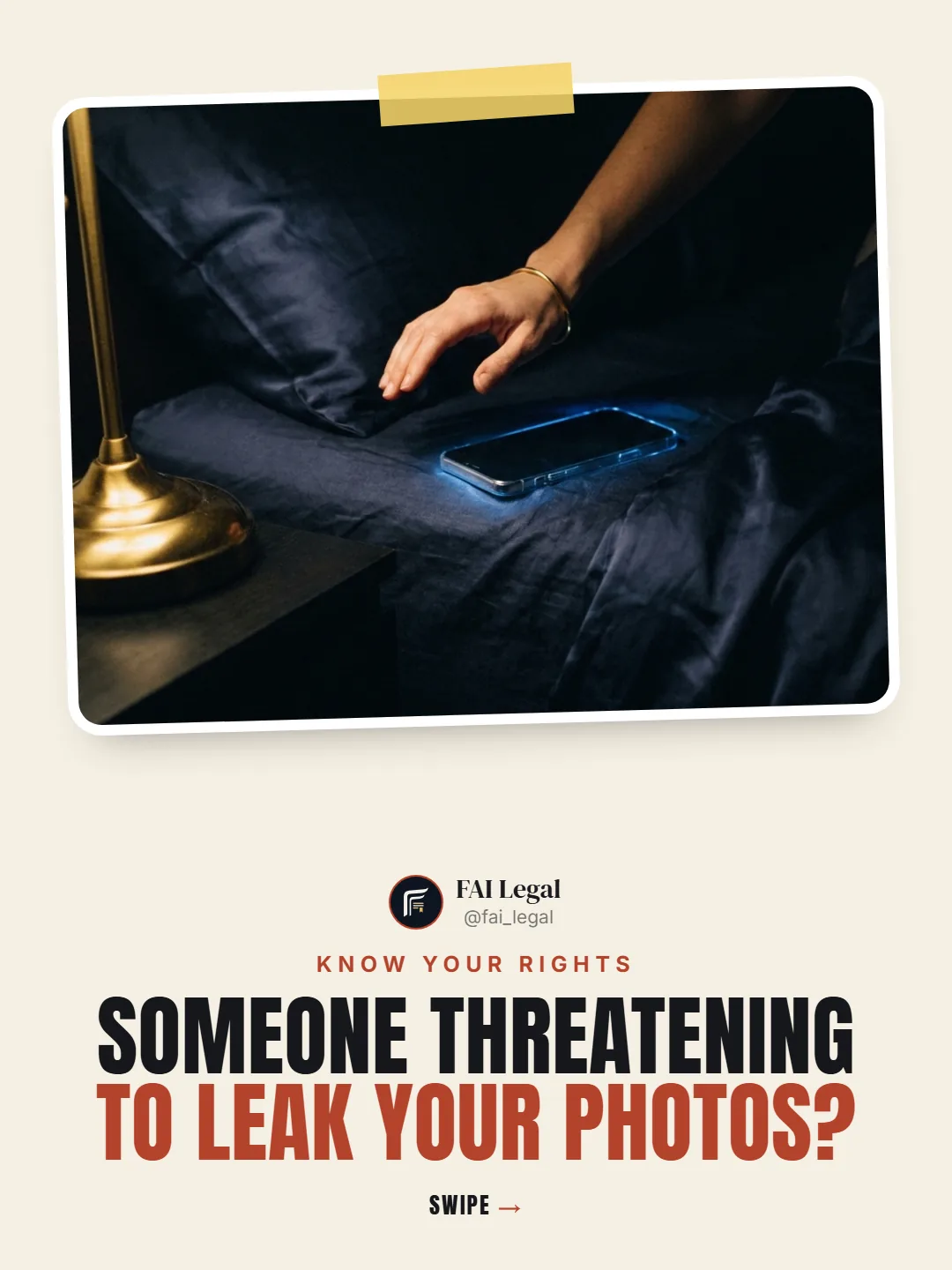
2 AM: "I'll send your pictures to everyone." Don't delete the chat. It is your strongest evidence.
The short answer
Threatening or blackmailing a person with intimate pictures is a crime under section 21 of the Prevention of Electronic Crimes Act 2016. In a Peshawar case the father handed over the very phone the pictures arrived on, the forensic report traced them to the accused's phone, and the conviction stood.
Naveed v. The State · Peshawar High Court · 2023 YLR 1377 · decided 5 December 2022
By the FAI Legal editorial desk · 10 October 2026 · 5 min read
A message arrives late at night: someone says he will send your private pictures to your family or post them online unless you do what he wants. The first instinct is to delete everything and hope it goes away.
This matters to anyone, most often women and girls, who is threatened or blackmailed with pictures on WhatsApp, Facebook or any other app, and to the families who want to help them.
Key points
- Section 21 of the Prevention of Electronic Crimes Act 2016 (PECA): intimidating a person with a sexually explicit image or video through an information system, to harm, take revenge or blackmail, is punishable with up to five years, or a fine up to five million rupees, or both.
- Section 24 of PECA, cyber stalking: contacting a person repeatedly despite a clear indication of disinterest, with intent to coerce, intimidate or harass. Up to three years, or a fine up to one million rupees, or both.
- Keep the chat and the phone. Screenshot the messages with the number and the time. Do not reply and do not pay. Report it to the National Cyber Crime Investigation Agency (NCCIA), which replaced the FIA Cyber Crime Wing.
- Peshawar High Court, 2023 YLR 1377: the phone on which the pictures were received was taken into evidence, the forensic report found them in the accused's WhatsApp "sent" folder, and the conviction under sections 21 and 24 stood.
The rule in one line
The threat itself is the crime, and the chat is the proof. Do not delete it, do not reply, do not pay. Keep the phone, take screenshots that show the number and the time, and report it to the NCCIA.
What happened in this case
In September 2021 the accused sent a woman's objectionable pictures by WhatsApp to her father. The aim, as the courts found, was to pressure the family into a compromise in another criminal case (paragraphs 14 and 19).
The father supported his daughter's complaint and produced the mobile phone on which the pictures were received. It was taken into possession by the investigators (paragraph 2).
The SIM that sent the pictures was registered in the accused's name, and his phone was recovered when he came to the FIA office (paragraph 15).
What the forensic report showed
The forensic analysis found the pictures in the "PICS" folder of the accused's phone and in his WhatsApp "sent" folder. The same pictures were found in the "WhatsApp Images" folder of the father's phone (paragraph 18).
In short: the phone that received the pictures and the phone that sent them told the same story. That is why keeping the phone matters.
What the courts decided
The trial court convicted the accused under sections 21 and 24 of PECA on 18 April 2022 and sentenced him to three years' rigorous imprisonment under section 21, with a fine (paragraph 12).
On appeal the Additional Sessions Judge reduced the sentence under section 21 to two years' rigorous imprisonment with a fine of two hundred thousand rupees, and kept the conviction under section 24 (paragraph 13).
Justice Ishtiaq Ibrahim of the Peshawar High Court heard all three petitions together, the accused's petition against conviction and the complainant's and the State's petitions for a higher sentence, and dismissed them all on 5 December 2022. The court held that the charges under sections 21 and 24 were duly proved and that the accused had been rightly convicted (paragraphs 20 and 22).
The case at a glance
- Facts
- The accused sent a woman's objectionable pictures by WhatsApp to her father, to pressure the family over another criminal case. The father produced the phone that received them. The SIM was registered to the accused, his phone was seized, and the forensic report found the pictures in his WhatsApp "sent" folder and in the father's "WhatsApp Images" folder. Convicted under PECA ss.21 and 24; sentence under s.21 reduced on appeal to two years' rigorous imprisonment.
- The question
- Whether the conviction under sections 21 and 24 of PECA should be quashed, or the sentence increased.
- What the Court held
- No. The charges were duly proved and the accused was rightly convicted. All three petitions were dismissed.
- Why
- The prosecution witnesses were not shaken in cross-examination, the motive was plausibly explained, and the expert evidence confirmed transmission from the accused's phone. In cases involving digital evidence such testimony carries considerable weight, and factual findings of the lower courts are not lightly disturbed.
- Limits
- This was a High Court decision on quashment petitions under section 561-A of the Code of Criminal Procedure, on the facts proved at trial. It does not set a fixed sentence for every case, and bail in such cases depends on the facts: it is not always refused.
In the Court’s words
“The transmission of images is the means to achieve the end goal, and charges have been laid under sections 21 and 24 of the Act, which has been duly proved by the prosecution and the petitioner-accused has been rightly convicted and sentenced by the learned lower forums.”
2023 YLR 1377, para 20
“The courts below examined this aspect in depth, particularly the expert's testimony confirming the transmission of a message through the accused's mobile phone, which in cases involving digital evidence carries considerable weight.”
2023 YLR 1377, para 22
The law it relies on
Whoever intentionally and publicly exhibits or displays or transmits any information which "intimidates a natural person with any sexual act, or any sexually explicit image or video of a natural person" through an information system "to harm a natural person or his reputation, or to take revenge, or to create hatred or to blackmail, shall be punished with imprisonment for a term which may extend to five years or with fine which may extend to five million rupees or with both". Under s.21(3) the aggrieved person may apply to the Authority for removal, destruction of or blocking access to such information.
Cyber stalking includes, with intent to coerce or intimidate or harass, contacting or attempting to contact a person "to foster personal interaction repeatedly despite a clear indication of disinterest by such person". Punishment: "imprisonment for a term which may extend to three years or with fine which may extend to one million rupees or with both".
The National Cyber Crime Investigation Agency (NCCIA) inquires into, investigates and prosecutes offences under the Act. After it is established, "the Cyber Crime Wing of the Federal Investigation Agency shall cease to exist" and its cases stand transferred to the NCCIA. Inserted by Act II of 2025.
What this does not mean
- It does not mean you must handle it alone or pay to make it stop. Paying or replying usually gives the blackmailer more power; the law treats the blackmail itself as the offence.
- It does not mean screenshots alone are enough. In this case the phone that received the pictures and the forensic report on both phones carried the proof, so keep the device too.
- It does not mean every case ends in the same sentence. The sentence depends on the facts proved in each case.
Questions people ask
Should I delete the messages so nobody sees them?
No. The chat is your evidence. Take screenshots that show the sender's number, the date and the time, and keep the phone itself. In 2023 YLR 1377 the phone on which the pictures were received was produced in evidence and examined by forensic experts.
Where do I report it?
To the National Cyber Crime Investigation Agency (NCCIA). Under section 29 of PECA, as amended in 2025, it replaced the FIA Cyber Crime Wing and took over its cases.
Can I get the pictures taken down?
Section 21(3) of PECA lets the aggrieved person apply to the Authority for removal, destruction of or blocking access to such information. Speak to a lawyer about making that application alongside your complaint.
Sources
- Naveed v. The State, 2023 YLR 1377 (Peshawar High Court, 5 December 2022), paras 2, 12, 13, 15, 18, 20, 22
Objectionable pictures sent by WhatsApp to the complainant's father; the receiving phone and the forensic report proved transmission; conviction under PECA ss.21 and 24 upheld and all three petitions dismissed. verified against full text Peshawar High Court (judgment PDF) - Prevention of Electronic Crimes Act, 2016, ss.21, 24, 29 text checked in FAI Statute Search Pakistan Code
Every quote and section above is traced to the full judgment or statute text by an automatic check that runs on every update.
What the reel says
Read the words of the reel
2 AM: "I'll send your pictures to everyone." Don't delete the chat. It is your strongest evidence.
Threatening or blackmailing someone with intimate pictures is a crime under PECA 2016, section 21: up to five years, or a fine, or both.
Still messaging after a clear no? That's cyber stalking, section 24.
Tonight: screenshot it with the number and the time. Don't reply, don't pay. Keep the phone. Report it to the NCCIA (it replaced the FIA Cyber Crime Wing).
Peshawar High Court (December 2022): a woman's pictures were sent to her father on WhatsApp. He handed over that very phone, the forensic report traced the pictures to the accused's phone, and the conviction under sections 21 and 24 stood (2023 YLR 1377).
Educational legal information, not legal advice. Every case turns on its own facts. Speak to a qualified lawyer about your situation. Reading this page does not create a lawyer and client relationship. Review status: Pending advocate review. How we check.