Criminal law · Supreme Court of Pakistan
Cheque bounce case in Pakistan: can a police case make you pay?
The myth: “A bounced cheque means jail until you pay.”Wrong: a cheque case decides guilt; it does not collect money
The short answer
No. The Supreme Court says a cheque case decides guilt and does not collect money. The money has its own road, a civil suit, and a cheque given dishonestly is still a crime.
A v. The State (names withheld) · Supreme Court of Pakistan · Criminal Petition No. 960 of 2025 · decided 12 August 2025
By the FAI Legal editorial desk · 8 November 2026 · 5 min read
A cheque case in Pakistan is not a debt collector. In Islamabad, a man named in a case under section 489-F in March 2023 was arrested in January 2025. The trial court and the High Court refused him bail. On 12 August 2025, almost seven months after his arrest, the Supreme Court gave him bail and said that section 489-F "is not a provision which is intended by the legislature to be used for recovery of the alleged amount".
What stays true: a cheque given dishonestly towards a loan or an obligation is still a crime, punishable with up to three years, a fine, or both, and the money is still owed. The Court pointed to a separate road for the money: a summary civil suit under Order XXXVII of the Code of Civil Procedure.
Key points
- Bail is the rule in a cheque case: the offence is in the non-prohibitory clause, so bail "has to be considered favourably as a rule, but may be declined in exceptional cases" (para 3).
- A big amount is not a reason to refuse bail: "the quantum of amount involved" cannot be treated as an exception (para 3).
- A criminal case is not for recovering money: "The criminal proceedings are meant to determine the guilt and then to sentence an accused" (para 3).
- The money has its own road: a summary suit under Order XXXVII of the Code of Civil Procedure (para 3).
- The Supreme Court said it again on 30 June 2025, in a lawyer's case over his unpaid fee: section 489-F is "a safeguard against fraud, rather than as a blade to enforce civil recovery" (Criminal Petition No. 39-K of 2025, para 8).
Cheque bounce case in Pakistan: the short answer
What happens when a cheque bounces? If it was given dishonestly towards a loan or an obligation, the person who gave it can face a criminal case under section 489-F of the Pakistan Penal Code: up to three years, or a fine, or both. But the criminal case is not a way to collect the money. The Supreme Court said so on 12 August 2025, and gave bail to a man who had been in custody for almost seven months.
People search this as cheque bounce case in pakistan, cheque bounce case how many years jail, is cheque bounce case bailable, cheque bounce recovery and, in Roman Urdu, 489 f ki saza. Our earlier page on bail in cheque bounce (489-F) cases, failegal.site/media/bail489, looks at the same August judgment from the bail side; this page answers whether a police case can make you pay.
Islamabad, 2023: a bounced cheque and a case
The case was registered on 28 March 2023 at a police station in Islamabad under section 489-F (para 1). "The petitioner was arrested on 23.01.2025 and he had sought post arrest bail which was declined by the trial court vide order dated 26.03.2025." The High Court dismissed his bail too, on 9 May 2025 (para 1).
From his arrest on 23 January 2025 to the Supreme Court's order on 12 August 2025 is 201 days: almost seven months.
We checked it in FAI Legal
Both judgments are on FAI Legal's Judgment Search, marked as citations from the court record, with every paragraph open in the judgment reader. The paragraphs quoted on this page are paras 1, 3 and 4 of the August 2025 order and paras 7 and 8 of the June 2025 judgment. Section 489-F is on Statute Search.
Is a cheque bounce case bailable? August 2025: bail
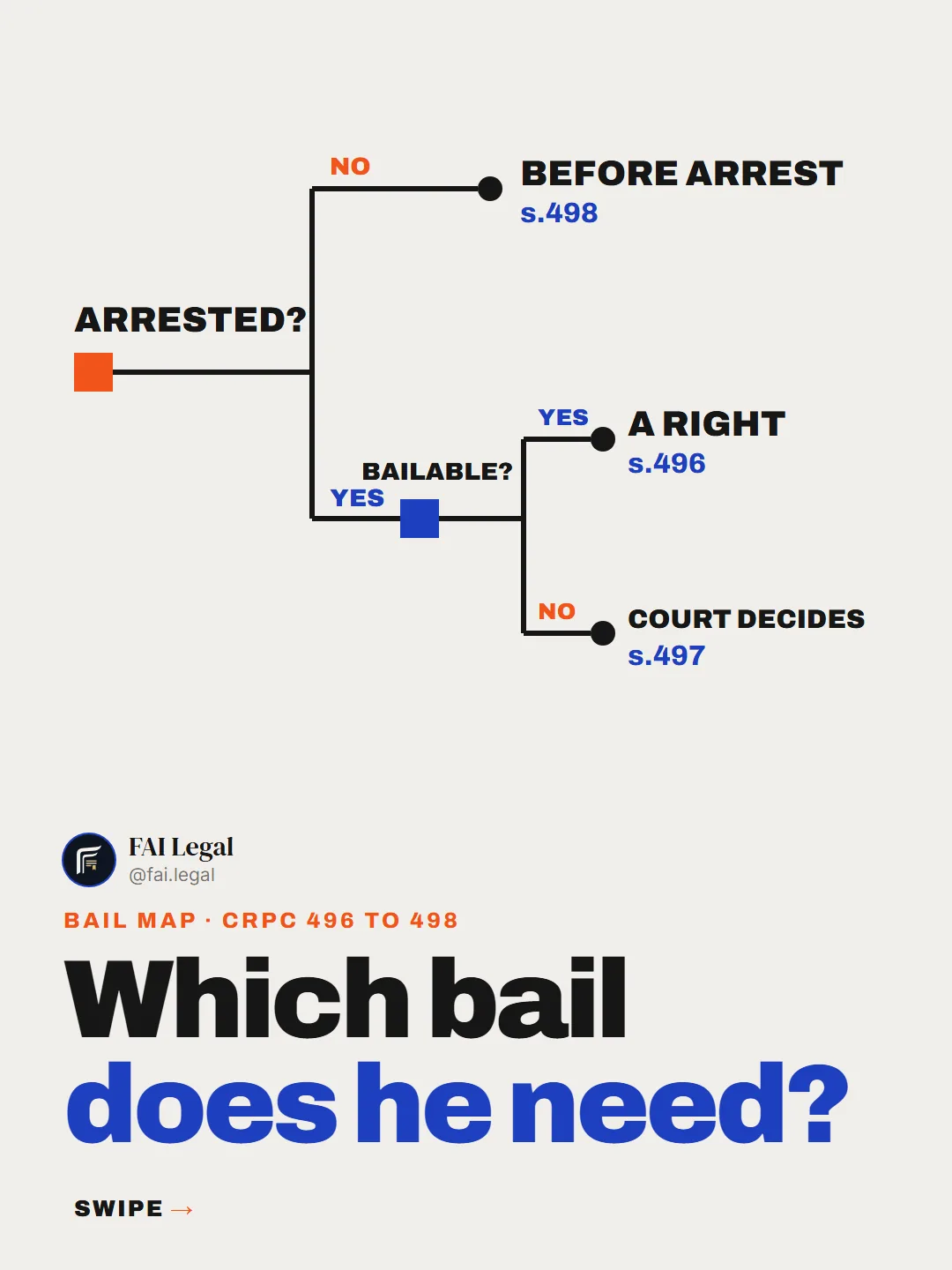
The Court started from the rule for offences in the non-prohibitory clause: the granting of bail "has to be considered favourably as a rule, but may be declined in exceptional cases". The exceptions it listed are the likelihood that the accused will abscond, tampering with the prosecution evidence, and the danger of the offence being repeated (para 3).
Then it said "the quantum of amount involved in a case registered under section 489-F cannot be treated as an exception to the general rule" (para 3). A big cheque is not, by itself, a reason to keep someone in custody.
And why: "The offence under section 489-F of P.P.C. is not a provision which is intended by the legislature to be used for recovery of the alleged amount. The criminal proceedings are meant to determine the guilt and then to sentence an accused." For the money, "The legislature has set out the framework for recovery of an alleged amount in case of a dishonoured cheque under Order XXXVII of the Civil Procedure Code, 1908" (para 3). The petition was converted into an appeal and allowed, with bail on a bond of Rs. 100,000 (para 4).
June 2025: a safeguard, not a blade
Six weeks earlier, on 30 June 2025, the Supreme Court decided Criminal Petition No. 39-K of 2025. An advocate had registered a case under section 489-F against his own client over unpaid fees, paid by cheques that bounced (para 2). The Court said: "A failure to pay for a service, such as legal representation in this instance, does not necessarily result in penal consequences" (para 7).
It added that section 489-F is intended to function as "a safeguard against fraud, rather than as a blade to enforce civil recovery", and that "Mens rea (dishonest intent) must be established in order to incur penal consequences" (para 8). The client was granted bail (para 9).
Find rulings like this on FAI Legal
FAI Legal is a website: open failegal.site in your phone's browser, there is nothing to download. Type your question in plain words, read section 489-F on Statute Search, and see both judgments in full on Judgment Search. For your own case, talk to a lawyer.
The case at a glance
- Facts
- A case under section 489-F was registered in Islamabad on 28 March 2023; the accused was arrested on 23 January 2025; the trial court refused post-arrest bail on 26 March 2025 and the High Court on 9 May 2025 (para 1).
- The question
- Whether post-arrest bail could be refused in a case under section 489-F, an offence in the non-prohibitory clause, because of the amount involved.
- What the Court held
- The petition was converted into an appeal and allowed; post-arrest bail on a bond of Rs. 100,000 with one surety (para 4).
- Why
- Bail in non-prohibitory offences is the rule and refusal the exception (abscondence, tampering, repetition); the amount involved is no exception; section 489-F is not meant for recovery, which has its framework under Order XXXVII CPC; whether the offence is attracted needed further probe (para 3).
- Limits
- The order is a bail decision on a tentative assessment and does not decide guilt (para 4). A cheque given dishonestly towards a loan or an obligation is still punishable under section 489-F, and bail can still be refused in exceptional cases.
The law it relies on
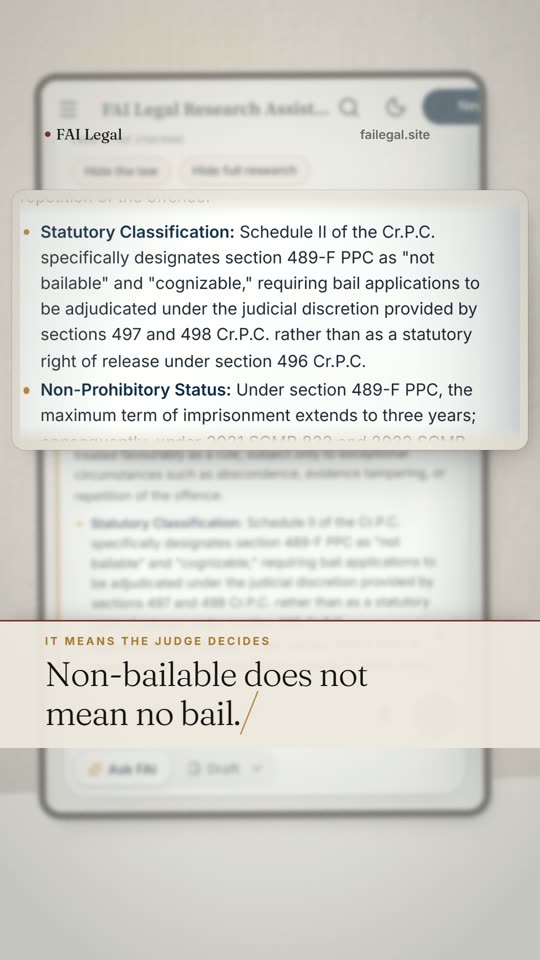
Whoever dishonestly issues a cheque towards repayment of a loan or fulfilment of an obligation which is dishonoured on presentation, shall be punished with imprisonment which may extend to three years, or with fine, or with both, unless he shows that he had made arrangements with his bank and the bank was at fault.
A summary suit on a bill of exchange, hundi or promissory note (a cheque is a bill of exchange); the defendant needs the court's leave to appear and defend. The Supreme Court named it as the road for recovering the money (para 3).
What this does not mean
- It does not mean a bounced cheque is never a crime: a cheque given dishonestly towards a loan or an obligation is punishable under section 489-F with up to three years, a fine, or both.
- It does not mean the money is forgiven: the person owed can sue for it, and the Court named the summary suit under Order XXXVII.
- It does not mean bail is automatic: it can still be refused in exceptional cases, such as a likelihood that the accused will abscond.
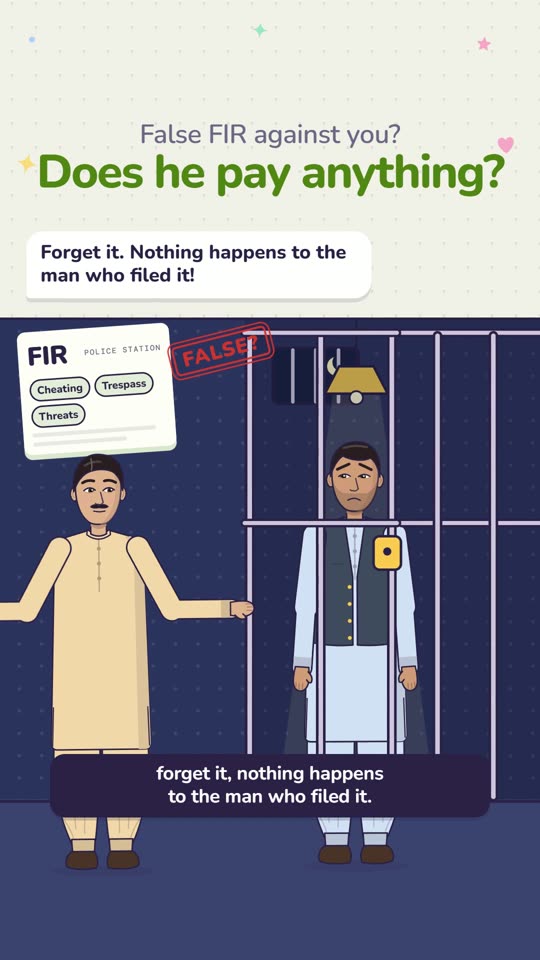
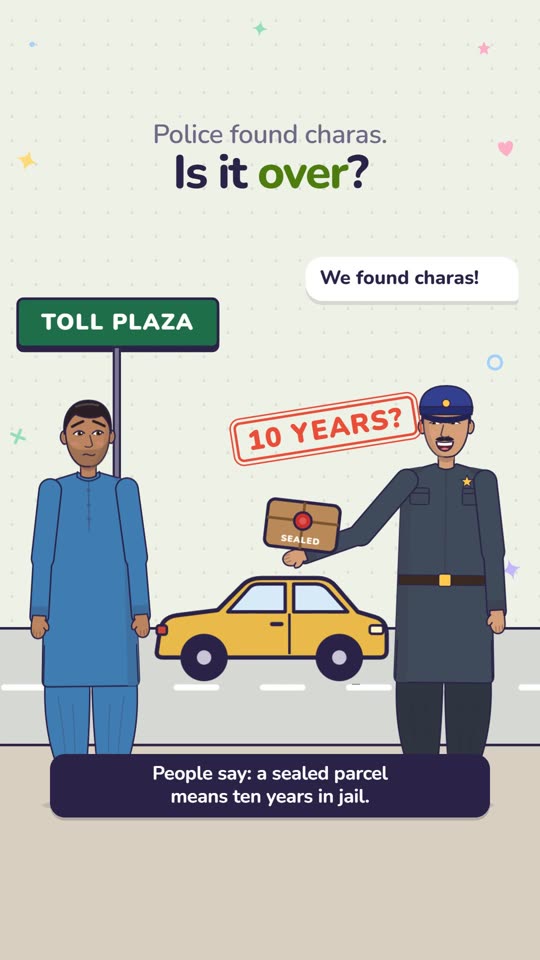
- The reel's opening scene, a shop counter and a threat, is a drawing of the common belief, not the case's own scene.
Questions people ask
Is a cheque bounce case bailable in Pakistan?
Section 489-F is in the non-prohibitory clause, so bail is considered favourably as a rule and refused only in exceptional cases, such as a likelihood of absconding, tampering with evidence or repeating the offence. On 12 August 2025 the Supreme Court said the amount involved cannot be treated as an exception (Criminal Petition No. 960 of 2025, para 3).
How many years of jail is the punishment for a cheque bounce case?
Up to three years, or a fine, or both, under section 489-F of the Pakistan Penal Code, if the cheque was given dishonestly towards a loan or an obligation and it was dishonoured.
Can a cheque case make me pay the money?
No. The Supreme Court said section 489-F is not a provision intended to be used for recovery of the amount; a criminal case decides guilt. The money is recovered through a civil suit, for example a summary suit under Order XXXVII of the Code of Civil Procedure.
489 f ki saza kya hai?
Teen saal tak qaid, ya jurmana, ya dono, agar cheque dhoke se qarz ya kisi zimmedari ki adaigi ke liye diya gaya ho aur bank ne wapas kar diya ho (dafa 489-F).
What did the Supreme Court say in June 2025?
In Criminal Petition No. 39-K of 2025, decided 30 June 2025, a case an advocate registered against his own client over unpaid fees, it said section 489-F is a safeguard against fraud, not a blade to enforce civil recovery, and that dishonest intent must be established (para 8).
Check yourself
True or false? “A bounced cheque means jail until you pay.”
Wrong: a cheque case decides guilt; it does not collect money. No. The Supreme Court says a cheque case decides guilt and does not collect money. The money has its own road, a civil suit, and a cheque given dishonestly is still a crime.
Next one: true or false? “Non-bailable means no bail.”
Sources
- A v. The State (names withheld), Criminal Petition No. 960 of 2025 (Supreme Court of Pakistan, 12 August 2025)
Bail after two refusals: the amount involved is no exception to bail in a non-prohibitory offence, and section 489-F is not meant for recovering money, which has its framework under Order XXXVII CPC. - A v. The State (names withheld), Criminal Petition No. 39-K of 2025 (Supreme Court of Pakistan, 30 June 2025)
Section 489-F is "a safeguard against fraud, rather than as a blade to enforce civil recovery"; dishonest intent must be established. - Pakistan Penal Code, 1860, Section 489-F text checked in FAI Statute Search, 8 November 2026 Pakistan Code
Every quote and section above is traced to the full judgment or statute text by an automatic check that runs on every update.
What the reel says
Read the words of the reel
Cheque bounce case: pay or jail?
That's the threat. And it's wrong, says the Supreme Court: a cheque case isn't a debt collector.
Here's what really happened in Islamabad. A man was named in a cheque case in March 2023 and arrested in January 2025. The trial court said no bail. So did the High Court. He spent almost seven months inside before the Supreme Court gave him bail on 12 August 2025. A big amount, it said, is no reason to keep you in, and a criminal case decides guilt. It doesn't collect money. The money has its own road: a civil suit.
In June 2025 the Court said it again, in a case a lawyer filed over his unpaid fee: the cheque law is a safeguard against fraud, not a blade to make people pay.
But careful:
1. A cheque you give dishonestly is still a crime: up to three years, or a fine, or both (PPC s.489-F).
2. You still owe the money. They can sue you for it.
3. Don't hide. Running away is one reason courts refuse bail.
4. For your own case, talk to a lawyer.
Full story: failegal.site/media/cheque-bounce-case-pakistan-2025 Should a bounced cheque ever mean jail? Tell us in the comments, no names.
Educational legal information, not legal advice. Every case turns on its own facts. Speak to a lawyer about your own case. Last checked: 8 November 2026. Review status: Pending advocate review. How we check.