Property and inheritance · Supreme Court of Pakistan
Not on stamp paper, so the paper is worthless? The Supreme Court said no.
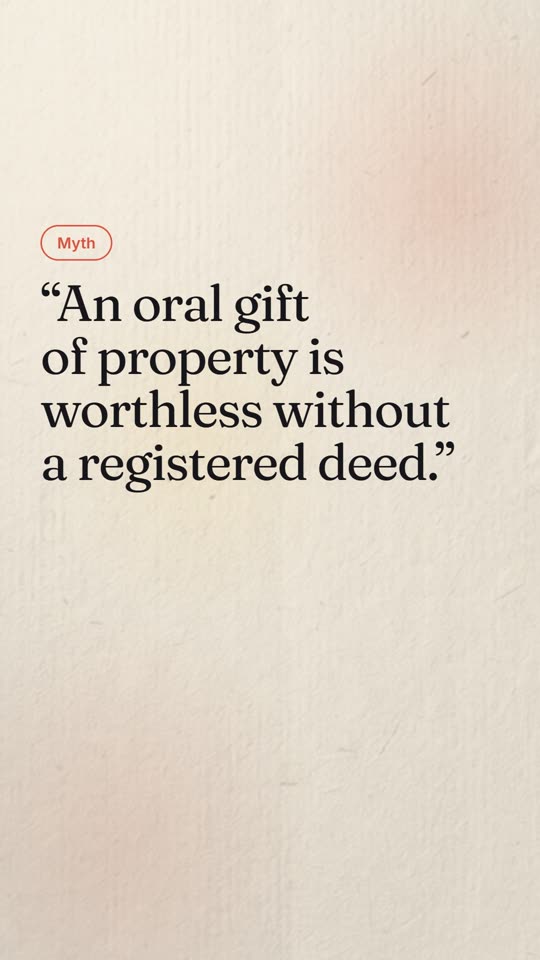
The myth: “Not on stamp paper? It's worthless.”Wrong
The short answer
A document that is not properly stamped is not void. The Stamp Act only keeps it out of evidence until the duty is paid, and once a court has admitted it, the stamp cannot be raised later in the same case. In 2014 the Supreme Court restored a man's decree on a short-stamped promissory note.
Sheikh Muhammad Shakeel v. Sheikh Hafiz Muhammad Aslam · Supreme Court of Pakistan · 2014 SCMR 1562 · decided 14 May 2014
By the FAI Legal editorial desk · 10 October 2026 · 5 min read
In Pakistan almost every deal, loan or promise is written on stamp paper. Many people believe that if a paper is not on stamp paper, or carries too little stamp duty, it means nothing in court.
This matters to anyone who has lent money on a written note, signed an agreement on plain paper, or is being told that their document is useless because of the stamp.
Key points
- Section 35 of the Stamp Act 1899: an instrument chargeable with duty is not admitted in evidence or acted upon "unless such instrument is duly stamped".
- Proviso (a) to s.35: most such instruments, but not a bill of exchange or a promissory note, can be admitted on payment of the duty and a penalty, which can be up to ten times the duty or the missing part of it.
- Section 36: once an instrument "has been admitted in evidence", that admission cannot be called in question at any later stage of the same suit on the ground that it was not duly stamped.
- The Supreme Court in 2014 SCMR 1562: "An insufficiently stamped Promissory Note is neither invalid nor void instrument, but it is only subject to disabilities mentioned in section 35".
The rule in one line
A missing or short stamp does not make a document void. Until the duty is paid, the court will not take it in evidence; for most documents you can pay the duty and a penalty and have it admitted. And once a court has admitted a document, the other side cannot attack it later in that case for want of stamp.
What happened in this case
A man gave a total of ten lakh rupees, on different dates, to a cloth trader as an investment in his business, on the promise that the money would be returned on demand. To assure him, the trader signed a promissory note dated 25 May 2001 for Rs. 10,00,000 (paragraph 2).
On 20 July 2001 the trader paid back two lakh rupees but did not return the rest. The man sent a legal notice and then filed a summary suit under Order XXXVII, Rule 2 of the Code of Civil Procedure for recovery of Rs. 10,00,000 (paragraph 2).
The trader said the note was forged. At trial the note was produced and exhibited as P.2 without any objection from him (paragraphs 3 and 4). The trial court decreed the suit on 7 August 2004 (paragraph 5).
The High Court of Sindh allowed the trader's appeal on 18 June 2007 and dismissed the suit (paragraphs 1 and 5). The note was insufficiently stamped, and the High Court also held that it was not attested under Article 17(2)(a) of the Qanun-e-Shahadat Order (paragraph 9).
What the Supreme Court said
The man came to the Supreme Court in a direct appeal, Civil Appeal No. 1428 of 2007. Justice Amir Hani Muslim wrote the judgment, and the appeal was decided on 14 May 2014.
On attestation, the Court said: "This finding of the learned High Court is contrary to the language of section 4 of the Act, which defines a Negotiable Instrument" (paragraph 9). A promissory note is defined by the Negotiable Instruments Act, not by the attestation rule for other documents.
On the stamp, the Court held: "An insufficiently stamped Promissory Note is neither invalid nor void instrument, but it is only subject to disabilities mentioned in section 35" (paragraph 12). Because the note had already been admitted in evidence without objection, section 36 of the Stamp Act barred the trader from questioning it later on the ground of stamp (paragraphs 13 to 15).
The appeal was allowed and the trial court's decree was restored.
Still, use the right stamp paper
This is not a licence to skip stamp duty. Under s.35 a paper that is not duly stamped is kept out of evidence until the duty is paid, and the penalty can be up to ten times the duty. For a promissory note or a bill of exchange, proviso (a) does not even allow admission on payment of a penalty. The note in this case was saved because it had already been admitted without objection.
The simplest protection is to use the correct stamp paper from the start, and to raise any objection to the other side's paper at the moment it is produced in court.
The case at a glance
- Facts
- A summary suit for Rs. 10,00,000 on a promissory note dated 25 May 2001 given for money invested in a cloth business. The note was insufficiently stamped but was exhibited as P.2 without objection. The trial court decreed the suit on 7 August 2004; the High Court of Sindh allowed the defendant's appeal on 18 June 2007.
- The question
- Whether a promissory note that is insufficiently stamped, and was admitted in evidence without objection, can be discarded on appeal for want of stamp or for want of attestation.
- What the Court held
- No. An insufficiently stamped promissory note is not invalid or void; it is only subject to the disabilities in s.35. Once admitted, s.36 bars questioning it in the same suit. Appeal allowed and the trial court's decree restored.
- Why
- Section 35 limits the use of an unstamped paper as evidence; it does not destroy the transaction. Section 36 protects an admission already made. A promissory note is governed by the definition in s.4 of the Negotiable Instruments Act, so the attestation requirement in Article 17(2)(a) did not apply to it.
- Limits
- The note was saved because it had already been admitted without objection. Had the defendant objected when it was produced, s.35 would have kept it out, and for a promissory note the penalty route in proviso (a) is not available. The judgment does not say stamp duty may be ignored.
The law it relies on
"No instrument chargeable with duty shall be admitted in evidence for any purpose ... or shall be acted upon ... unless such instrument is duly stamped." Proviso (a): an instrument, other than one chargeable with a duty not exceeding twenty-five paisa only, "or a bill of exchange or promissory note", shall be admitted "on payment of the duty ... together with a penalty", up to "a sum equal to ten times such duty or portion".
"Where an instrument has been admitted in evidence, such admission shall not, except as provided in section 61, be called in question at any stage of the same suit or proceeding on the ground that the instrument has not been duly stamped."
What this does not mean
- It does not mean stamp duty is optional. Until the duty is paid, a paper that is not duly stamped is not taken in evidence, and the penalty can be ten times the duty.
- It does not mean every short-stamped promissory note will be enforced. This note was saved because it was admitted in evidence without objection; s.35 does not let a promissory note in on payment of a penalty.
- It does not decide whether the money was really owed in every such case. The trial court decided that on the evidence, and the Supreme Court restored its decree.
Questions people ask
My agreement is on plain paper. Is it void?
Not because of the stamp alone. The Supreme Court said in 2014 SCMR 1562 that an insufficiently stamped instrument is neither invalid nor void; it is subject to the limits in s.35 of the Stamp Act. For most documents, the court can admit it once the duty and a penalty are paid. Speak to a lawyer about your document.
How much is the penalty?
Under proviso (a) to s.35, the penalty is five rupees or, when ten times the proper duty or the missing part of it exceeds five rupees, a sum equal to ten times that duty or part.
The other side produced an unstamped paper in court. What should I do?
Object when it is produced. Under s.36, once a court has admitted a paper in evidence, its admission cannot be questioned later in the same suit on the ground that it was not duly stamped.
Check yourself
True or false? “Not on stamp paper? It's worthless.”
Wrong. A document that is not properly stamped is not void. The Stamp Act only keeps it out of evidence until the duty is paid, and once a court has admitted it, the stamp cannot be raised later in the same case. In 2014 the Supreme Court restored a man's decree on a short-stamped promissory note.
Next one: true or false? “If I pay my rent on time, the landlord can never make me leave.”
Sources
- Sheikh Muhammad Shakeel v. Sheikh Hafiz Muhammad Aslam, 2014 SCMR 1562 (Supreme Court of Pakistan, 14 May 2014), paras 2, 4, 5, 9, 12, 13, 14, 15
An insufficiently stamped promissory note is neither invalid nor void; it is only subject to the disabilities in s.35 of the Stamp Act, and s.36 bars questioning it once admitted. Trial court's decree restored. verified against full text - Stamp Act, 1899, s.35 text checked in FAI Statute Search Pakistan Code
- Stamp Act, 1899, s.36 text checked in FAI Statute Search Pakistan Code
Every quote and section above is traced to the full judgment or statute text by an automatic check that runs on every update.
What the reel says
Read the words of the reel
Heard this one? "Not on stamp paper? It's worthless." Wrong.
A man won his suit on a Rs. 10 lakh promissory note. The note was short-stamped, so the High Court threw his suit out.
The Supreme Court: an insufficiently stamped promissory note is "neither invalid nor void"; it is only subject to the limits in s.35 of the Stamp Act. The trial court's decree was restored (2014 SCMR 1562).
Stamp Act s.35: until the duty is paid, a paper is not taken in evidence. But most papers (not promissory notes or bills of exchange) can be admitted on payment of the duty and a penalty.
Stamp Act s.36: once the court has admitted a paper in evidence, it cannot be questioned later in the same case for want of stamp.
Still: the penalty can be up to ten times the duty. Use the right stamp paper from the start, and talk to a lawyer about your own case.
Educational legal information, not legal advice. Every case turns on its own facts. Speak to a qualified lawyer about your situation. Reading this page does not create a lawyer and client relationship. Review status: Pending advocate review. How we check.