Family · Supreme Court of Pakistan
Second marriage without permission in Pakistan: why the fine did not end it
The myth: “A second marriage without permission costs, at worst, a small fine.”Half right: the law allows it with permission, but the fine is not the end
The short answer
A small fine is not the worst case: without written permission, the first marriage can be dissolved on that ground alone, and she keeps her dower.
A v. B (names withheld) · Supreme Court of Pakistan · C.P.L.A. No. 3268 of 2024 · decided 19 September 2025
By the FAI Legal editorial desk · 8 November 2026 · 6 min read
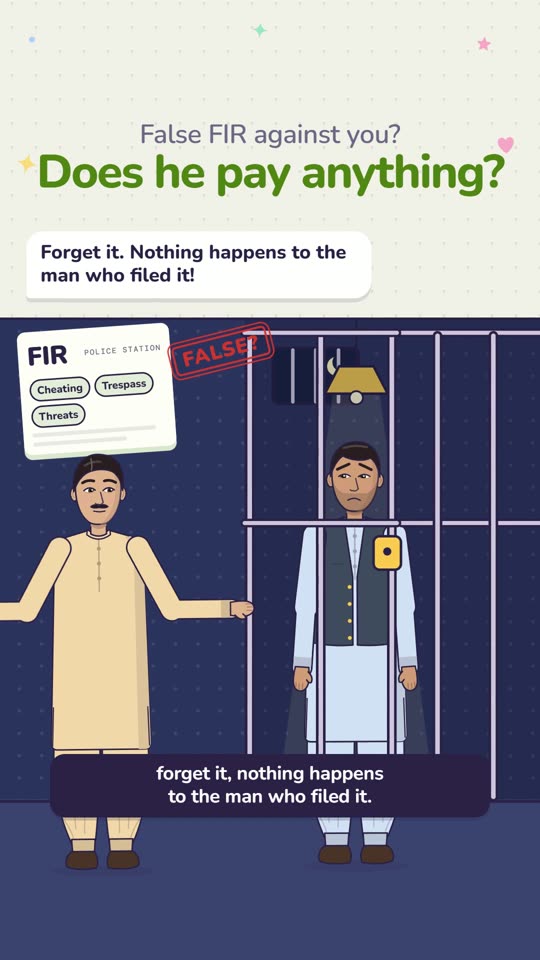
The fine is not the end of it. A husband in Peshawar married a second time in 2017 without his first wife's permission or the Arbitration Council's. On her complaint he was convicted and paid a Rs. 5,000 fine, and his counsel told the Supreme Court that "the matter has ended". The Court answered: "We cannot agree with this argument" (para 12). The second marriage alone was a ground to dissolve the first marriage, and she kept her dower: the plot, the gold and the money (paras 12 and 19).
The half that holds: the law does not ban a second marriage. Section 6 of the Muslim Family Laws Ordinance asks for one thing first, the previous written permission of the Arbitration Council, which may grant it only if the proposed marriage is "necessary and just" (para 12). The Supreme Court said it again on 12 January 2026: a second marriage without that permission is a contravention "attracting both penal consequences and civil consequences, including dissolution".
Key points
- Marrying again without permission can cost the first marriage: the second marriage "alone was sufficient for the Family Court to dissolve the marriage" (para 12).
- Paying the fine does not end it: "We cannot agree with this argument" (para 12).
- She keeps her dower: the marriage was dissolved on the second-marriage ground, and she "will keep the Gold, Money, and Plot given to her" (para 19).
- Section 6 gives the first wife a say before the nikah: her consent is sought first, and if she refuses, an Arbitration Council with a representative of each side decides (para 12; section 6(3)).
- The penalty in section 6(5): the entire dower, prompt or deferred, payable at once, and simple imprisonment up to one year, or a fine, or both. In this case the fine was Rs. 5,000.
- The Supreme Court repeated the rule on 12 January 2026 (C.P.L.A. No. 3767 of 2025, para 10).
Second marriage punishment in Pakistan: the short answer
A husband who marries again without the Arbitration Council's written permission risks three things. His first wife can have her marriage dissolved on that ground alone. The entire dower becomes payable at once. And he can be convicted on her complaint: simple imprisonment up to one year, or a fine, or both (section 6(5)). In this case the fine was Rs. 5,000, and the Supreme Court held that paying it did not end the matter (para 12).
People search this as second marriage punishment in pakistan, dusri shadi karne par saja, without divorce second marriage punishment and second marriage supreme court order. The law does not forbid a second marriage. It asks for permission first (doosri shadi ki ijazat), and it attaches these consequences to skipping that step.
Peshawar, 2015: the nikah and the dower
The nikah took place on 31 May 2015. The dower was a plot, 30 tola gold ornaments and Rs. 500,000 (paras 2 and 4). The rukhsati followed on 9 April 2016. After three jirgas to reconcile them, she left the marital home in December 2016 (para 16).
Then "the Respondent contracted his second marriage on 29.04.2017 during the subsistence of his marriage with the Petitioner and without her permission" (para 16). The Court recorded: "Admittedly, no such permission was ever sought" (para 12).
At first, he won
She filed for dissolution of marriage on 4 July 2017. On 22 July 2019 the Family Court gave her khula instead and directed her to return the gold and the plot; it treated the money, which it found was never paid, as dower given up for the khula (para 4). Her appeal was dismissed on 12 October 2020, and the Peshawar High Court dismissed her writ petition on 27 May 2024 (paras 1 and 4).
On her complaint of 28 June 2018 under section 6(5) of the Ordinance, the Judicial Magistrate-II, Peshawar convicted him on 26 January 2023 (para 12). Before the Supreme Court his counsel said that "the penalty of Rs.5,000/- arising from the Conviction Judgement has been paid, hence, the matter has ended" (para 12).
We checked it in FAI Legal
Both judgments are on FAI Legal's Judgment Search, marked as citations from the court record, with every paragraph open in the judgment reader. The paragraphs quoted on this page are paras 2, 4, 12, 13, 16 and 19 of the September 2025 judgment and para 10 of the January 2026 judgment. Section 6 of the Muslim Family Laws Ordinance is on FAI's Statute Search.
Supreme Court, September 2025: the fine does not end it
The Court answered the fine argument directly: "We cannot agree with this argument. The question was whether the ground of taking an additional wife was established for the purposes of dissolving the marriage." The second marriage "was contracted in clear violation of Section 6 of the MFLO, thereby attracting clause (ii-a) of Section 2 of the DMMA, which alone was sufficient for the Family Court to dissolve the marriage" (para 12).
It held that a Family Court cannot impose khula on a wife who did not ask for it (para 13), and it set the khula aside: "The marriage is dissolved on the ground that the Respondent contracted a second marriage in violation of the law. Consequently, the Petitioner will not be required to return her Dower and will keep the Gold, Money, and Plot given to her." She was also given maintenance of Rs. 10,000 a month for the period of the marriage (para 19).
Why the step matters: it gives the first wife a say before the nikah, not after. A husband "may contract another marriage during the subsistence of the first marriage only after seeking the consent of his existing wife. If such consent is refused, he must then apply to the Chairman of the Union Council" (para 12).
The right half: permission first, nikah second
The friend's line was half right. Section 6 does not ban a second marriage. It says no man, during an existing marriage, shall contract another marriage "except with the previous permission in writing of the Arbitration Council". He applies to the Chairman of the Union Council with his reasons and whether his wife consents; each side nominates a representative; and the Arbitration Council may grant permission "if satisfied that the proposed marriage is necessary and just" (section 6(1) to (3)). So the council can also say no.
The penalty for skipping it, section 6(5): the entire dower, prompt or deferred, is payable at once, and on conviction upon complaint, simple imprisonment up to one year, or a fine, or both. The amount of the fine depends on the text in force in your province; here it was Rs. 5,000. On 12 January 2026 the Supreme Court repeated the rule: "contracting a second marriage without written permission of the Arbitration Council constitutes a contravention attracting both penal consequences and civil consequences, including dissolution under the DMMA" (C.P.L.A. No. 3767 of 2025, para 10).
Find rulings like this on FAI Legal
FAI Legal is a website: open failegal.site in your phone's browser, there is nothing to download. Read both judgments in full on Judgment Search, or ask your own question in plain words, for example "I want to marry a second time. What permission do I need, and what happens if I do not get it?" Start free. On FAI Media, our page on the January 2026 judgment covers a husband's second marriage without permission, and our carousel covers second marriage permission in Pakistan, step by step.
The case at a glance
- Facts
- Nikah on 31 May 2015 with a dower of a plot, 30 tola gold ornaments and Rs. 500,000 (paras 2 and 4). The husband admitted a second marriage on 29 April 2017 without the wife's or the Arbitration Council's permission (paras 12 and 16) and was convicted on her complaint under section 6(5) MFLO by the Judicial Magistrate-II, Peshawar on 26 January 2023 (para 12). The Family Court granted khula instead of dissolution and directed the return of the gold and the plot; the appeal and the writ petition failed (para 4).
- The question
- Whether the courts below were right to grant khula and deny dissolution when the husband had contracted a second marriage in violation of section 6 MFLO, and whether the paid penalty ended the matter (paras 12 and 13).
- What the Court held
- The petition was converted into an appeal and allowed; the khula was set aside and the marriage dissolved on the ground that the husband contracted a second marriage in violation of the law; she keeps the gold, the money and the plot, with maintenance of Rs. 10,000 a month for the subsistence of the marriage (para 19).
- Why
- The second marriage was admitted and no permission was ever sought, so section 2(ii-a) DMMA applied and "alone was sufficient" for dissolution; the conviction fortified it; the payment of the Rs. 5,000 penalty did not answer whether the ground for dissolution was made out (para 12). Khula needs the wife's consent and cannot be imposed in place of a statutory ground (para 13).
- Limits
- The judgment decides one case on its facts. It does not ban second marriages: section 6 allows one with the Arbitration Council's previous written permission. The fine amount in section 6(5) depends on the text in force in each province. It does not decide how an Arbitration Council should weigh a particular application.
In the Court’s words
“Admittedly, no such permission was ever sought, hence the fact of the second marriage stood established.”
C.P.L.A. No. 3268 of 2024, para 12
The law it relies on
No man, during an existing marriage, shall contract another marriage except with the previous permission in writing of the Arbitration Council; the application to the Chairman gives the reasons and whether the existing wife consents; the council may grant permission if satisfied that the proposed marriage is necessary and just; without permission, the entire dower is payable at once, and on conviction upon complaint, simple imprisonment up to one year, or a fine, or both.
A wife may obtain a decree for dissolution if the husband has taken an additional wife in contravention of the Muslim Family Laws Ordinance (applied by the Supreme Court in paras 12 and 19, and on 12 January 2026 in C.P.L.A. No. 3767 of 2025, para 10).
What this does not mean
- It does not mean a second marriage is banned: section 6 asks for the Arbitration Council's written permission first, which it can grant if the marriage is necessary and just.
- It does not mean the fine is the only risk: the first wife can seek dissolution on that ground alone and keep her dower, and the entire dower becomes payable at once (section 6(5)).
- It does not mean every wife keeps her dower after khula: here the khula was set aside because she never asked for it (para 13), and the marriage was dissolved on the second-marriage ground instead.
- It does not decide what an Arbitration Council should do with a particular application; that turns on the reasons given and the wife's view.
- The reel's opening scene, a wedding stage and a friend's advice, is a drawing of the common belief, not the case's own scene.
Questions people ask
What is the punishment for a second marriage without permission in Pakistan?
Under section 6(5) of the Muslim Family Laws Ordinance, the entire dower, prompt or deferred, is payable to the existing wife at once, and on conviction upon complaint the husband faces simple imprisonment up to one year, or a fine, or both. The first wife may also seek dissolution of her marriage on that ground alone (Supreme Court, 19 September 2025, para 12).
Does paying the fine end the case?
No. Here the husband's counsel argued that the Rs. 5,000 fine had been paid and "the matter has ended"; the Supreme Court said: "We cannot agree with this argument" (para 12).
Is a second marriage allowed in Pakistan without the first wife's consent?
The law asks for permission first. The husband seeks his wife's consent; if she refuses, he applies to the Chairman of the Union Council, and an Arbitration Council with a representative of each side may permit the marriage only if it is necessary and just (section 6; para 12).
Doosri shadi ki ijazat kahan se milti hai?
From the Arbitration Council that the Chairman of your Union Council constitutes after your written application. The application gives the reasons and says whether the existing wife consents (section 6(2) and (3)).
Can the first wife get her marriage dissolved if her husband marries again?
Yes, under section 2(ii-a) of the Dissolution of Muslim Marriages Act, if the second marriage was in contravention of the Ordinance. In this case the Supreme Court set aside a khula she never asked for and dissolved the marriage on the second-marriage ground, so she kept her dower (paras 13 and 19).
What did the Supreme Court say in January 2026?
In C.P.L.A. No. 3767 of 2025, decided 12 January 2026, it said a second marriage without the Arbitration Council's written permission is a contravention "attracting both penal consequences and civil consequences, including dissolution" (para 10).
Check yourself
True or false? “A second marriage without permission costs, at worst, a small fine.”
Half right: the law allows it with permission, but the fine is not the end. A small fine is not the worst case: without written permission, the first marriage can be dissolved on that ground alone, and she keeps her dower.
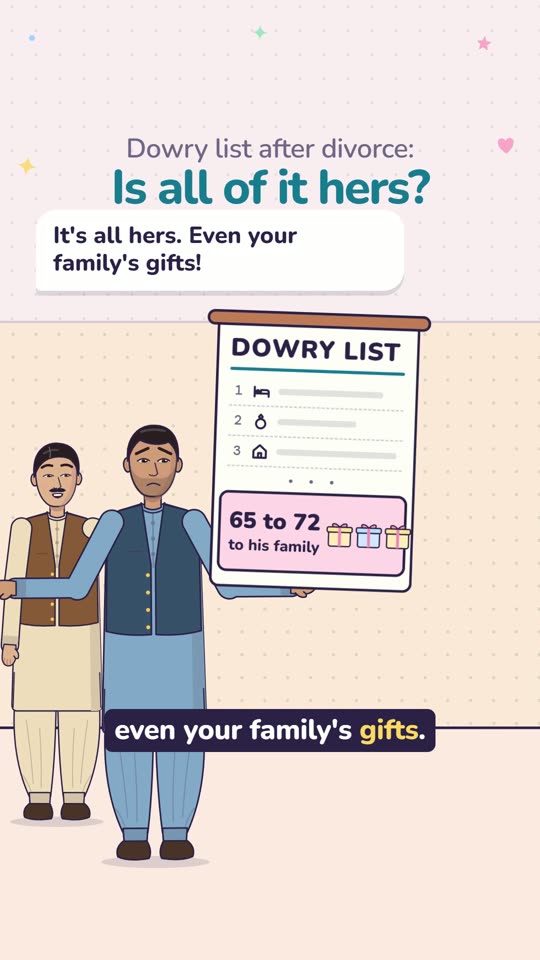
Next one: true or false? “Everything on her dowry list is hers, even the gifts to his family.”
Sources
- A v. B (names withheld), C.P.L.A. No. 3268 of 2024 (Supreme Court of Pakistan, 19 September 2025)
A second marriage without permission "alone was sufficient" to dissolve the first marriage; the paid Rs. 5,000 penalty did not end the matter; khula set aside and the wife keeps the gold, money and plot. - A v. B (names withheld), C.P.L.A. No. 3767 of 2025 (Supreme Court of Pakistan, 12 January 2026)
A second marriage without the Arbitration Council's written permission attracts "both penal consequences and civil consequences, including dissolution". - Muslim Family Laws Ordinance, 1961, Section 6 text checked in FAI Statute Search, 8 November 2026 Pakistan Code
Every quote and section above is traced to the full judgment or statute text by an automatic check that runs on every update.
What the reel says
Read the words of the reel
Second marriage punishment in Pakistan: is it just a small fine?
Dusri shadi bina ijazat: kya bas thora sa jurmana hota hai?
Half right. A husband in Peshawar paid a Rs 5,000 fine, and the Supreme Court still said: it doesn't end there.
They married in 2015. Her dower: a plot, 30 tolas of gold and Rs 5 lakh. In 2017 he married again without permission. At first the courts gave her khula and told her to return the plot and the gold, and a magistrate fined him Rs 5,000. His lawyer told the Supreme Court the matter had ended. In September 2025 the Court answered: "We cannot agree with this argument." The second marriage alone was enough to end the first, and she keeps the plot, the gold and the money.
The right half:
1. The law does not ban a second marriage. It asks for permission first.
2. Apply to your Union Council's Chairman; the arbitration council gives written permission only if the marriage is necessary and just.
3. In January 2026 the Supreme Court said it again: permission first, nikah second.
4. Talk to a lawyer about your own case.
Educational legal information, not legal advice. Every case turns on its own facts. Speak to a lawyer about your own case. Last checked: 8 November 2026. Review status: Pending advocate review. How we check.