Courts and procedure · For advocates
Order VII Rule 11: end a bad suit early.
In short
Four grounds, two of which need the court to fix time first. And rejection is not always the end.
By the FAI Legal editorial desk · 10 October 2026 · 9 slides · 2 min read
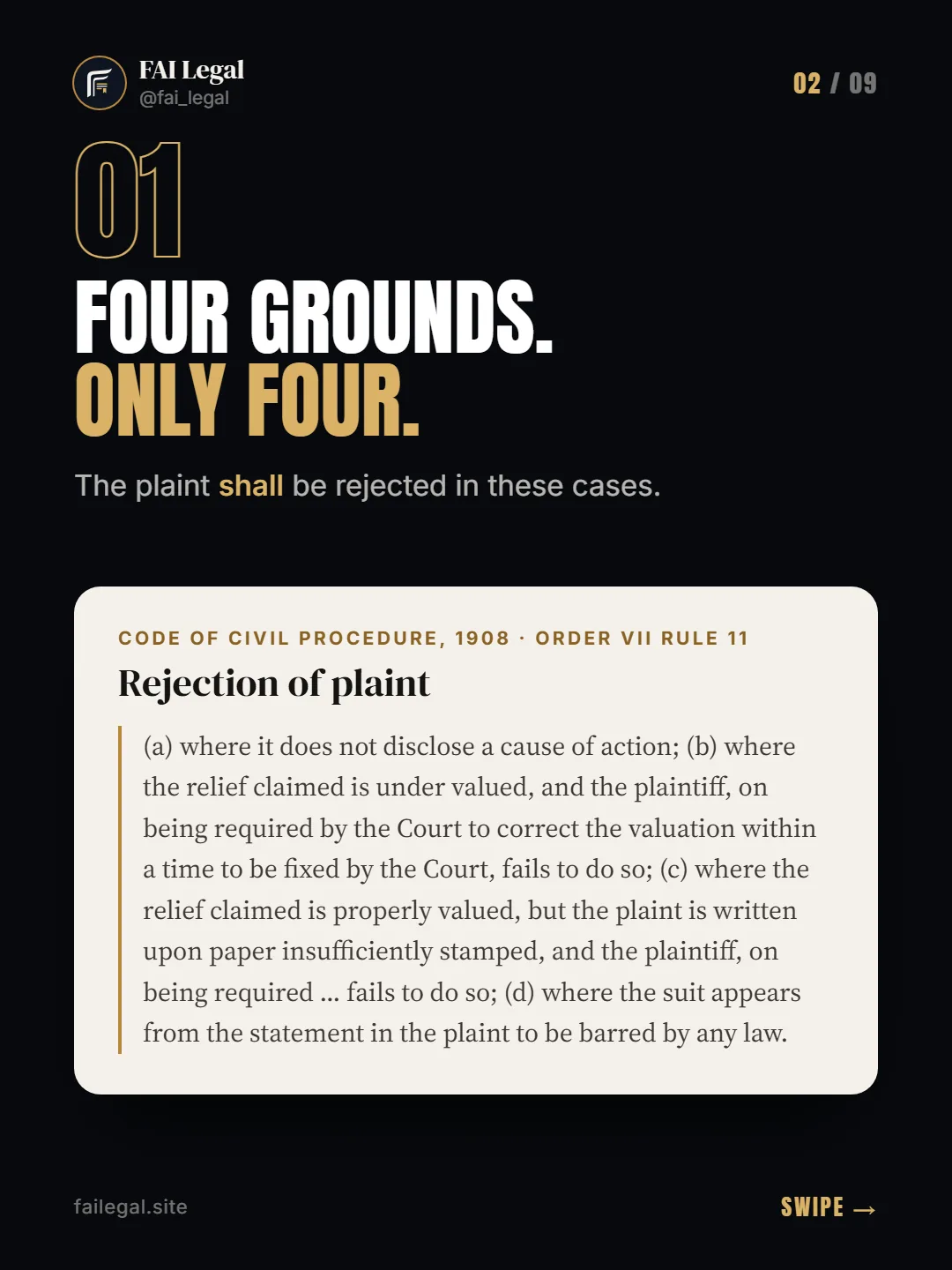
Four grounds. Only four.
The plaint shall be rejected in these cases.
“(a) where it does not disclose a cause of action; (b) where the relief claimed is under valued, and the plaintiff, on being required by the Court to correct the valuation within a time to be fixed by the Court, fails to do so; (c) where the relief claimed is properly valued, but the plaint is written upon paper insufficiently stamped, and the plaintiff, on being required … fails to do so; (d) where the suit appears from the statement in the plaint to be barred by any law.”
Code of Civil Procedure, 1908 · Order VII Rule 11, Rejection of plaint
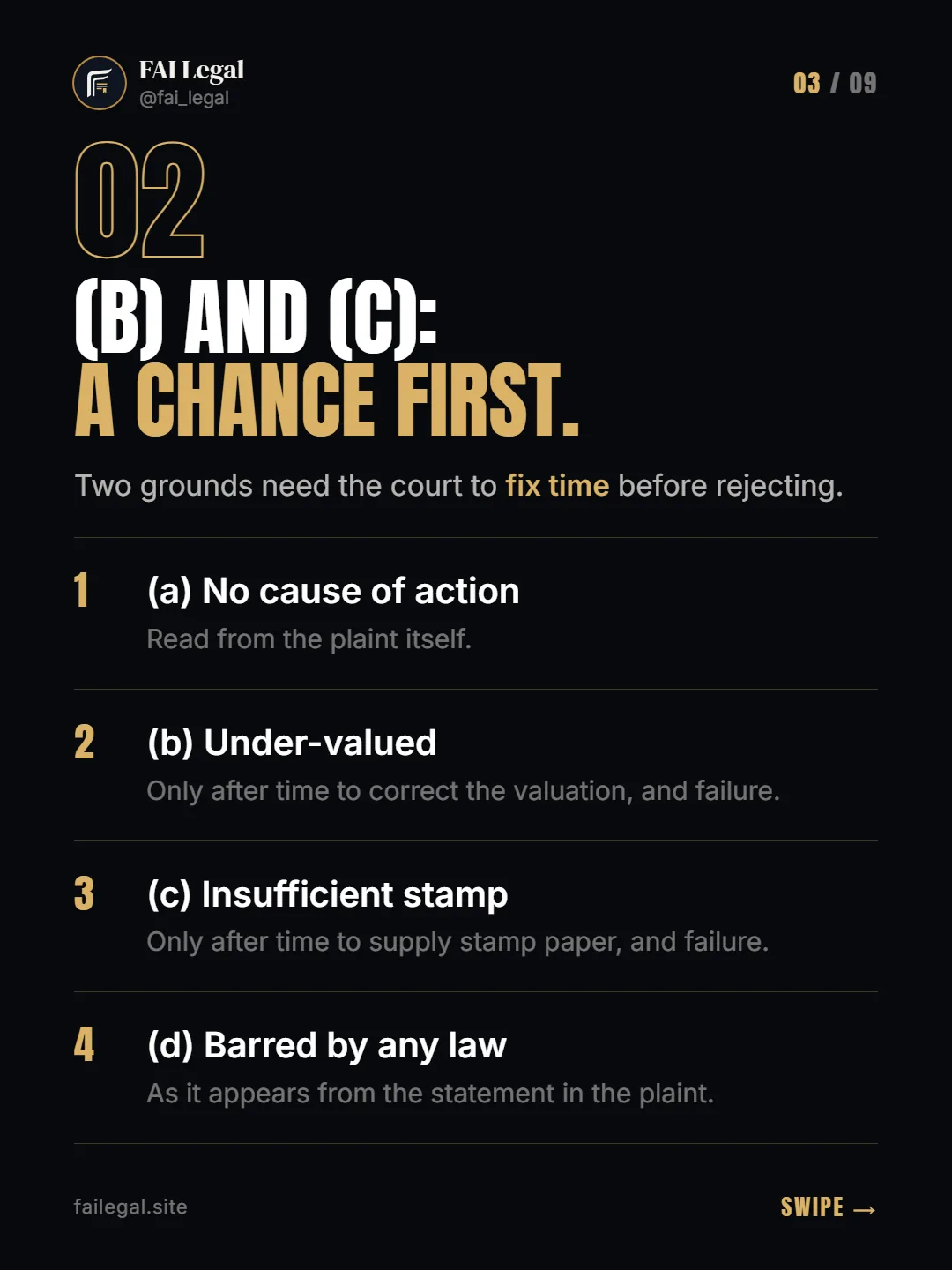
(b) and (c): a chance first.
Two grounds need the court to fix time before rejecting.
- (a) No cause of actionRead from the plaint itself.
- (b) Under-valuedOnly after time to correct the valuation, and failure.
- (c) Insufficient stampOnly after time to supply stamp paper, and failure.
- (d) Barred by any lawAs it appears from the statement in the plaint.
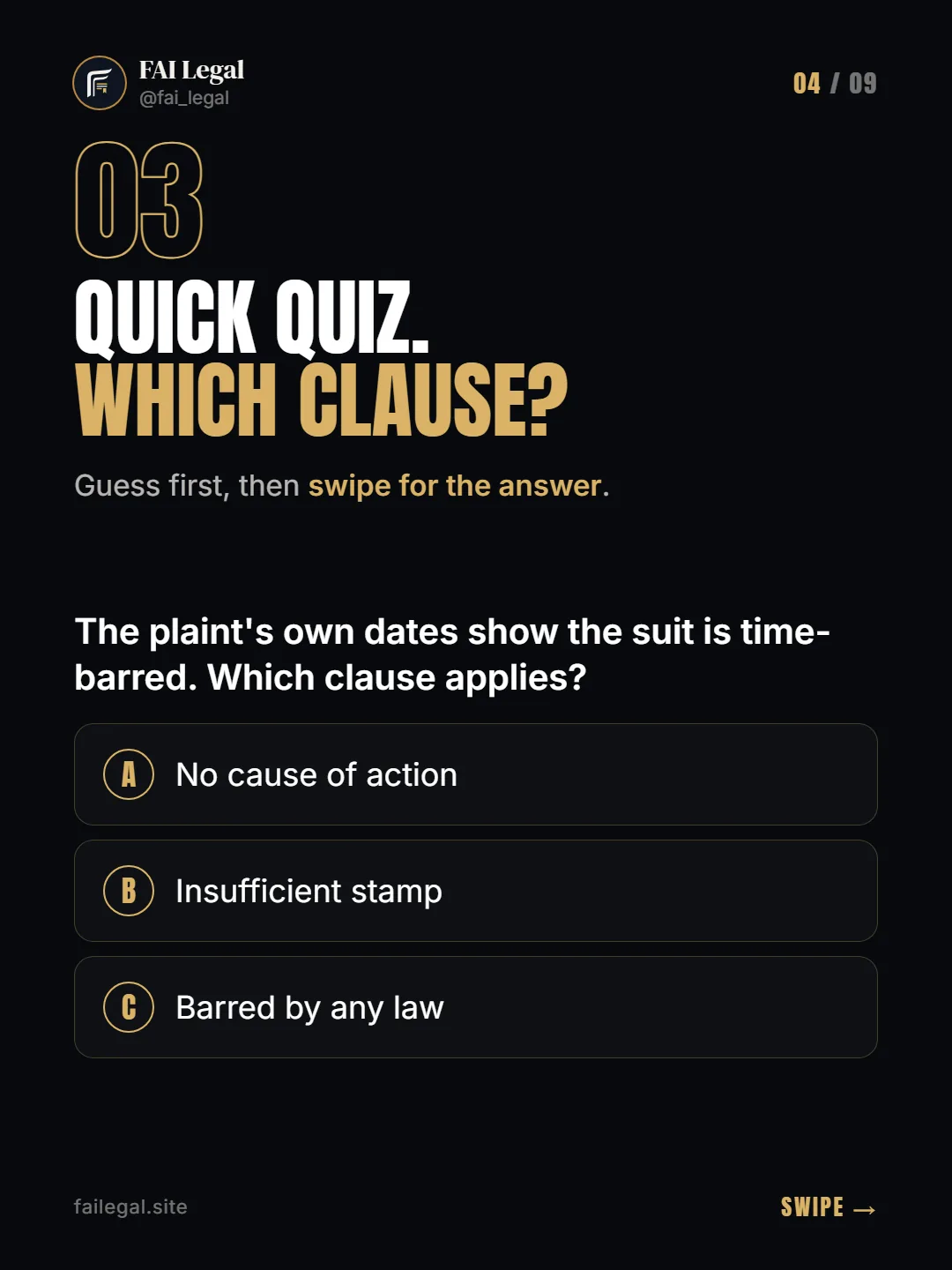
Quick quiz. Which clause?
Guess first, then swipe for the answer.
- A. No cause of action
- B. Insufficient stamp
- C. Barred by any law
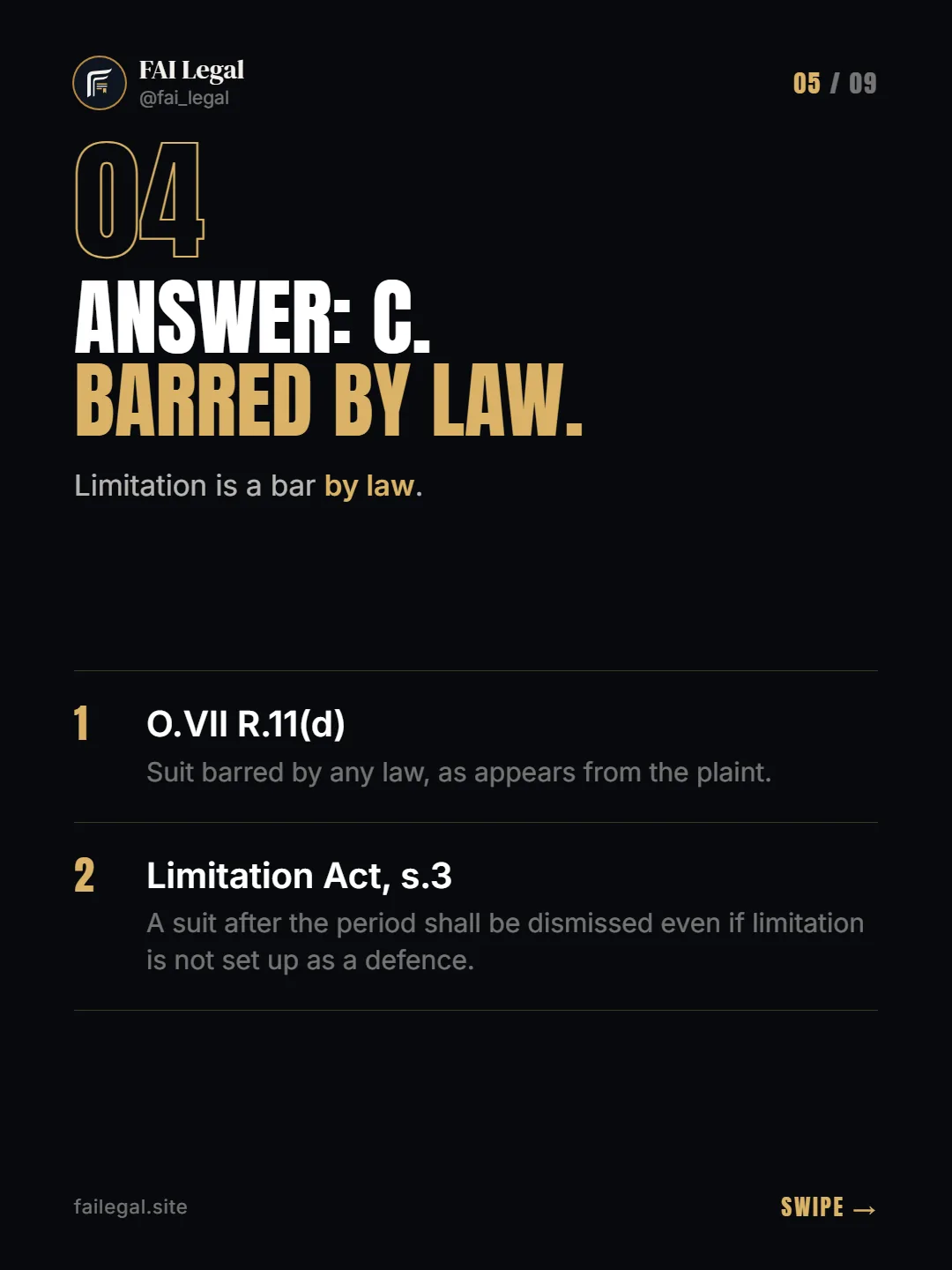
Answer: C. Barred by law.
Limitation is a bar by law.
- O.VII R.11(d)Suit barred by any law, as appears from the plaint.
- Limitation Act, s.3A suit after the period shall be dismissed even if limitation is not set up as a defence.
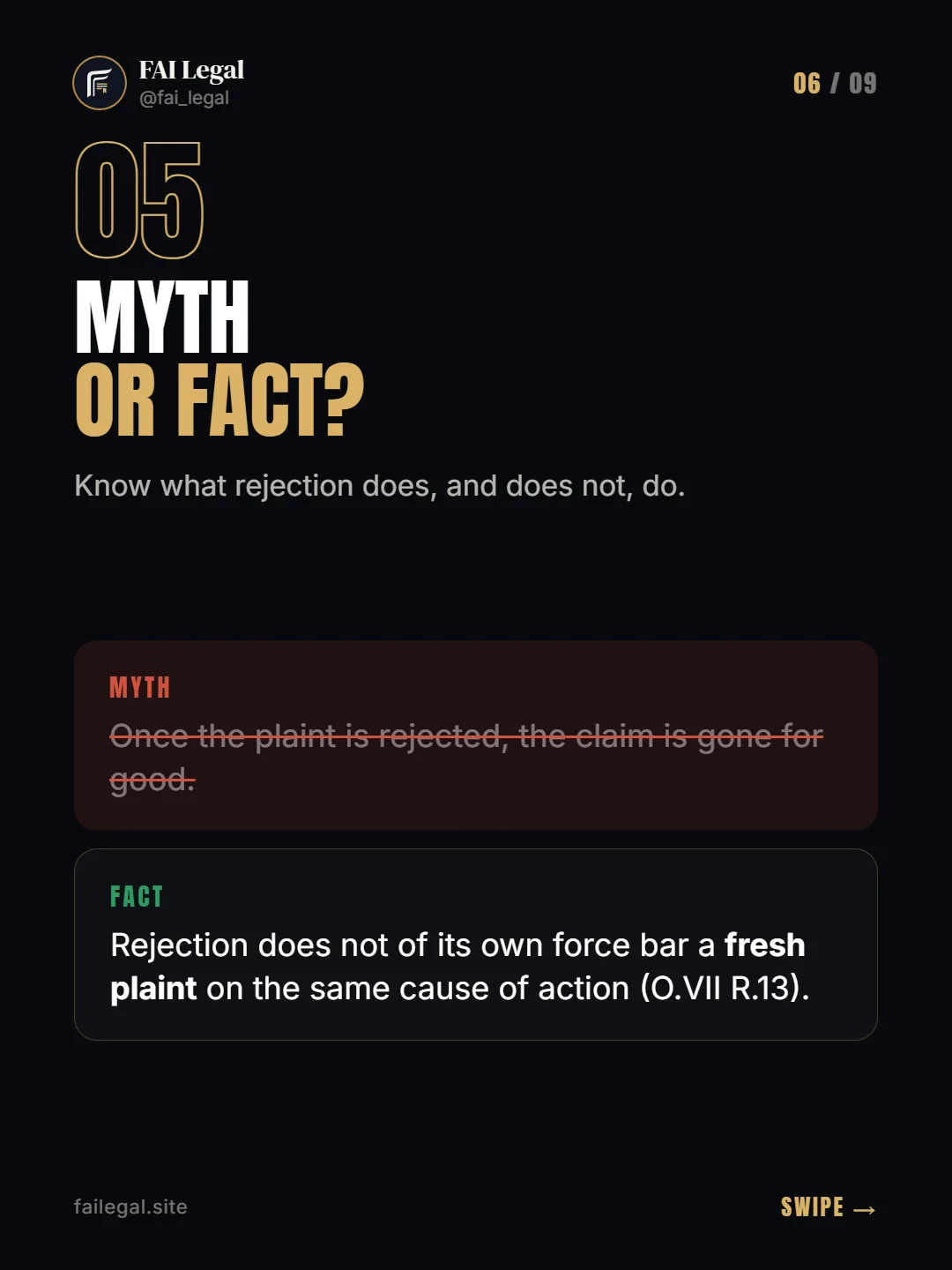
Myth or fact?
Know what rejection does, and does not, do.
- Myth: Once the plaint is rejected, the claim is gone for good.
- Fact: Rejection does not of its own force bar a fresh plaint on the same cause of action (O.VII R.13).
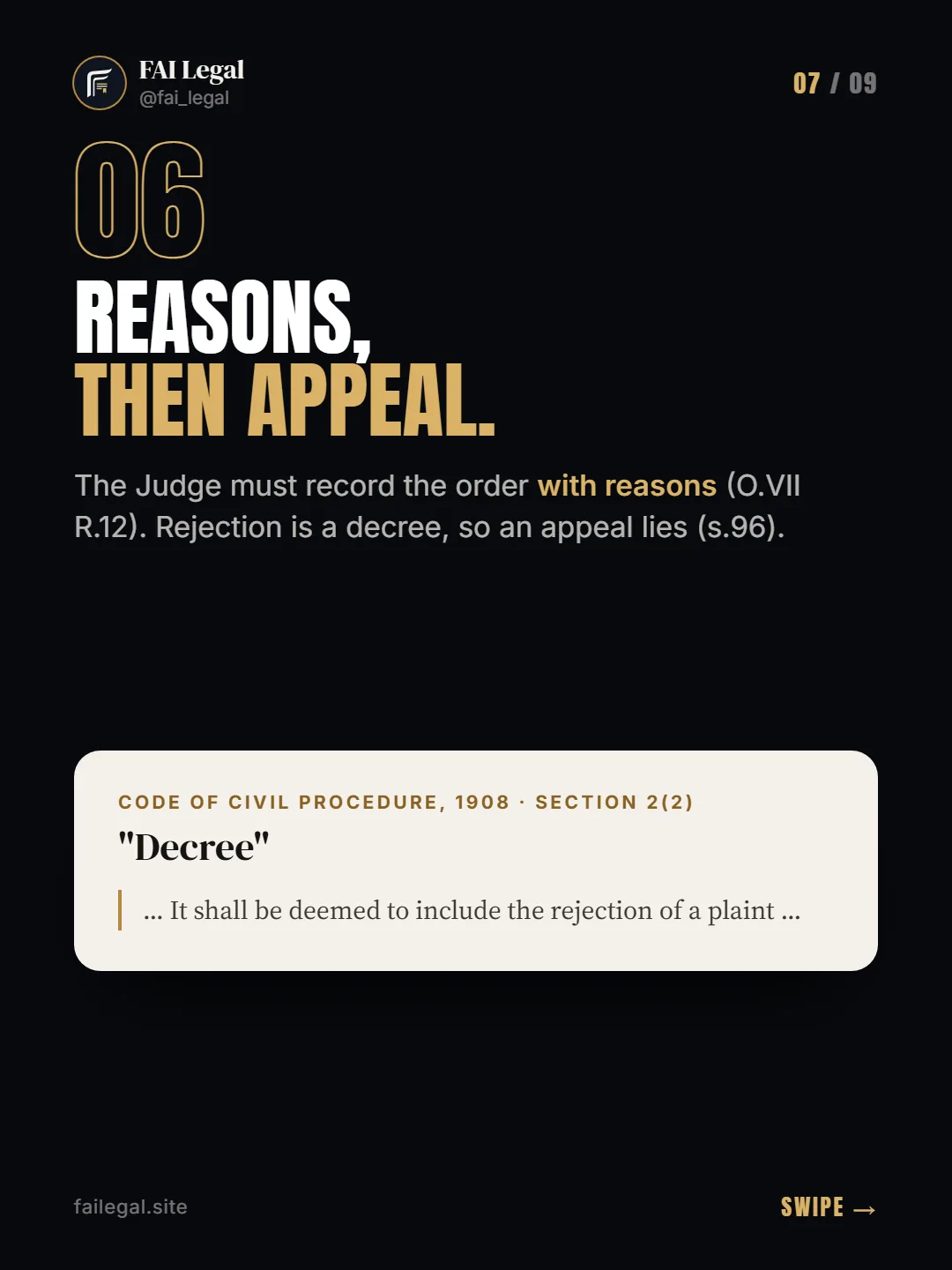
Reasons, then appeal.
The Judge must record the order with reasons (O.VII R.12). Rejection is a decree, so an appeal lies (s.96).
“It shall be deemed to include the rejection of a plaint”
Code of Civil Procedure, 1908 · Section 2(2), "Decree"
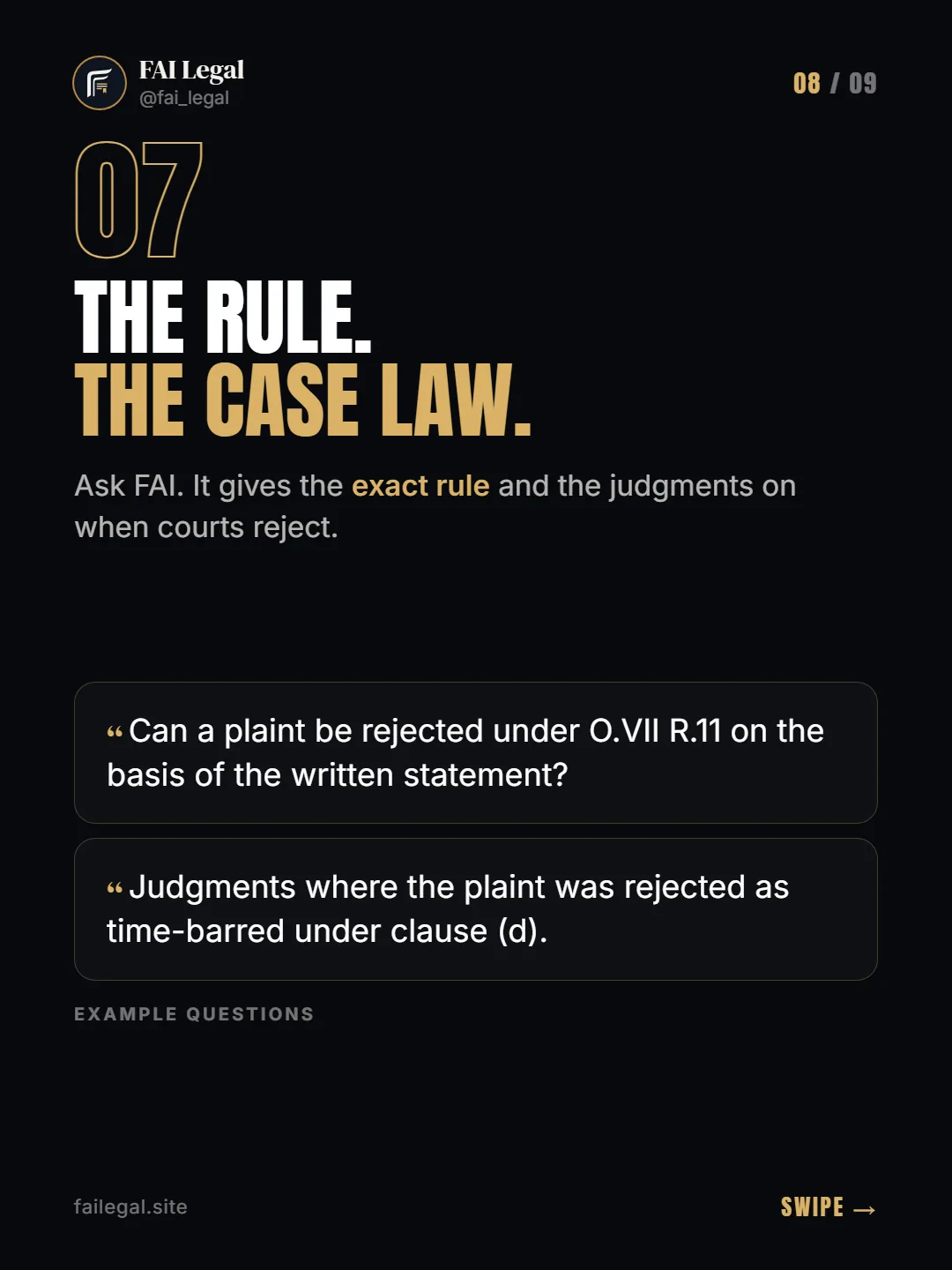
The rule. The case law.
Ask FAI. It gives the exact rule and the judgments on when courts reject.
- Can a plaint be rejected under O.VII R.11 on the basis of the written statement?
- Judgments where the plaint was rejected as time-barred under clause (d).
Example questions
What this does not mean
- Under-valuation and insufficient stamp are not grounds for instant rejection. The court must first fix time to correct it, and the plaintiff must fail to do so.
- Grounds (a) and (d) are judged from the plaint itself.
- Rejection does not of its own force bar a fresh plaint on the same cause of action (O.VII R.13).
Questions people ask
What is Order VII Rule 11 CPC?
It lists four grounds on which a plaint shall be rejected: no cause of action, under-valued relief not corrected in time, insufficient stamp not supplied in time, and a suit that appears from the plaint to be barred by any law.
Can a plaint be rejected because the suit is time-barred?
Yes. Limitation is a bar by law under O.VII R.11(d), and section 3 of the Limitation Act says a suit filed after the period shall be dismissed even if limitation is not set up as a defence.
Can I file a fresh suit after my plaint is rejected?
Rejection does not of its own force bar a fresh plaint on the same cause of action (O.VII R.13).
Can I appeal against rejection of plaint in Pakistan?
Yes. Rejection of a plaint is deemed a decree under section 2(2) CPC, so an appeal lies under s.96. The Judge must record the order with reasons (O.VII R.12).
Can a court reject a plaint straight away for insufficient stamp paper?
No. Under clause (c), the court must first require the plaintiff to supply the stamp paper within a fixed time, and reject only if he fails.
Sources
- Code of Civil Procedure, 1908 · Order VII Rule 11
Rejection of plaint Pakistan Code - Code of Civil Procedure, 1908 · Section 2(2)
"Decree" Pakistan Code
Educational legal information, not legal advice. Every case turns on its own facts. Speak to a qualified lawyer about your situation. Review status: Pending advocate review. How we check.