Courts and procedure · For citizens
Got a court summons? Do not ignore it.
In short
The case can go on without you. If you do not file your written statement in time, the court may pronounce judgment against you (CPC Order VIII Rule 10). The period ordinarily does not exceed 30 days (O.VIII R.1). An ex parte decree can be challenged within 30 days (O.IX R.13, Limitation Act Art. 164).
By the FAI Legal editorial desk · 12 October 2026 · 11 slides · 2 min read

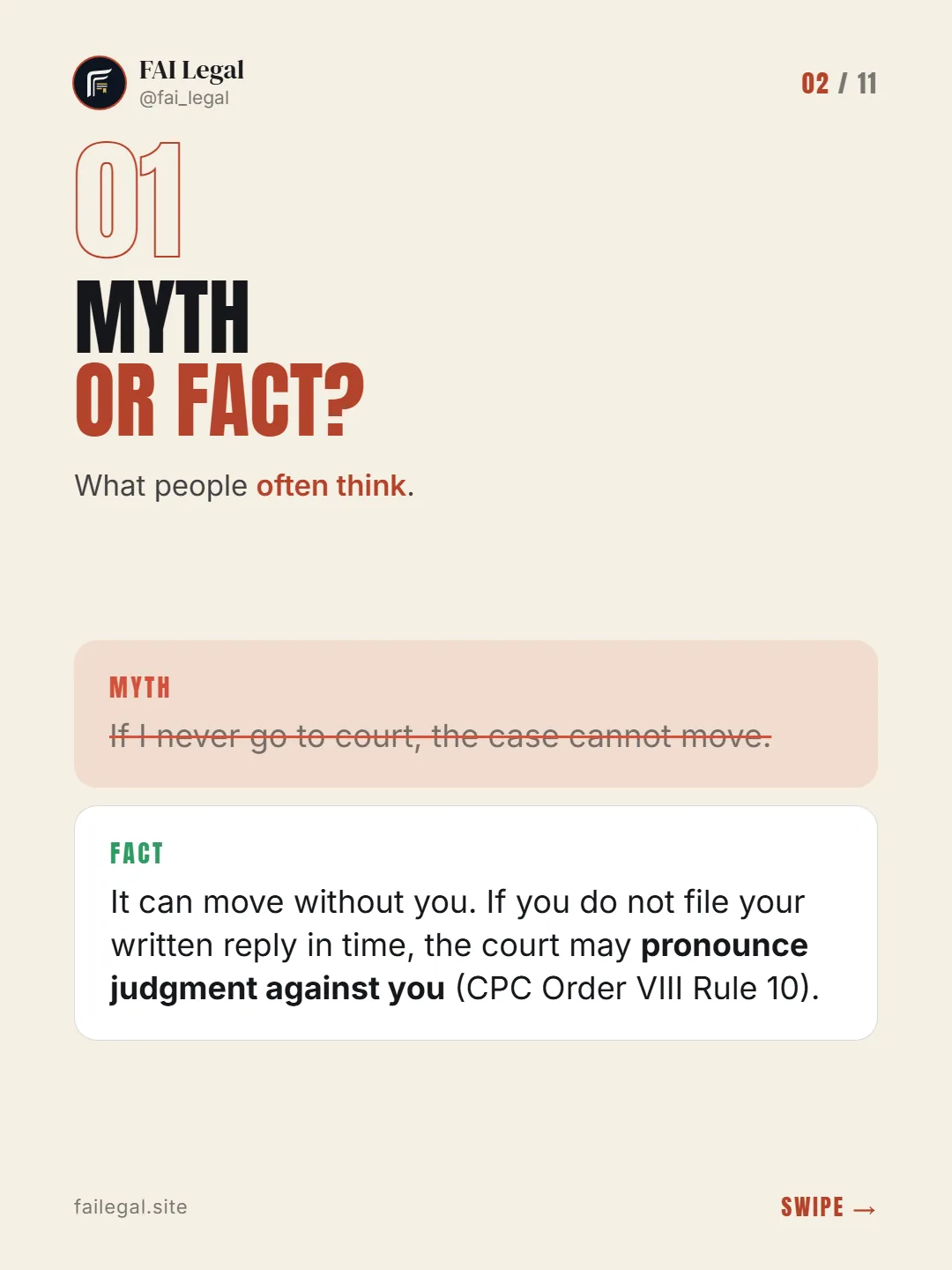
Myth or fact?
What people often think.
- Myth: If I never go to court, the case cannot move.
- Fact: It can move without you. If you do not file your written reply in time, the court may pronounce judgment against you (CPC Order VIII Rule 10).
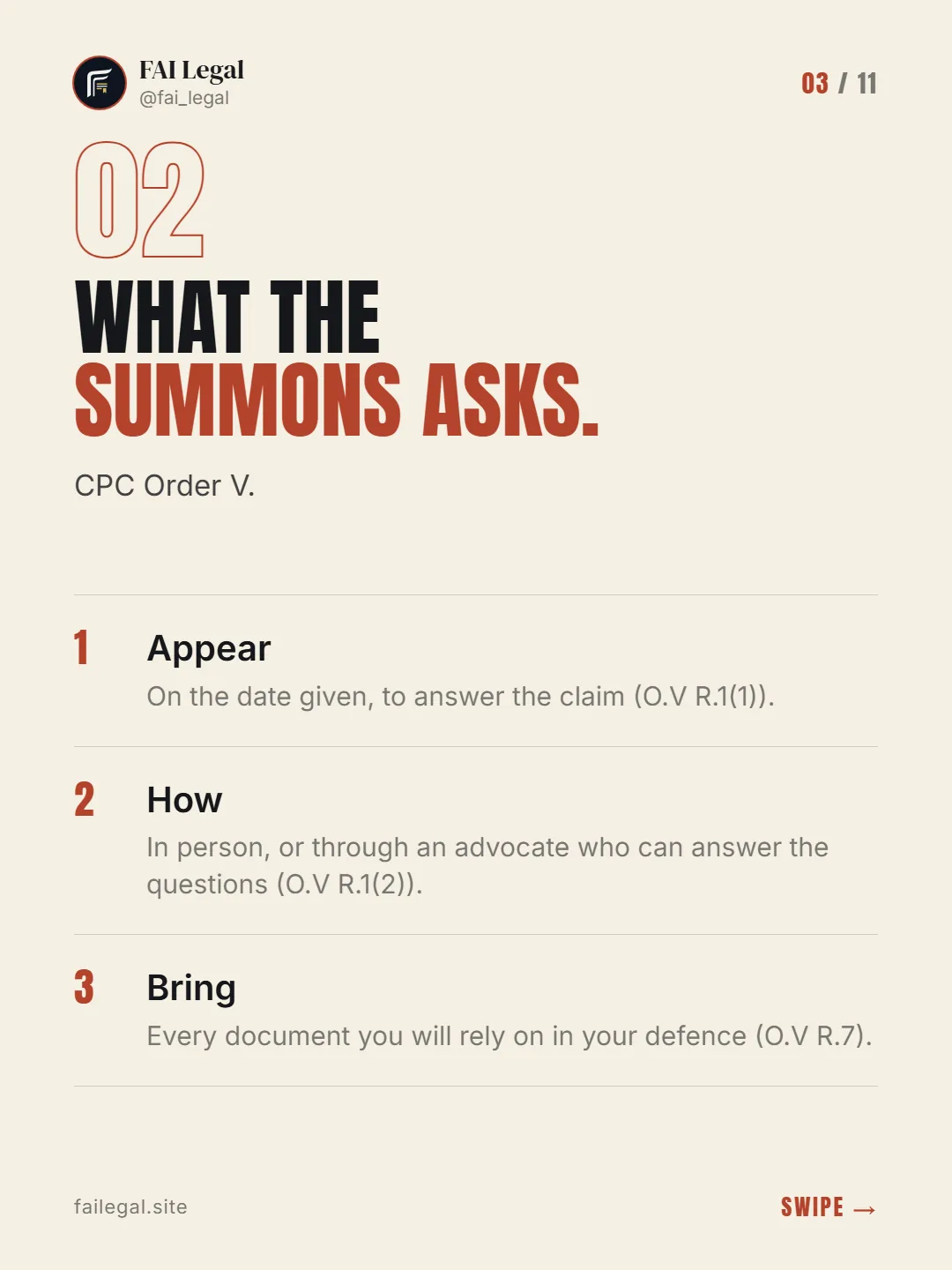
What the summons asks.
CPC Order V.
- AppearOn the date given, to answer the claim (O.V R.1(1)).
- HowIn person, or through an advocate who can answer the questions (O.V R.1(2)).
- BringEvery document you will rely on in your defence (O.V R.7).
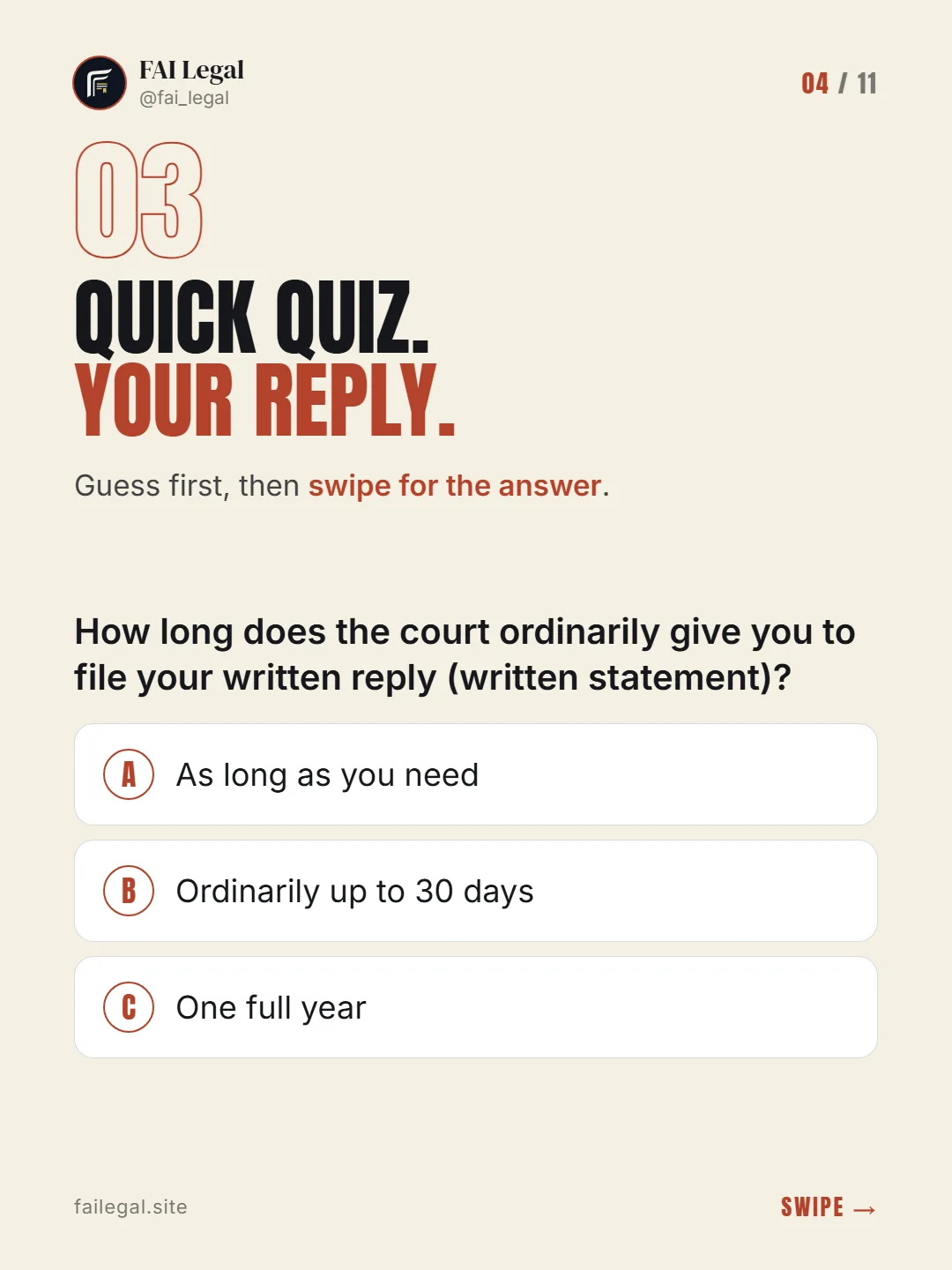
Quick quiz. Your reply.
Guess first, then swipe for the answer.
- A. As long as you need
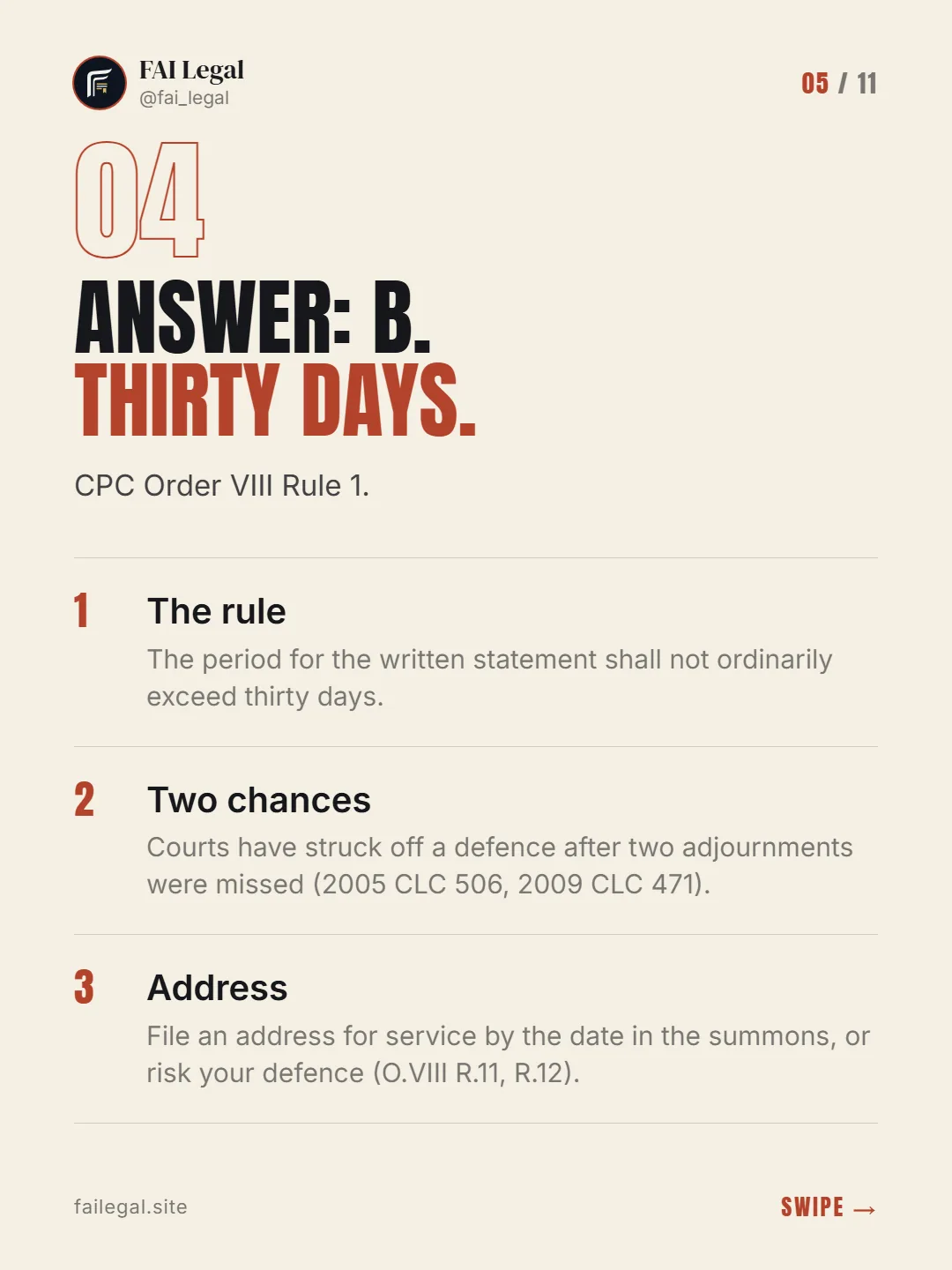
- B. Ordinarily up to 30 days
- C. One full year
Answer: B. Thirty days.
CPC Order VIII Rule 1.
- The ruleThe period for the written statement shall not ordinarily exceed thirty days.
- Two chancesCourts have struck off a defence after two adjournments were missed (2005 CLC 506, 2009 CLC 471).
- AddressFile an address for service by the date in the summons, or risk your defence (O.VIII R.11, R.12).
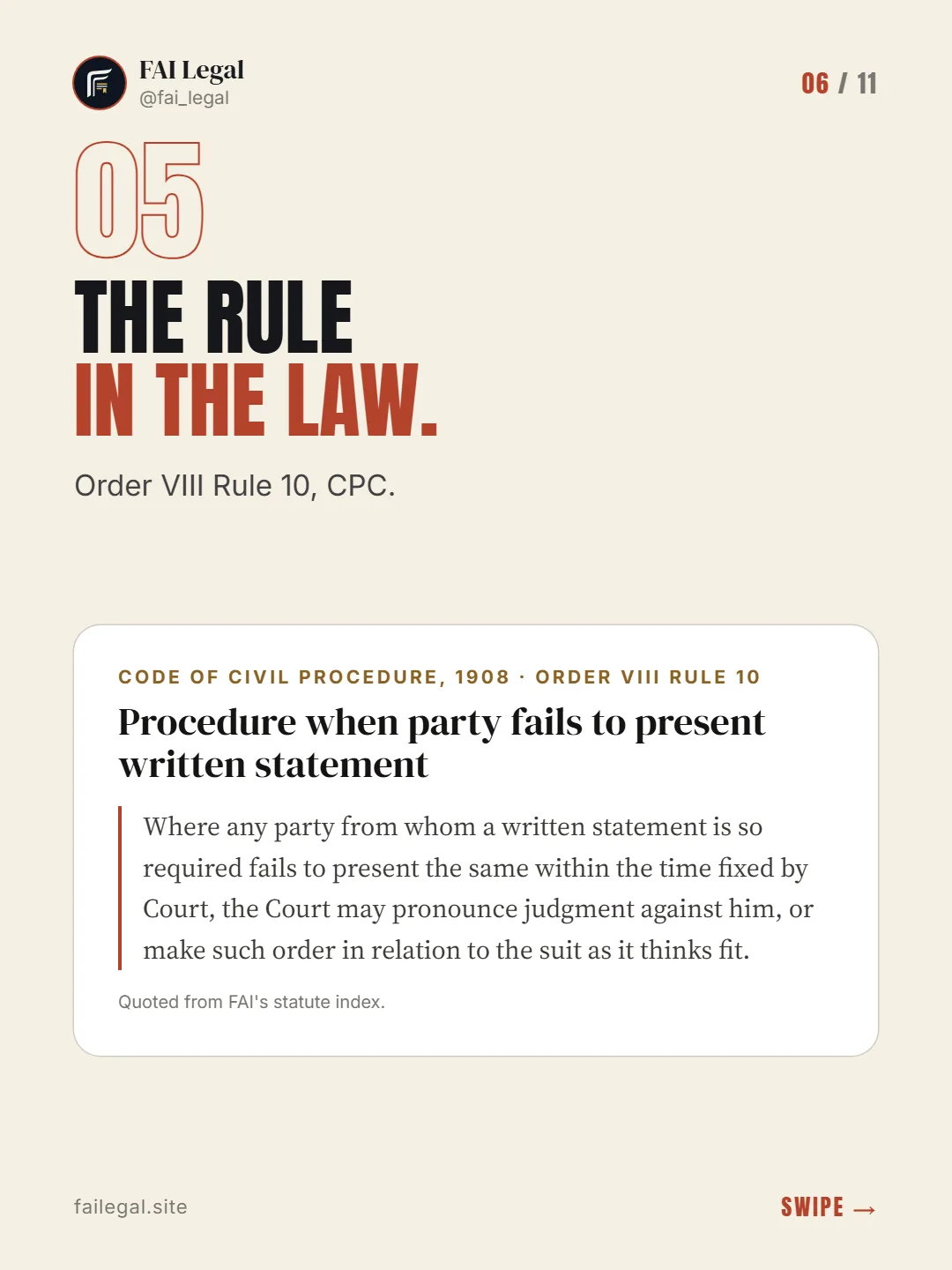
The rule in the law.
Order VIII Rule 10, CPC.
“Where any party from whom a written statement is so required fails to present the same within the time fixed by Court, the Court may pronounce judgment against him, or make such order in relation to the suit as it thinks fit.”
Code of Civil Procedure, 1908 · Order VIII Rule 10, Procedure when party fails to present written statement
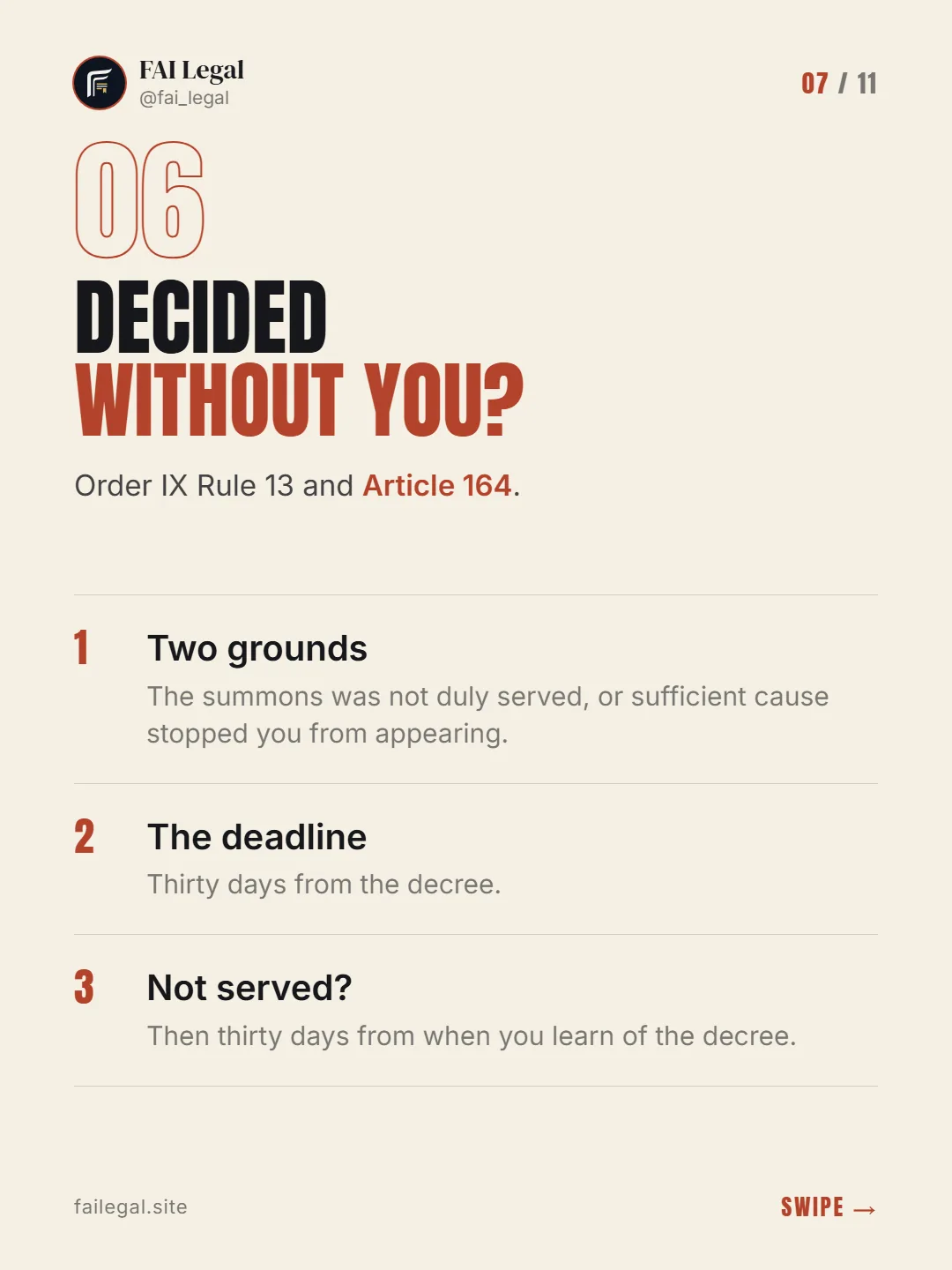
Decided without you?
Order IX Rule 13 and Article 164.
- Two groundsThe summons was not duly served, or sufficient cause stopped you from appearing.
- The deadlineThirty days from the decree.
- Not served?Then thirty days from when you learn of the decree.
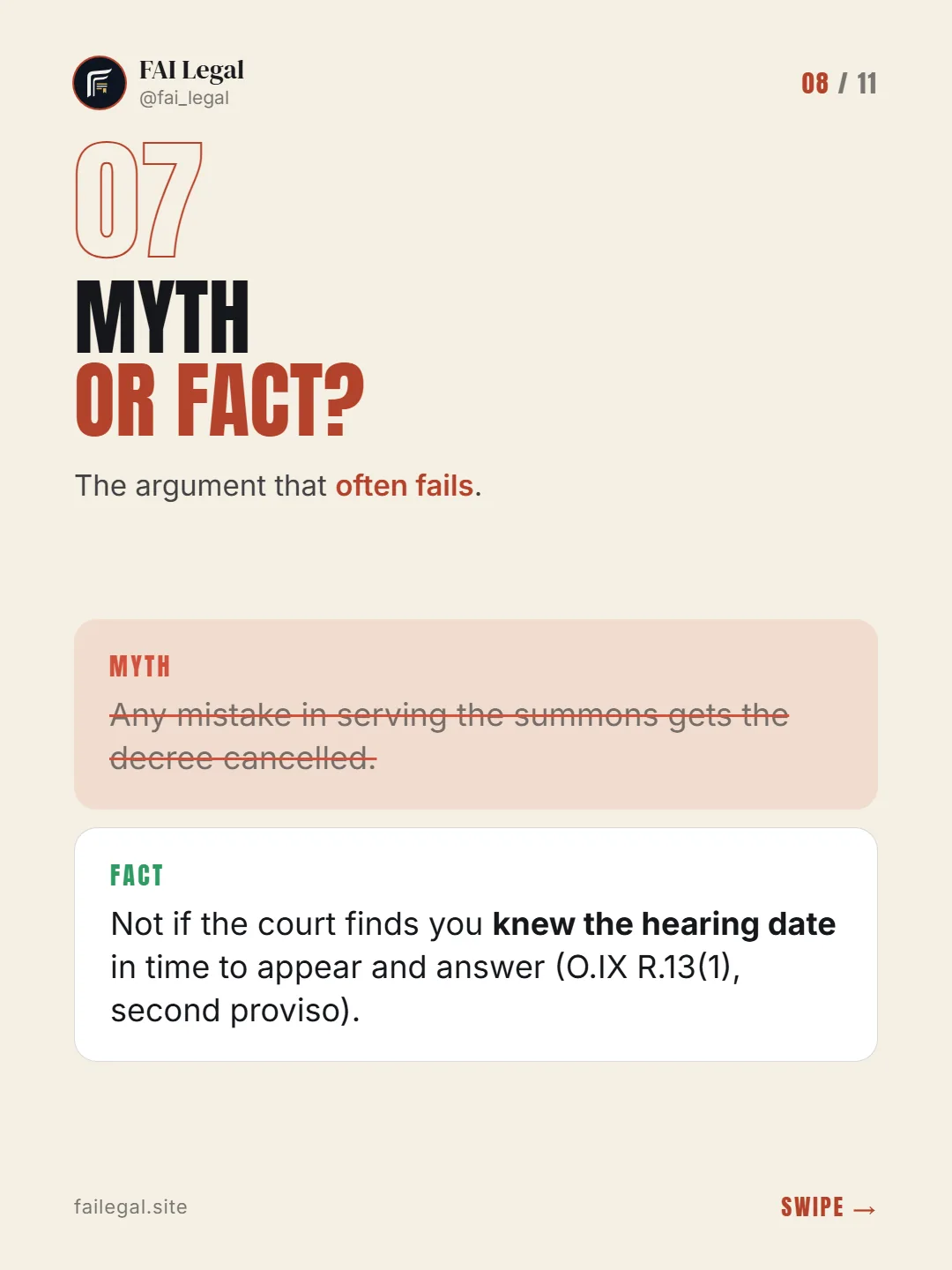
Myth or fact?
The argument that often fails.
- Myth: Any mistake in serving the summons gets the decree cancelled.
- Fact: Not if the court finds you knew the hearing date in time to appear and answer (O.IX R.13(1), second proviso).
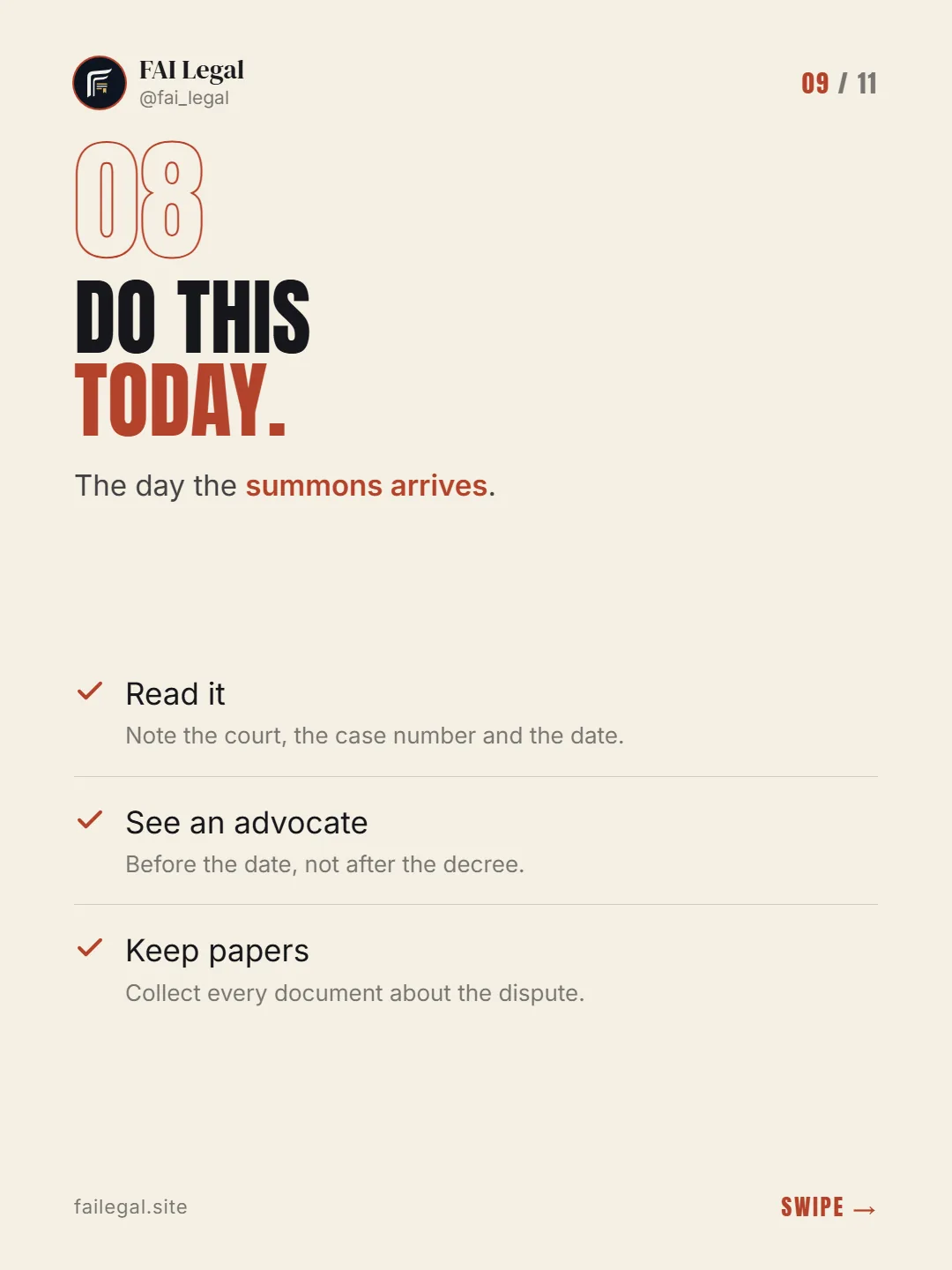
Do this today.
The day the summons arrives.
- Read itNote the court, the case number and the date.
- See an advocateBefore the date, not after the decree.
- Keep papersCollect every document about the dispute.
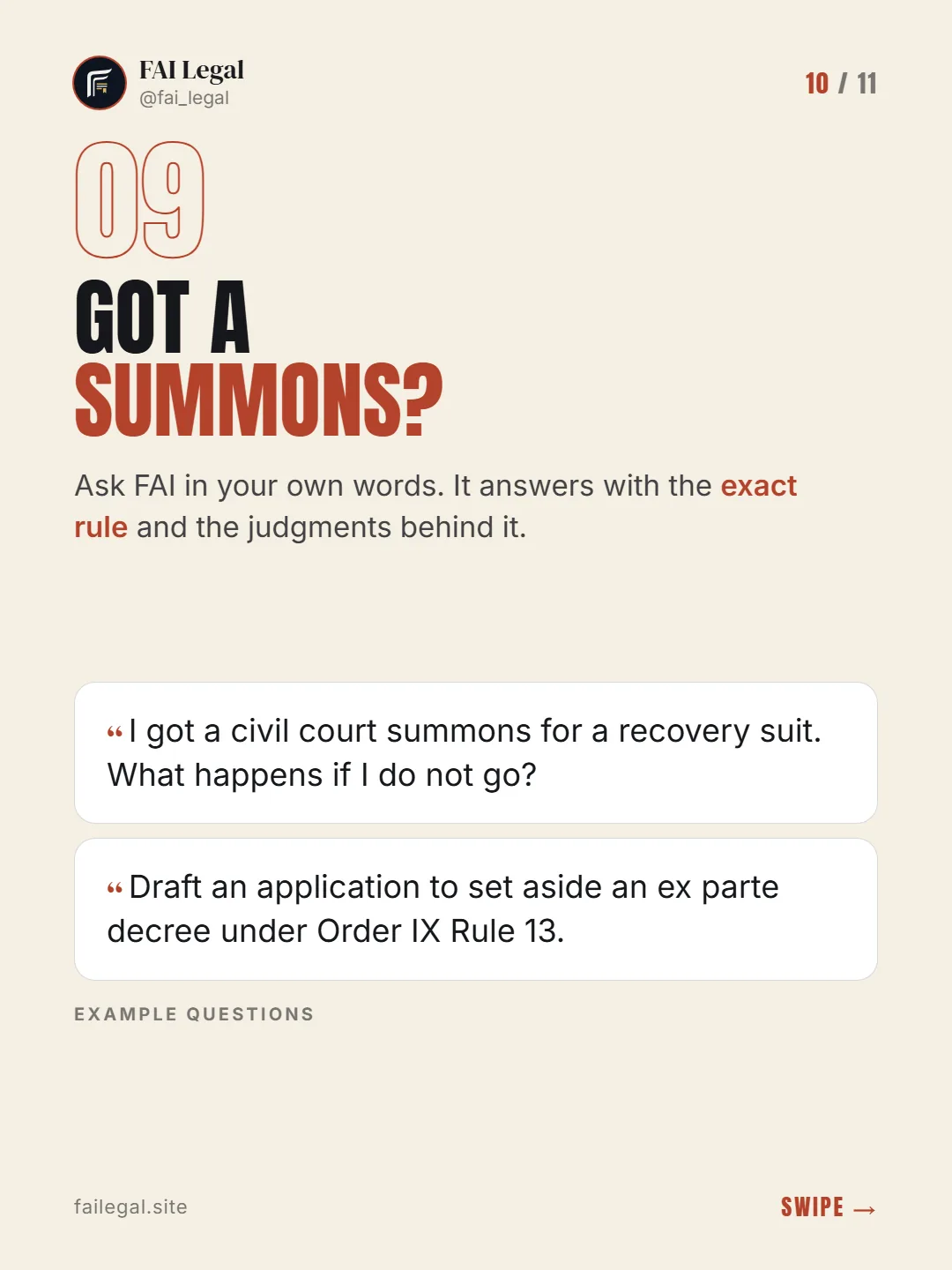
Got a summons?
Ask FAI in your own words. It answers with the exact rule and the judgments behind it.
- I got a civil court summons for a recovery suit. What happens if I do not go?
- Draft an application to set aside an ex parte decree under Order IX Rule 13.
Example questions
What this does not mean
- The 30 day period for the written statement is the ordinary limit under Order VIII Rule 1. The rule says it shall not ordinarily exceed thirty days, so check the date the court fixes.
- Order VIII Rule 10 says the court may pronounce judgment. It is not automatic, and the court can make another order it thinks fit.
- A mistake in serving the summons does not always cancel an ex parte decree. If the court finds you knew the hearing date in time to appear and answer, the decree can stand (O.IX R.13(1), second proviso).
Questions people ask
What happens if I ignore a civil court summons in Pakistan?
The case can go on without you. If you do not file your written statement within the time fixed, the court may pronounce judgment against you (CPC Order VIII Rule 10).
How many days do I get to file a written statement?
The period shall not ordinarily exceed thirty days (CPC Order VIII Rule 1). Check the date the court has fixed in your case.
Can I send a lawyer instead of going to court myself?
Yes. You can appear in person or through an advocate who is able to answer the questions (O.V R.1(2)).
How do I set aside an ex parte decree?
Apply under Order IX Rule 13, showing that the summons was not duly served or that sufficient cause stopped you from appearing. The deadline is thirty days from the decree, or from when you learn of it if you were not served (Limitation Act Art. 164).
What should I take with me when summoned?
Bring every document you will rely on in your defence (O.V R.7). See an advocate before the date, not after a decree.
Sources
- Code of Civil Procedure, 1908 · Order VIII Rule 10
Procedure when party fails to present written statement Pakistan Code
Educational legal information, not legal advice. Every case turns on its own facts. Speak to a qualified lawyer about your situation. Review status: Pending advocate review. How we check.