Courts and procedure · For advocates
Decree by fraud? Section 12(2), not a suit.
In short
Which court, which clock, and what the Supreme Court expects in the application, from the reported headnotes.
By the FAI Legal editorial desk · 10 October 2026 · 10 slides · 2 min read

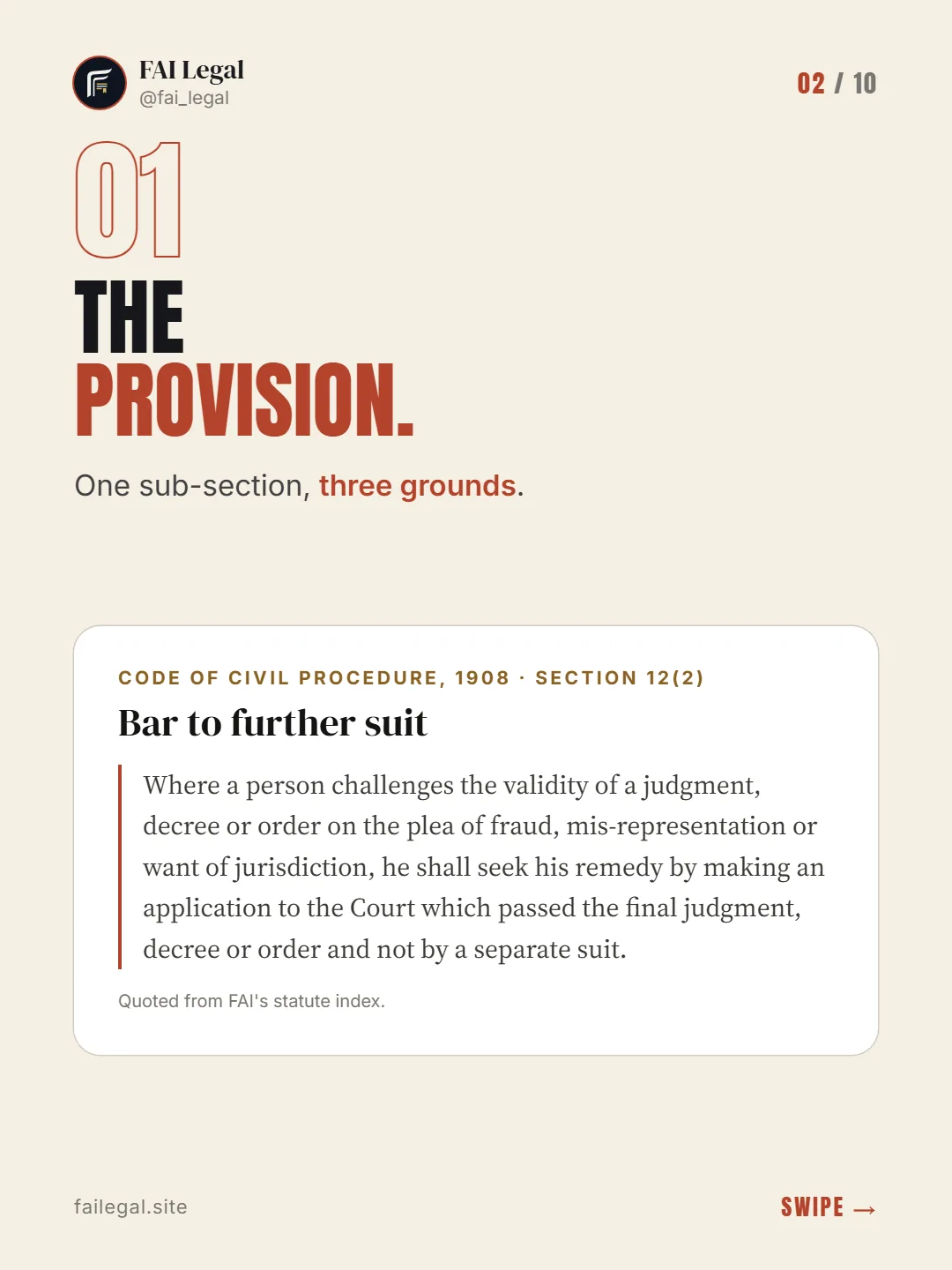
The provision.
One sub-section, three grounds.
“Where a person challenges the validity of a judgment, decree or order on the plea of fraud, mis-representation or want of jurisdiction, he shall seek his remedy by making an application to the Court which passed the final judgment, decree or order and not by a separate suit.”
Code of Civil Procedure, 1908 · Section 12(2), Bar to further suit
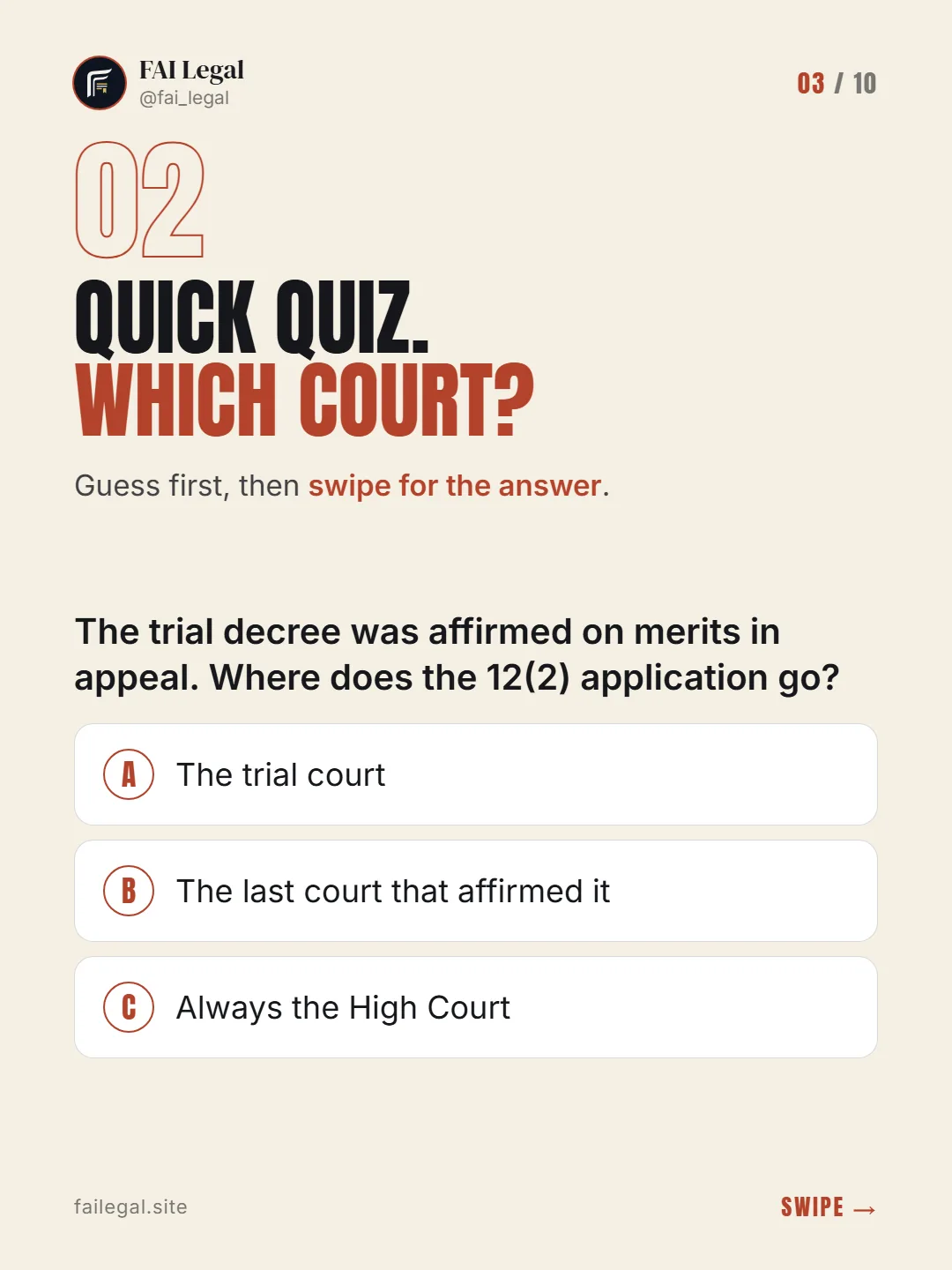
Quick quiz. Which court?
Guess first, then swipe for the answer.
- A. The trial court
- B. The last court that affirmed it
- C. Always the High Court
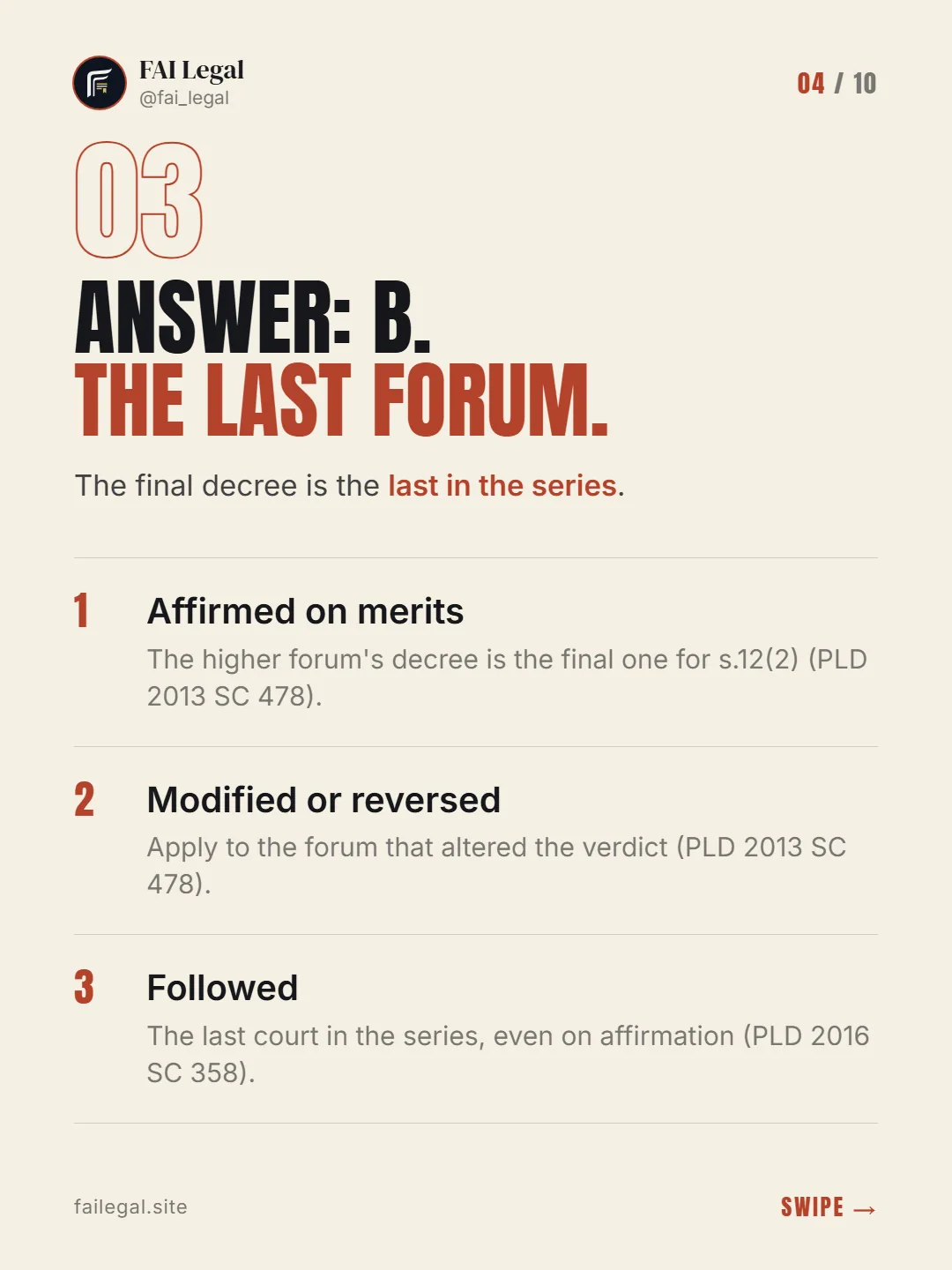
Answer: B. The last forum.
The final decree is the last in the series.
- Affirmed on meritsThe higher forum's decree is the final one for s.12(2) (PLD 2013 SC 478).
- Modified or reversedApply to the forum that altered the verdict (PLD 2013 SC 478).
- FollowedThe last court in the series, even on affirmation (PLD 2016 SC 358).
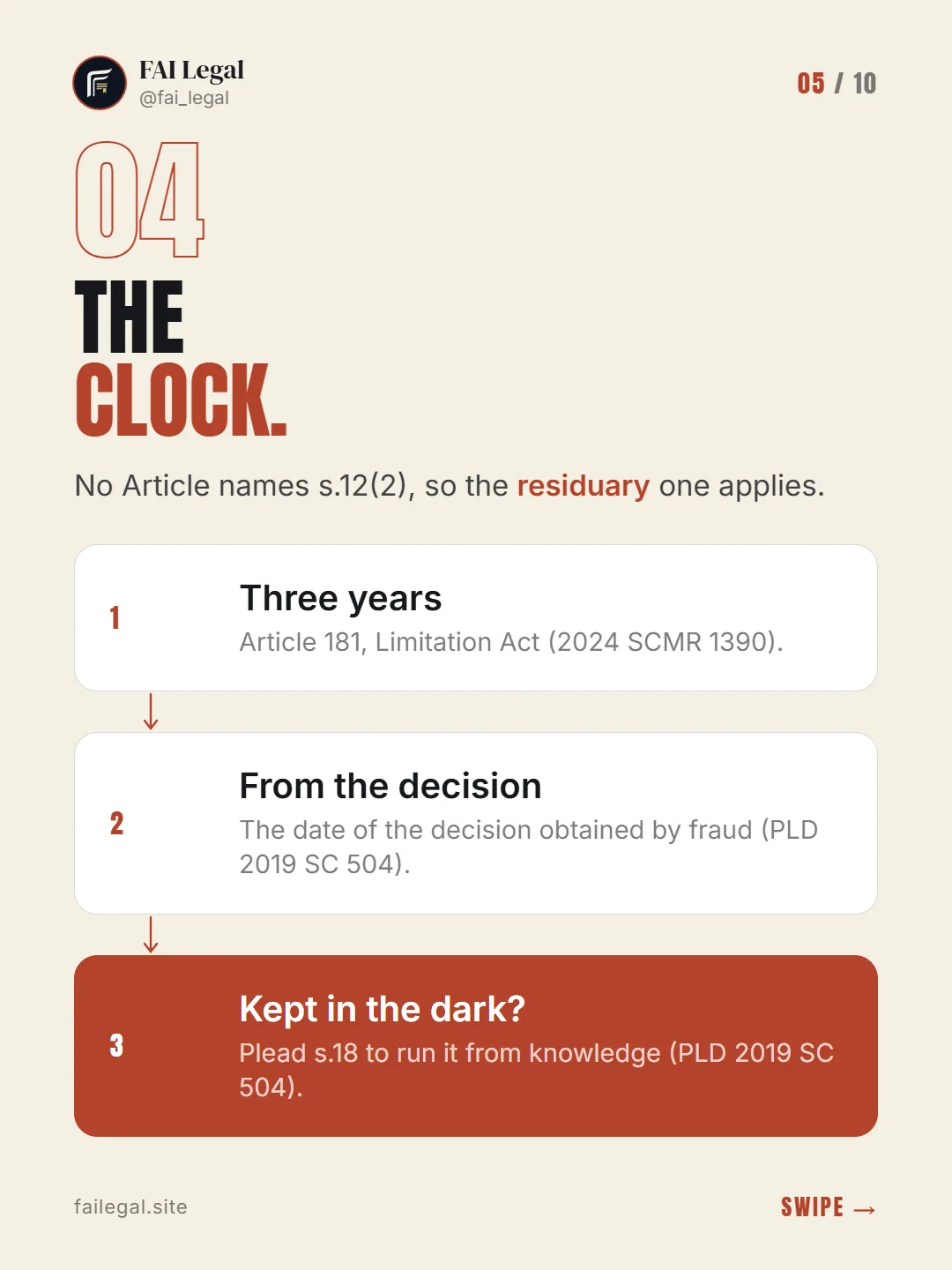
The clock.
No Article names s.12(2), so the residuary one applies.
- Three yearsArticle 181, Limitation Act (2024 SCMR 1390).
- From the decisionThe date of the decision obtained by fraud (PLD 2019 SC 504).
- Kept in the dark?Plead s.18 to run it from knowledge (PLD 2019 SC 504).
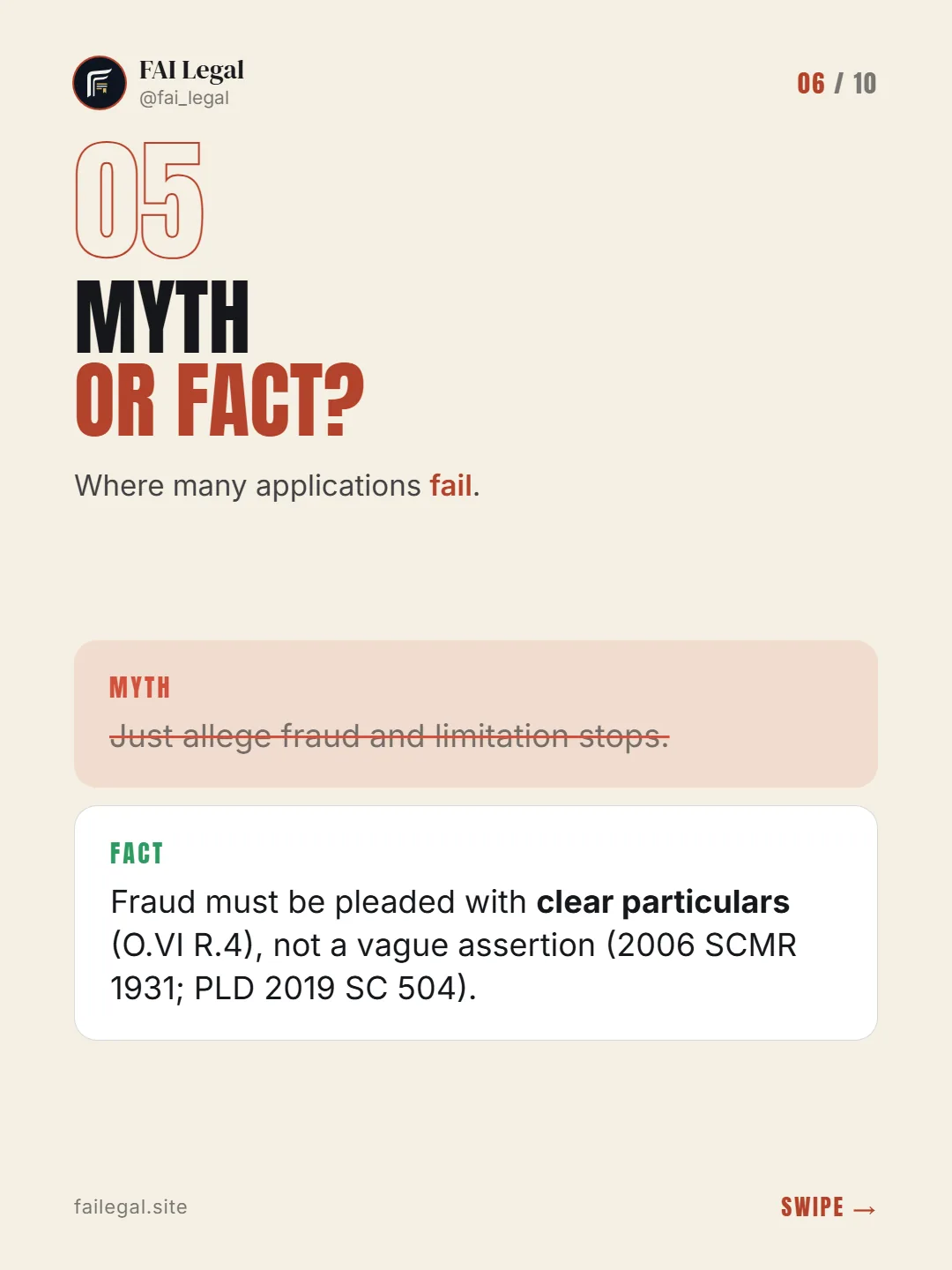
Myth or fact?
Where many applications fail.
- Myth: Just allege fraud and limitation stops.
- Fact: Fraud must be pleaded with clear particulars (O.VI R.4), not a vague assertion (2006 SCMR 1931; PLD 2019 SC 504).
Myth or fact?
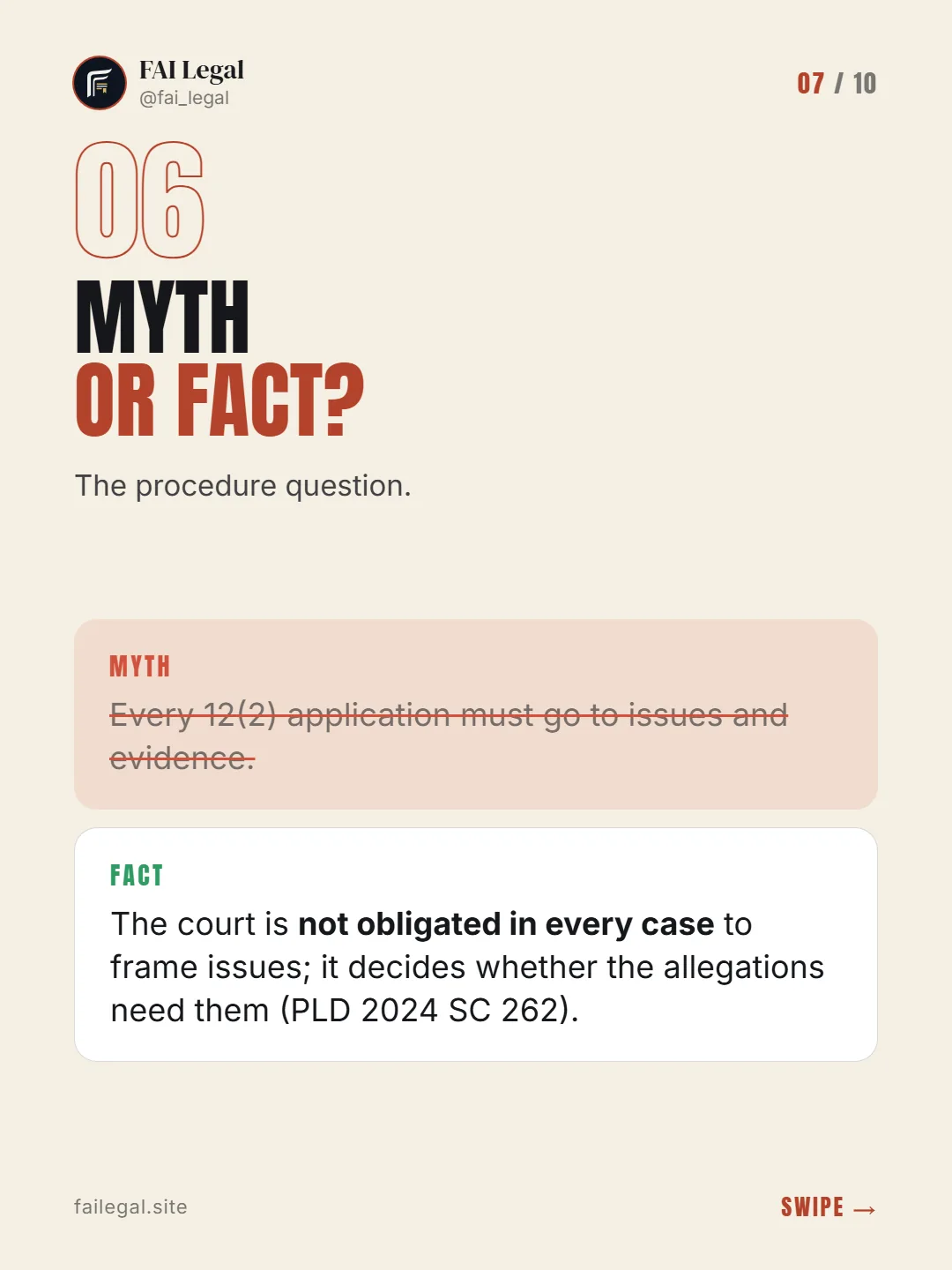
The procedure question.
- Myth: Every 12(2) application must go to issues and evidence.
- Fact: The court is not obligated in every case to frame issues; it decides whether the allegations need them (PLD 2024 SC 262).
Two more points.
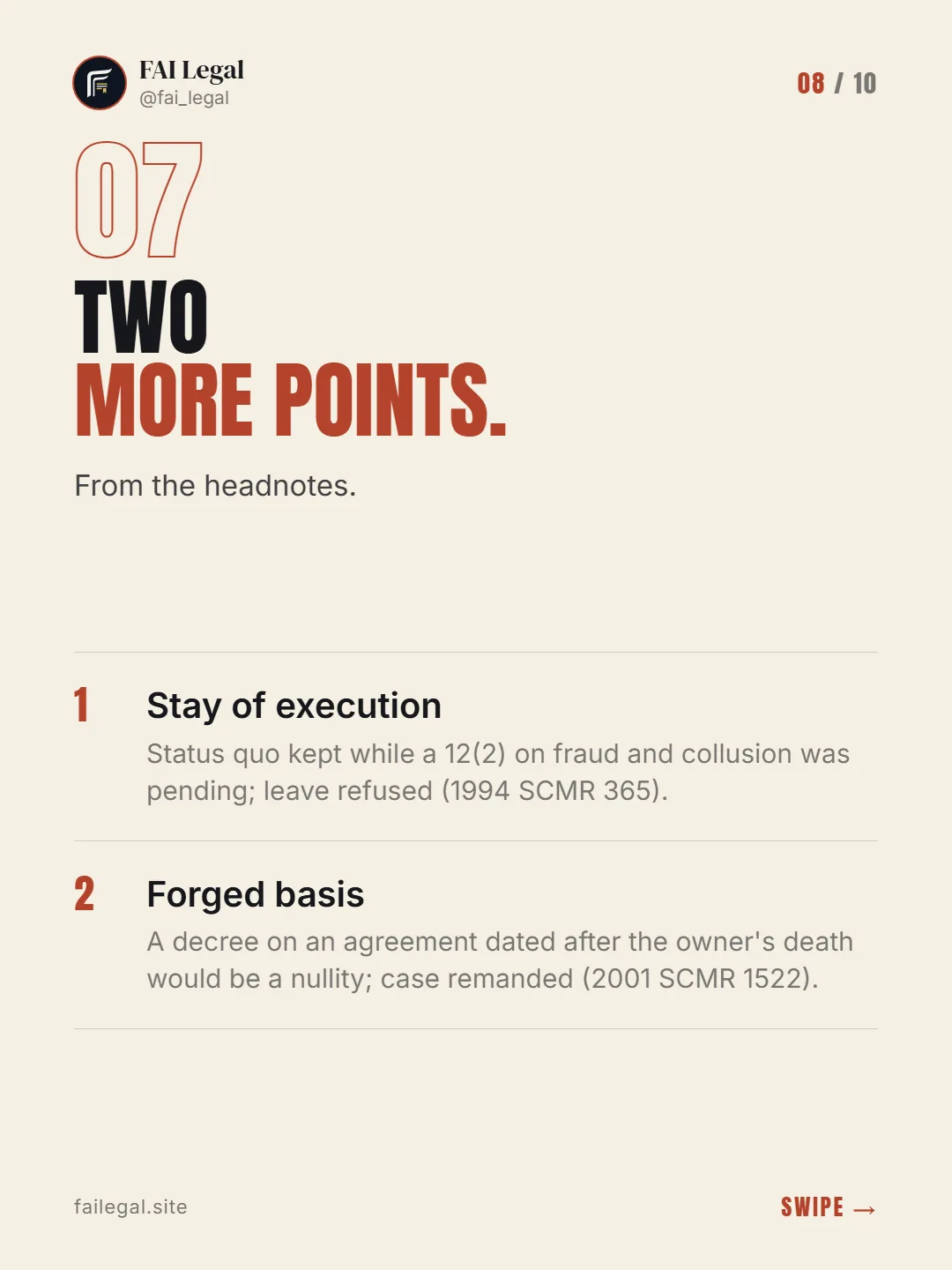
From the headnotes.
- Stay of executionStatus quo kept while a 12(2) on fraud and collusion was pending; leave refused (1994 SCMR 365).
- Forged basisA decree on an agreement dated after the owner's death would be a nullity; case remanded (2001 SCMR 1522).
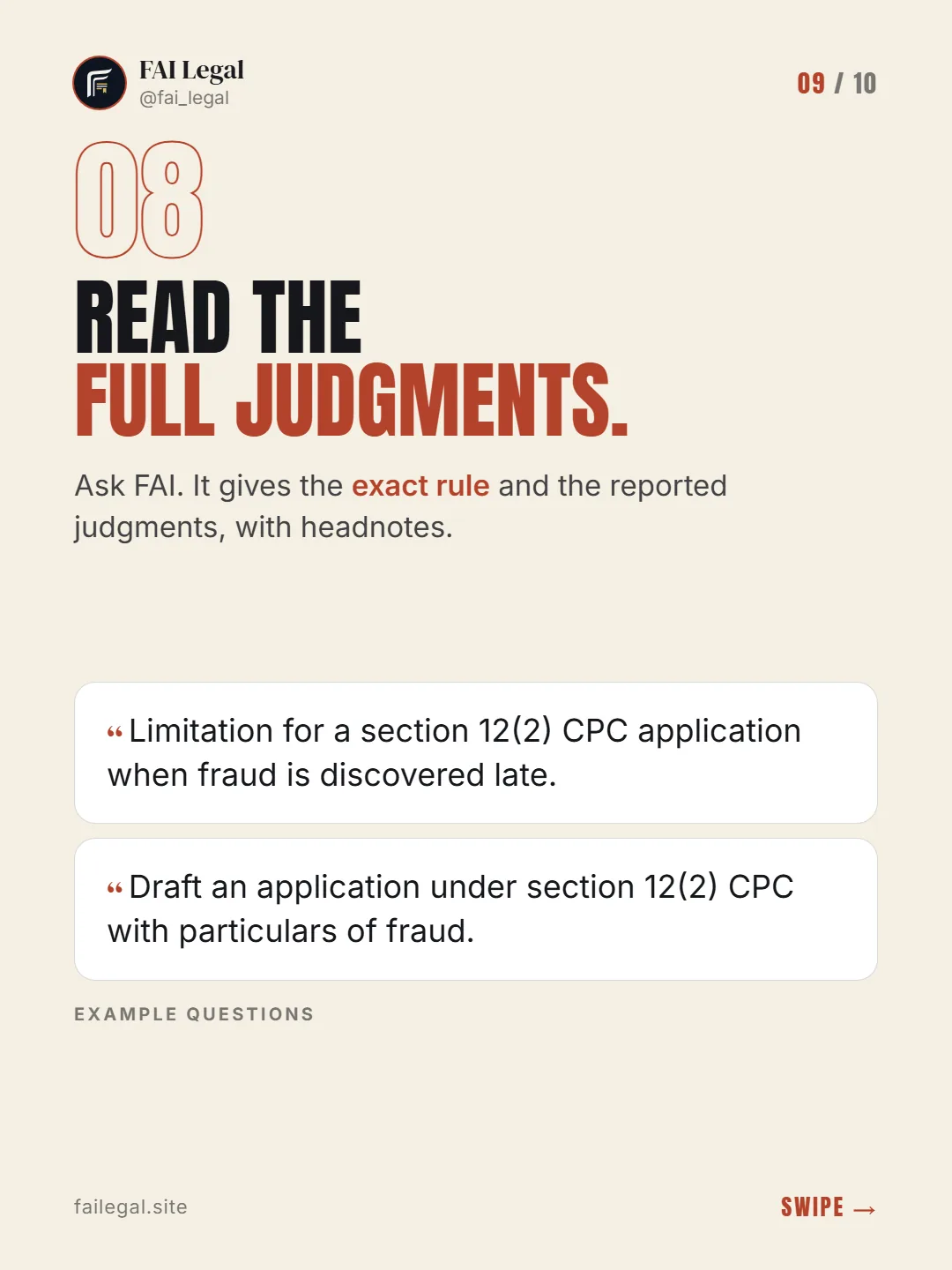
Read the full judgments.
Ask FAI. It gives the exact rule and the reported judgments, with headnotes.
- Limitation for a section 12(2) CPC application when fraud is discovered late.
- Draft an application under section 12(2) CPC with particulars of fraud.
Example questions
What this does not mean
- A separate suit is not the remedy. Section 12(2) CPC requires an application to the court that passed the final judgment, decree or order.
- Simply alleging fraud does not stop limitation. Fraud must be pleaded with clear particulars, not a vague assertion (2006 SCMR 1931; PLD 2019 SC 504).
- The court is not obligated to frame issues and record evidence in every 12(2) application (PLD 2024 SC 262).
Questions people ask
What is section 12(2) CPC?
It says a person who challenges a judgment, decree or order on the plea of fraud, misrepresentation or want of jurisdiction must apply to the court that passed the final judgment, decree or order, not file a separate suit.
Which court hears a 12(2) CPC application?
The last court in the series. Where a higher forum affirmed on merits, its decree is the final one, and where it modified or reversed, apply to the forum that altered the verdict (PLD 2013 SC 478; PLD 2016 SC 358).
What is the limitation for a 12(2) CPC application?
Three years under Article 181 of the Limitation Act (2024 SCMR 1390), from the date of the decision obtained by fraud. If you were kept in the dark, plead s.18 to run it from knowledge (PLD 2019 SC 504).
Can I file a suit to cancel a decree obtained by fraud?
No. Section 12(2) CPC says the remedy is an application to the court that passed the final decree, and not by a separate suit.
Can execution be stopped while a 12(2) application is pending?
In one reported case, status quo was kept while a 12(2) application on fraud and collusion was pending, and leave was refused (1994 SCMR 365).
Sources
- Code of Civil Procedure, 1908 · Section 12(2)
Bar to further suit Pakistan Code
Educational legal information, not legal advice. Every case turns on its own facts. Speak to a qualified lawyer about your situation. Review status: Pending advocate review. How we check.