Workplace · Supreme Court of Pakistan
Can a contract employee become the company's own worker?
The myth: “If you were hired through a contractor, you can never be the company's worker.”Wrong
The short answer
IFFCO Pakistan (Private) Limited v. Ghulam Murtaza and others, Supreme Court of Pakistan, 2024 SCMR 1548, decided 4 April 2024
IFFCO Pakistan (Private) Limited v. Ghulam Murtaza and others · Supreme Court of Pakistan · 2024 SCMR 1548 · decided 4 April 2024
By the FAI Legal editorial desk · 27 October 2026 · 7 min read
Yes, it can happen. In April 2024 the Supreme Court refused a company's challenge and left in place the finding that workers it called contractors' men were its own employees. Outsourcing is allowed, the Court said, "but what is crucial is that the outsourcing should not be used as a weapon of circumvention of labour laws by means of sham agreements" (2024 SCMR 1548, para 11).
What decides it is how the work really runs: who pays you, who controls and supervises you, whose machines, premises and raw material you work with, and whether you do the company's regular work. The law itself counts a worker employed "either directly or through a contractor" (Industrial Relations Act 2012, section 2(xxxiii)).
Key points
- A contractor's name on the paper does not settle it: workers "engaged directly or through a contractor, would be deemed to be the employees of the company for whose benefit they perform functions" (para 11).
- The test is control and supervision, financial risk, the plant, machinery and premises, and the raw material (para 7), along with who appoints you, who pays you and who can dismiss you (para 11).
- In this case the company's own attendance sheets and pay from its own account decided it, and its three contractor agreements had all expired (para 5).
- Outsourcing itself is lawful. Only a sham arrangement used to deprive workers of their rights is not: "There is a huge distinction between bona fide and mala fide outsourcing" (para 11).
- Two of the workers appeared in person before the Supreme Court, and the company's petitions were dismissed with leave to appeal refused (paras 4 and 13).
Can a contract employee become permanent? The short answer
If you were hired through a contractor but the company really runs your work, the law can treat you as the company's own worker. In IFFCO Pakistan (Private) Limited v. Ghulam Murtaza (2024 SCMR 1548), decided on 4 April 2024, the Supreme Court left standing the findings of the labour commission and the Sindh High Court that such workers were the company's employees, free to join a trade union of their own choice.
The question is never only what the contract says. It is how the job actually works: whose sheet marks your attendance, whose account pays you, who approves your leave, whose machines and raw material you use, and whether your work is the company's everyday business.
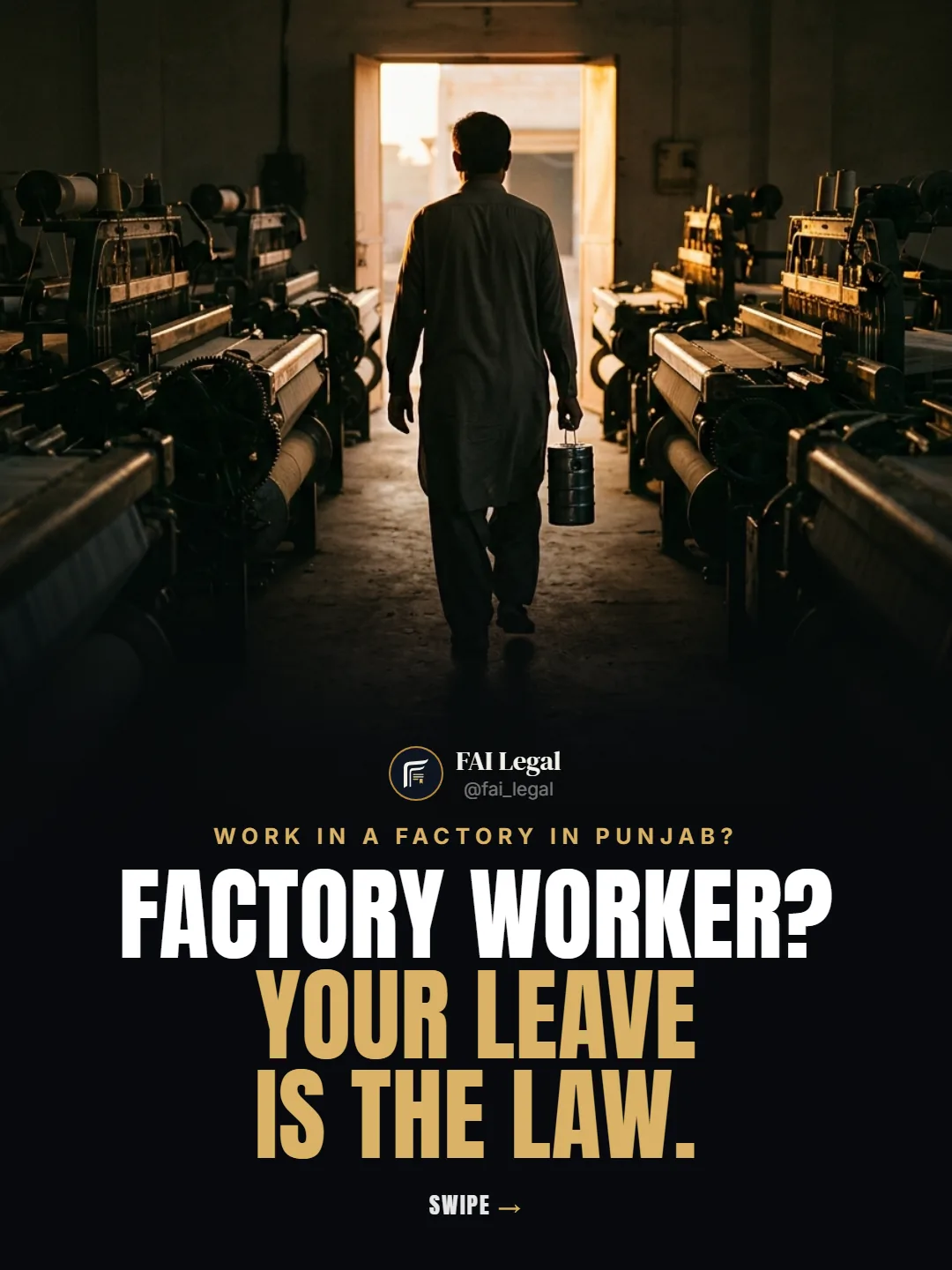
Karachi: workers the company called contractors' men
The company refines, packs and sells cooking oil in Karachi. A group of its workers went to the National Industrial Relations Commission (NIRC) saying they had done work of a permanent nature there "for the past many years", "regularly and without any gap or break", yet were given no appointment letters, were kept out of the trade union and were denied annual increments, bonus, leave, medical cover and group insurance (2024 SCMR 1548, para 2).
The company said they were employed by three independent contractors (para 3). But the workers produced attendance and requisition sheets issued by the company, which it never rebutted; the three agreements, made in 2007, 2008 and 2009, "had already expired when presented in Court"; the High Court found they were "being paid from the account of the company"; and the contractors themselves never came forward to claim them (para 5). The NIRC single bench (9 November 2020), its full bench (13 September 2021) and the Sindh High Court (14 February 2023) all ruled for the workers (para 2).
What the Supreme Court decided in April 2024
A bench of Muhammad Ali Mazhar and Irfan Saadat Khan, JJ heard the company's petitions on 4 April 2024. Two of the workers appeared in person and argued that they had worked for years under the company's direct control, including the approval of their leave and the recording of their daily attendance (para 4). The company withdrew its petitions against 20 workers, and for the rest the petitions were dismissed and leave to appeal refused (para 13). The judgment, written by Muhammad Ali Mazhar, J, gives the reasons.
"There is no bar to contract out the whole job or in the bits and pieces to the outsource contractor", the Court said, "but what is crucial is that the outsourcing should not be used as a weapon of circumvention of labour laws by means of sham agreements". It added: "The alleged outsourcing arrangement cannot be allowed to be used as a device to deprive the workers of their legitimate rights envisaged under the labour laws" (para 11).
The test: whose worker are you?
The Court's yardstick is "the extent of control and supervision on human resource, ongoing control of independent contractor, if any, financial risks and obligations, as well as the provision of plant, machinery, and premises, and finally supply of raw material and allied set-up" (para 7). It also listed the usual questions: who is the appointing authority, who is the paymaster, who can dismiss, the extent of control and supervision, and the nature of the job and of the establishment (para 11).
Its summary of the law is plain: if the workers are in a department that is one of the company's main parts, the machines and raw material are the company's and its supervisors control the work, they are the company's employees; workers "engaged directly or through a contractor, would be deemed to be the employees of the company for whose benefit they perform functions"; and where a contract is "not genuine", "the so called contract employees will have to be treated as employee of the company" (para 11).
Workers: what to do
Keep proof that the company runs your work: attendance sheets, pay slips and bank transfers showing who pays you, leave approvals, gate passes, the company's uniform or card, and the names of the supervisors who direct you. In this case the company's attendance sheets and its own account were what the courts relied on (para 5).
Under the Industrial Relations Act 2012, a worker can bring a grievance about a right under any law to the employer in writing "within ninety days" of the day it arises; the employer must answer within fifteen days, and the worker can then take it to the Commission within sixty days (section 33). The Punjab Act gives three months, then the Labour Court within sixty days (section 33). Workers with the same grievance can apply together. A union or a labour lawyer can help you choose the right forum.
Companies: outsourcing that holds up
The Court did not ban outsourcing. A business may hand a job, or parts of it, to an outside contractor, including through toll manufacturing (paras 6 and 11). What it must not do is use a paper arrangement to dodge labour laws.
The warning signs from this case: contractor agreements that have expired while the same people keep working, the company paying and supervising the workers itself, and contractors who never step forward as the real employer (paras 5 and 11).
For law students and lawyers
The Court relied on Fauji Fertilizer Company Ltd. v. NIRC (2013 SCMR 1253), Abdul Ghafoor v. President, National Bank of Pakistan (2018 SCMR 157), State Oil Company Limited v. Bakht Siddique (2018 SCMR 1181) and Sui Southern Gas Company Limited v. Registrar of Trade Unions (2020 PLC 153), and on the factors listed in Nilgiri Coop. Mkt. Society Ltd. v. State of T.N. (AIR 2004 SC 1639), including the integration test (paras 9 and 11).
It also noted Pakistan's ratification of ILO Conventions 87 and 98 and the duties in section 91 and Schedule II of the IRA (para 10), and repeated that a High Court in its constitutional jurisdiction does not upset concurrent findings of fact that rest on the evidence (para 12).
The case at a glance
- Facts
- Workers at a Karachi oil company said they had done permanent work for years without a break but were treated as contractors' employees, kept out of the union and denied benefits. The company relied on three contractor agreements, all expired; the attendance sheets were the company's and the pay came from its own account. The NIRC single bench and full bench and the Sindh High Court held them to be the company's employees.
- The question
- Were workers supplied through contractors the company's own employees, with the rights of its workers?
- What the Court held
- Yes on these facts. The concurrent findings stood; the company's petitions were dismissed and leave to appeal was refused (paras 12 and 13).
- Why
- Outsourcing is lawful, but not as a sham to get around labour laws. The test is control and supervision, financial risk, plant, machinery and premises, and raw material; who appoints, pays and dismisses. Workers engaged directly or through a contractor are deemed employees of the company they work for (paras 7 and 11).
- Limits
- It does not make every contractor's worker the company's: it turns on evidence, which these workers had (para 5). Genuine outsourcing remains lawful (para 11). People employed mainly in managerial or administrative roles are outside the IRA's definition of worker (section 2(xxxiii)).
In the Court’s words
“the employees, engaged directly or through a contractor, would be deemed to be the employees of the company for whose benefit they perform functions”
2024 SCMR 1548, para 11
“all the agreements had already expired when presented in Court”
2024 SCMR 1548, para 5
The law it relies on
"worker" and "workman" mean a person "employed (including employment as a supervisor or as an apprentice) in an establishment or industry for hire or reward either directly or through a contractor whether the terms of employment are express or implied", but not a person employed mainly in a managerial or administrative capacity.
A worker may bring a grievance about a right under any law to the employer's notice in writing "within ninety days of the day on which the cause of such grievance arises"; the employer answers within fifteen days; the worker may then go to the Commission within sixty days.
The same definition of worker, "either directly or through a contractor"; a grievance within three months, then the Labour Court within sixty days.
What this does not mean
- It does not mean every worker supplied by a contractor is automatically the company's. It turns on evidence of control, pay and the nature of the work, which these workers produced and the company never rebutted (para 5).
- It does not ban outsourcing. A genuine contractor who runs and pays its own staff is lawful (para 11).
- It does not cover people employed mainly in managerial or administrative roles, who fall outside the definition of worker (Industrial Relations Act 2012, section 2(xxxiii)).
- It does not set a fixed number of years. The workers here had served for many years without a break, but the test is how the work is controlled, not the calendar alone (paras 2, 7 and 11).
Questions people ask
Can a contract employee become permanent?
If you were placed through a contractor but the company controls your work, pays you and you do its regular work, the courts can treat you as its own employee, with its workers' rights (2024 SCMR 1548, para 11).
I was hired through a contractor. Am I the company's employee?
It depends on the facts: who pays you, who supervises you and approves your leave, whose machines, premises and raw material you use, and whether your work is the company's regular business (paras 7 and 11).
What proof do I need?
Attendance sheets, pay slips or bank transfers, leave approvals, gate passes, the company's uniform or card, and your supervisors' names. Here the company's attendance sheets and its own account decided it (para 5).
How long do I have to complain?
Under the Industrial Relations Act 2012, a written grievance to the employer within ninety days of the cause, then the Commission within sixty days of the employer's answer or silence (section 33). Punjab: three months, then the Labour Court.
Is outsourcing illegal in Pakistan?
No. The Supreme Court said there is no bar to outsourcing a job, but it cannot be used as a weapon to get around labour laws through sham agreements (para 11).
Thekedar ke through rakhe gaye mulazim ke haqooq?
Agar tankhwah company deti hai, haazri aur chhutti company dekhti hai, aur aap company ka rozana kaam karte hain, to aap company ke mulazim ho sakte hain (Supreme Court, 2024 SCMR 1548). Saboot sambhal kar rakhein.
Check yourself
True or false? “If you were hired through a contractor, you can never be the company's worker.”
Wrong. IFFCO Pakistan (Private) Limited v. Ghulam Murtaza and others, Supreme Court of Pakistan, 2024 SCMR 1548, decided 4 April 2024
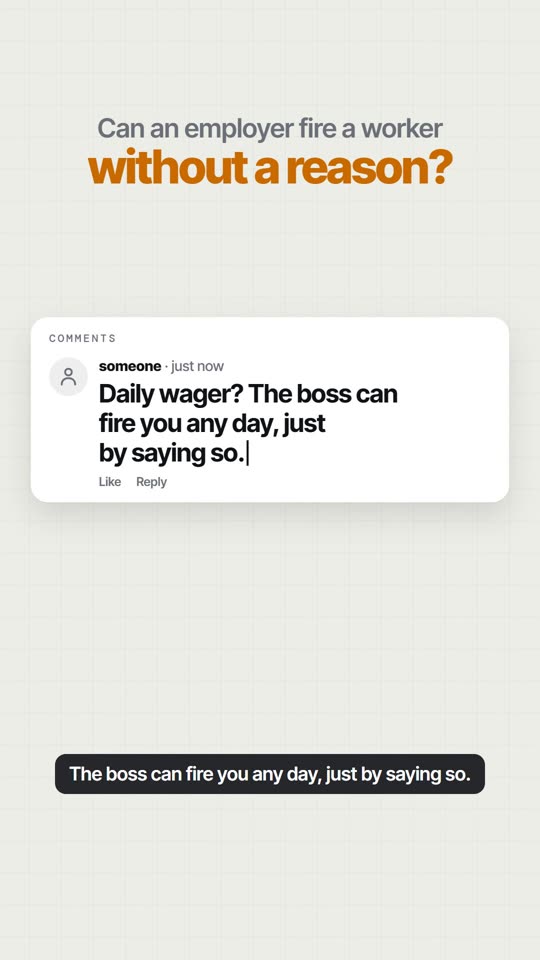
Next one: true or false? “A daily wager can be fired any day, just by word of mouth.”
Sources
- IFFCO Pakistan (Private) Limited v. Ghulam Murtaza and others, 2024 SCMR 1548 (Supreme Court of Pakistan, 4 April 2024), paras 2 to 5, 7, 11 to 13
Workers supplied through contractors held to be the company's employees on evidence of its control, supervision and pay; outsourcing is lawful but cannot be a sham to circumvent labour laws; the company's petitions dismissed and leave refused. verified against full text - Industrial Relations Act, 2012, Sections 2(xxxiii) and 33 text checked in FAI Statute Search, 27 October 2026
- Punjab Industrial Relations Act, 2010, Sections 2(xxxi) and 33 text checked in FAI Statute Search, 27 October 2026
Every quote and section above is traced to the full judgment or statute text by an automatic check that runs on every update.
What the reel says
Read the words of the reel
Years at the same machine, and the company says: you're not ours, you're the contractor's.
Can a contract employee ever be the company's own worker?
People think no. Wrong.
Karachi, an oil factory: workers there for years with no break, but no appointment letter, no bonus, no union. The company said they were the contractors' men. Its contracts had all expired, the attendance sheets were the company's, and the pay came from its own account. In April 2024 the Supreme Court turned the company down: outsourcing is allowed, but it can't be a weapon to dodge labour laws with sham contracts (2024 SCMR 1548). Two of the workers stood up for themselves in court, without a lawyer.
Whose worker are you?
1. Who pays you?
2. Who marks your attendance and leave?
3. Whose machines, raw material and daily work?
If it's the company, you can be the company's worker. Keep proof, and complain in writing within 90 days.
Educational legal information, not legal advice. Every case turns on its own facts. Speak to a lawyer about your own matter. Last checked: 27 October 2026. Review status: Pending advocate review. How we check.