Law study · For law students
9 PPC words you must know cold.
In short
Chapter II of the PPC defines the words every offence is built on: movable property, wrongful gain, injury, dishonestly, fraudulently, reason to believe, common intention, voluntarily and good faith. Here they are in 9 flashcards, each with its section.
By the FAI Legal editorial desk · 23 October 2026 · 12 slides · 2 min read
The law.
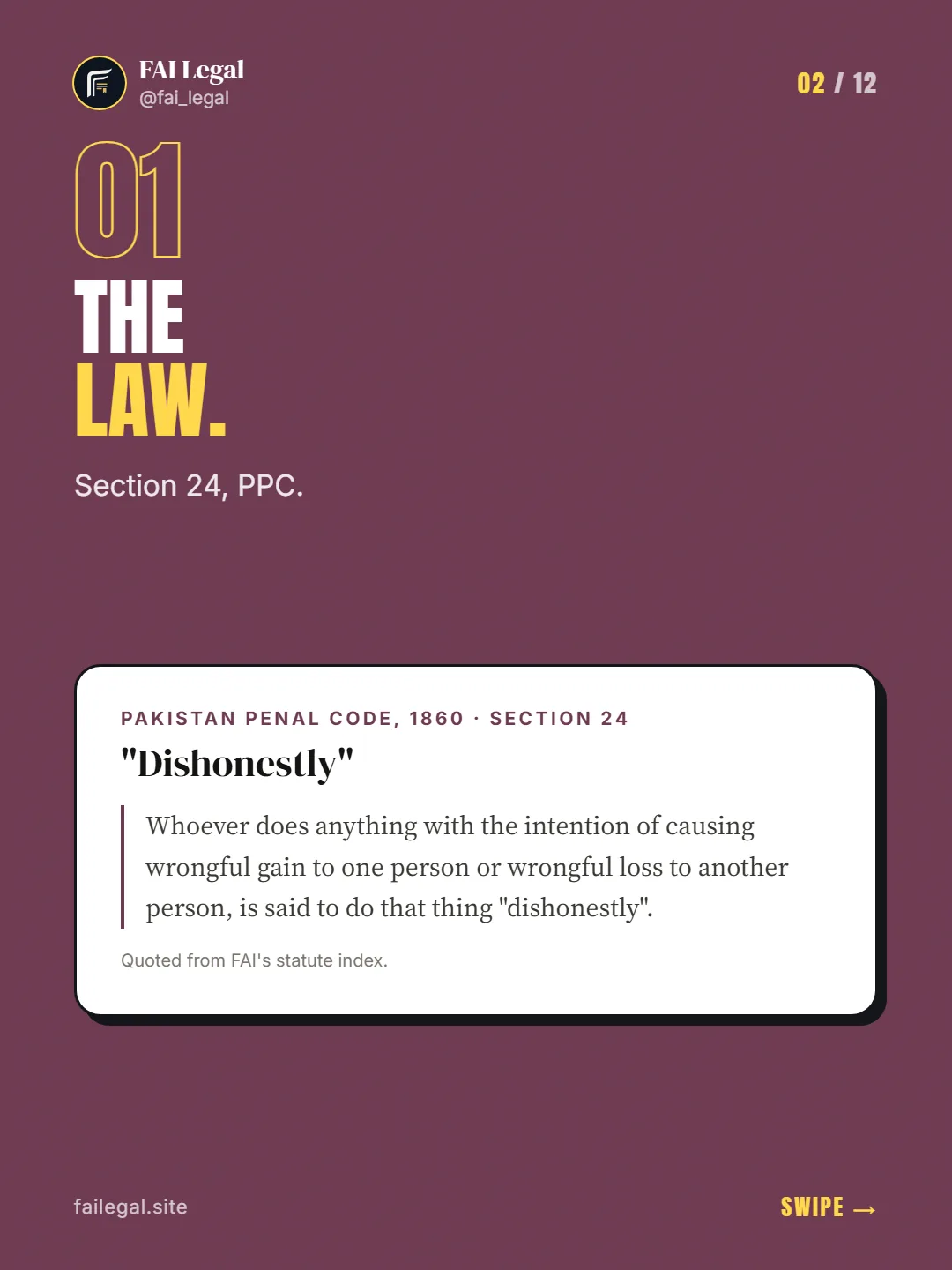
Section 24, PPC.
“Whoever does anything with the intention of causing wrongful gain to one person or wrongful loss to another person, is said to do that thing "dishonestly".”
Pakistan Penal Code, 1860 · Section 24, "Dishonestly"
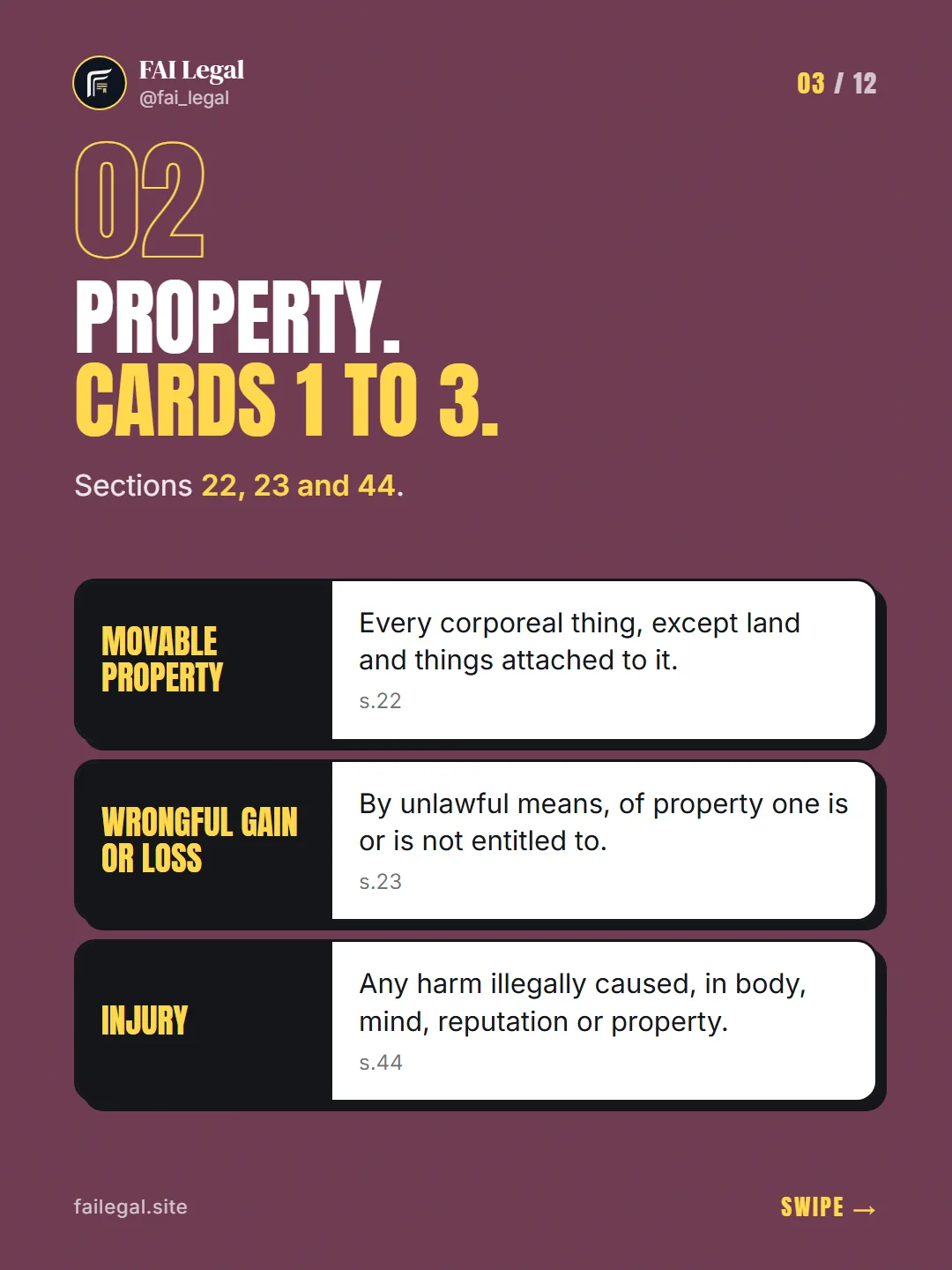
Property. Cards 1 to 3.
Sections 22, 23 and 44.
- Movable propertyEvery corporeal thing, except land and things attached to it. (s.22)
- Wrongful gain or lossBy unlawful means, of property one is or is not entitled to. (s.23)
- InjuryAny harm illegally caused, in body, mind, reputation or property. (s.44)
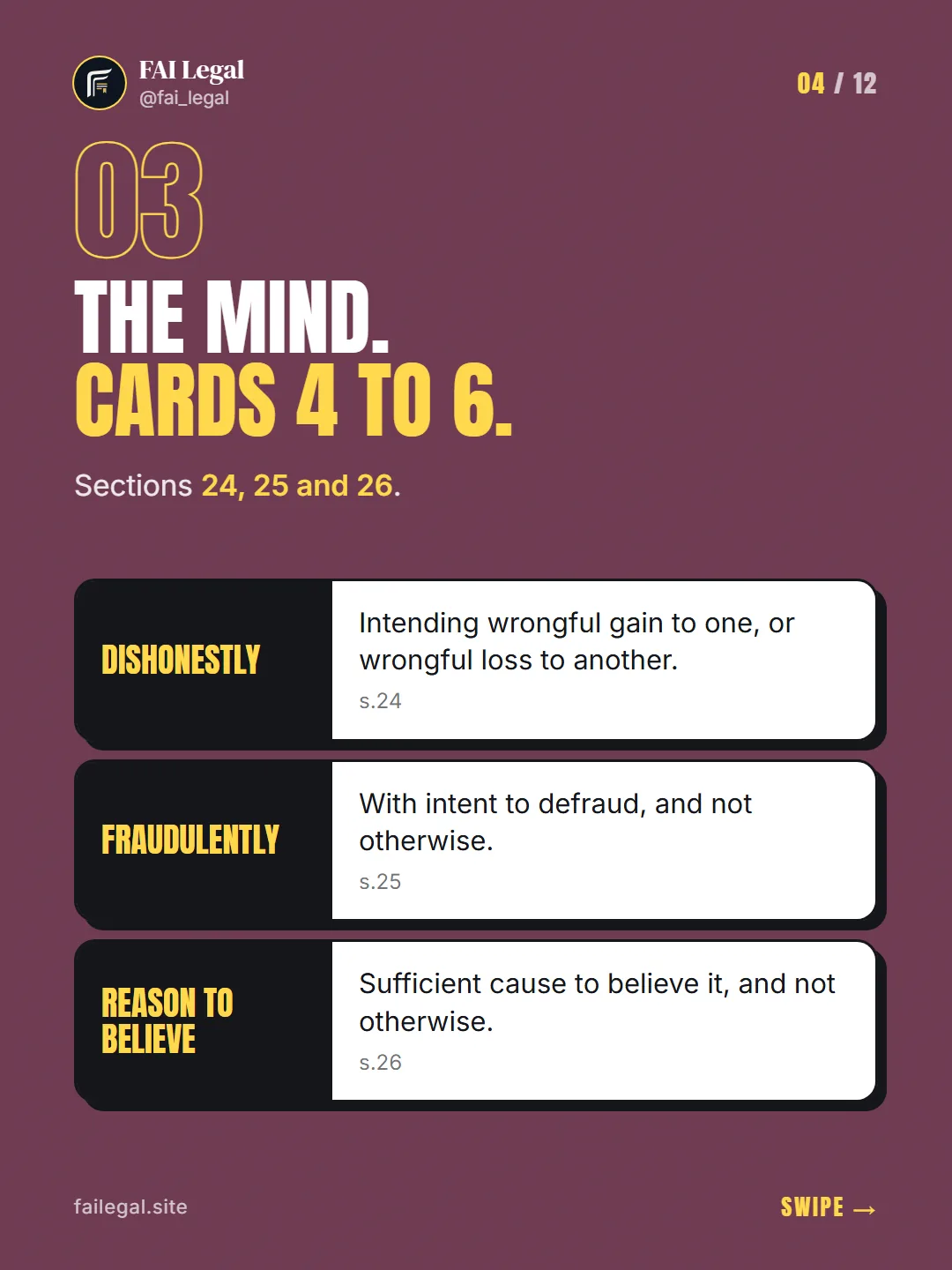
The mind. Cards 4 to 6.
Sections 24, 25 and 26.
- DishonestlyIntending wrongful gain to one, or wrongful loss to another. (s.24)
- FraudulentlyWith intent to defraud, and not otherwise. (s.25)
- Reason to believeSufficient cause to believe it, and not otherwise. (s.26)
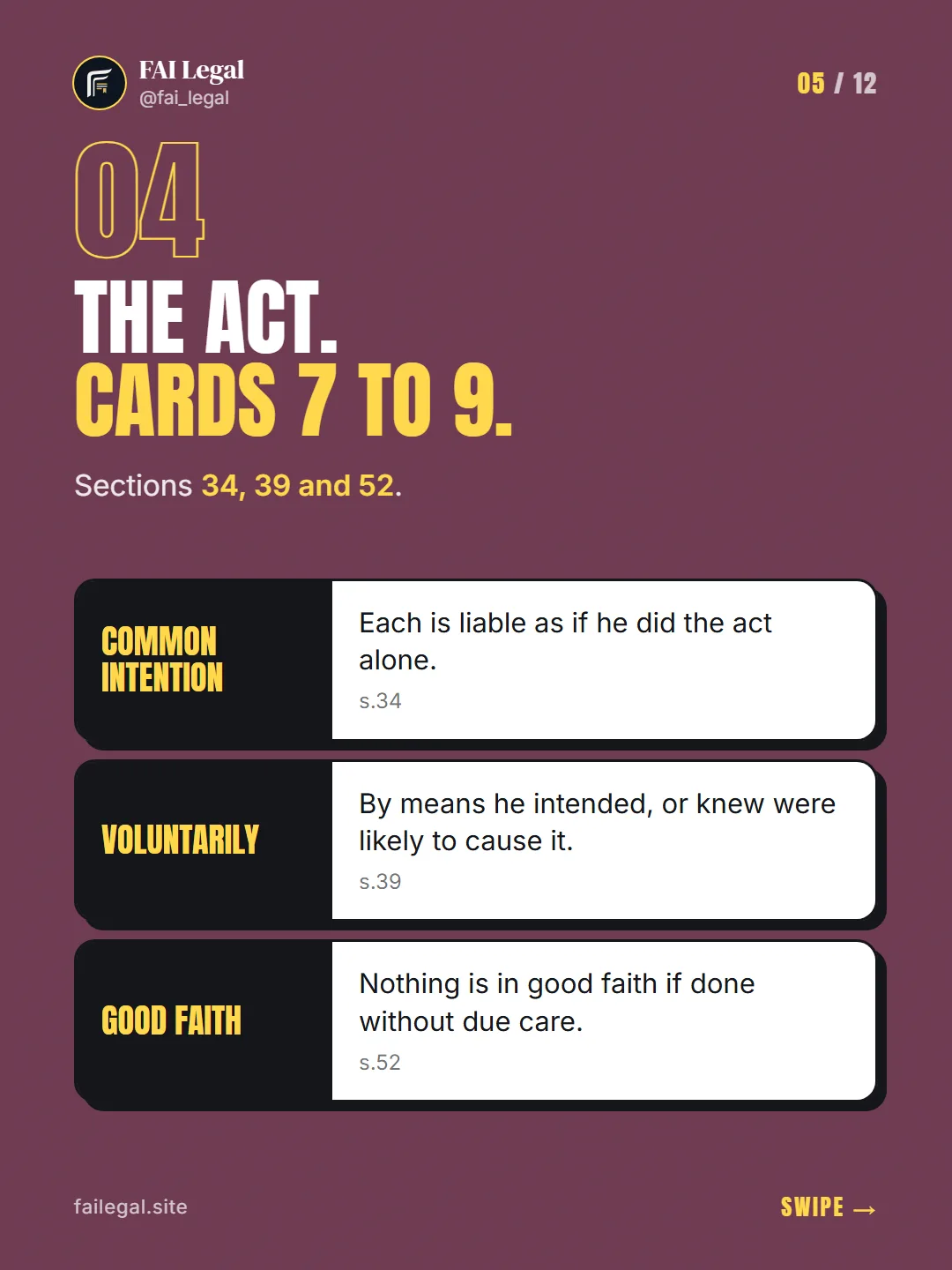
The act. Cards 7 to 9.
Sections 34, 39 and 52.
- Common intentionEach is liable as if he did the act alone. (s.34)
- VoluntarilyBy means he intended, or knew were likely to cause it. (s.39)
- Good faithNothing is in good faith if done without due care. (s.52)
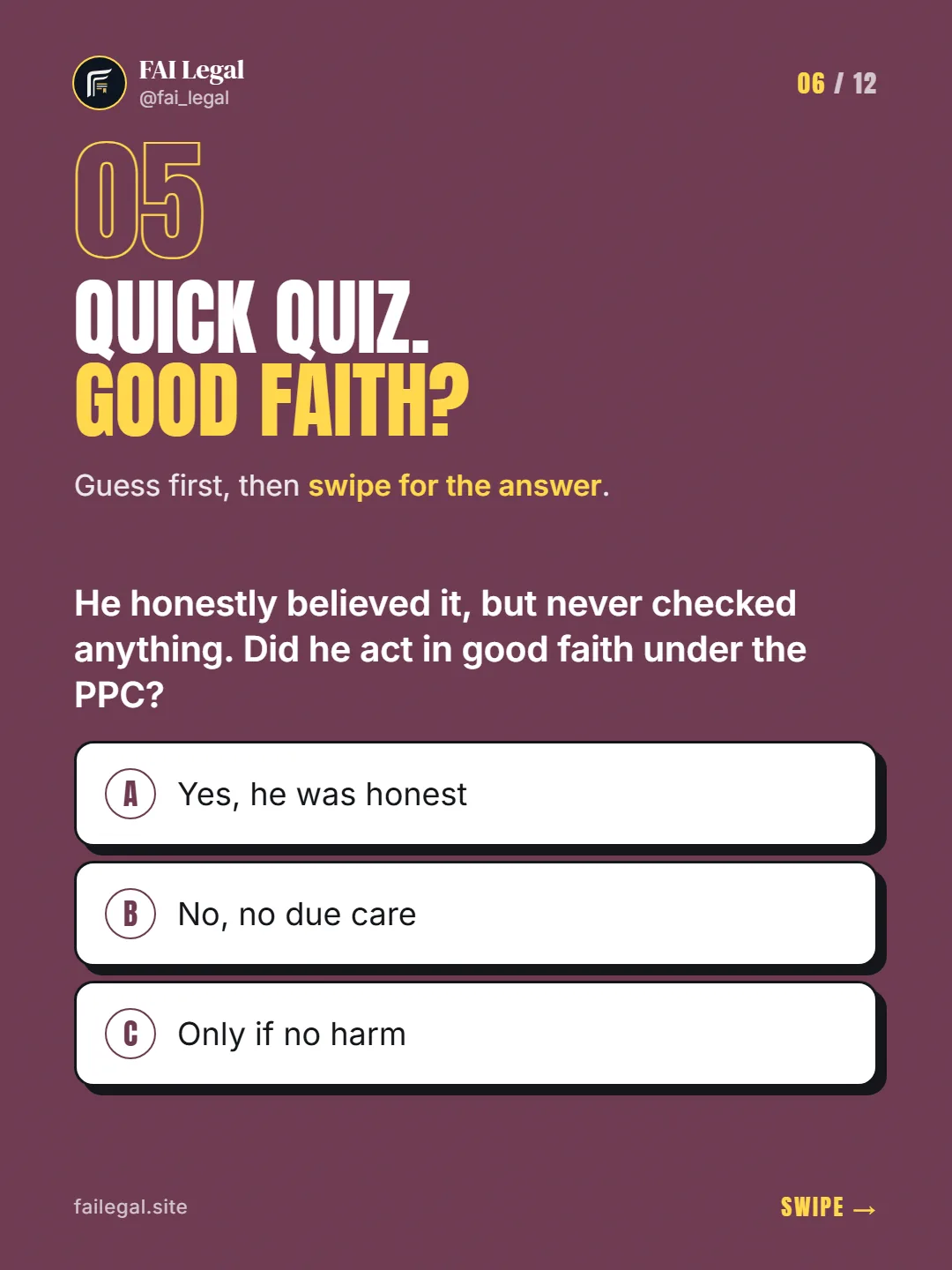
Quick quiz. Good faith?
Guess first, then swipe for the answer.
- A. Yes, he was honest
- B. No, no due care
- C. Only if no harm
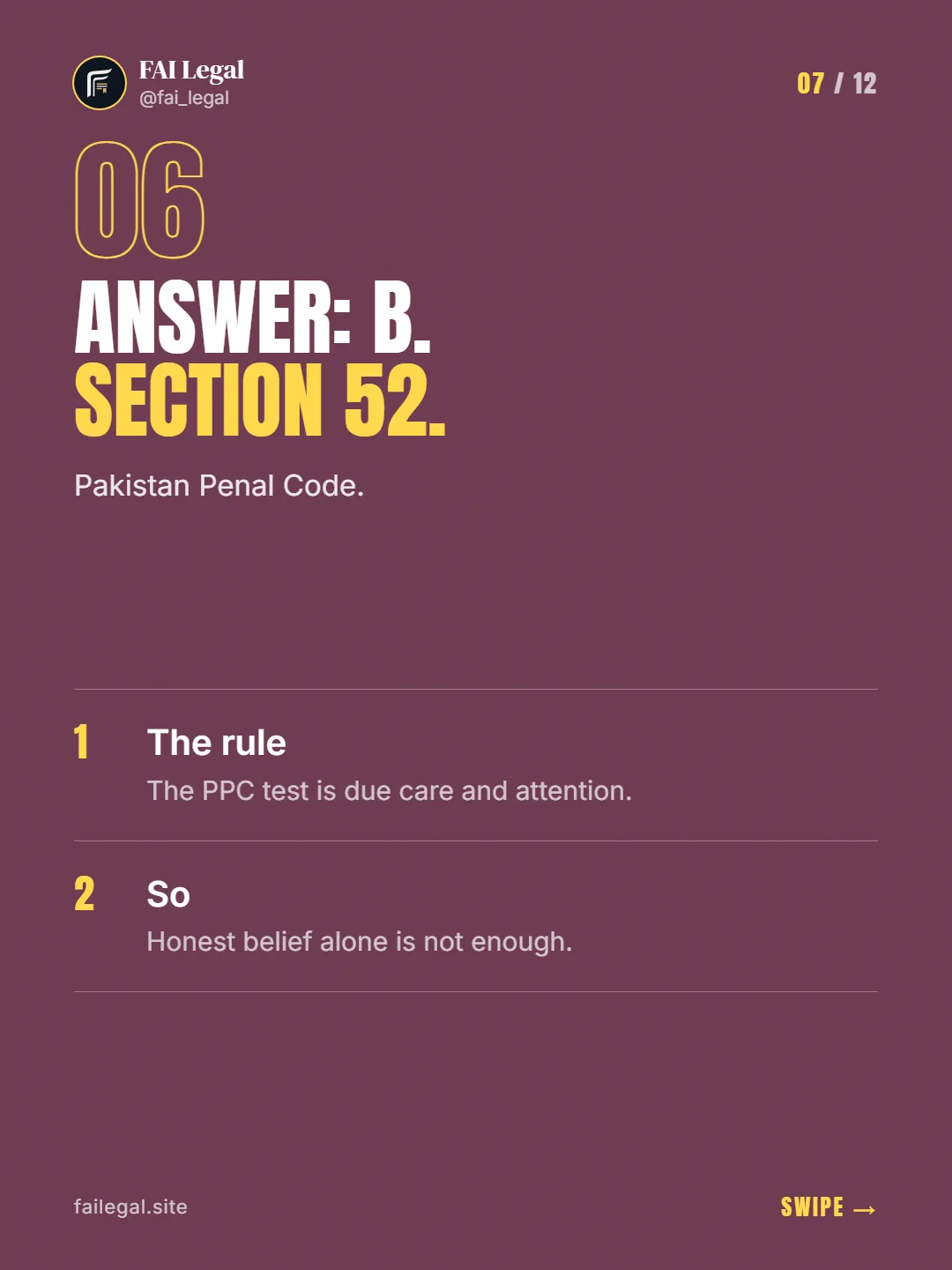
Answer: B. Section 52.
Pakistan Penal Code.
- The ruleThe PPC test is due care and attention.
- SoHonest belief alone is not enough.
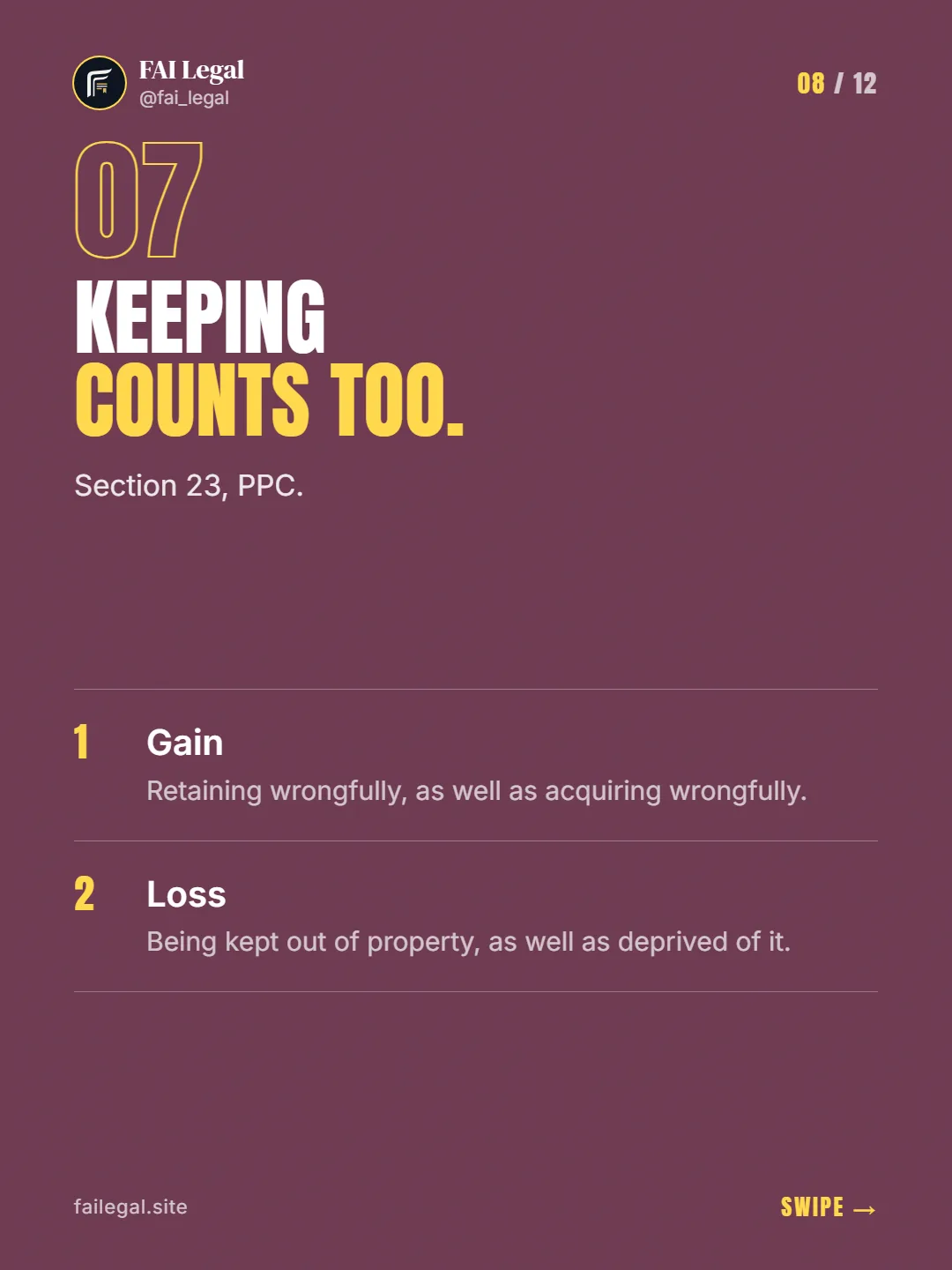
Keeping counts too.
Section 23, PPC.
- GainRetaining wrongfully, as well as acquiring wrongfully.
- LossBeing kept out of property, as well as deprived of it.
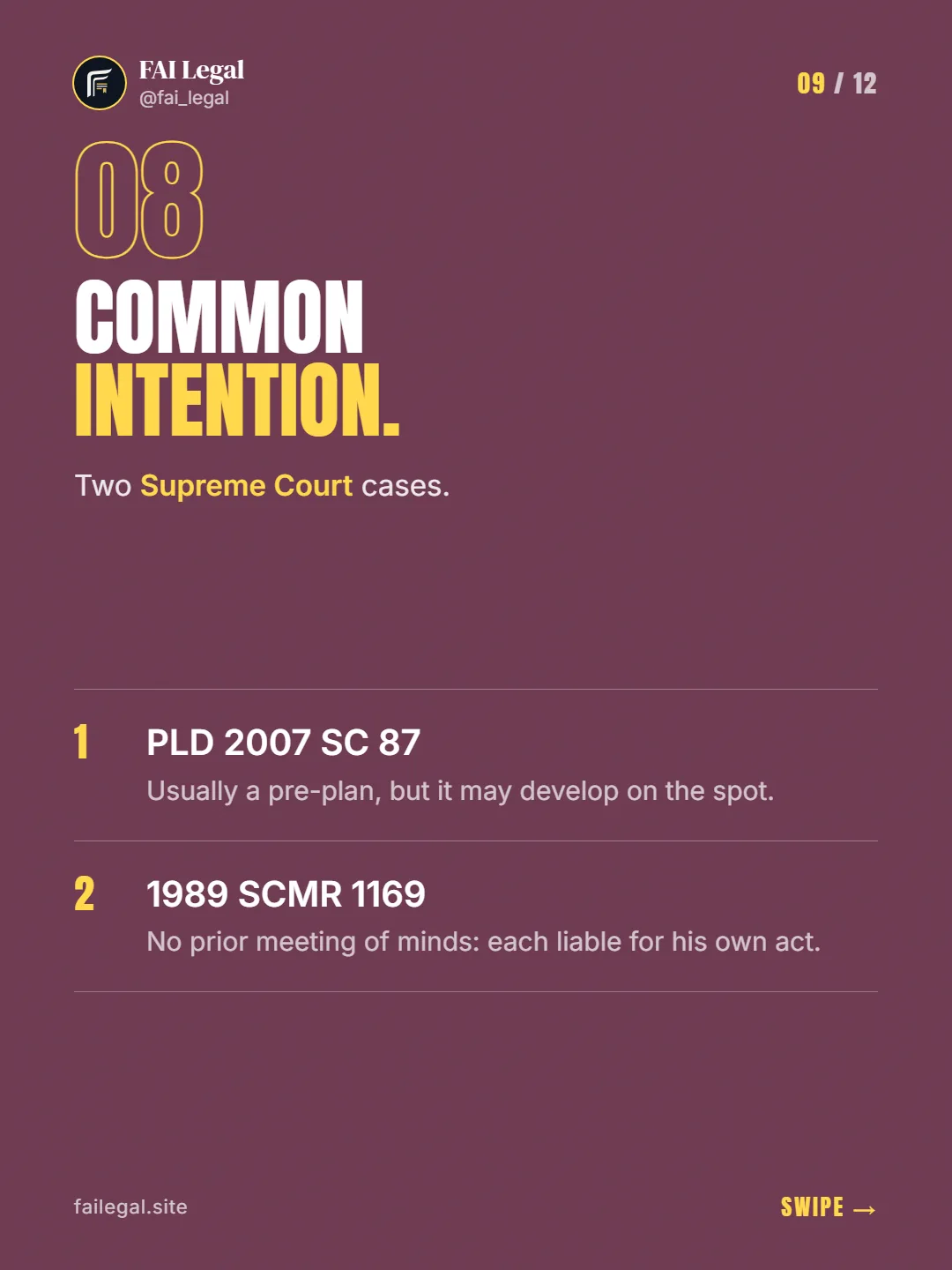
Common intention.
Two Supreme Court cases.
- PLD 2007 SC 87Usually a pre-plan, but it may develop on the spot.
- 1989 SCMR 1169No prior meeting of minds: each liable for his own act.
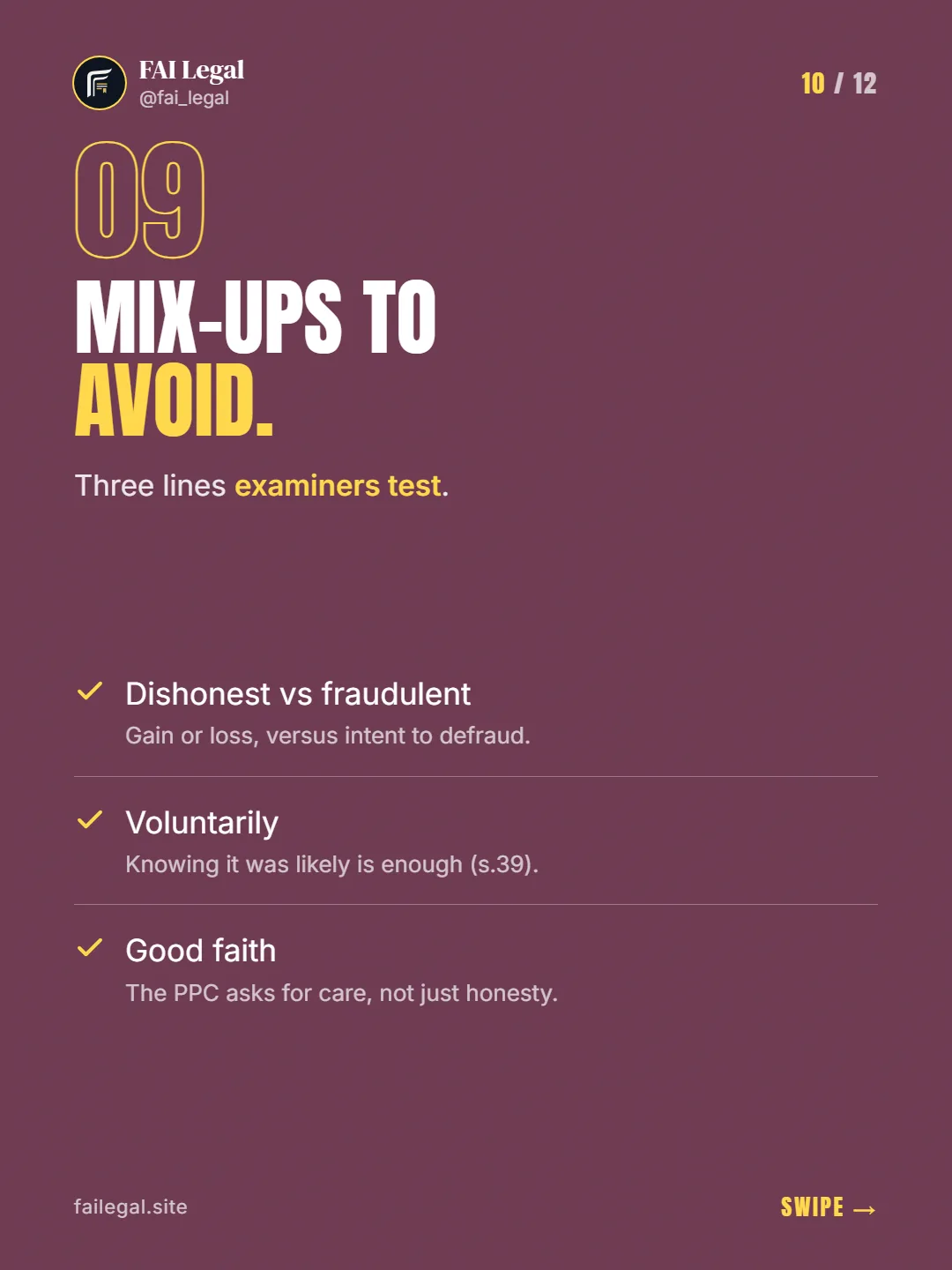
Mix-ups to avoid.
Three lines examiners test.
- Dishonest vs fraudulentGain or loss, versus intent to defraud.
- VoluntarilyKnowing it was likely is enough (s.39).
- Good faithThe PPC asks for care, not just honesty.
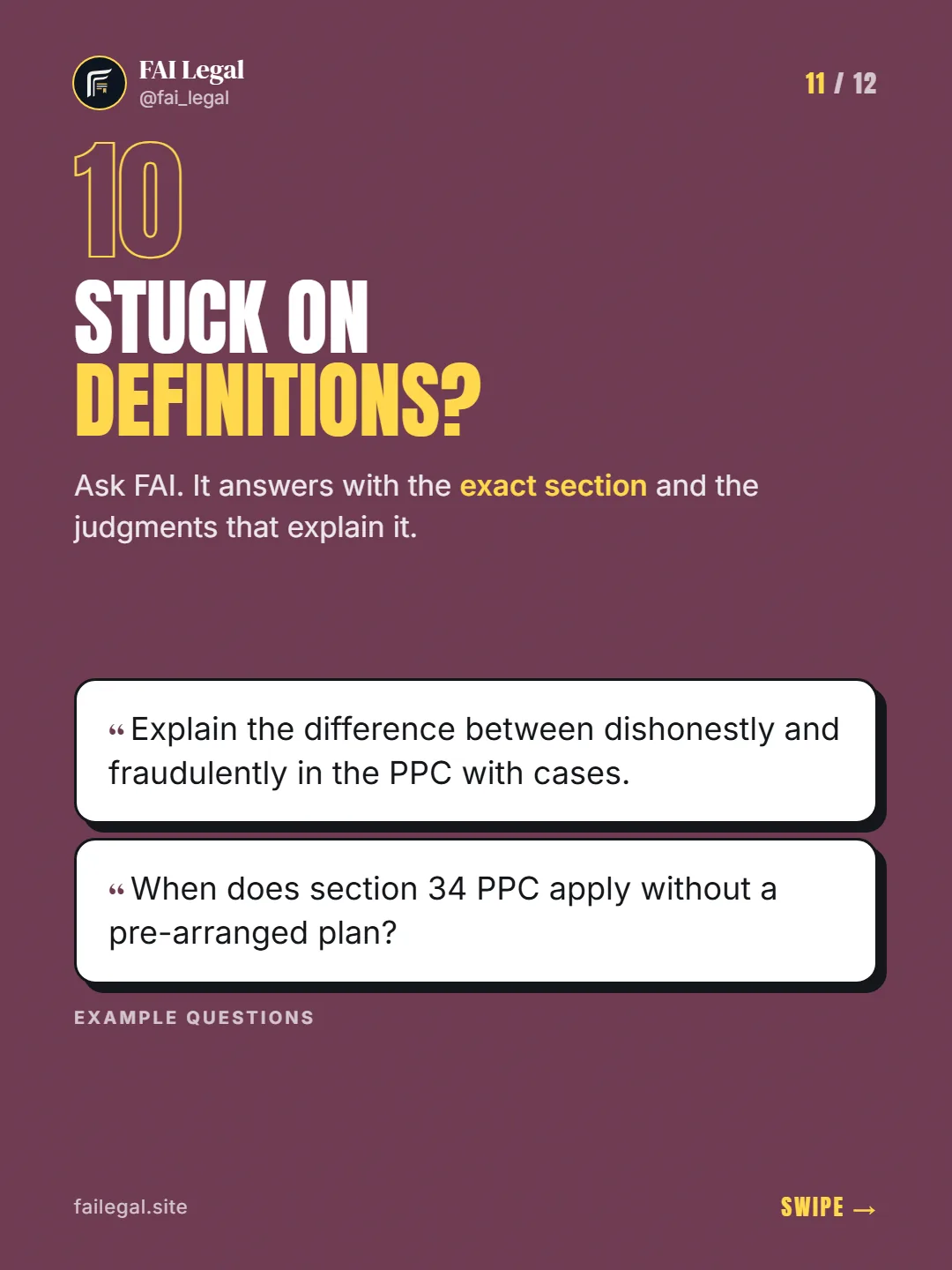
Stuck on definitions?
Ask FAI. It answers with the exact section and the judgments that explain it.
- Explain the difference between dishonestly and fraudulently in the PPC with cases.
- When does section 34 PPC apply without a pre-arranged plan?
Example questions
Sources
- Pakistan Penal Code, 1860 · Section 24
"Dishonestly" Pakistan Code
Educational legal information, not legal advice. Every case turns on its own facts. Speak to a qualified lawyer about your situation. Review status: Pending advocate review. How we check.