Property and inheritance · Supreme Court of Pakistan
Can a father sell his property without his son's consent?
The myth: “Abba's house is his sons' too, so he can't sell it or give it away without them.”Wrong
The short answer
Syed Masood Ali's case, Supreme Court of Pakistan, PLD 2025 SC 339, Civil Petitions Nos. 552-K of 2021 and 1108-K of 2023, decided 26 December 2024. Bench: Muhammad Ali Mazhar and Syed Hasan Azhar Rizvi, JJ. The rule: Abrar Ahmed v. Irshad Ahmed, PLD 2014 SC 331, and Hamida Begum v. Murad Begum, PLD 1975 SC 624. The limits: Mst. Kulsoom Bibi v. Muhammad Arif, 2005 SCMR 135.
Syed Masood Ali's case (the respondent, his stepmother, is not named here) · Supreme Court of Pakistan · PLD 2025 SC 339 · decided 26 December 2024
By the FAI Legal editorial desk · 23 October 2026 · 7 min read
Yes. While a father is alive, everything he owns is his. His sons, daughters and wife are his future heirs, but an heir has no right at all in a person's property until that person dies. So nobody can stop him selling or giving it away, or demand a share in his lifetime (PLD 1975 SC 624; PLD 2014 SC 331, para 2). In December 2024 the Supreme Court applied this to a son who tried to undo his late father's gift of a Karachi house, and refused him leave to appeal (PLD 2025 SC 339, paras 17 to 22).
In plain words: a share comes only after death. There are limits. A gift made in the last illness before death counts only up to one third unless the heirs agree, and a fake or forced gift can be undone with proof (2005 SCMR 135, paras 11 and 13).
Key points
- Gifts and inheritance between Muslims in Pakistan follow Muslim Personal Law (Shariat Application Act 1962, section 2). Under it, an heir's right comes into existence only on the death of the owner; until then a presumptive heir has no right at all in the property (PLD 1975 SC 624, applying Mulla, section 52).
- So a son cannot stop his father from selling or gifting his property, or ask for a share, while the father is alive. A son's suit in his father's lifetime against the father's gift was bound to be dismissed (PLD 1975 SC 624), and sons living in their father's house live there with his permission (PLD 2014 SC 331, para 2).
- In PLD 2025 SC 339 the Supreme Court upheld a father's 1991 gift of his Karachi house to one of his two wives, made before witnesses and confirmed by a registered deed, against his son by the other wife: all the elements of a valid gift were met, and potential heirs could not challenge it (paras 17 and 18).
- A gift must be real and complete: a clear declaration, acceptance, and delivery of possession. It can be oral; writing and registration are not essential, but they help prove it (PLD 2025 SC 339, paras 6 and 20).
- The limits: a gift made during the last illness (marz-ul-maut) takes effect only up to one third of the estate unless the heirs consent after the death, and a fraudulent gift is no gift at all (2005 SCMR 135, paras 11 and 13). A will is limited to one third too.
Can a father sell his property without his son's consent?
Yes. In Pakistan, gifts and inheritance between Muslims follow Muslim Personal Law (West Pakistan Muslim Personal Law (Shariat) Application Act 1962, section 2). Under it, a person's heirs get their shares only when he dies. Until then the property is entirely his: he can live in it, rent it out, sell it or give it away, and he does not need the consent of his sons, daughters or anyone else.
The Supreme Court put it plainly in 1975, quoting Mulla's Muhammadan Law: "the right of an heir-apparent or presumptive comes into existence for the first time on the death of the ancestor", and "Till that death occurs a presumptive heir has no right at all in the property of his ancestor" (Hamida Begum v. Murad Begum, PLD 1975 SC 624). It said the same in 2013 and again in December 2024 (PLD 2014 SC 331, para 2; PLD 2025 SC 339, para 17).
Karachi, 1991: the case
A man in Karachi owned a house of 90 square yards in Liaquatabad. He was married to two wives. On 9 January 1991, in front of witnesses, he made an oral gift of the house to one of them, and on 9 February 1991 the gift was confirmed by a registered deed, which recorded that she accepted it and that possession was handed over (PLD 2025 SC 339, paras 2 and 5). He died in 1999.
In 2004 his son by the other wife filed a civil suit to cancel the gift. He said the house had never really been handed over, that the father's signatures were forged because he was ill, and that the deed's witnesses were not produced. The trial court dismissed the suit in 2007, the appeal was dismissed in 2009, and the Sindh High Court dismissed his second appeal in 2021 (paras 2, 3 and 19).
What the Supreme Court said
On 26 December 2024 the Supreme Court refused him leave to appeal. The gift had all three elements of a valid gift under Muslim law: a clear declaration, acceptance and delivery of possession; and between a husband and a wife living in the house, formal delivery of possession is not needed (paras 6 to 16). The Court concluded that "all requisite elements for a valid and legally enforceable gift/Hiba are satisfied in the present case" (para 18).
It then applied the rule about heirs: a presumptive heir has no right in a person's property until that person dies, so potential heirs cannot challenge a gift the owner made in his lifetime (para 17, following PLD 2014 SC 331). No document showed the father's illness, nobody claimed the house from 1991 or when he died in 1999, and the suit came four years after the family learned of the gift (para 19). The wife's own suit for possession of two floors of the building had meanwhile been decreed in 2023 (paras 24 and 33).
The rule, for law students and lawyers
The principle is spes successionis: Muslim law does not recognise a mere hope of inheriting as a right. Until the owner dies, a presumptive heir has no interest in praesenti in the property (PLD 1975 SC 624, applying Mulla, section 52). The Transfer of Property Act 1882 says the same from the other side: "The chance of an heir-apparent succeeding to an estate" cannot be transferred (section 6(a)).
Three consequences follow. First, a suit by a son in his father's lifetime to challenge the father's gift is not maintainable; even a grandson could not get an injunction to stop his very old grandfather dealing with his property (PLD 1975 SC 624; 1979 SCMR 619). Second, children living in the father's house are his licensees and cannot resist a gift on the ground that they were in possession (PLD 2014 SC 331, para 2). Third, for an heir who does have a case, time runs from the owner's death: in 1975 the Court held that limitation for a son's challenge to his father's gift started on the father's death (PLD 1975 SC 624).
The limits: deathbed gifts, fake gifts and wills
Last illness (marz-ul-maut): a gift made under the pressure of death, during the illness that kills the giver, is treated like a will. It cannot take effect beyond one third of the estate, after funeral expenses and debts, unless the heirs consent after the death (2005 SCMR 135, para 13). Courts look at whether the illness was the cause of death and whether the giver acted in fear of imminent death (PLD 1977 SC 28).
Fake or forced gifts: a gift procured by fraud or forgery is no gift at all, whether or not it was made in the last illness (2005 SCMR 135, para 11). When heirs challenge a gift after the death, the person relying on it must prove the declaration, acceptance and delivery of possession (2018 SCMR 30). And a will, unlike a lifetime gift, is limited to one third of the estate.
If you are a father who wants to give property
Do it properly and in your lifetime, while you are well: say it clearly in front of witnesses, let the person accept it, and hand over possession. Writing and registration are not required for a valid gift, but a registered deed or a mutation in the revenue record is the best proof later (PLD 2025 SC 339, paras 6 and 20).
Do not leave it to your last illness: a gift made then counts only up to one third unless the heirs agree (2005 SCMR 135, para 13). If you are not sure how a gift will affect your family, talk to a lawyer before you sign.
If you are a son or a daughter
While your parent is alive, you cannot claim a share or stop a sale or a gift. After the death, every heir gets the share the law fixes, and possession by one heir is possession for all (2022 SCMR 13). If you believe a gift was forged or taken by pressure, gather proof and go to court promptly: in PLD 2025 SC 339 the Court noted that the son waited four years after learning of the gift (para 19).
The case at a glance
- Facts
- A Karachi man with two wives made an oral gift of his house to one of them in January 1991 before witnesses, confirmed by a registered deed in February 1991. He died in 1999. In 2004 his son by the other wife sued to cancel the gift; the suit, the appeal and the second appeal were all dismissed.
- The question
- Could the son, as an heir, undo his late father's lifetime gift of the house?
- What the Court held
- No. All the elements of a valid gift were proved, and potential heirs have no right in the property while the owner lives, so they cannot challenge his gift. Leave to appeal was refused (paras 17, 18, 22 and 33).
- Why
- Under Muslim law a presumptive heir has no right in the property until the owner dies (para 17, following PLD 2014 SC 331). Between a husband and a wife living in the house, formal delivery of possession is not needed; writing and registration are not essential (paras 6, 11 to 13 and 20).
- Limits
- The ruling does not allow fake or forced gifts, and it does not change the one-third limit on gifts in the last illness and on wills (2005 SCMR 135, paras 11 and 13). It decides a lifetime gift that was proved, not a sale or a will.
In the Court’s words
“a presumptive heir has no rights in the property of the deceased until his death occurs”
PLD 2025 SC 339, para 17
“the appellants could not claim any right of any sort or the nature in the property during the lifetime of their father”
PLD 2014 SC 331, para 2
“gift can be made orally and requires no registration, even writing is not necessary to the validity of the gift made regarding immovable property”
PLD 2025 SC 339, para 6
“a gift made by a Muslim during 'Marz-ul-Maut' cannot take effect beyond 1/3rd of his estate (after payment of funeral expenses and debts) unless the heirs give their consent after the death of donor”
2005 SCMR 135, para 13
The law it relies on
Notwithstanding any custom or usage, in all questions regarding succession, wills, legacies and gifts (among others), the rule of decision is Muslim Personal Law (Shariat) where the parties are Muslims.
The chance of an heir-apparent succeeding to an estate, or any other mere possibility of a like nature, cannot be transferred.
What this does not mean
- It does not mean a father can do anything after his death. A will is limited to one third, and the rest goes to the heirs by their fixed shares.
- It does not protect a fake, forged or forced gift. Such a gift can be cancelled with proof (2005 SCMR 135, para 11).
- It does not make a deathbed gift fully valid. A gift in the last illness counts only up to one third unless the heirs agree after the death (2005 SCMR 135, para 13).
- It does not decide whether a particular gift in your family was valid. That depends on its own facts and proof.
Questions people ask
Can a father sell his property without his son's consent in Pakistan?
Yes. While he is alive the property is his, and his heirs have no right in it until he dies, so he needs no one's consent to sell it (PLD 1975 SC 624; PLD 2014 SC 331, para 2).
Does a son have a share in his father's property while the father is alive?
No. Under Muslim law a share arises only on the father's death; until then a presumptive heir has no right at all in the property (PLD 1975 SC 624; PLD 2025 SC 339, para 17).
Can a father gift property to one son or one child in Pakistan?
In his lifetime, yes, if the gift is real and complete: a clear declaration, acceptance and delivery of possession (PLD 2025 SC 339, paras 6 and 18). A gift in the last illness counts only up to one third, and a fake or forced gift can be cancelled (2005 SCMR 135, paras 11 and 13).
Can a son stop his father from selling ancestral property?
Muslim law in Pakistan gives no share by birth. Even a grandson could not get an injunction to stop his very old grandfather from dealing with his own property (1979 SCMR 619).
Is a gift deed or registration necessary for a gift of a house?
Not for validity: an oral gift with acceptance and possession is valid (PLD 2025 SC 339, paras 6 and 20). A registered deed or mutation is still the best proof.
Can a father disinherit his son in Pakistan?
Not by a will: a will is limited to one third and the heirs' shares are fixed by law. What he really sells or gives away in his lifetime, while well, is no longer part of his estate.
Check yourself
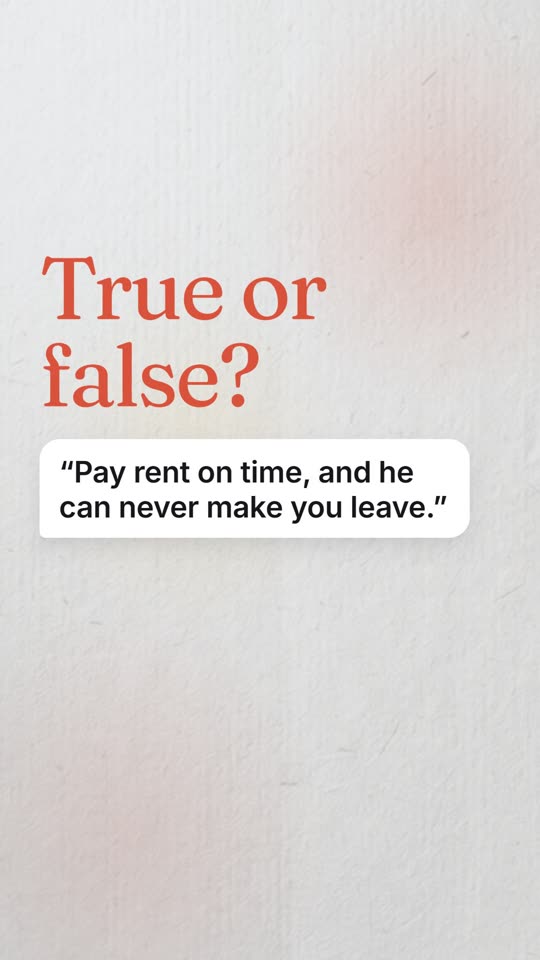
True or false? “Abba's house is his sons' too, so he can't sell it or give it away without them.”
Wrong. Syed Masood Ali's case, Supreme Court of Pakistan, PLD 2025 SC 339, Civil Petitions Nos. 552-K of 2021 and 1108-K of 2023, decided 26 December 2024. Bench: Muhammad Ali Mazhar and Syed Hasan Azhar Rizvi, JJ. The rule: Abrar Ahmed v. Irshad Ahmed, PLD 2014 SC 331, and Hamida Begum v. Murad Begum, PLD 1975 SC 624. The limits: Mst. Kulsoom Bibi v. Muhammad Arif, 2005 SCMR 135.
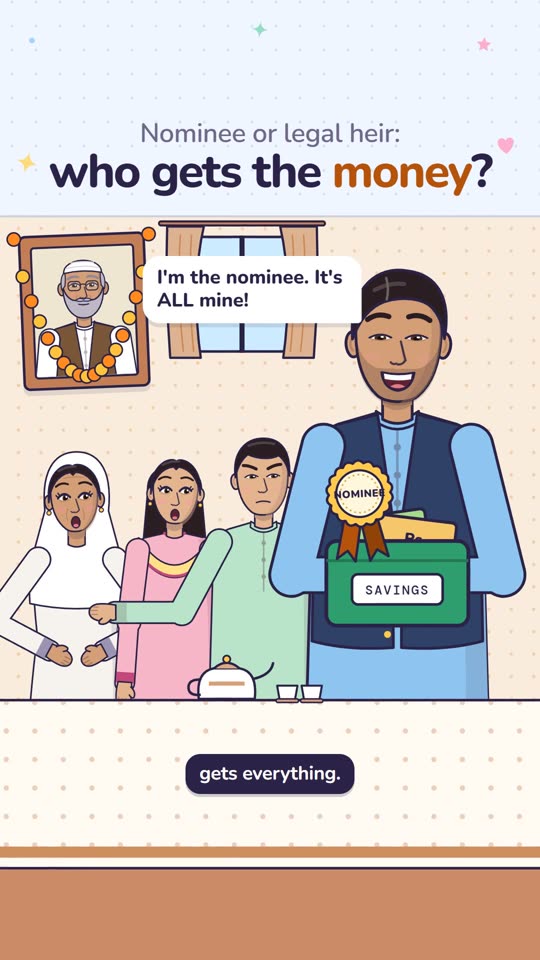
Next one: true or false? “Whoever is the nominee gets everything.”
Sources
- Syed Masood Ali's case (the respondent, his stepmother, is not named here), PLD 2025 SC 339 (Supreme Court of Pakistan, 26 December 2024), paras 2, 5, 6, 11-13, 17-20, 22-24, 33
A father's proved lifetime gift of his house to his wife stands; potential heirs have no right in the property until the owner dies and cannot challenge his gift. verified against full text - Abrar Ahmed v. Irshad Ahmed, PLD 2014 SC 331 (Supreme Court of Pakistan, 18 December 2013), paras 2
Sons living in their father's house could claim no right in it during his lifetime and could not challenge his gift of it to another son. verified against full text - Hamida Begum v. Murad Begum, PLD 1975 SC 624 (Supreme Court of Pakistan, 8 September 1975), paras -
Muslim law does not recognise spes successionis; a son's suit in his father's lifetime against the father's gift is bound to be dismissed; limitation for an heir's challenge runs from the death. verified against full text - Mst. Kulsoom Bibi v. Muhammad Arif, 2005 SCMR 135 (Supreme Court of Pakistan, 7 September 2004), paras 11, 13
A gift in marz-ul-maut cannot take effect beyond one third without the heirs' consent after the death; a fraudulent gift is nullified. verified against full text - Muhammad Siddique v. Shah Pasand Khan, 1979 SCMR 619 (Supreme Court of Pakistan, 3 July 1979 (date of hearing)), paras -
A grandson has no vested right in his grandfather's property and cannot restrain him from disposing of it. verified against full text
Every quote and section above is traced to the full judgment or statute text by an automatic check that runs on every update.
What the reel says
Read the words of the reel
Can a father sell his property without his son's consent?
Yes. While Abba is alive, it's all his. An heir's share comes only after death (Supreme Court, PLD 1975 SC 624).
The case: Karachi, 1991. A father with two wives gave his house to one of them, in front of witnesses, and registered it.
He died in 1999. In 2004 his son from the other wife went to court: cancel the gift, I have a share. He lost in every court.
December 2024, Supreme Court: the gift was made properly, and while the father lived his heirs had no right in it (PLD 2025 SC 339, para 17).
The limits: a gift in the last illness counts only up to one third unless the heirs agree; a fake or forced gift can be undone with proof (2005 SCMR 135).
Giving property? Say it clearly, hand it over, keep it on paper.
Send this to the family group.
Educational legal information, not legal advice. Every case turns on its own facts. Speak to a qualified lawyer about your own matter. Reading this page does not create a lawyer-client relationship. Review status: Pending advocate review. How we check.